Explained
Castable Fish Finders, Explained
After reading this you'll understand every spec on a castable sonar listing and know which ones matter for how you fish.
In this guide
A castable fish finder is a small floating pod you tie to your line and cast out, and it beams what's under the water to your phone. The category looks intimidating because the listings are stuffed with terms like CHIRP, cone angle, transducer and bathymetric mapping. Most of it comes down to two questions: how clearly can it show you fish, and can it remember where you've been.
The 30-second version
- Castable means no boat needed. these units work from shore, a dock, a kayak or through the ice, streaming sonar to your phone instead of a mounted screen.
- CHIRP is the sonar quality feature. it sweeps a range of frequencies instead of a single ping, so individual fish separate cleanly from bait and bottom.
- GPS mapping is what most anglers end up wanting. onboard GPS lets the unit draw depth contours over repeated casts, turning a quick readout into a real scouting tool.
- Wi-Fi and Bluetooth are a genuine trade-off. Wi-Fi casts farther and unlocks deeper mapping, Bluetooth pairs faster and simpler but reaches less distance.
- The market is basically two brands. Deeper makes Wi-Fi spheres up and down a price ladder, Garmin makes a simpler Bluetooth puck, and budget makers such as LUCKY sell basic Wi-Fi spheres with no mapping; matching one to your fishing is the whole decision.
The products this guide is about
Our verdict on each, with the full reasoning on the companion review.
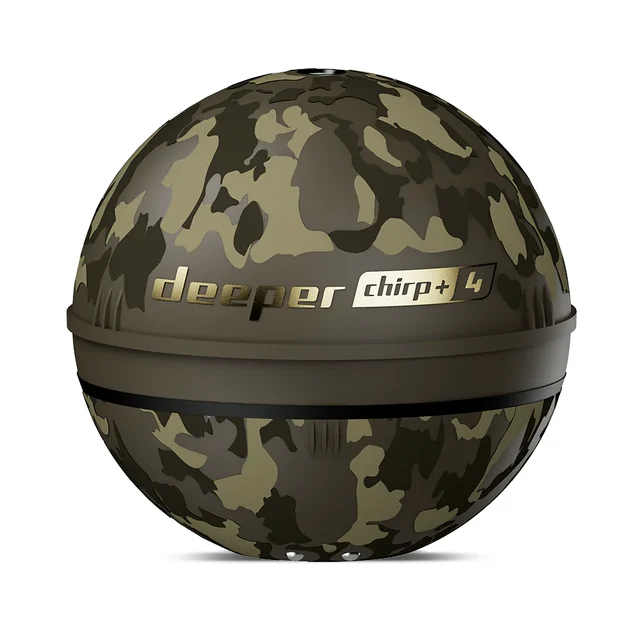
- Buy Deeper Smart Sonar CHIRP+ 4 The most capable castable sonar you can buy, with true CHIRP detail and full 2D/3D mapping.
- Buy Garmin STRIKER Cast GPS The simplest, most dependable castable, and the value pick for anyone who wants sonar without a learning curve. Amazon
- It depends Deeper Sonar PRO+ 2 Still excellent triple-beam sonar with GPS mapping, but it now sits in the shadow of Deeper's newer CHIRP models. Amazon
- Skip LUCKY Orbit LS-2W Wi-Fi Castable Fish Finder A budget Wi-Fi castable sphere that puts depth and fish on your phone, with no GPS mapping listed and a 45 m depth ceiling.
What actually matters
- Sonar quality (CHIRP vs standard): true CHIRP with tight target separation makes it far easier to tell a fish from a bait ball or the bottom, and it matters most when you fish structure.
- GPS and mapping: a unit with onboard GPS builds depth and contour maps of waters you fish often; without it you get a live readout but no memory of the lake.
- Connection type and range: Wi-Fi reaches farther for long shore casts and supports richer mapping, while Bluetooth is quicker to pair and less fiddly; match it to how far you actually cast.
- Depth capability: make sure the unit's maximum depth comfortably covers the deepest water you fish, since budget castables often cap out surprisingly shallow.
- Battery life: you want enough runtime to outlast a full session, and fast charging so the pod is ready between trips.
- App and ecosystem: a clean, stable app matters as much as the hardware, because a flaky connection ruins an otherwise good unit; read recent owner reports before buying.
The specs, in plain English
Green flags vs red flags
Green flags
- True CHIRP or clearly described multi-beam sonar with a stated target-separation figure
- Onboard GPS with real contour/bathymetric mapping, not just 'spot marking'
- A max depth that comfortably exceeds the deepest water you fish
- Battery life that outlasts a full session, ideally with fast charging
- Recent, consistent owner reports praising app stability and connection reliability
- A brand with a real product ladder and ongoing app support
Red flags
- 'GPS' listed but only for spot marking, with no actual depth mapping
- A single beam with no CHIRP if you plan to fish structure
- A surprisingly shallow depth ceiling relative to your waters
- Vague sonar claims with no frequency, beam or separation detail
- A pattern of owner reports about dropped connections or a buggy app
- A no-name brand with no app track record or software updates
Who's who: the brands
- Deeper - The category leader for Wi-Fi castable spheres, with a full ladder from entry-level to true-CHIRP flagship units and strong GPS mapping.
- Garmin - Known for its simple, dependable Bluetooth castable puck with beginner-friendly mapping, and for its wider fish-finder and GPS heritage.
- LUCKY - A budget sonar maker that also builds OEM units for other sellers; its Orbit LS-2W Wi-Fi castable lists a single 90 degree beam, 45 m of depth, 70 m of range and 5 hours of battery, with no GPS mapping listed.
- Lowrance - A long-standing marine electronics name best known for mounted sonar and mapping units, often cross-shopped by anglers moving up from castables.
- Humminbird - Another established mounted-sonar and mapping brand, a common reference point for anglers comparing castable convenience against a fixed unit.
How to read a listing without getting fooled
Start with the sonar description and don't be dazzled by the word 'sonar' alone: look for whether it's true CHIRP or a plain single/multi-frequency system, and whether the listing states a target-separation or beam figure. Next check GPS, and read carefully, because 'GPS' can mean genuine contour mapping or just dropping a pin on a spot, and only the former helps you learn a lake. Confirm the max depth against the deepest water you fish, then note the connection type: Wi-Fi range figures (often 100 to 120 m) suit long shore casts, while Bluetooth (often around 60 m) is simpler but shorter. Finally, treat the app as part of the product and skim recent owner reports for connection and stability complaints, since a great transducer behind a flaky app is a frustrating buy.
How much should you spend?
Spend based on how seriously you fish, not on the biggest number of features. The entry rung buys a real castable from a trusted brand but typically drops GPS mapping, uses a single beam and caps out shallow, and most anglers outgrow it within a season, so the small saving rarely pays off. The mid rung is the value sweet spot for the majority of buyers: dependable sonar plus its own contour mapping, without a steep learning curve. Stepping up to the flagship tier is worth it only if you fish often, chase structure precisely and will actually use true CHIRP detail and full 2D/3D mapping; a casual angler will never touch half of it. Older premium models can be strong buys when discounted below the current flagship line, but at full price they sit awkwardly close to it. Buy for the fishing you actually do and you won't overpay for features you never use, or underbuy into limits you'll quickly resent.
Questions, answered
What is a castable fish finder and how is it different from a mounted one?
It's a small floating sonar pod you tie to your line and cast out, or lower from a dock or kayak. It streams sonar wirelessly to your phone instead of to a fixed screen, so there's nothing to mount or wire. It's aimed at anglers who fish from shore, banks, small craft or through the ice and don't want a permanent boat installation.
Do I really need CHIRP on a castable unit?
It helps but isn't essential for everyone. CHIRP sends a sweep of frequencies rather than a single ping, which generally produces cleaner returns and tighter target separation, making it easier to pick individual fish out from bait and structure. For casual pond and dock fishing the difference is modest; for serious structure fishing it's noticeable and worth paying for.
Wi-Fi or Bluetooth, which connection is better?
Each has a trade-off. Wi-Fi models reach farther, roughly 100 to 120 m, which suits long shore casts and supports deeper mapping, but the connection can take more effort to set up and keeps your phone tied to the session. Bluetooth pairs almost instantly and is simpler, but its range is shorter, often around 60 m. Pick Wi-Fi for reach and mapping, Bluetooth for fuss-free simplicity.
Do I need the GPS and mapping features?
If you fish the same waters repeatedly and want to learn depth contours, drop-offs and weed edges, onboard GPS mapping is genuinely useful and is the feature most anglers end up valuing. If you only want a quick depth-and-fish readout from a dock or pond now and then, you can live without it, but most people eventually wish they had it.
How deep can a castable fish finder actually see?
It varies a lot by model. Budget castables often cap out around 50 m, while premium and flagship units reach roughly 100 m. What matters is that the unit's maximum depth comfortably exceeds the deepest water you fish, with some margin, or you'll be blind in exactly the spots where sonar helps most.
Is a castable unit good enough, or should I get a mounted fish finder?
For shore, bank, kayak and ice anglers without a boat, a good castable is genuinely capable and far more convenient. A permanently mounted unit still offers bigger screens, more power and continuous real-time scanning while moving, so if you fish mostly from a boat it may serve you better. For everyone fishing boatless, a castable is usually the smarter buy.
Or jump to the head-to-head: Deeper Smart Sonar CHIRP+ 4 vs Garmin STRIKER Cast GPS.