Explained
Fishing Reels, Explained
After reading, you'll know which reel type fits your fishing and how to read a reel's spec sheet without being fooled by marketing.
In this guide
A fishing reel is just the mechanism that stores your line and lets you cast and retrieve it, but the wall of jargon (gear ratios, bearing counts, drag numbers, cryptic size codes) makes buying one feel harder than it is. The single biggest decision is reel type: a forgiving spinning reel versus a higher-control baitcaster. Most people trip up by chasing the highest bearing count instead of matching the reel to the fish, water, and lures they actually use.
The 30-second version
- Pick the type first. A spinning reel is the forgiving, do-everything default; a baitcaster adds casting control and power but demands practice.
- Drag quality beats bearing count. A smooth, strong, consistent drag matters far more for landing fish than a big number on the box.
- Size is a code, not a mystery. For all-around freshwater and light inshore fishing, a spinning reel in the 2500 to 4000 range covers most situations.
- Saltwater changes the math. If you fish salt or brackish water at all, choose a corrosion-tolerant reel and rinse it with fresh water after every trip.
- Gear ratio is about speed. A mid ratio (roughly 5.8:1 to 6.4:1) is the most versatile starting point; go faster or slower only for specific techniques.
The products this guide is about
Our verdict on each, with the full reasoning on the companion review.
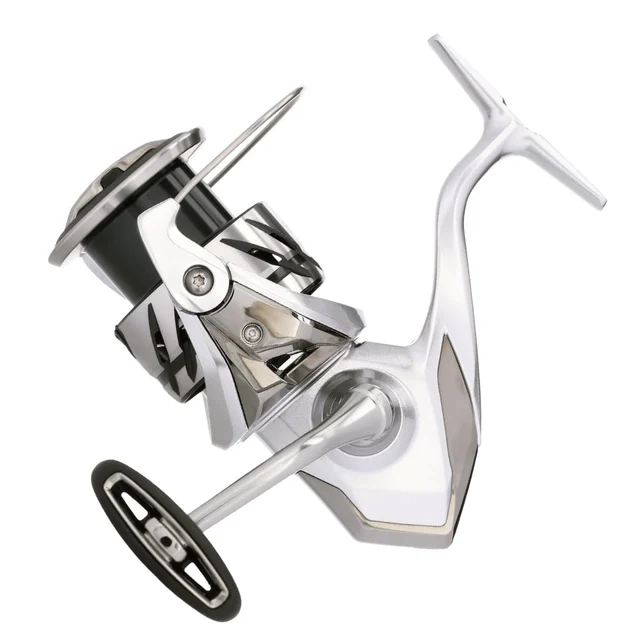
- Buy Shimano Stradic FM Spinning Reel The all-around spinning reel most anglers should buy first and keep for years. Amazon
- Buy Daiwa BG Spinning Reel A bombproof metal-bodied spinning reel that punches far above its mid-range price. Amazon
- It depends Shimano SLX DC Baitcasting Reel A digitally-braked baitcaster that tames backlash, if you actually need a baitcaster. Amazon
- Skip Abu Garcia Max X Low Profile Reel A cheap entry baitcaster with a graphite body and one gear ratio; a poor first reel for an all-around buyer. Amazon
What actually matters
- Reel type is the first and biggest choice. Spinning reels hang below the rod, resist tangles, and are easy to learn; baitcasters sit on top, give more casting control and power, and reward practice. Get this right before worrying about anything else.
- Drag is the friction system that lets line slip under load so a running fish doesn't snap it. A smooth, strong drag that engages consistently protects your line and your catch far more than raw bearing count.
- Reel size determines line capacity and how much fish the reel can handle. Too small and you run out of line on a big fish; too large and the setup feels clumsy for light work.
- Corrosion resistance matters the moment saltwater is involved. Sealed components and salt-rated construction decide whether a reel lasts years or seizes up in a season.
- Body material affects durability and weight. Metal (usually aluminum) bodies flex less under load and last longer than all-graphite, at the cost of some extra weight.
- Gear ratio sets how fast you retrieve line. Higher ratios pick up line quickly for fast techniques; lower ratios give more cranking power for deep or hard-fighting fish.
- Smoothness and long-term feel are what you notice on every cast. A reel that stays smooth season after season is worth more than one that feels great in the store and gets gritty fast.
The specs, in plain English
Green flags vs red flags
Green flags
- An aluminum or otherwise metal body/frame, which flexes less under load and tends to outlast all-graphite construction
- A drag described as smooth, strong, and sealed, with owner reports that it holds up over multiple seasons
- A size range or lineup that fits your fishing (e.g. a 2500-4000 spinning reel for all-around use)
- Explicit saltwater rating or corrosion resistance if you fish salt or brackish water
- A mid gear ratio around 5.8:1 to 6.4:1 for a first, do-everything reel
- A long track record and owners who still recommend the reel a few years in
Red flags
- Marketing that leans hard on a high bearing count while saying little about drag or build quality
- A rough, gritty, or plasticky feel out of the box, or owner reports of it getting rough quickly
- An entry-level baitcaster pitched to beginners; the backlash learning curve frustrates many newcomers
- No mention of corrosion resistance on a reel you plan to use near saltwater
- A drag that feels jerky or slips inconsistently when you test it under tension
- Buying a size that's clearly mismatched to your rod and target fish, over- or under-sized
Who's who: the brands
- Shimano - Japanese giant known for smooth, refined reels; the Stradic line is a longtime benchmark all-around spinning reel.
- Daiwa - Another major Japanese maker; the BG spinning reels are famous for metal-bodied toughness and value, especially near saltwater.
- Abu Garcia - Long-running maker best known for baitcasters; strong mid and upper models, but the cheapest entry casters can frustrate beginners.
- Penn - American brand with a strong saltwater and offshore reputation for durable, corrosion-resistant reels.
- Pflueger - Value-focused brand whose spinning reels are popular affordable choices for freshwater and finesse fishing.
How to read a listing without getting fooled
Start at the top of the spec sheet with reel type and size, because those decide whether the reel fits your fishing at all; a beautiful reel in the wrong size or type is still the wrong reel. Read the size code (2500, 4000, 5000, and so on) as a rough capacity and power rating, and check the printed line capacity against the line you actually plan to use. Treat the drag spec as important but don't get hung up on the exact maximum number, since a smooth, consistent drag you'll never max out beats a huge figure that engages roughly. Be skeptical of bearing counts used as the headline feature; more cheap bearings do not make a better reel. Note the body material (metal frames last longer under load than all-graphite), and if you fish salt, look for an explicit saltwater or corrosion rating rather than assuming. Finally, cross-check the marketing against independent testing and long-run owner reports, which reveal whether a reel stays smooth and reliable after a season of real use.
How much should you spend?
Reel prices span a wide range, and the smart move is to spend based on how often you'll fish rather than on spec sheets. At the budget end you can get a serviceable reel, but very cheap baitcasters in particular tend to feel rough and backlash easily, which sours many beginners; a forgiving spinning reel at the same money is usually the better first buy. The value sweet spot sits in the mid range, where a metal-bodied reel with a genuinely strong drag delivers most of what a premium reel does for noticeably less. Stepping up to premium buys refinement: a smoother retrieve, a more polished drag, and often more years of reliable life, which is worth it for a reel you'll use often but hard to justify for a backup or occasional use. In short, spend more when the reel is your everyday workhorse, and save when it's a spare or you fish only now and then.
Questions, answered
Should I get a spinning reel or a baitcaster for all-around use?
For most anglers, and especially beginners, a spinning reel is the more forgiving all-around choice: it handles light and heavy lures, resists tangles, and is easy to learn. Baitcasters give more casting control and power for heavier lures and fishing in cover, but they reward practice and can backlash until you get the feel. If you can only own one reel to start, make it a spinning reel.
What reel size should I get for all-around fishing?
For a do-everything freshwater and light-inshore setup, a spinning reel in roughly the 2500 to 4000 range (Shimano and Daiwa sizing) covers the vast majority of situations. Go smaller (1000 to 2000) for ultralight and trout, and larger (5000 and up) if you target bigger saltwater species or surf-cast.
What does gear ratio mean, and which should I pick?
Gear ratio (like 6.2:1) is how many times the spool or rotor turns per handle crank; higher numbers retrieve line faster. A mid ratio around 5.8:1 to 6.4:1 is the most versatile all-around choice. Pick faster ratios for quick-moving techniques and slower ratios for cranking deep or fighting fish with more torque.
Do I really need a saltwater-rated reel?
If you fish salt or brackish water at all, lean toward a corrosion-tolerant, saltwater-rated reel and rinse it with fresh water after every trip. Freshwater-only reels can be used occasionally in salt but will corrode faster without diligent cleaning, so if salt is part of your plan it's worth choosing accordingly from the start.
Is a higher bearing count better?
Not necessarily. Bearing count is one of the most over-marketed specs on a reel. A handful of high-quality, well-sealed bearings will feel and last better than a long list of cheap ones. Judge a reel by how smooth and consistent it actually feels and by its drag and build quality, not by the bearing number on the box.
How do I keep a reel working well over time?
Rinse it with fresh water after saltwater or sandy trips, wipe it dry, and store it out of direct heat. Back off the drag when the reel isn't in use so the washers don't take a permanent set, and give it occasional light lubrication per the maker's guidance. Basic care is the difference between a reel that lasts a couple of seasons and one that lasts many years.
Or jump to the head-to-head: Shimano Stradic FM Spinning Reel vs Daiwa BG Spinning Reel.