Explained
Fire Starters, Explained
After reading, you'll understand why a ferro rod is still the core fire tool, and what the numbers on a listing actually tell you.
In this guide
Most people buy a fire starter once and only find out whether it works on the evening they need it. The confusion starts with names: magnesium blocks, ferro rods, fire steels and flint and steel are sold as if they were the same thing. Then battery plasma lighters arrive with the promise of fire at a button press. The good news is that the choice comes down to a few measurable things, and tinder matters as much as the tool.
The 30-second version
- A ferro rod needs no fuel or battery, which is why it is the tool that still works after a week in a damp pack.
- Strike ratings tell you rod life, and a thicker rod generally lasts longer and throws a bigger spark.
- The spark is only half the job, because without dry tinder a hot spark lights nothing.
- Plasma lighters are convenient, and they are only as reliable as their last charge.
- Striker matters as much as rod, since a blunt or rounded striker makes any rod feel weak.
The products this guide is about
Our verdict on each, with the full reasoning on the companion review.
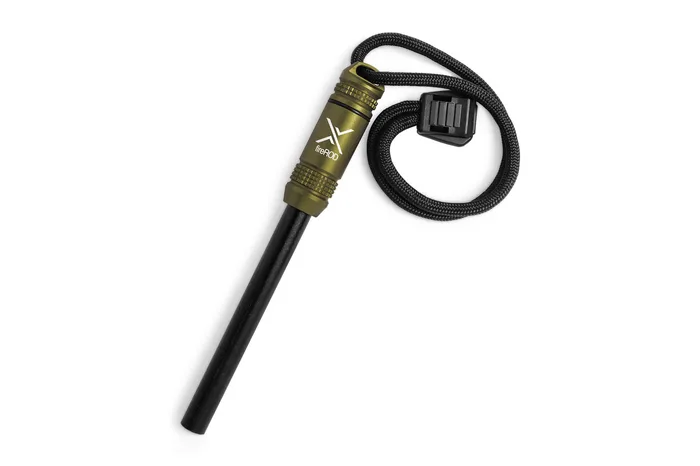
- Buy Exotac fireROD V2 A 1.1 oz ferro rod with a sealed tinder capsule in the handle and a rod you can replace when it wears out.
- Buy Light My Fire Swedish FireSteel Army 2in1 The best-value ferro rod here, rated for 12,000 strikes, with an emergency whistle moulded into the handle.
- It depends Überleben Zünden Fire Starter The thickest rod and the highest strike rating here, on a handmade hardwood handle, at more than twice the weight of the fireROD.
- Skip SOL Fire Lite Fuel-Free Lighter A handy USB-rechargeable plasma lighter that publishes nothing about the battery it depends on.
What actually matters
- Ignition type - ferro rods shave off burning metal that ignites tinder; plasma lighters create an electric arc. Rods are more reliable, lighters are easier.
- Rated strikes - the maker's estimate of rod life. It varies with rod thickness and technique, but it lets you compare rods fairly.
- Rod diameter - thicker rods throw larger spark showers and last longer. They also weigh more, which matters for carry.
- Weight and length - a pocket or sheath tool wants to be light; a camp tool can be heavy. Makers who publish both help you choose.
- Striker - a hardened scraper with a sharp, square edge makes a rod far more effective. Some rods are designed around a knife spine instead.
- Tinder storage - a sealed compartment keeps tinder dry, which is the real limit on getting a fire going in wet conditions.
- Battery disclosure - for plasma lighters, uses per charge and battery capacity are the numbers that matter, and many brands omit them.
The specs, in plain English
Green flags vs red flags
Green flags
- Weight, length and rod diameter all published.
- A stated strike rating for the rod.
- A replaceable rod or refill kit sold separately.
- A dedicated striker included, or a clear note that a knife spine is intended.
- Somewhere to keep tinder dry.
Red flags
- A battery lighter with no uses per charge or battery capacity published.
- Absolute claims such as works in all conditions with no rating behind them.
- No weight or dimensions at all.
- A striker that is thin, rounded or painted.
- Kits that bundle many gimmicks and publish no rod size.
Who's who: the brands
- Exotac - Makes machined aluminium fire and survival tools in Atlanta, known for replaceable rods and sealed tinder storage.
- Light My Fire - Swedish outdoor brand behind the Swedish FireSteel, a long-running and widely stocked ferro rod line.
- Überleben - Idaho-based bushcraft brand known for thick ferro rods on hardwood handles.
- SOL - Survive Outdoors Longer, best known for emergency blankets and bivvies, with a range of fire and survival kits.
How to read a listing without getting fooled
Start with the ignition type, because a ferro rod and a battery lighter are different tools. For a rod, look for the diameter, the rated strikes, the weight and whether the rod can be replaced. Check what is in the box: a proper striker, a lanyard to keep it attached, and ideally some way of carrying dry tinder. Ignore spark temperature claims, which are similar across ferrocerium rods. For a plasma lighter, find the battery capacity and uses per charge before anything else, and if they are missing, treat it as a convenience item rather than an emergency tool.
How much should you spend?
Budget ferro rods are genuinely usable, and the main compromises are thinner rods, cheaper strikers and no published figures. The mid-range is where the good tools sit: machined or hardwood handles, replaceable rods, integrated tinder storage and proper specification tables. There is little reason to pay premium prices in this category, since the spark comes from the same alloy either way. Plasma lighters cost as much as a good rod or more, and their value depends on battery life that many makers do not disclose.
Questions, answered
How long does a ferro rod last?
Usually thousands of strikes, which for most people is many years of use. Rated figures in this comparison run from 10,000 to 15,000 strikes. Thicker rods last longer, and a good striker used at a steep angle wastes less material. Store the rod dry, because ferrocerium can corrode slightly, though it still sparks after the surface is scraped clean.
Is flint and steel the same as a ferro rod?
No. Traditional flint and steel strikes a piece of high-carbon steel against a hard stone to produce small sparks, which then need char cloth to catch. A ferro rod produces far hotter and more plentiful sparks and will light ordinary tinder. Many modern products are marketed as flint when they are actually ferrocerium.
Can I take a ferro rod on a plane?
Ferro rods are generally treated differently from lighters, but rules vary by airline and country and change over time. Check the current guidance from your airline and the relevant aviation authority before travelling. Battery lighters are subject to lithium battery rules and often have their own restrictions.
What tinder should I carry?
Something that catches a spark easily and stays dry. Cotton wool balls rubbed with petroleum jelly are cheap and very effective, and commercial tinder tabs are compact and reliable. Birch bark works well if you can find it. Keep tinder in a waterproof container, or in the handle capsule if your rod has one.
Or jump to the head-to-head: Exotac fireROD V2 vs Light My Fire Swedish FireSteel Army 2in1.