Explained
Dutch Ovens, Explained
After reading this, you will know exactly which Dutch oven specs matter for the way you cook and how to judge one without being fooled by marketing.
In this guide
A Dutch oven is a heavy, lidded pot built to hold steady, even heat for long braises, soups, stews, and no-knead bread. Almost every model is enameled cast iron, so on paper they look identical, and that is where shoppers get tripped up: the meaningful differences hide in the lid seal, the enamel quality, the interior color, and the weight, not in raw cooking power. This guide translates those details so you can match a pot to your kitchen instead of paying for a badge.
The 30-second version
- Cooking performance is close across the board. so raw heat is rarely the reason to spend more; enamel durability, lid seal, handling, and warranty are what separate the pots.
- Size drives everything. a 5.5 to 6 quart round is the versatile sweet spot for most households, handling braises, soups, chili, and a standard loaf of bread.
- Interior color is a real cooking choice. light interiors let you read browning and fond but stain, while dark matte interiors hide stains and resist scratches but make browning harder to judge.
- The lid seal decides moisture retention. a tight, heavy lid keeps liquid in over long cooks, and premium pots seal noticeably better than budget ones.
- Enamel is the usual failure point. cheaper coatings chip at the rim and edges, so a smooth, even finish plus a warranty that covers chipping matters more than the color you pick.
The products this guide is about
Our verdict on each, with the full reasoning on the companion review.
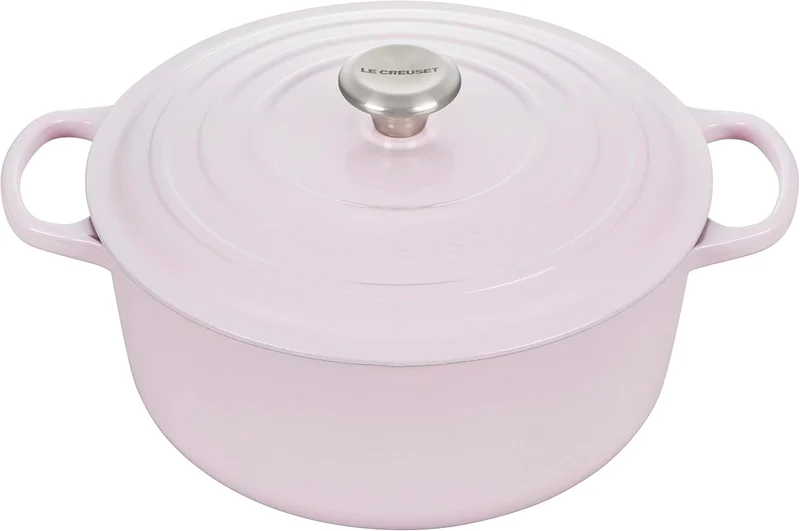
- Buy Le Creuset Signature 5.5-Qt Round Dutch Oven The all-rounder that does everything well and holds its value for decades. Amazon
- Buy Staub 5.5-Qt Round Cocotte The braising specialist: heaviest walls, best heat retention, and a self-basting lid. Amazon
- It depends Lodge 6-Quart Enameled Cast Iron Dutch Oven Roughly the same cooking for a fraction of the price, if you can live with the trade-offs. Amazon
- Skip Cuisinart Chef's Classic Enameled Cast Iron 5-Qt Round Dutch Oven Attractive and cheap, but the enamel is the weak link. Amazon
What actually matters
- Capacity because a pot too small for your household forces batch cooking, while an oversized one is heavier and slower to heat; 5.5 to 6 qt suits two to six people.
- Lid fit and weight because a tight, heavy lid traps moisture over long braises, and a loose lid lets steam and flavor escape.
- Enamel quality because a smooth, even coating resists chipping and staining, and this is where budget pots most often fall short.
- Interior color because light interiors help you watch browning and deglazing while dark matte interiors stay looking new and clean up easily.
- Empty weight and handle design because a full 5-6 qt pot is genuinely heavy, so large, grippable handles matter more than they look.
- Warranty and support because enamel can fail years in, and a brand that honors a lifetime or chip-covering warranty protects a big purchase.
- Cooktop and oven compatibility because all cast iron works on induction and in the oven, but the lid knob may carry a lower heat rating than the pot.
The specs, in plain English
Green flags vs red flags
Green flags
- A smooth, even enamel finish with no rough patches, pinholes, or thin spots along the rim
- A heavy lid that sits flat and snug, with a self-basting design if you braise often
- A warranty that explicitly addresses chipping or offers lifetime coverage from a brand known to honor it
- Large, wide handles that you can grip with oven mitts on when the pot is full
- An interior color chosen deliberately for how you cook, light for visibility or dark matte for low maintenance
Red flags
- Enamel that looks uneven, rough in spots, or shows chips straight out of the box
- A lid that rocks or seals loosely, since it will lose moisture over long cooks
- Small or stubby handles that are hard to grip with mitts on a heavy full pot
- A vague or limited warranty from a brand with a pattern of chipping complaints
- A size chosen on price alone rather than your household, leaving you with a pot that is too small or needlessly heavy
Who's who: the brands
- Le Creuset - The French benchmark; light readable interiors, comparatively lighter bodies, durable enamel, and well-regarded lifetime warranty support, at flagship prices.
- Staub - The French braising specialist; thick walls, spiked self-basting lids, and stain-hiding matte black interiors, heavier and performance-focused.
- Lodge - The value standard-bearer; cooking results remarkably close to premium pots for far less, and one of the few to warranty enamel against chips.
- Cuisinart - A budget option in bold colors, but with a reputation for enamel that chips too easily to trust for the long haul.
How to read a listing without getting fooled
Start with the numbers you can trust: capacity in quarts and shape (round for everyday, oval for roasts). Then look past the color swatches to the details that decide longevity. Check whether the interior is light or dark matte and decide which suits your cooking, not just your eye. Read the lid description for words like self-basting or tight-sealing, and note the empty weight, since a pound or two changes how a full pot feels. Treat glowing adjectives like premium or professional as marketing until the listing backs them with a real warranty, especially one that names chipping. Finally, confirm the oven-safe temperature and check the knob rating separately, because the lid knob is often the limiting part. If a listing hides weight, warranty terms, or interior color, that omission is itself a signal.
How much should you spend?
Spend based on how often you cook, not on the badge. Independent testing consistently shows that a well-made budget pot cooks remarkably close to the flagship names, so you are not buying better braises at the top of the range. What the extra money actually buys is enamel that resists chipping for years, a tighter lid, a lighter or more scratch-resistant body, refined handles, and warranty support that shows up when something fails. If you cook often and want one pot for a lifetime, the premium tier earns its keep; if you cook occasionally, a value pot is the sensible call, provided its enamel holds up and it carries a real warranty. The one place to never economize is enamel quality, because the cheapest pots that chip out of the box cost you the whole pot. Aim for the value sweet spot: the least expensive pot that still has smooth enamel, a snug lid, and warranty backing.
Questions, answered
What size Dutch oven should I buy?
A 5.5 to 6 quart round is the most versatile size for two to six people, handling braises, soups, chili, and a standard boule of bread. A 3 to 4 qt pot suits one or two people, while 7 qt and up is better for large batches and big roasts but is heavier and slower to heat.
Is an expensive Dutch oven really worth it over a budget one?
For pure cooking results, not much; independent testing shows a good budget pot cooks remarkably close to the premium brands. The premium price buys enamel durability, a tighter lid, a lighter or more scratch-resistant body, refined handles, and decades-long warranty support. Cook often and want one pot for life, and the premium models justify their cost; cook occasionally, and a value model is sensible.
Light interior or dark matte interior, which is better?
Light interiors make it easy to see browning, fond, and sauce color, which helps technique, but they stain over time and need occasional baking-soda cleaning. Dark matte interiors hide stains, resist scratches, and give a more nonstick-like surface, but make it harder to judge browning. Choose based on whether visibility or low maintenance matters more to you.
Why does the enamel chip, and how do I prevent it?
Chips usually come from impact, such as dropping the lid onto the rim or banging metal tools against the edge, and cheaper enamel chips more readily. To prevent it, lower the lid gently, use wood or silicone tools, avoid stacking pots without padding, and never subject the pot to sudden temperature shocks. If bare cast iron is exposed, dry it thoroughly to prevent rust.
Can I use a Dutch oven on an induction cooktop and in the oven?
Yes. Because these pots are cast iron, they work on induction as well as gas, electric, and ceramic cooktops, and all are oven-safe. Check the maker's stated maximum oven temperature for the lid knob, since some standard knobs are rated lower than the pot itself and can be swapped for a metal knob for high-heat baking.
What can I actually cook in a Dutch oven?
It is one of the most versatile pots you can own: braises and pot roasts, soups and stews, chili, beans, deep-frying, and especially no-knead and artisan bread, where the sealed lid traps steam for a crisp crust. Its steady, even heat makes it ideal for anything that cooks low and slow.
Or jump to the head-to-head: Le Creuset Signature 5.5-Qt Round Dutch Oven vs Staub 5.5-Qt Round Cocotte.