Explained
Electric Griddles, Explained
After reading this you will know which griddle specs matter, which are marketing noise, and how to match a model to your kitchen.
In this guide
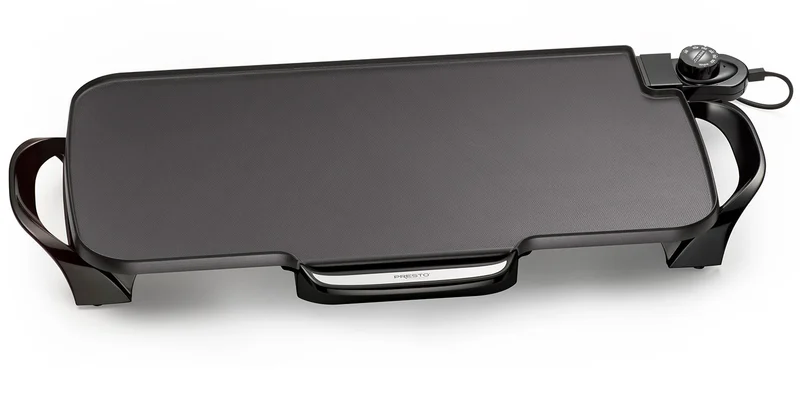
A countertop electric griddle is a big flat cooking surface with its own heating element and temperature dial, so you can cook pancakes, bacon, grilled cheese and burgers without fighting your stovetop's hot spots. What trips up first-time buyers is that the marketing shouts about surface size and wattage, while the things that decide whether you enjoy the griddle for years, heat evenness, coating quality and how it stores, are harder to see on the box. This guide decodes all of it.
The 30-second version
- Heat evenness is the real quality gap. A griddle that browns evenly corner to corner is worth far more than one with a bigger number on the dial.
- Buy for your household size, not the biggest surface. Two people rarely need more than a compact-to-medium plate, while families and batch cooks benefit from twenty inches or more of length.
- Both ceramic and traditional nonstick work. Ceramic coatings are marketed as PFAS-free and feel slick when new; traditional PTFE is proven and cheap, and both last longer with gentle care.
- Storage is a design feature, not an afterthought. Removable or folding handles decide whether a large griddle lives in a cabinet or permanently on your counter.
- An immersible base makes cleanup painless. If the temperature probe unplugs, you can wash the whole unit in the sink instead of scrubbing around live wiring.
The products this guide is about
Our verdict on each, with the full reasoning on the companion review.
- Buy Zojirushi EA-DCC10 Gourmet Sizzler Electric Griddle The most even, most consistent griddle here - you pay for it, but the results show up on every batch. Amazon
- Buy Presto 07062 22-inch Ceramic Electric Griddle with Removable Handles The value pick: a huge PFAS-free ceramic surface that still tucks into a cabinet. Amazon
- It depends Presto 07047 Cool Touch Electric Griddle A dependable, cheaper classic - but you trade down on surface, coating and storage. Amazon
- Skip BLACK+DECKER GD2011B Family-Sized Electric Griddle Roomy and cheap, but owner reports on heat evenness and the drip tray hold it back.
What actually matters
- Heat evenness is the single biggest difference between a good and a mediocre griddle; uneven plates scorch food in the middle and leave the edges pale, so look for consistent browning across the whole surface.
- Usable cooking area determines how much you can cook at once; measure the flat, heated surface rather than the outer dimensions, since bezels and edges eat into the number.
- Nonstick type and durability decide how easily food releases and how long the surface lasts; ceramic and PTFE both perform well new, but coatings live or die by how gently you treat them.
- Immersible base matters for cleanup; a removable temperature control lets you submerge the unit, which is far easier than wiping around fixed electronics.
- Storage design is easy to overlook until the griddle owns your counter; removable or folding handles let a large surface fit into a standard cabinet.
- Temperature control and range affect versatility; an accurate dial that reaches a genuine searing setting lets you move from warming to smash burgers on one appliance.
- Handling and safety features such as cool-touch handles, stable feet and a secure drip tray make the griddle safer to move, serve from and clean.
The specs, in plain English
Green flags vs red flags
Green flags
- Independent testing and owner reports agree the heat is even and the dial is accurate
- The temperature control detaches so the base is fully immersible
- Handles are removable or fold flat so the unit fits in a cabinet
- The drip tray fits snugly and slides out cleanly
- Usable cooking area, not just outer size, is clearly stated
- The brand has a long track record and easy-to-find replacement parts
Red flags
- Repeated owner complaints about hot and cold zones across the plate
- A drip tray that owners say fits loosely, falls out or cracks
- Marketing leans on wattage or outer dimensions while staying vague about heat evenness
- Fixed handles on a large griddle with no compact storage option
- The coating shows early wear or peeling in owner photos
- No detachable control, meaning you cannot safely immerse it for cleaning
Who's who: the brands
- Zojirushi - Japanese maker known for premium, exceptionally even griddles and long-lasting titanium- and ceramic-enhanced coatings.
- Presto - Long-established value brand offering large surfaces, removable handles and both ceramic and traditional nonstick options at accessible prices.
- BLACK+DECKER - Widely available budget brand with roomy family-sized griddles, though owner sentiment on some models is mixed.
- Cuisinart - Kitchen-appliance mainstay offering griddles and griddle-grill combos with a focus on versatility.
- Hamilton Beach - Affordable, no-frills griddles aimed at everyday breakfast cooking and casual use.
How to read a listing without getting fooled
Start by finding the usable cooking area rather than the headline size; a listing that quotes only outer dimensions is hiding a smaller cooking surface behind wide edges. Treat wattage as a rough capability figure, not a quality score, because it says nothing about how evenly that power spreads across the plate. The claims worth trusting are the ones you can cross-check in owner reports and independent testing, especially heat evenness and coating durability, so read the critical reviews, not just the glowing ones. Confirm the temperature control detaches for immersible cleaning, check whether the handles come off or fold for storage, and look specifically for comments about the drip tray fitting well. If the marketing is loud about surface size but quiet about even heating, assume evenness is the weak point.
How much should you spend?
Spend based on how often you actually cook griddle food. Entry-level griddles from trusted brands cook breakfast perfectly well and are the sensible choice for occasional users, though you trade down on coating type, heat evenness and compact storage. The mid-range is the value sweet spot for most households: it is where you find the largest surfaces, PFAS-free ceramic coatings and removable handles without a big jump in cost. Stepping up to a premium model buys markedly more even heat and a more durable coating, and it is genuinely worth it if you cook large batches often and care about uniform browning. It is harder to justify if the griddle only comes out on weekends. Beware the cheapest options where owners flag uneven heat or a flimsy drip tray, since a low price stops being a bargain once the appliance frustrates you.
Questions, answered
Ceramic or traditional nonstick, which should I choose?
Both release food well when new. Ceramic coatings are marketed as PFAS-free and feel slicker out of the box, while traditional PTFE nonstick is proven and inexpensive. Whichever you pick, low-to-medium heat, soft utensils and hand washing are what make the coating last.
How big a griddle do I actually need?
For two people, a compact-to-medium surface of roughly 160 to 200 square inches is plenty. For a family or batch cooking, look for twenty inches or more of length. Remember the unit needs that much clear counter space while it runs, so measure your kitchen before buying the biggest model.
Are electric griddles easy to clean?
The good ones are. Most are designed so that once you unplug the removable temperature control, you can immerse the whole base in water, which is far easier than cleaning a built-in cooktop. A snug drip tray catches grease and keeps the job tidy.
Why do some griddles cost several times more than others?
You are mostly paying for heat evenness and coating quality. Premium models hold a consistent temperature edge to edge and use more durable surfaces, so results are more uniform batch after batch. Whether that is worth the premium depends on how often you cook and how much even browning matters to you.
Can I cook more than pancakes on one?
Yes. A flat electric griddle handles eggs, bacon, hash browns, French toast, grilled cheese, quesadillas, smash burgers and stir-fried vegetables. Higher settings give a real sear and lower ones keep food warm, and the large, even surface is what makes cooking several items at once practical.
Is more wattage always better?
No. Wattage indicates how much heat the griddle can produce, but not how evenly that heat spreads across the plate. A lower-wattage griddle with excellent heat distribution will cook more uniformly than a high-wattage one with hot and cold zones, so prioritize evenness over the raw number.
Or jump to the head-to-head: Presto 07062 22-inch Ceramic Electric Griddle with Removable Handles vs Zojirushi EA-DCC10 Gourmet Sizzler Electric Griddle.