Explained
Electric Pepper Grinders, Explained
After reading, you'll understand how to compare electric pepper grinders on mechanism, power and the specs that matter.
In this guide
Electric pepper grinders look similar on a shelf, but the useful differences are inside: the grinding mechanism, how the grind adjusts, how the mill is powered and how long it lasts. Many listings emphasise lights and finishes and bury the details that decide whether you will be happy with the mill after a month.
The 30-second version
- Ceramic handles salt, because it does not corrode the way steel can.
- Runtime matters more than battery size, and few brands publish it.
- Grind adjustment is essential, since fine and coarse suit different dishes.
- Pod systems replace a spice rack, while pairs focus on salt and pepper.
- Spec sheets should agree, and a mismatch on power or materials is a warning.
The products this guide is about
Our verdict on each, with the full reasoning on the companion review.
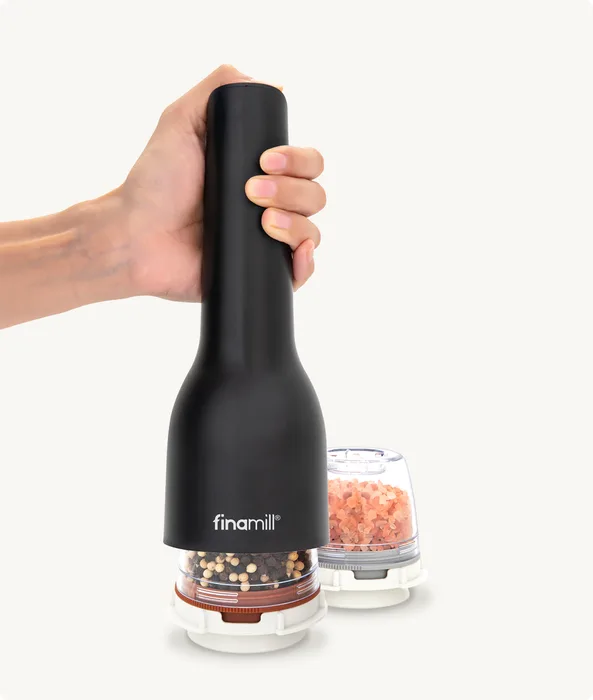
- Buy FinaMill Classic Rechargeable A one-button electric mill with swappable spice pods and months of use per charge.
- Buy Latent Epicure USB-C Rechargeable Salt & Pepper Grinder Set A matched stainless salt and pepper pair with the most complete specification sheet here.
- It depends Peugeot Elis Sense u'Select Electric Salt and Pepper Mills, 20 cm Touch-activated premium mills from the classic maker, with six grind settings and a very high price.
- Skip Cole & Mason Battersea USB Electric Salt & Pepper Mill A handsome rechargeable mill whose own spec sheet contradicts its headline feature.
What actually matters
- Mechanism - ceramic, steel or a brand's own design. Ceramic resists corrosion and works for salt and pepper.
- Grind adjustment - a knob or numbered settings let you move between fine and coarse.
- Power - USB-C rechargeable is now common. Some mills still use disposable AAA batteries.
- Runtime - how long a charge lasts in practice. It varies from minutes of continuous use to months of normal cooking.
- Capacity - larger chambers mean fewer refills. Clear chambers help you see when to refill.
- Operation - one-touch buttons, touch sensors and gravity switches differ in how easy they are one-handed.
- Warranty - electric mills have motors and batteries that can fail, so the warranty term matters.
The specs, in plain English
Green flags vs red flags
Green flags
- Mechanism type stated clearly.
- Runtime or uses per charge published.
- Dimensions and capacity published.
- Grind adjustment described.
- A warranty term on the product page.
Red flags
- Power details that contradict each other on the same page.
- No mention of how the mill is powered.
- Materials listed differently in different sections.
- No warranty information.
- Only finishes and lights described, with no mechanism details.
Who's who: the brands
- FinaMill - Known for the pod-based electric spice mill that lets one body grind many spices.
- Latent Epicure - Makes electric salt and pepper sets with fully published specifications.
- Peugeot - The historic French mill maker, known for its grinding mechanisms and premium mills.
- Cole & Mason - British kitchen brand with a wide range of manual and electric salt and pepper mills.
How to read a listing without getting fooled
Start with the mechanism and check it suits what you will grind. Then find the power source and runtime, and make sure the description and the specification block agree. Check the grind adjustment, the capacity and the dimensions. Finally look for a warranty term. If any of those are missing or contradictory, compare with a mill that publishes them.
How much should you spend?
Budget electric mills often use disposable batteries and basic mechanisms, and they are fine for occasional use. The mid-range is where rechargeable ceramic mills with good adjustment and warranties sit, and it suits most kitchens. Premium mills buy brand heritage, heavier construction and features like touch activation, and they cost several times more. Price does not guarantee clear specifications, so read the page whichever tier you buy.
Questions, answered
Why does my electric grinder leave pepper dust on the counter?
Most mills drop a little residue after grinding. A rest tray or base catches it, and some mills are designed to stand upside down so the mechanism is at the top. If it bothers you, look for a mill that ships with a stand.
Can I put pre-ground pepper in an electric grinder?
No. Grinders need whole peppercorns or coarse salt crystals. Pre-ground spices will clog the mechanism and will not dispense properly.
Can I wash an electric grinder?
Generally not in water, because of the motor and battery. Empty it, brush out the mechanism and wipe the outside. Some removable chambers or pods can be washed separately if the maker says so.
Why does my grinder slow down?
Usually a low battery or a clogged mechanism. Charge it fully, empty it and brush the burrs. Very oily or damp spices can also slow the mechanism.
Or jump to the head-to-head: FinaMill Classic Rechargeable vs Latent Epicure USB-C Rechargeable Salt & Pepper Grinder Set.