Explained
Electric Fireplaces, Explained
After reading, you'll know which format fits your room, how to spot a convincing flame, and why every plug-in unit is a supplemental heater, not a furnace.
In this guide
Electric fireplaces look simple in a listing, but they cover three very different products doing three different jobs: a firebox you build into a wall, a wide ribbon of flame you hang like a TV, and a freestanding stove you just plug in. The biggest trap for first-time buyers is judging by the spec sheet instead of the flame, and expecting furnace-level heat from a device that maxes out around a space heater's output. This guide decodes the terms so you can match the right format to your room and your expectations.
The 30-second version
- Format decides everything. A built-in insert, a wall-mounted linear unit, and a freestanding stove look and install completely differently, so pick the format before you compare brands.
- Buy for the flame, not the numbers. Flame realism is the whole reason to own a fireplace you don't need for heat, and it barely shows up on a spec sheet, so study close-up demo footage.
- Treat heat as a bonus. Plug-in units are generally limited to about 1,500 watts (roughly 5,000 BTU), enough to take the chill off one room, not to replace central heat.
- Cheap flames age badly. Ultra-budget units can look artificial up close and some owner reports flag LED or heater failures, so build quality is worth paying for.
- Smart control is a real differentiator. WiFi with an app plus voice control is common on mid-tier linear units and genuinely handy, while many pricier fireboxes still ship with only a remote.
The products this guide is about
Our verdict on each, with the full reasoning on the companion review.
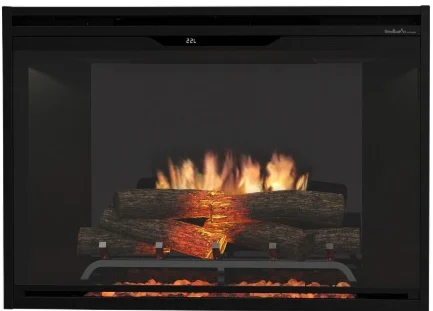
- Buy Dimplex Revillusion Built-in Electric Firebox The most convincing electric flame you can buy, if you can build it in. Amazon
- Buy Touchstone Sideline Elite Smart 60" Recessed Electric Fireplace A wide, near-frameless linear fireplace with real smart control at a fair price. Amazon
- It depends Real Flame Hollis Electric Fireplace A charming freestanding stove-mantel that charges a premium for its looks. Amazon
- Skip R.W.FLAME 60" Recessed & Wall-Mounted Electric Fireplace Cheap ambient color light, but the realism and longevity aren't there. Amazon
What actually matters
- Flame realism - the single most important criterion; mirror-free, front-lit log effects read as fire, while flat LED strips read as a screen saver.
- Format and installation - a built-in insert needs a framed cavity or mantel, a linear/wall-mount unit recesses or surface-hangs, and a freestanding stove just plugs in; each demands a very different amount of work.
- Heat output - measured in BTU or watts, but all of these are supplemental, so what matters is the room size they can take the chill off, not whether they can heat a house.
- Controls - decide whether a remote is enough or you want WiFi, app, and voice; smart control is worth having and uneven across price tiers.
- Build quality and longevity - heavier, name-brand units with real warranties tend to outlast thin metal-and-plastic bargains; scan owner reports for LED and heater failures.
- Fit and clearances - recess depth, wall opening size, and required clearances decide whether a unit physically works in your space, so measure before you buy.
The specs, in plain English
Green flags vs red flags
Green flags
- A mirror-free, front-lit flame with a randomized ember bed that still looks convincing in close-up footage
- A format that matches your space - a cavity for an insert, a flat wall for a linear unit, or open floor for a stove
- Genuine smart control (WiFi app plus Alexa/Google) if you want more than a remote
- A heavy, name-brand build with a clear warranty and consistent owner reports on longevity
- Clear heat framing that positions the unit as supplemental for one room, not a furnace replacement
Red flags
- A flame that looks flat, repetitive, or cartoonish in close-up demos
- Marketing that implies it can heat a whole house or replace central heating
- Thin metal-and-plastic construction paired with clusters of owner reports about LEDs or the heater failing
- Vague or missing warranty and inconsistent support follow-through
- A price premium justified mostly by cosmetic extras (like a decorative chimney) rather than flame or build quality
- No recess-depth or clearance specs listed, making fit a gamble
Who's who: the brands
- Dimplex - Long-established name known for the most realistic flame effects, especially its built-in fireboxes.
- Touchstone - Popular for wide, near-frameless linear units that pair a modern look with genuine WiFi and voice control.
- Real Flame - Focuses on freestanding, furniture-style stoves and mantels for traditional rooms, styling over raw flame size.
- R.W.FLAME - A budget wall-mount brand offering big sizes and lots of color options, with realism and durability trade-offs.
How to read a listing without getting fooled
Start by identifying the format, because a listing that buries whether a unit is an insert, a wall-mount, or a freestanding stove is hiding how much installation work you're signing up for. Then ignore the flashy BTU number: most plug-in units land near 5,000 BTU, so treat heat as roughly equal across the field and focus your attention on the flame instead. Look for phrases like 'mirror-free,' 'front-lit log set,' or '3D flame' and, more importantly, watch close-up video - a flat, looping LED strip gives itself away in seconds. Check whether 'smart' means a true app with voice control or just a handheld remote, since brands use the word loosely. Finally, confirm the boring specs that determine whether it fits at all: recess depth, opening dimensions, and clearances. If those are missing, be cautious.
How much should you spend?
Spend based on how the flame will actually live in your room. The value sweet spot for most people is a mid-tier linear unit: it buys a convincing wide flame, real smart control, and a warranty without the cost or construction of a built-in firebox. Paying up to the top tier makes sense only when flame realism is the whole point and you're building the unit into a wall or mantel - that's where the premium fireboxes earn their keep. Be wary at the bottom of the market, where a rock-bottom price usually buys a flame that looks artificial up close and parts that owners report failing early; the small step up from bargain to solid mid-range typically pays for itself in flame quality, controls, and support. And don't overpay for looks alone - a decorative chimney or premium furniture styling can command a high price for a small firebox, which is fine if you love the aesthetic but poor value if you want the most flame for your money.
Questions, answered
Can an electric fireplace actually heat a room?
Treat every one of these as a supplemental heater. Most draw up to 1,500 watts (roughly 5,000 BTU), enough to take the chill off a single room, not to replace a furnace. Infrared units tend to warm people and objects a bit more directly, while linear units mostly warm the nearby air.
What's the difference between an insert, a wall-mount, and a freestanding model?
A built-in insert or firebox is designed to sit inside a framed cavity or mantel for a seamless look and usually has the most realistic flame. A recessed or wall-mount linear unit hangs on or into a wall like a wide screen and is the easiest retrofit. A freestanding stove or mantel is a finished piece of furniture you simply plug in and place, with no construction at all.
Why do some electric fireplace flames look so fake?
It usually comes down to the flame technology. Cheaper units use a flat LED strip that loops obviously and looks artificial up close, while better units use a mirror-free 3D projection with a randomized ember bed and a front-lit log set that reads much more like real fire. The best way to judge is to watch close-up demo video rather than trust the product photos.
Do I need an electrician to install one?
Usually not. Most plug into a standard outlet, and wall-mount linear units are designed for DIY recessing or hanging. A built-in firebox still plugs in, but you or a contractor have to build the framed enclosure or mantel around it. Some larger units offer an optional hardwire connection, which is the situation where an electrician helps.
Is a very cheap electric fireplace worth it?
Only if your goal is inexpensive ambient colored light and you're not particular about realism or long-term durability. Budget units often look artificial up close, and some owner reports flag LEDs or the heater failing, with inconsistent support. For a little more money, a solid mid-tier unit typically gets you a better flame, smart control, and stronger warranty backing.
Or jump to the head-to-head: Dimplex Revillusion Built-in Electric Firebox vs Touchstone Sideline Elite Smart 60" Recessed Electric Fireplace.