

Home & Kitchen
The Best Enameled Cast-Iron Dutch Ovens: 4 Compared (and One to Skip)
We compared four current 5-6 qt round enameled cast-iron Dutch ovens on heat retention, enamel durability, everyday usability, and value.
The short version
We compared four current 5-6 qt round enameled cast-iron Dutch ovens. Le Creuset is the best all-rounder thanks to its light, easy-to-read interior, comparatively lighter body, and durable enamel, which is why it is our top pick. Staub wins on pure performance with the thickest walls and a self-basting lid, at the cost of extra weight and a dark interior. Lodge delivers nearly the same cooking for far less money but carries real trade-offs, including a looser lid seal and reports of rim chipping. The Cuisinart is inexpensive but its enamel chips too easily to recommend. Best for: most home cooks are best served by the Le Creuset, while dedicated braisers should choose the Staub and value hunters should consider the Lodge.
Our picks at a glance
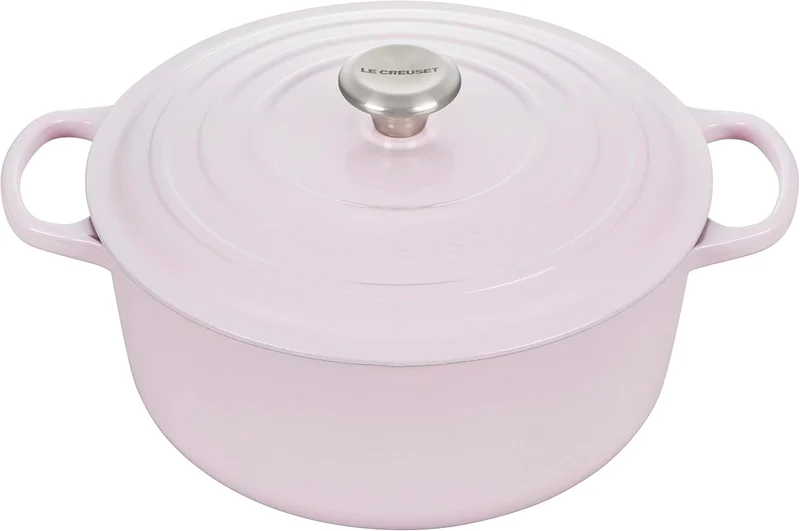
- Le Creuset Signature 5.5-Qt Round Dutch Oven - Buy. The all-rounder that does everything well and holds its value for decades.
- Staub 5.5-Qt Round Cocotte - Buy. The braising specialist: heaviest walls, best heat retention, and a self-basting lid.
- Lodge 6-Quart Enameled Cast Iron Dutch Oven - It depends. Roughly the same cooking for a fraction of the price, if you can live with the trade-offs.
- Cuisinart Chef's Classic Enameled Cast Iron 5-Qt Round Dutch Oven - Skip. Attractive and cheap, but the enamel is the weak link.
The verdict in 30 seconds
What mattered most
- Capacity
- Heat & moisture retention
- Interior enamel
- Enamel durability (owner reports)
- Empty weight / handling
- Warranty
Enameled cast-iron Dutch ovens all look similar, but they diverge on the details that matter over a decade of braises: how tightly the lid seals, how well the enamel resists chipping, and how much you pay for a name. We synthesized independent testing and long-run owner reports across four current 5-6 qt round models. Two are easy buys, one is a superb value with real caveats, and one we would leave on the shelf.
The all-rounder that does everything well and holds its value for decades.
Best for: Anyone who wants one do-everything pot for life and is willing to pay for it.
- Light sand-colored interior enamel makes it easy to judge browning and fond
- Large ergonomic handles and comparatively lighter body make a full pot easier to lift
- Reviewers and owners consistently report smooth, durable enamel and strong warranty support
- The most expensive option by a wide margin
- Light interior stains over time and needs occasional baking-soda cleaning
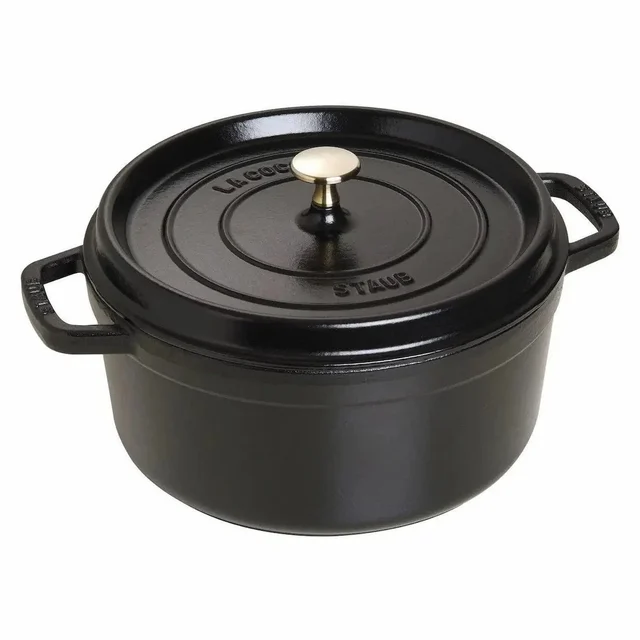
The braising specialist: heaviest walls, best heat retention, and a self-basting lid.
Best for: Serious braisers and bread bakers who prioritize performance over a light interior.
- Thick walls and a tight, spiked self-basting lid give independent testing the best heat and moisture retention in the group
- Matte black interior enamel hides stains and resists scratching, so it looks new for longer
- Made in France with a reputation for standing up to years of hard use
- Heaviest pot here at nearly 13 lb empty, which makes a full pot a two-hand job
- The dark interior makes it harder to monitor browning and deglazing
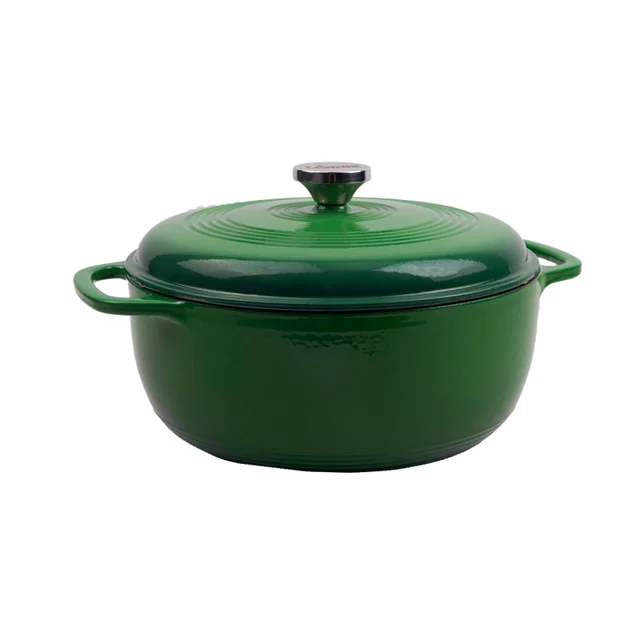
Roughly the same cooking for a fraction of the price, if you can live with the trade-offs.
Best for: Value-first cooks who want premium results and do not mind some cosmetic wear.
- Independent testing puts its cooking performance remarkably close to pots costing several times more
- One of the few brands whose warranty explicitly covers enamel chips
- Generous 6 qt capacity for stews, chili, and bread
- Lid seals less tightly than premium models, so it loses a bit more moisture over long cooks
- Owners report enamel chipping at the rim and edges, and the light interior stains
- Heaviest empty weight in the group at nearly 14 lb
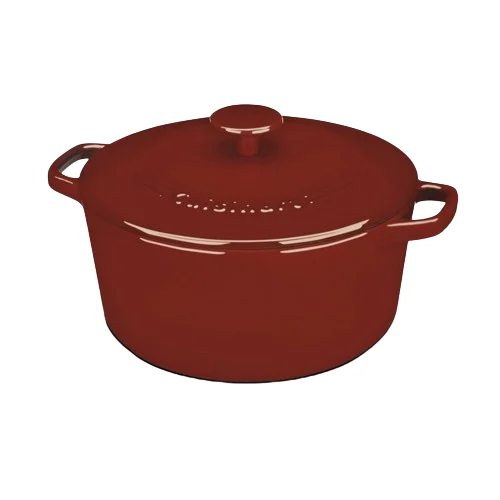
Attractive and cheap, but the enamel is the weak link.
Best for: Occasional cooks on the tightest budget who accept limited longevity.
- Inexpensive and available in bold colors
- Cooks and cleans acceptably when the enamel is intact
- Independent testing and owner reports repeatedly cite enamel that chips easily, sometimes out of the box
- Enamel finish is uneven, smooth in some spots and rough in others
- Chips can expose bare cast iron and lead to rust
| Criteria | Le Creuset Signature 5.5-Qt Round Dutch Oven Top pick | Staub 5.5-Qt Round Cocotte | Lodge 6-Quart Enameled Cast Iron Dutch Oven | Cuisinart Chef's Classic Enameled Cast Iron 5-Qt Round Dutch Oven |
|---|---|---|---|---|
| Verdict | Buy it | Buy it | It depends | Skip it |
| Best for | Anyone who wants one do-everything pot for life and is willing to pay for it. | Serious braisers and bread bakers who prioritize performance over a light interior. | Value-first cooks who want premium results and do not mind some cosmetic wear. | Occasional cooks on the tightest budget who accept limited longevity. |
| Price tier | $$$$ · flagship | $$$ · premium | $ · budget | $ · budget |
| Capacity | 5.5 qt | 5.5 qt | 6 qt | 5 qt |
| Heat & moisture retention | Excellent | Best in group | Very good | Good |
| Interior enamel | Light, easy to read | Matte black, stain-hiding | Light, stains over time | Light, uneven finish |
| Enamel durability (owner reports) | Very strong | Very strong | Good; some rim chips | Weak; chips easily |
| Empty weight / handling | Lightest of the four | Heaviest | Very heavy | Moderate |
| Warranty | Lifetime, well regarded | Lifetime | Lifetime, covers chips | Limited |
| Price tier | $$$$ · flagship | $$$ · premium | $ · budget | $ · budget |
Which one is right for you?
- Anyone who wants one do-everything pot for life and is willing to pay for it. Buy it Le Creuset Signature 5.5-Qt Round Dutch Oven
- Serious braisers and bread bakers who prioritize performance over a light interior. Buy it Staub 5.5-Qt Round Cocotte
- Value-first cooks who want premium results and do not mind some cosmetic wear. It depends Lodge 6-Quart Enameled Cast Iron Dutch Oven
- Occasional cooks on the tightest budget who accept limited longevity. Skip it Cuisinart Chef's Classic Enameled Cast Iron 5-Qt Round Dutch Oven
How we judged the field
We do not run our own laboratory. Instead, we synthesized independent testing and a large body of long-run owner reports to see where these pots actually diverge in daily use. Enameled cast iron is a mature category, so raw cooking performance is close across the board; the meaningful differences show up in durability, handling, and value.
The criteria that mattered most:
- Heat and moisture retention: how evenly the pot holds a low simmer and how much liquid the lid keeps in over a long braise.
- Enamel durability: whether the coating resists chipping at the rim and staining on the interior over years, not weeks.
- Everyday usability: empty weight, handle size, and whether a light or dark interior helps you cook.
- Value and support: price relative to performance, and how each brand’s warranty behaves when enamel fails.
Le Creuset Signature 5.5-Qt Round Dutch Oven
Buy itThe Le Creuset is the pot that does everything without a fuss. Its sand-colored interior makes it easy to watch browning and build fond, which is a genuine cooking advantage over darker pots. It is also the lightest of the four, and its oversized handles make lifting a full pot of stew less of an ordeal. Owner reports over many years point to smooth, durable enamel and a warranty experience that tends to go the customer’s way. The only real knocks are the flagship price and a light interior that stains and needs the occasional baking-soda scrub. If you want one Dutch oven for life and can stomach the cost, this is the safe, satisfying choice.
Staub 5.5-Qt Round Cocotte
Buy itStaub is the specialist that out-braises the field. Its walls are noticeably thicker, and independent testing credits it with the best heat and moisture retention here, helped by a flat, spiked lid that drips condensation back over the food instead of running it to the edges. The matte black interior shrugs off stains and scratches, so it keeps looking new far longer than light-colored pots. The trade-offs are physical: it is the heaviest pot in the group, and that dark interior makes it harder to judge how far your onions have caramelized. For dedicated braisers, bread bakers, and anyone who values performance and low-maintenance looks over a readable interior, it is an easy recommendation.
Lodge 6-Quart Enameled Cast Iron Dutch Oven
It dependsThe Lodge is the value story of the category. Independent testing puts its cooking results remarkably close to pots that cost several times as much, and Lodge is unusual in backing its enamel against chips in writing. For a shopper focused on results per dollar, that is hard to argue with. The reasons it lands at “it depends” are real, though: the lid does not seal as tightly, so it gives up a little more moisture over long cooks; owners report enamel chipping at the rim and edges more often than with the premium brands; and it is the heaviest pot here empty. If you want premium cooking on a budget and are relaxed about cosmetic wear, buy it with confidence. If you expect flawless enamel for a decade, spend more.
Cuisinart Chef’s Classic Enameled Cast Iron 5-Qt Round Dutch Oven
Skip itThe Cuisinart is attractive and cheap, and when the enamel is intact it cooks and cleans acceptably. The problem is that the enamel too often is not intact. Independent testing and a consistent pattern of owner reports describe a coating that chips easily, sometimes straight out of the box, with a finish that is smooth in some areas and rough in others. Once a chip exposes bare cast iron, rust can follow. When a similarly priced Lodge holds up better and is warrantied against chips, there is little reason to accept the Cuisinart’s durability risk.
Le Creuset Signature vs Staub Cocotte: which should you buy?
These are the two strongest pots, and the choice comes down to how you cook. The Staub retains heat and moisture slightly better and hides stains behind its matte black interior, making it the connoisseur’s braising pot. But it is heavier, and its dark interior makes it harder to read browning. The Le Creuset counters with a lighter body, bigger handles, and a pale interior that shows you exactly what is happening in the pot, all of which make it the friendlier everyday choice. Both are made to last a lifetime and both carry strong warranties. Pick the Staub if your cooking centers on long braises and slow bakes; pick the Le Creuset if you want the most versatile, easiest-to-live-with pot for a wide range of everyday cooking. We give the overall nod to the Le Creuset for that versatility.
What to look for
- A tight-fitting lid: the better the seal, the less moisture escapes during long braises.
- Interior color you will actually use: light interiors help you judge browning; dark matte interiors hide stains and resist scratches.
- Enamel quality and warranty: look for smooth, even enamel and a warranty that addresses chipping, the most common failure point.
- Weight and handle design: a full 5-6 qt pot is heavy, so large, grippable handles matter more than they seem.
- Right size for your household: 5.5 to 6 qt round is the versatile sweet spot for most homes.
- Oven and cooktop compatibility: all cast iron works on induction and in the oven, but confirm the knob’s maximum temperature rating.
Our final take
For most people, the Le Creuset Signature is the pot to buy: versatile, comparatively light, easy to cook in, and built to last. If you braise and bake constantly and want the best heat retention, the Staub Cocotte is the more capable tool and worth the extra weight. Budget-focused cooks should look hard at the Lodge, which delivers most of the performance for a fraction of the price so long as you accept its trade-offs. The Cuisinart is the one to skip; its enamel simply does not hold up well enough to trust, especially when better-value alternatives exist at a similar price.
Questions, answered
Is an expensive Le Creuset or Staub really worth it over a budget model?
For pure cooking results, no; independent testing shows a budget pot like the Lodge cooks remarkably close to the premium brands. What you pay extra for is enamel durability, tighter lids, a lighter or more scratch-resistant body, refined handles, and decades-long warranty support. If you cook often and want one pot for life, the premium models justify their cost; if you cook occasionally, a value model is sensible.
What size Dutch oven should I buy for a household?
A 5.5 to 6 qt round is the most versatile size for two to six people, handling braises, soups, chili, and a standard boule of bread. Smaller 3 to 4 qt pots suit one or two people, while 7 qt and up are better for large batches and big roasts but are heavier and slower to heat.
Why does the enamel chip, and how do I prevent it?
Chips usually come from impact, such as dropping the lid onto the rim or banging metal tools against the edge, and cheaper enamel chips more readily. To prevent it, lower the lid gently, use wood or silicone tools, avoid stacking pots without padding, and never subject the pot to sudden temperature shocks. If bare cast iron is exposed, dry it thoroughly to prevent rust.
Light interior or dark matte interior, which is better?
Light interiors, like Le Creuset's, make it easy to see browning, fond, and sauce color, which helps with technique, but they stain over time. Dark matte interiors, like Staub's, hide stains and resist scratches and give a naturally more nonstick surface, but make it harder to judge browning. Choose based on whether visibility or low-maintenance looks matters more to you.
Can I use these on an induction cooktop and in the oven?
Yes. All four are cast iron, so they work on induction as well as gas, electric, and ceramic cooktops, and all are oven-safe. Check each maker's stated maximum oven temperature for the knob, since some standard knobs are rated lower than the pot itself and can be swapped for a metal knob for high-heat use.
Deciding between the top two? See our head-to-head: Le Creuset Signature 5.5-Qt Round Dutch Oven vs Staub 5.5-Qt Round Cocotte.
More Home & Kitchen reviews
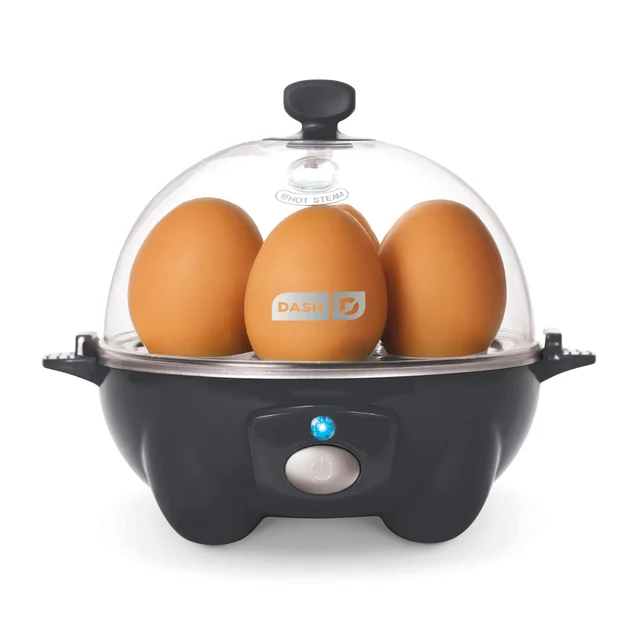 The Best Electric Egg Cookers: 4 Compared (and One to Skip)
 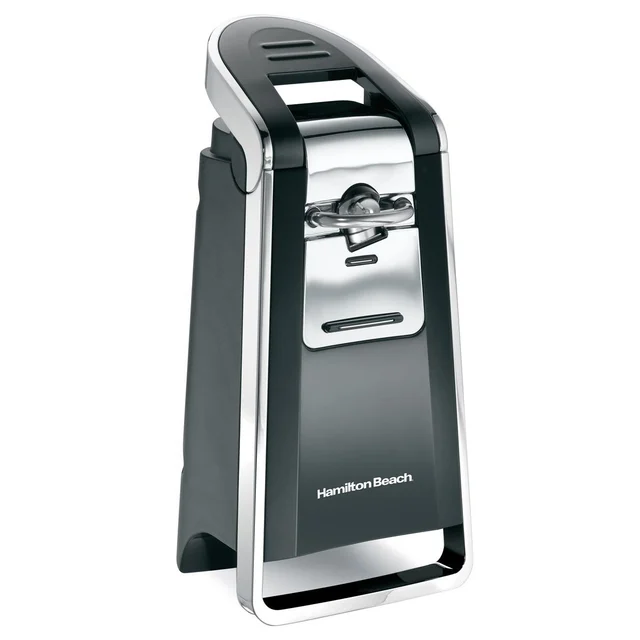 The Best Electric Can Openers: 4 Compared (and One to Skip)
 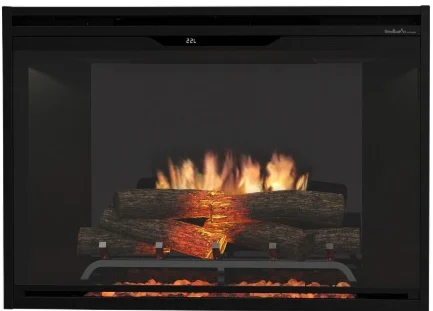 The Best Electric Fireplaces: 4 Compared (and One to Skip)
 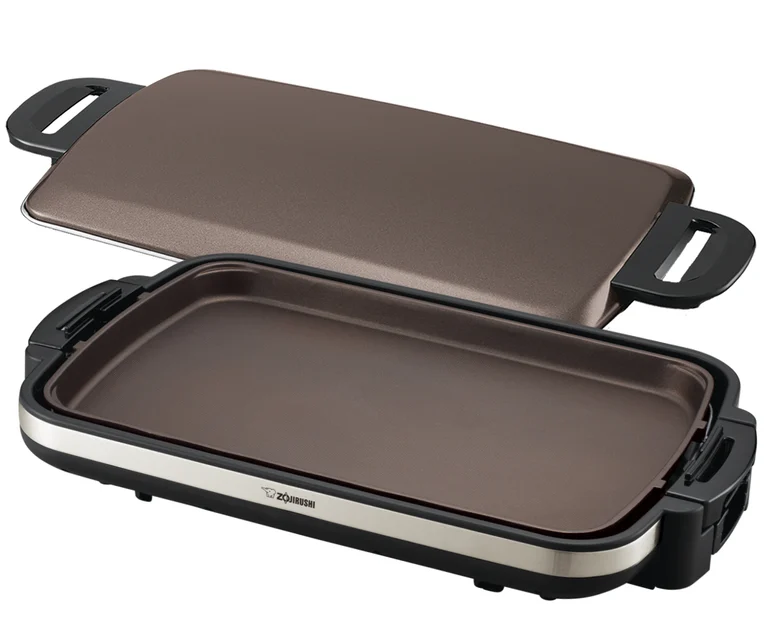 The Best Electric Griddles: 4 Compared (and One to Skip)
  The Best Electric Pepper Grinders: 4 Compared (and One to Skip)
  The Best Electric Smokers: 4 Compared (and One to Skip)