Explained
Duffel Bags, Explained
After reading, you'll understand what a duffel's water claim covers, how to compare fabrics across brands, and which features matter for the way you travel.
In this guide
First-time buyers tend to shop duffels by litres and colour, then find out on the first wet day that weather-resistant did not mean waterproof. The second surprise is carrying: a full 60 litre bag on one shoulder strap gets heavy fast. The third is that sizes within one product line behave like different bags, so a spec quoted for one size tells you little about another. All three are visible on the product page before you buy.
The 30-second version
- Waterproof is a claim about the closed bag, and it should come with a stated test such as IPX7, not just a coated fabric.
- Denier needs its coating, so read the materials line for both the D figure and the TPU or PU layer.
- Empty weight varies more than you would expect, from under two pounds for a gym duffel to over five for a submersible one.
- Two straps beat one, and backpack straps that stow or detach keep the bag tidy on a baggage belt.
- Compare the exact size, because litres, weight and dimensions change with every size in a line.
The products this guide is about
Our verdict on each, with the full reasoning on the companion review.
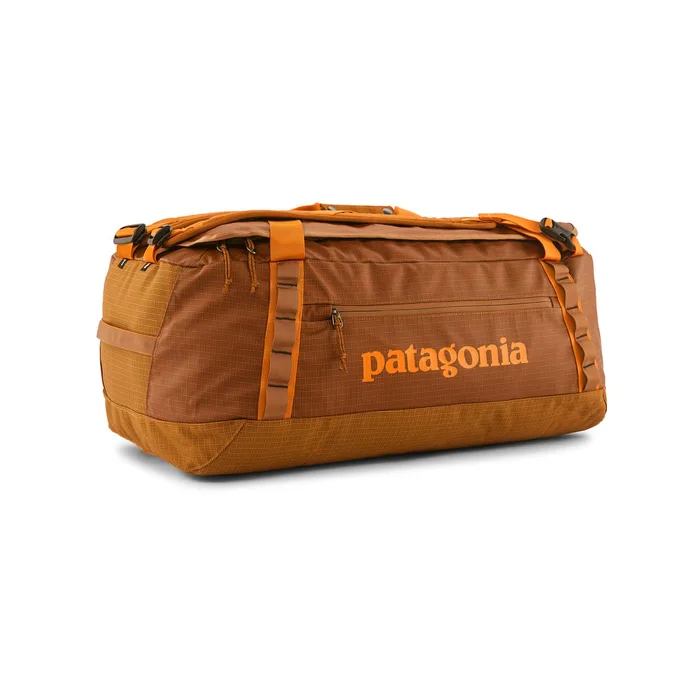
- Buy Patagonia Black Hole Duffel 55L A 55 L laminated ripstop duffel with removable backpack straps and a fully published spec sheet, described by its maker as weather-resistant.
- Buy Eagle Creek Cargo Hauler 60L Duffel Bag The lightest travel duffel here at 2 lb 3 oz, with stowable backpack straps, lockable zippers and a body that packs into its own end pocket.
- It depends YETI Panga 50L Waterproof Duffel A submersible duffel that YETI describes as airtight when properly closed, at the cost of a 5.2 lb empty weight and a zipper that needs care.
- Skip Under Armour UA Undeniable 5.0 Medium Duffle Bag A popular 58 L gym duffel with a water-repellent finish that lacks the carry system and published fabric specs a travel duffel needs.
What actually matters
- Water claim - This is the most misread line on the page. Weather-resistant fabric handles rain, while a waterproof claim with a rating covers the zipped bag.
- Fabric denier - Denier describes yarn thickness and gives a rough sense of how heavy the cloth is. It is only comparable between bags when the fibre and weave are similar.
- Coating or laminate - A TPU or PU layer is what stops water passing through the cloth. A laminate is a film bonded to the fabric, and a coating is applied to it.
- Empty weight - The bag's own weight comes out of your baggage allowance and your shoulders. Heavier usually buys thicker fabric or a sealed zipper.
- Carry system - Backpack straps make a full duffel manageable through stations and up stairs. Check whether they are listed at all, and whether they stow or detach.
- Packability - Some duffels fold into their own pocket for storage or as a spare bag inside other luggage. Structured or submersible bags generally are not described this way.
- Warranty - A named warranty on the product page tells you what the maker stands behind. Read the terms on the maker's warranty page, since coverage differs between brands.
The specs, in plain English
Green flags vs red flags
Green flags
- The water claim is specific, either a stated rating for the closed bag or a plain weather-resistant description of the fabric.
- Denier and coating or laminate are both published for the main fabric.
- Weight, capacity and external dimensions are listed for the exact size.
- Two backpack straps are listed, with a note on whether they stow or detach.
- A named warranty appears on the product page.
Red flags
- The listing says waterproof with no rating and a conventional zipper.
- Material is given only as polyester or nylon with no denier.
- The only carry options are grab handles and a single shoulder strap on a bag over 50 litres.
- Specs are quoted for a different size or an older version of the bag.
- No empty weight is published.
Who's who: the brands
- Patagonia - Known for the Black Hole line of laminated recycled-polyester duffels with a detailed materials breakdown.
- Eagle Creek - A travel-luggage specialist whose Cargo Hauler duffels focus on low weight, organisation and packing down small.
- YETI - Best known for coolers, and makes the Panga line of submersible duffels with a sealed zipper.
- Under Armour - A sportswear brand whose Undeniable duffels are common gym and team bags.
How to read a listing without getting fooled
Start with the materials line and look for three things: fibre, denier and the coating or laminate. Then find the water wording and note the exact term, because weather-resistant, water-resistant, water-repellent and waterproof are four different promises, and only the last should come with a rating. Check that capacity, weight and dimensions are given for the size you are buying, since product pages often cover several sizes with one description. Read the feature list for backpack straps, lockable zippers and whether the bag packs into its own pocket, and treat anything not listed as absent. Finish with the warranty link.
How much should you spend?
Budget duffels are mostly sports bags: light polyester, a water-repellent finish, one shoulder strap and few published fabric details. Mid-range is where purpose-built travel duffels start, with coated fabrics, backpack straps, lockable zippers and a named warranty. Premium buys heavier laminated fabric and fuller documentation, or in the case of submersible duffels a sealed zipper and a stated immersion rating. Pay for the premium tier when the bag will see rough handling or real water. For occasional flights and road trips a mid-range travel duffel covers the need.
Questions, answered
Do I need a waterproof duffel for normal travel?
Usually not. A coated or laminated duffel described as weather-resistant copes with rain between a car and a terminal. Submersible duffels are heavier and their zippers need maintenance, so they make sense mainly for boats, rivers and open truck beds. For the odd item that must stay dry, a small dry bag inside a regular duffel does the job.
Is a higher denier always better?
No. Higher denier means thicker yarn and usually more weight, which helps with abrasion but adds to the empty weight. Weave, fibre and coating matter as well, and a lighter fabric reinforced with ballistic panels at wear points can be a sensible design. Use denier to compare similar bags, not as a single score.
How big is a 60 litre duffel in practice?
It is a mid-size bag, larger than most cabin luggage and smaller than expedition duffels, which run to 90 litres and beyond. The external dimensions tell you more than the litre figure when it comes to fitting a car boot or an airline sizer. Soft sides also mean the packed shape depends on how full it is.
Should I pick a duffel or a wheeled suitcase?
A duffel is lighter for its volume, squashes into awkward spaces and can be carried over ground where wheels do not roll. A suitcase protects contents better and is easier on smooth floors. If most of your travel is airports and hotels, a suitcase is the more comfortable choice. If it involves boats, small vehicles or rough ground, a duffel with backpack straps is easier to live with.
Or jump to the head-to-head: Patagonia Black Hole Duffel 55L vs Eagle Creek Cargo Hauler 60L Duffel Bag.