Explained
Dual Action Polishers, Explained
After reading this you will know why a random orbital DA is the beginner-safe machine, what orbit throw and OPM actually change, how to match pads to a backing plate, when to use compound versus polish, and exactly where polishing sits in the detailing order.
In this guide
A dual action polisher is the tool that removes swirls and light scratches instead of hiding them, and it is the one power tool in car care that people are genuinely afraid of buying. Most of that fear belongs to rotary polishers, which spin on a fixed axis and will burn through clear coat on a body line in seconds. A random orbital DA is built so the pad stalls when you press too hard, which turns your worst mistake into a machine that stops cutting rather than a repaint, and once you understand throw, pads and speed control the rest of the spec sheet stops being intimidating.
The 30-second version
- A random orbital DA fails safely. The pad orbits on an offset counterweight and spins freely rather than being driven, so pressure or a curve stalls the spin and the machine stops cutting, which is the built-in feedback that makes it the right first machine.
- Orbit throw is the number that sets correction speed. Throw is how far the pad travels in each orbit, measured in millimetres, and it matters far more than watts: short throw around 8mm to 9mm is forgiving and slower, while 12mm to 21mm long throw clears big panels faster and punishes sloppy technique on edges.
- Constant speed electronics decide whether the spec is real. A machine without them sheds speed exactly when you load the pad with pressure and product, so the throw you paid for disappears mid-pass and beginners respond by pressing harder, which stalls it further.
- Pads and product do the cutting, the machine just moves them. Cutting pads with compound remove defects, polishing and finishing pads with a finer polish refine the gloss, and the same polisher produces wildly different results depending on which combination is bolted to it.
- Polishing is the correction step, not the protection step. The order is wash, decontaminate with a clay bar, polish, then protect with wax, sealant or a ceramic coating, because anything you apply before polishing gets removed by the pad.
The products this guide is about
Our verdict on each, with the full reasoning on the companion review.
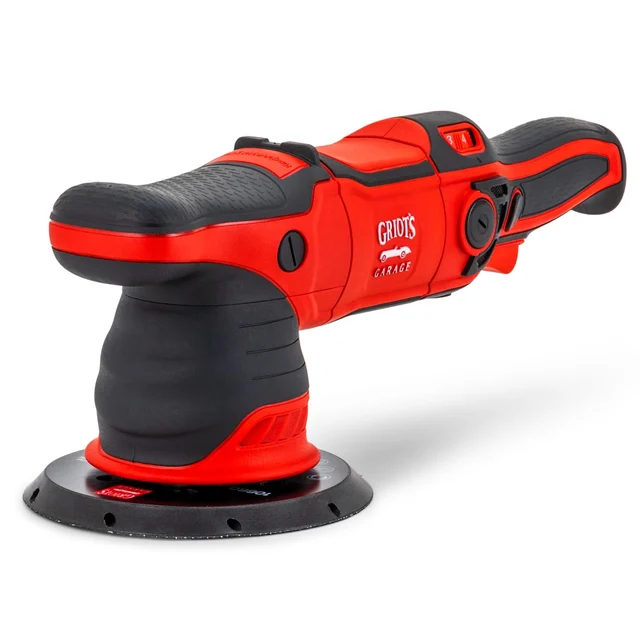
- Buy Griot's Garage G9 Random Orbital Polisher The most capable machine a first-time polisher can safely handle, with a 9mm orbit that corrects real defects without punishing mistakes.
- Buy RUPES BigFoot LHR15 Mark V Random Orbital Polisher A 15mm long-throw machine that covers ground faster and finishes cleaner than anything short-throw, if you polish often enough to justify it.
- It depends Adam's Polishes Swirl Killer MINI 12mm Long Throw Polisher A 3-inch spot machine that solves pillars, mirrors and bumpers, and does nothing useful on a hood.
- Skip Porter-Cable 7424XP Variable Speed Random Orbit Polisher The machine that made home paint correction possible, now outclassed by tools that cost about the same.
What actually matters
- Machine type (random orbital, forced rotation, rotary) - free-spinning random orbitals stall under pressure and protect your paint, forced rotation machines are geared so the pad keeps turning no matter what you do, and rotaries spin on a fixed axis with no failure mode at all; for a first machine, free spinning is the answer and everything else is a later upgrade.
- Orbit size (throw) in millimetres - this is the single biggest factor in how quickly the machine corrects, and the trade is speed against forgiveness: 8mm is the old slow standard, 9mm is the modern beginner sweet spot, 12mm to 15mm covers a hood in far fewer passes, and 21mm is a big-panel specialist that fights you on curves.
- Motor and constant speed control - wattage or amps alone tell you almost nothing, because what matters is whether the electronics hold the set speed as pad pressure and polish load the head; a machine that bogs down under light pressure will make every job take twice as long.
- Backing plate size and what plates the tool accepts - the plate is the disc the pad sticks to, and it determines your pad options; a 5-inch plate running 5.5-inch pads is the most flexible full-size setup, a 6-inch plate is fastest on flat panels, and a 3-inch plate is for spot work around mirrors, pillars and emblems.
- Pad supply and cost - you will use several pads on a single car and you need to swap to a clean one long before you think you do, so a machine that takes common plate sizes with pads available from every detailing supplier is worth more than a slightly better tool with a captive accessory ecosystem.
- Variable speed range - you want a low setting for spreading product and finishing and a high setting for cutting, plus a dial or trigger you can actually reach while the machine is running and against a panel.
- Weight, balance and cord - you hold this at arm's length for hours, so balance and vibration matter more than raw weight, and cord length is a genuine daily annoyance in either direction: too short in a shop, a tangle in a one-car garage.
The specs, in plain English
Green flags vs red flags
Green flags
- A free-spinning random orbital described with a specific orbit throw in millimetres, ideally around 9mm for a first machine
- Constant speed or speed-holding electronics stated outright, not just a wattage or amp figure
- A backing plate included and a second plate size supported, so you can run both large pads on flat panels and smaller ones on curves
- Standard plate and pad sizes that any detailing supplier stocks, rather than a proprietary accessory system
- A speed dial or progressive trigger you can adjust with the machine in your hands, plus a cord length that suits your actual working space
- A maker that sells replacement plates, brushes and spares, and covers manufacturing defects for a meaningful period
Red flags
- A listing that leads with watts, amps or a huge RPM number and never states the orbit throw
- RPM quoted as the headline figure on a machine sold as a DA, which suggests either a rotary or marketing that does not understand the tool
- No mention of speed control behaviour under load, especially on older designs where the motor visibly bogs when you press
- A very long throw pitched at first-time buyers, since long throw carries more energy onto edges and body lines exactly where beginners get in trouble
- A 3-inch spot machine described as if it can correct a whole car, which turns a weekend job into a multi-day one
- Owner reports of overheating heads, plates that come loose, or the pad stalling constantly at low pressure
Who's who: the brands
- Griot's Garage - Detailing house whose random orbital polishers are the common first-machine recommendation, known for modern orbit sizes, strong motors and long defect coverage.
- RUPES - Italian maker that popularised long-throw BigFoot machines; the professional default for speed and finish quality, with a deep pad and accessory ecosystem and a flagship price to match.
- Adam's Polishes - Enthusiast brand with a broad Swirl Killer range including capable 3-inch mini polishers for pillars, mirrors and bumper corners, usually sold alongside matched pads and polishes.
- Meguiar's - Mainstream car-care staple whose DA polishers and pads are stocked almost everywhere, which makes returns, replacements and finding matching compounds straightforward.
- Porter-Cable - The tool that created home paint correction; still widely sold with two decades of pads and tutorials around it, but its short throw and older motor have been overtaken by newer machines.
- Harbor Freight (Bauer) - Value line offering long-throw DA machines at budget pricing, the usual answer when the budget is genuinely fixed and a premium machine is out of reach.
How to read a listing without getting fooled
Find the orbit throw first, because a listing that will not tell you the throw in millimetres is hiding the most important number behind watts and RPM. Confirm the machine is a free-spinning random orbital rather than a forced rotation or rotary tool, since all three get called polishers and only one has the stall behaviour that protects a beginner. Then look for constant speed control or wording about holding speed under load, and treat a big wattage figure with no mention of speed regulation as an unfinished spec. Next, check what backing plate ships with the tool and which other plate sizes it accepts, then confirm that pads in those sizes are sold by more than one supplier, because pads are consumables and a captive accessory system gets expensive. Read the OPM range and make sure the low end is genuinely slow enough to spread product and finish, not just a high top speed. Finally, treat kits carefully: a bundle that includes plates, an assortment of cutting and finishing pads, and a compound and a polish can be excellent value, but a bundle padded with one-size pads and a single all-in-one liquid is often hiding a weak machine.
How much should you spend?
Spend on orbit throw and speed electronics, not on wattage or accessory count. The value sweet spot for almost everyone is a mid-range random orbital with a modern short throw around 9mm and constant speed control, because that combination corrects real defects, still stalls helpfully when you get it wrong, and runs cheap standard pads. Below that, the saving is illusory: a legacy short-throw machine with no speed regulation costs close to a modern one and makes you work far more passes for the same result, and the hours are the real cost. Going further up buys long throw, refined balance and a cleaner finish with less follow-up, which pays for itself if you correct several cars a year and does not if you polish your own car each spring. Budget separately for the things that do the actual cutting: pads in more than one grade, a compound, a polish, a clay bar for the step before, and a wax, sealant or coating for the step after, since the polisher on its own finishes nothing. A 3-inch spot machine is a second-machine purchase that sits on top of a full-size tool rather than replacing it, so leave it until you have physically run out of room around a mirror or pillar.
Questions, answered
Will a dual action polisher damage my paint?
A free-spinning random orbital is very hard to damage paint with, and that is the entire point of the design. The pad orbits and spins freely, so the moment you add real downward pressure or run onto a curve, the free spin stalls and the machine stops cutting. That is the built-in warning a rotary does not have. The realistic risks are polishing the same spot for far too long, running a filthy loaded pad that drags grit, or catching a sharp edge or a piece of trim. Tape off body lines and trim while you learn, keep the pad flat and moving, use light pressure, and swap to a clean pad often.
What does orbit throw actually change, and should I get long throw?
Throw is how far the pad travels in each orbit, and it is the main lever on how quickly the machine corrects. A short throw of 8mm or 9mm works a smaller area, needs more passes, and stalls readily, which is helpful feedback while you are learning. A long throw of 12mm to 21mm sweeps far more paint per pass and saves real time on hoods and roofs, but it also carries more energy onto edges and body lines, so the same mistake costs more. For a first machine, short throw around 9mm is the sweet spot. Move to long throw when time has become the constraint and your technique is settled.
What is the difference between OPM and RPM?
OPM means orbits per minute and it is what the speed dial on a DA sets: how many times the pad completes its offset orbit. RPM means revolutions per minute, how fast something spins on a fixed axis, and it is the meaningful number on a rotary polisher. On a free-spinning DA the pad's own rotation is a side effect of friction, not something the motor drives, so it changes constantly with pressure and surface and cannot be quoted as a spec. Compare DA machines on throw and OPM range, and be suspicious of a DA listing that headlines an RPM figure.
What backing plate and pad sizes should I buy?
Match the pad to the plate and keep the pad roughly a quarter to half an inch larger than the plate. A 6-inch plate with 6.5-inch pads covers flat panels fastest. A 5-inch plate with 5.5-inch pads is the flexible default, because it follows contours better, concentrates more pressure per square inch, and cuts a little faster on the same machine. A 3-inch plate with 3.5-inch pads is for spot work around mirrors, pillars, emblems and bumper corners. Buy pads in sets, keep cutting and finishing pads strictly separate, and swap to a clean pad far sooner than feels necessary, because a loaded pad stops cutting and starts smearing product around.
Do I use compound or polish, and how do I choose a pad?
Compound is the coarser abrasive and it removes deeper defects, usually leaving a slight haze that a second stage refines. Polish is finer, clears light swirls, and finishes clean. Pair aggressiveness across the two: a cutting pad with compound for the correction stage, then a polishing or finishing pad with polish to refine. The rule that saves paint and time is to start with the least aggressive combination that works. Test a small section with a finishing pad and polish first, look at the result under good light, and only step up to a firmer pad or a compound if the defects are still there.
Where does polishing fit alongside washing, clay, wax and ceramic coatings?
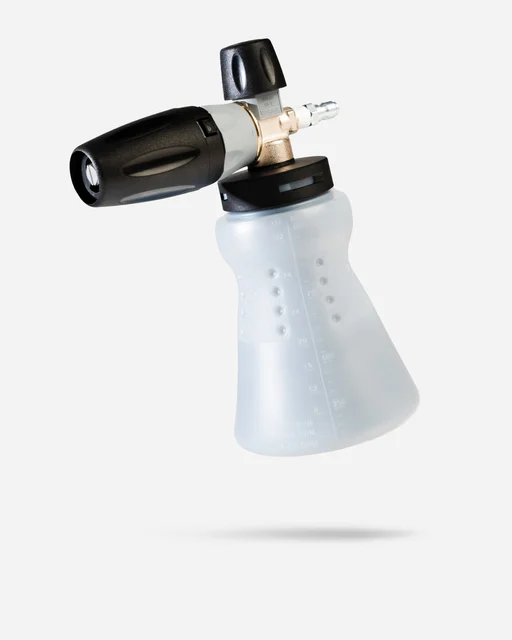
Polishing is the correction step and it sits in a fixed place in the order. Wash the car first, using a foam cannon and clean microfiber towels so you are not grinding dirt in before you start. Decontaminate the paint with a clay bar so the pad is not dragging embedded grit across the clear coat. Polish to remove swirls and oxidation. Then protect the freshly corrected paint with a wax, a sealant or a ceramic coating. Protection applied before correction is wasted, because the pad removes it. Our clay bar, car wax and ceramic coating comparisons cover the steps on either side of polishing, and our foam cannon and microfiber towel picks cover the wash that starts the whole process.
Or jump to the head-to-head: Griot's Garage G9 Random Orbital Polisher vs RUPES BigFoot LHR15 Mark V Random Orbital Polisher.