

Automotive
The Best Dual Action Polishers: 4 Compared (and One to Skip)
We compared four DA car polishers on orbit size, motor control, pad compatibility, and how safely a first-timer can correct paint.
The short version
Buy the Griot's Garage G9. Its 9mm orbit is the best balance of correction and forgiveness for anyone who has not machine polished before, the 1,000-watt motor keeps the pad turning under pressure, and Griot's covers defects for life. If you polish several cars a year, the RUPES BigFoot LHR15 Mark V and its 15mm long throw cut your time on hoods and roofs and leave a cleaner finish, at several times the price. Adam's Swirl Killer MINI 12mm is worth adding once your full-size machine keeps running out of room on pillars and bumper corners, but it is a second tool, not a first. Skip the Porter-Cable 7424XP. It is safe, but its 8mm orbit and older motor make you work far harder for the same result as machines costing about the same money. Whichever you choose, start with a random orbital rather than a rotary, because a DA stalls when you make a mistake and a rotary does not. Best for: anyone ready to remove swirls instead of hiding them, without risking their clear coat.
Our picks at a glance
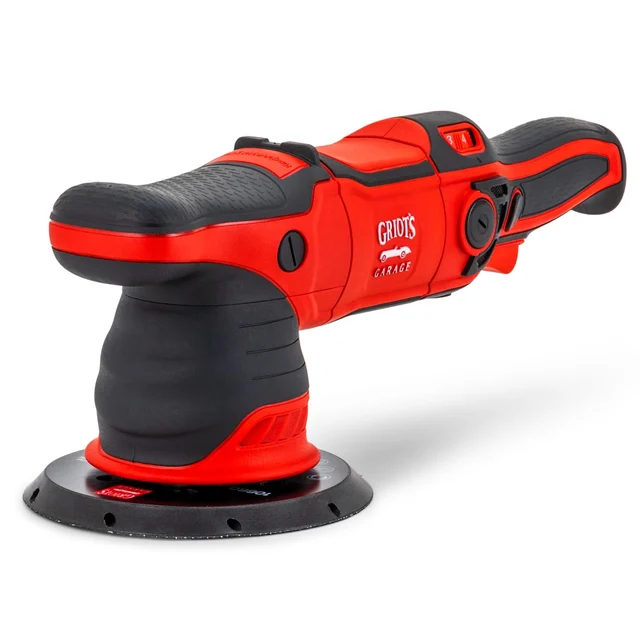
- Griot's Garage G9 Random Orbital Polisher - Buy. The most capable machine a first-time polisher can safely handle, with a 9mm orbit that corrects real defects without punishing mistakes.
- RUPES BigFoot LHR15 Mark V Random Orbital Polisher - Buy. A 15mm long-throw machine that covers ground faster and finishes cleaner than anything short-throw, if you polish often enough to justify it.
- Adam's Polishes Swirl Killer MINI 12mm Long Throw Polisher - It depends. A 3-inch spot machine that solves pillars, mirrors and bumpers, and does nothing useful on a hood.
- Porter-Cable 7424XP Variable Speed Random Orbit Polisher - Skip. The machine that made home paint correction possible, now outclassed by tools that cost about the same.
The verdict in 30 seconds
What mattered most
- Orbit (throw)
- Backing plate and pads
- Motor and speed control
- Speed on large panels
- Beginner forgiveness
- Reach into tight areas
A dual action polisher is the tool that actually removes swirls instead of filling them, and it is the step between decontaminating your paint and protecting it. It is also the safe way in, because a random orbital pad stalls when you lean on it while a rotary keeps cutting until it burns through clear coat. We synthesized independent testing and owner reports across four machines that span the real decision: a forgiving 9mm random orbital, a 15mm long-throw premium tool, a 3-inch mini for tight panels, and the legacy budget machine that newer designs have left behind. Two are straightforward buys, one is a specialist second tool, and one is a skip.
The most capable machine a first-time polisher can safely handle, with a 9mm orbit that corrects real defects without punishing mistakes.
Best for: First-time and occasional polishers who want one machine that can correct a whole car with almost no risk of burning paint.
- 9mm orbit hits the sweet spot: enough throw to correct paint, short enough that the pad stays predictable on curves and edges
- 1,000-watt motor with constant speed control holds pad rotation under pad pressure instead of bogging down
- Ships with a 6-inch vented backing plate and accepts a 5-inch plate, so pads are cheap and easy to find
- Detachable 10-foot cord and a fan-cooled counterbalance that owners credit for lower vibration and cooler running
- Griot's covers manufacturing defects for life, which is unusual for a power tool at this price
- Corded, and the 6-inch head still cannot reach mirrors, pillars and tight bumper sections
- Slower than a 15mm or 21mm long-throw machine across big flat panels like hoods and roofs
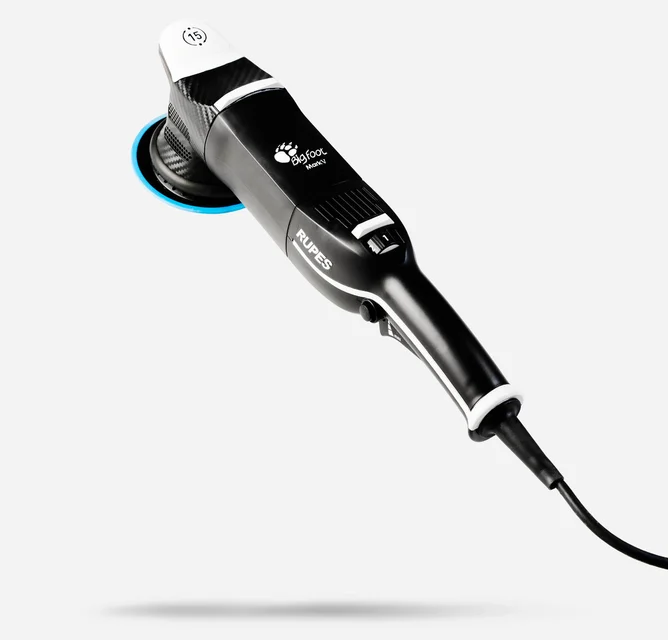
A 15mm long-throw machine that covers ground faster and finishes cleaner than anything short-throw, if you polish often enough to justify it.
Best for: Detailers and serious enthusiasts correcting several cars a year who value speed and finish quality over up-front cost.
- 15mm orbit clears hoods, roofs and doors in noticeably fewer passes than an 8mm or 9mm machine
- Runs 5.5 to 6 inch pads on a 5-inch plate, so it still follows contours a full 6-inch machine skips
- Progressive trigger plus a speed dial gives real control at the start and end of each section pass
- Mark V is shorter and quieter than the Mark III it replaced, which owners report as less fatigue over a full car
- Registration extends the warranty, and backing plates, pads and spares are easy to source
- Costs several times what a competent beginner machine costs
- Long throw is less forgiving on sharp edges and body lines, so it rewards technique you build on a smaller machine first
- The 30-foot cord is a gift in a shop and a nuisance in a one-car garage
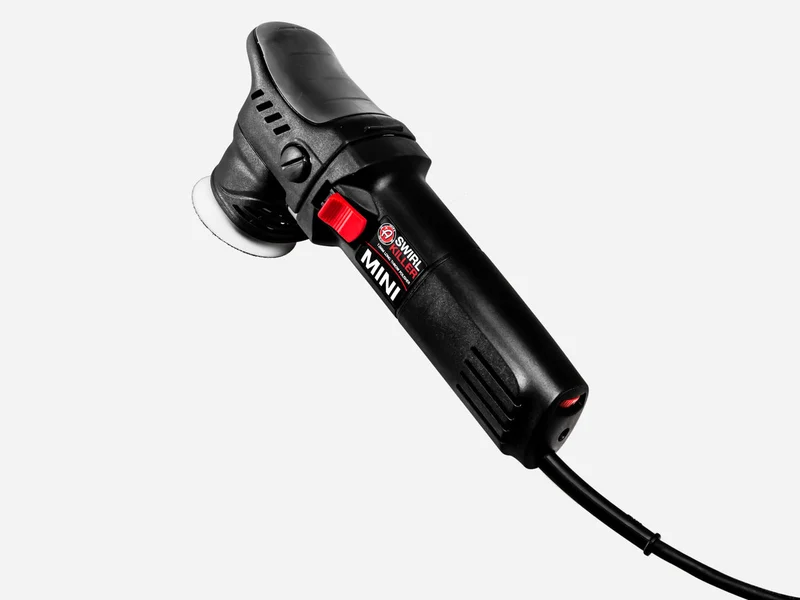
A 3-inch spot machine that solves pillars, mirrors and bumpers, and does nothing useful on a hood.
Best for: People who already own a full-size DA and keep running out of room on pillars, mirrors, spoilers and bumper corners.
- 12mm throw at up to 5,500 OPM genuinely corrects rather than just spreading polish, which cheap minis rarely manage
- Short overhang around the head reaches A pillars, fog light surrounds, door handles and the paint around emblems
- Runs inexpensive 3 and 3.5 inch pads, so aggressive spot work does not get expensive
- Light enough to hold sideways or vertically on a pillar for a full set of passes
- The 3-inch pad makes whole-car correction a project you would not want to finish
- It is a second machine rather than a first, so its real cost sits on top of a full-size polisher
- Vibration is noticeable on a small body running at high speed
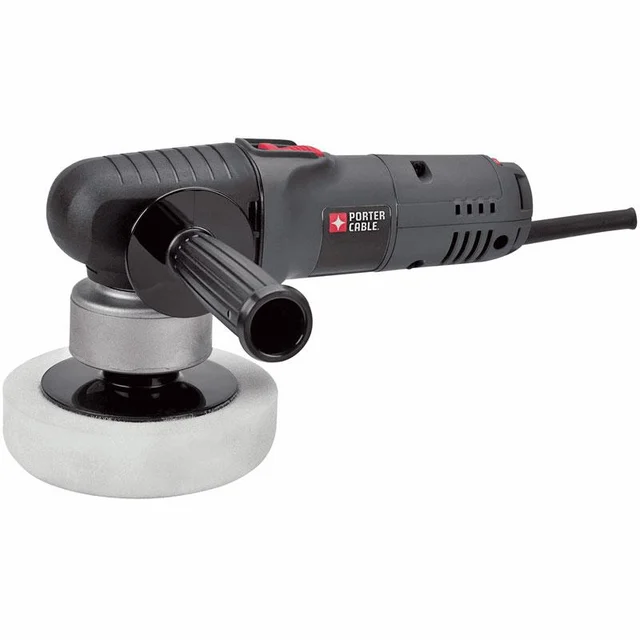
The machine that made home paint correction possible, now outclassed by tools that cost about the same.
Best for: Very few people now. If your budget is genuinely fixed, a long-throw budget DA such as Harbor Freight's Bauer gives you more machine for less money.
- Very hard to damage paint with, because the short 8mm orbit stalls early under pressure
- Two decades of backing plates, pads and step-by-step guidance built up around it
- Sold through mainstream hardware retailers, so buying, returning and servicing it is simple
- The 8mm orbit and 4.5-amp motor need far more passes for the same correction as a modern 9mm or 15mm machine
- The pad stalls readily on curves and body lines, which pushes beginners into pressing harder and working slower
- No constant speed electronics, so it loses speed exactly when you load the pad
- Priced close enough to clearly better machines that the saving does not cover the extra hours
| Criteria | Griot's Garage G9 Random Orbital Polisher Top pick | RUPES BigFoot LHR15 Mark V Random Orbital Polisher | Adam's Polishes Swirl Killer MINI 12mm Long Throw Polisher | Porter-Cable 7424XP Variable Speed Random Orbit Polisher |
|---|---|---|---|---|
| Verdict | Buy it | Buy it | It depends | Skip it |
| Best for | First-time and occasional polishers who want one machine that can correct a whole car with almost no risk of burning paint. | Detailers and serious enthusiasts correcting several cars a year who value speed and finish quality over up-front cost. | People who already own a full-size DA and keep running out of room on pillars, mirrors, spoilers and bumper corners. | Very few people now. If your budget is genuinely fixed, a long-throw budget DA such as Harbor Freight's Bauer gives you more machine for less money. |
| Price tier | $$ · mid-range | $$$$ · flagship | $$ · mid-range | $ · budget |
| Orbit (throw) | 9mm | 15mm | 12mm | 8mm |
| Backing plate and pads | 6 in. vented plate included, 5 in. plate optional (5.5 to 6.5 in. pads) | 5 in. plate (5.5 to 6 in. pads) | 3 in. plate (3 to 3.5 in. pads) | 6 in. plate (5.5 to 6 in. pads) |
| Motor and speed control | 1,000W, constant speed control, roughly 2,000 to 6,400 OPM | Efficient 500W-class motor, progressive trigger plus speed dial | 500W rated, roughly 2,500 to 5,500 OPM | 4.5 amp, variable speed dial, roughly 2,500 to 6,800 OPM |
| Speed on large panels | Good | Fastest here | Not intended for panels | Slowest here |
| Beginner forgiveness | Very forgiving, pad stalls before paint suffers | Forgiving, but the long throw rewards good technique | Forgiving, small contact patch limits damage | Most forgiving, stalls almost too easily |
| Reach into tight areas | Limited unless you fit the 5 in. plate | Good for a full-size tool | Best here by a wide margin | Limited |
| Warranty and parts | Lifetime against manufacturing defects, parts direct from Griot's | Extended with registration, wide professional parts supply | Standard manufacturer warranty, pads and plates direct from Adam's | Standard manufacturer warranty, accessories available everywhere |
| Price tier | $$ · mid-range | $$$$ · flagship | $$ · mid-range | $ · budget |
Which one is right for you?
- First-time and occasional polishers who want one machine that can correct a whole car with almost no risk of burning paint. Buy it Griot's Garage G9 Random Orbital Polisher
- Detailers and serious enthusiasts correcting several cars a year who value speed and finish quality over up-front cost. Buy it RUPES BigFoot LHR15 Mark V Random Orbital Polisher
- People who already own a full-size DA and keep running out of room on pillars, mirrors, spoilers and bumper corners. It depends Adam's Polishes Swirl Killer MINI 12mm Long Throw Polisher
- Very few people now. If your budget is genuinely fixed, a long-throw budget DA such as Harbor Freight's Bauer gives you more machine for less money. Skip it Porter-Cable 7424XP Variable Speed Random Orbit Polisher
How we judged the field
We do not run our own lab. We synthesized independent testing and a large pool of owner reports, then weighed the things that decide whether a polisher gets used or shelved: how much correction the orbit really delivers, how the machine behaves when a beginner presses too hard or wanders onto a body line, how easy pads and backing plates are to buy, and whether the price matches the result.
We deliberately picked machines that sit at different points of the same decision rather than four versions of the same tool. All four are free-spinning random orbitals, which is the safe class: press down and the pad slows and eventually stops rotating instead of grinding a hole in your clear coat. A rotary spins on a fixed axis and has no such failure mode, which is exactly why it corrects faster and why it can strip paint from an edge in seconds. Forced rotation machines, the gear-driven long-throw tools favoured by production shops, sit in between: the pad keeps turning under load, so they cut steadily on curves, and they will keep cutting on a sharp edge that would have stalled a free-spinning DA. For a first machine, free spinning is the right answer, so that is where we concentrated.
One framing worth setting up front: polishing is the correction step, not the protection step. A DA removes swirls, oxidation and light scratches by levelling a tiny amount of clear coat. Whatever you apply afterwards, wax, sealant or a ceramic coating, sits on top of that result. Decontaminate with a clay bar first, polish second, protect third.
This is the machine we would hand almost anyone buying their first polisher. The 9mm orbit is the important number: it is a real step up from the 8mm tools that defined the category for years, so you spend less time on each section, but it is short enough that the pad still stalls helpfully when you lean too hard or clip a body line. The 1,000-watt motor with constant speed control is what makes that orbit useful, because it holds pad rotation as you add pressure rather than winding down exactly when you need it.
The practical details are as good as the specification. It ships with a 6-inch vented backing plate and accepts a 5-inch plate, which is the setup most owners settle on because smaller pads follow curves better and cut faster. Pads in both sizes are cheap and available from every detailing supplier. The cord detaches for storage, the fan-cooled counterbalance is widely credited with lower vibration and a cooler-running head over long sessions, and Griot’s covers manufacturing defects for life, which is not something you usually see on a power tool at this price.
The limits are real but narrow. It is corded, it is a 6-inch machine that will not reach mirror stalks or the tight parts of a bumper, and a 15mm tool will beat it on a big flat hood. None of that stops it correcting a whole car well.
The LHR15 is the long-throw machine most professionals reach for, and the Mark V is the current version of it. The 15mm orbit is the reason: each pass sweeps far more paint than a 9mm machine, so a full correction on a hood, roof or door takes noticeably less time and typically fewer stages. It pairs that throw with a 5-inch plate running 5.5 to 6 inch pads, which keeps it usable on the curved, creased panels that make a wide 6-inch machine awkward.
Control is where the money shows. The progressive trigger lets you start a pass slowly and settle the pad before you bring it up to speed, and the electronic speed dial holds that setting under load. Owners moving over from the Mark III consistently report that the Mark V is shorter, quieter and easier to hold flat for a full car, and reviewers point at the lower centre of gravity as the reason. Warranty coverage extends on registration, and the pad, plate and spares ecosystem around Rupes tools is deep.
The case against it is simple arithmetic. It costs several times what a very good beginner machine costs, the long throw is less forgiving on sharp edges, and the 30-foot cord that professionals love is a tangle in a home garage. If you polish one car a year, you will not get the value back. If you polish six, you will.
Every full-size polisher leaves work behind: A pillars, mirror housings, the paint around emblems and door handles, fog light surrounds, spoiler edges, the tight radius on a bumper corner. A 3-inch machine is how you finish those, and this one is better than most because the 12mm throw and up to 5,500 OPM actually correct defects rather than just warming polish around. The short overhang around the head is the design feature that matters, because it lets the pad reach into places where a bigger housing bottoms out first.
It is light enough to hold sideways against a pillar for a full set of passes, and it runs cheap 3 and 3.5 inch pads, so you can be aggressive with pad changes. Owners who already have a full-size DA describe it as the tool that turned a good correction into a complete one.
The reason this is not a straight buy is scope. A 3-inch pad means correcting an entire car with it would take a weekend nobody wants, so this is explicitly a second machine and its cost lands on top of a full-size polisher rather than instead of one. Vibration is also noticeable, as it is on any small body spinning fast. Buy it when you have felt the gap, not before.
Credit where it is due: this machine created home paint correction. For years it was the default recommendation, it is nearly impossible to damage paint with, and two decades of backing plates, pads and tutorials have accumulated around it. It is still sold through mainstream hardware retailers, which makes buying and returning it painless.
The problem is that the field moved and it did not. The 8mm orbit and 4.5-amp motor mean noticeably more passes for the same correction than a 9mm machine with modern speed electronics, and there is no constant speed control, so the tool sheds speed exactly when you load the pad. In practice the pad stalls readily on curves and body lines, and the standard beginner reaction to a stalled pad is to press harder, which stalls it further. That loop is where the frustration comes from.
If it were half the price of the alternatives, the trade would be defensible. It is not. It sits close enough to genuinely better machines that the saving does not begin to cover the extra hours, and if your budget really is fixed, a long-throw budget DA such as Harbor Freight’s Bauer hands you more capability for less money.
Griot’s Garage G9 vs RUPES BigFoot LHR15 Mark V: which should you buy?
These two are not really competing for the same buyer, and the way to choose between them is to count cars.
The G9 is the answer if you are correcting your own vehicle, maybe a partner’s, once or twice a year. The 9mm orbit still forgives the mistakes beginners actually make, the motor does not fade under pressure, the 5-inch plate option covers most contours, and the lifetime defect coverage removes the risk of buying a tool you use twice a year. You will spend more time per panel than an LHR15 owner, and it will not matter, because you were going to spend that afternoon in the garage anyway.
The LHR15 Mark V is the answer if the clock has a cost. Its 15mm throw is the difference between a hood taking one long stage and taking two, and across a full car that compounds into hours. The progressive trigger and refined balance are what make a long session tolerable, and the finish it leaves is cleaner with less follow-up work. The price only makes sense spread across a lot of paint, and the long throw expects you to already know how to handle an edge.
If you are unsure, buy the G9. It is not a compromise you outgrow quickly, and if you do outgrow it, it becomes the machine you hand to whoever is helping you.
What to look for
- Orbit size (throw). The number that sets correction speed. 8mm is the old standard and slow. 9mm is the modern beginner sweet spot. 12mm to 15mm is faster and less forgiving. 21mm is a big-panel specialist.
- Free spinning, forced rotation or rotary. Free spinning stalls under pressure and protects you. Forced rotation keeps cutting on curves and edges, which is faster and riskier. Rotary is for trained hands and heavy correction. Start free spinning.
- Motor and speed control. Watts alone tell you little. Constant speed electronics, which hold the set speed as you load the pad, are what stop a machine dying mid-pass.
- Backing plate size and pad supply. A 5-inch plate with 5.5-inch pads is the most flexible setup on a full-size machine, a 6-inch plate is fastest on flat panels, and a 3-inch plate is for spot work. Check what plates the tool accepts before you buy pads.
- Variable speed range. You want a low setting for spreading polish and finishing and a high setting for cutting. A dial you can reach with the machine running beats one you cannot.
- Weight, balance and cord. You will hold this for hours. Balance matters more than raw weight, and a detachable or generous cord decides how much of your session is spent untangling.
- Warranty and parts. Backing plates and brushes are consumables. Buy from a brand that sells replacements, and treat long defect coverage as real value on a tool used a few times a year.
- What it does not replace. A polisher corrects, it does not protect. Budget for pads, polish, a clay bar beforehand and a wax, sealant or coating afterwards.
Our final take
The decision here is not really which polisher is best, it is how much paint you plan to correct. For the overwhelming majority of people, that answer is one car, occasionally, and the Griot’s Garage G9 is built precisely for that: a 9mm orbit that removes real defects, a motor that holds its speed when you press, forgiving behaviour when you get it wrong, and defect coverage for life.
Step up to the RUPES BigFoot LHR15 Mark V when time is the constraint rather than money. Its 15mm throw genuinely shortens a full correction and leaves less to clean up afterwards, which is why it lives in so many professional carts. Add the Adam’s Swirl Killer MINI 12mm as a second machine once you have physically run out of room around a mirror or a pillar, and not a moment earlier. And leave the Porter-Cable 7424XP where it belongs, in the history of this hobby, because paying near-modern money for a machine that needs twice the passes is the one clear mistake available in this category.
Whatever you buy, tape your edges, work in small sections, keep the pad flat and clean, and finish the job with protection. The polisher is the step that makes the paint worth protecting.
Questions, answered
Is a dual action polisher actually safe for a beginner?
Yes, and that is the whole point of the design. On a free-spinning random orbital, the pad both orbits and spins freely, so as soon as you add real downward pressure or run onto a curve, the spin stalls and the machine stops cutting. That built-in feedback is why a DA is the standard first machine. A rotary spins on a fixed axis and never stalls, so it corrects faster and will burn through clear coat on an edge in seconds. Use light pressure, keep the machine flat and moving, and tape off sharp body lines and trim while you learn.
What does orbit or throw size actually change?
Throw is how far the pad travels in each orbit, and it is the single biggest factor in how fast a DA corrects. An 8mm machine works a small area and needs more passes. A 9mm machine, like the G9, is meaningfully quicker while still stalling helpfully when you press too hard. A 15mm or 21mm long-throw machine covers far more paint per pass, which saves real time on a hood or roof, but it also carries more energy onto edges and body lines, so mistakes cost more. Small pads want small throws: putting a 3-inch pad on a 21mm machine strains the tool and the pad.
Random orbital, forced rotation or rotary: which do I want?
For a first machine, free-spinning random orbital. Forced rotation machines are geared so the pad keeps turning no matter how hard you press, which makes them consistent on curves and faster on hard clear coat, but it removes the stall that protects you. Rotary polishers are faster still and are the right tool for heavy correction and wet sanding in trained hands. Most home paint correction is done entirely on a random orbital, and the finish quality difference on modern pads and polishes is small enough that the safety margin is worth more than the speed.
What backing plate and pad sizes should I buy?
Match the plate to the pad and keep the pad roughly a quarter to half an inch larger than the plate. A 6-inch plate with 6.5-inch pads covers panels fastest. A 5-inch plate with 5.5-inch pads is the flexible default: it follows contours better, puts more pressure per square inch on the paint, and cuts a little faster on the same machine. A 3-inch plate with 3.5-inch pads is for spot work. Buy pads in sets, keep cutting and finishing pads separate, and swap to a clean pad far sooner than you think, because a loaded pad stops cutting and starts smearing.
Where does polishing fit alongside washing, clay, wax and ceramic coatings?
Polishing is the correction step and it belongs in a specific place in the order. Wash the car, decontaminate the paint with a clay bar so the pad is not dragging embedded grit across the clear coat, then polish to remove swirls and oxidation, then protect the freshly corrected paint with a wax, sealant or ceramic coating. Protection before correction is wasted, because polishing removes it. Our clay bar, car wax and ceramic coating comparisons cover the steps on either side of this one, and our foam cannon and microfiber towel picks cover the wash that starts it.
Deciding between the top two? See our head-to-head: Griot's Garage G9 Random Orbital Polisher vs RUPES BigFoot LHR15 Mark V Random Orbital Polisher.
More Automotive reviews
 The Best Microfiber Towels for Car Detailing: 4 Compared (and One to Skip)
  The Best Windshield Wiper Blades: 4 Compared (and One to Skip)
  The Best All Purpose Cleaners: 4 Compared (and One to Skip)
  The Best Applicator Pads: 4 Compared (and One to Skip)
  The Best Aftermarket Backup Cameras: 4 Compared (and One to Skip)
  The Best Car Battery and Load Testers: 4 Compared (and One to Skip)