

Automotive
The Best Applicator Pads: 4 Compared (and One to Skip)
We compared four applicators and found the category holds three different tools, separated by whether the foam is open cell, tight cell, or not foam at all.
The short version
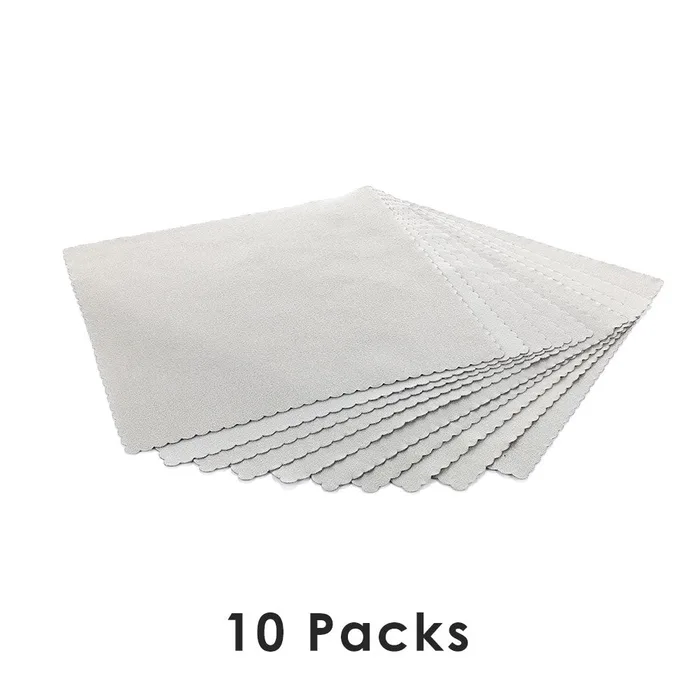
The Rag Company's Buttersoft Suede Applicator Cloths are the pick if you are applying a coating: 8 by 8 inches of AA-grade microfibre suede, lint-free and tag-free with clean straight-cut edges, in packs of ten. Meguiar's Foam Applicator Pads are the value buy for wax and polish, 4 inch ultra-soft tight-cell foam that keeps product on the paint rather than in the pad, and machine washable. Chemical Guys' Easy Grip Hex-Logic is the depends pick, a foam pad on a grip base aimed at tyre shine, dressings and sealants, where keeping the product off your hand is most of the value. Skip the Turtle Wax 4 inch foam five-pack for anything expensive. It is dense open-cell foam, which is fine for a cheap wax and is the pad most likely to be grabbed for a coating and to absorb it. Best for: anyone who has watched a coating disappear into a sponge.
Our picks at a glance
- The Rag Company Buttersoft Suede Applicator Cloths - Buy. Suede cloths for coatings, with dimensions, a stated fibre grade and edges that will not catch.
- Meguiar's Supreme Shine Foam Applicator Pads, 4 Pack - Buy. Ultra-soft tight-cell foam, which keeps wax on the paint instead of inside the pad, and it washes.
- Chemical Guys Easy Grip Hex-Logic Applicator - It depends. Foam on a grip base for tyre shine and dressings, where the point is keeping the product off your hand.
- Turtle Wax 4 in. Premium Black Foam Applicator, 5 Pack - Skip. Dense open-cell foam, which is exactly the structure that drinks an expensive product into the pad.
The verdict in 30 seconds
What mattered most
- Material
- Cell structure stated
- Dimensions
- Intended product
- Reusable
- Edges
An applicator pad looks like the most interchangeable item in detailing and is not. Open cell foam drinks product into the pad, tight cell foam keeps it on the surface, and neither is what a ceramic coating wants, because coatings are laid down with a suede or microfibre cloth over a block. Buy the wrong one and you either waste an expensive bottle into a sponge or leave high spots you then have to polish off.
Suede cloths for coatings, with dimensions, a stated fibre grade and edges that will not catch.
Best for: Applying ceramic coatings, graphene coatings and glass sealants, where an even layer and no lint is the whole requirement.
- 8 by 8 inches, sold in packs of ten.
- Premium AA-grade microfibre suede stated explicitly, rather than a generic softness claim.
- Lint-free, tag-free and non-abrasive, with clean straight-cut edges for even coating application.
- Designed for high-end coatings specifically, so the tool matches the product it is meant to lay down.
- A cloth rather than a pad, so it needs folding over a block or a foam applicator to spread evenly.
- Wrong tool for thick wax or a tyre dressing, where a foam pad does the job better.
- The maker rates the cloths for multiple washes, but a cloth with a cured coating in the fibres is finished, so treat it as a consumable for coatings.
- A ten pack may be more than a one-off job needs.
Own the The Rag Company Buttersoft Suede Applicator Cloths? Tell us how it held up.
Thanks. Counted, and shown once enough owners have weighed in.
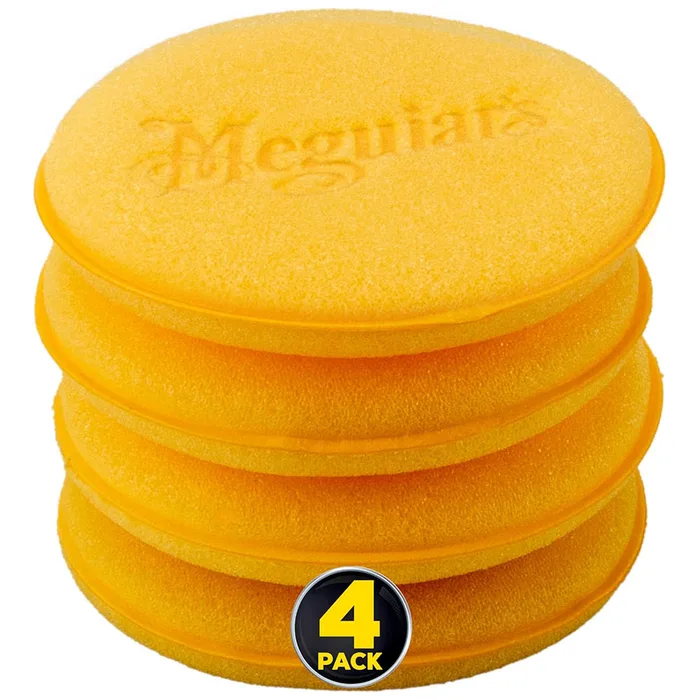
Ultra-soft tight-cell foam, which keeps wax on the paint instead of inside the pad, and it washes.
Best for: Waxes, polishes and mild compounds applied by hand, where tight-cell foam means the bottle lasts and the coverage stays even.
- Ultra-soft tight-cell foam stated explicitly, the structure that keeps product on the surface rather than absorbing it.
- Four inches, the standard size for hand application across a panel.
- Machine washable and described as highly durable, so each pad gets multiple uses.
- Cleared for mild compounds, polish and wax, which is an accurate description of what foam suits.
- Foam is the wrong tool for a ceramic coating regardless of cell structure.
- No thickness or density figure published, only tight-cell.
- Four pads is a modest count for a full car if you are using a fresh one per product.
- No grip or backing, so your fingers press directly through the pad.
Own the Meguiar's Supreme Shine Foam Applicator Pads, 4 Pack? Tell us how it held up.
Thanks. Counted, and shown once enough owners have weighed in.
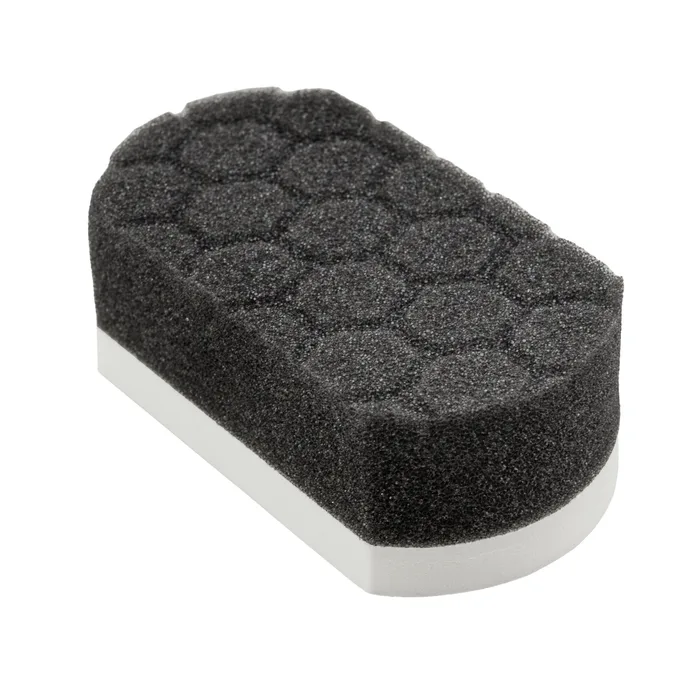
Foam on a grip base for tyre shine and dressings, where the point is keeping the product off your hand.
Best for: Tyre dressings and trim dressings, where a grip keeps sticky product off your hand and the curve of a sidewall needs control.
- A comfortable base grip separating your fingers from the product, which matters most with tyre dressing.
- Soft Hex-Logic foam face, described as high-density EVA foam, to spread the coat.
- Explicitly aimed at tyre shine, dressing or sealant, so the intended use is stated rather than implied.
- Budget tier, and the grip makes it far easier to control on a curved sidewall.
- Described as high-density EVA foam, but no cell structure is stated, so whether it absorbs or holds product is unknown.
- No dimensions published.
- The grip that helps on a tyre gets in the way on a flat panel, where you want to feel the surface.
- Not a coating tool, and nothing on the page suggests otherwise.
Own the Chemical Guys Easy Grip Hex-Logic Applicator? Tell us how it held up.
Thanks. Counted, and shown once enough owners have weighed in.
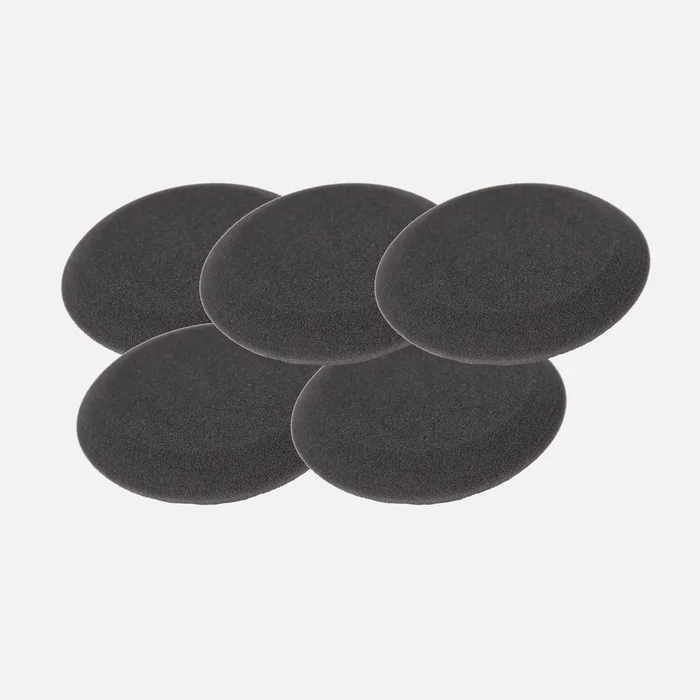
Dense open-cell foam, which is exactly the structure that drinks an expensive product into the pad.
Best for: Cheap paste and liquid waxes where absorbing some product does not matter. Not the pad to have in your hand when you open a coating.
- Soft tapered edges made entirely of foam, so there is no hard edge to scuff clear coat.
- Improved tensile strength and a dense construction, described as firm enough to survive dozens of waxes without losing shape.
- Five pads at the budget tier.
- Open cell construction, stated on the page, which means the pad absorbs product rather than holding it on the surface.
- Fine for a cheap paste wax and wasteful with anything expensive.
- It is the pad most likely to be reached for with a ceramic coating, which is where open cell costs real money.
- No cell size or density figure beyond dense and open.
Own the Turtle Wax 4 in. Premium Black Foam Applicator, 5 Pack? Tell us how it held up.
Thanks. Counted, and shown once enough owners have weighed in.
| Criteria | Buttersoft Suede Applicator Cloths Top pick Buy it Buy | Supreme Shine Foam Applicator Pads, 4 Pack Buy it Buy | Easy Grip Hex-Logic Applicator It depends Buy | 4 in. Premium Black Foam Applicator, 5 Pack Skip it Buy |
|---|---|---|---|---|
| Best for | Applying ceramic coatings, graphene coatings and glass sealants, where an even layer and no lint is the whole requirement. | Waxes, polishes and mild compounds applied by hand, where tight-cell foam means the bottle lasts and the coverage stays even. | Tyre dressings and trim dressings, where a grip keeps sticky product off your hand and the curve of a sidewall needs control. | Cheap paste and liquid waxes where absorbing some product does not matter. Not the pad to have in your hand when you open a coating. |
| Price tier | $$ · mid-range | $ · budget | $ · budget | $ · budget |
| Material | AA-grade microfibre suede | Tight-cell foam | Hex-Logic foam on a grip base | Dense open-cell foam |
| Cell structure stated | Not foam | Tight cell | Not stated | Open cell |
| Dimensions | 8 x 8 in. | 4 in. | Not published | 4 in. |
| Intended product | Coatings and glass sealants | Wax, polish, mild compounds | Tyre shine, dressings, sealants | Wax |
| Reusable | Rated for multiple washes, but finished once a coating cures in it | Machine washable | Not stated | Stated as dozens of uses |
| Edges | Clean straight cut | Not stated | Not stated | Soft tapered, all foam |
| Grip or backing | None, it is a cloth | None | Grip base | None |
| Pack size | 10 | 4 | 1 | 5 |
Which one is right for you?
- Applying ceramic coatings, graphene coatings and glass sealants, where an even layer and no lint is the whole requirement. Buy it The Rag Company Buttersoft Suede Applicator Cloths
- Waxes, polishes and mild compounds applied by hand, where tight-cell foam means the bottle lasts and the coverage stays even. Buy it Meguiar's Supreme Shine Foam Applicator Pads, 4 Pack
- Tyre dressings and trim dressings, where a grip keeps sticky product off your hand and the curve of a sidewall needs control. It depends Chemical Guys Easy Grip Hex-Logic Applicator
- Cheap paste and liquid waxes where absorbing some product does not matter. Not the pad to have in your hand when you open a coating. Skip it Turtle Wax 4 in. Premium Black Foam Applicator, 5 Pack
How we judged the field
Five things decide an applicator, and the first is what it is made of at a level below the word foam. Open cell foam absorbs product into the pad, tight cell keeps it on the face, and suede or short-nap microfibre does neither, releasing a thin even film. Those are three different tools sold under one category name. Second is what the product is intended for, since wax, dressing and coating behave completely differently on the same pad. Third is dimensions, which decide how much panel you cover per pass. Fourth is the edge, because that is what touches paint when you tilt the pad. Fifth is whether it can be washed and reused, which changes the cost of the pack considerably.
The field sorts by what goes on the pad rather than by brand. Coating applicators are cloths, usually suede or a tight short nap, sold in packs because they are consumed. Wax and polish applicators are tight-cell foam discs. Dressing applicators are open cell foam, often on a grip so your hand stays clean. We took one of each plus the general-purpose foam multipack that gets bought by default, which is where most of the waste in this category happens.
The Rag Company Buttersoft Suede Applicator Cloths
Buy itThe Buttersoft Suede Applicator Cloths are the pick because coatings are the application where getting the tool wrong costs real money. These are 8 by 8 inch cloths in premium AA-grade microfibre suede, described as lint-free, tag-free and non-abrasive with clean straight-cut edges, sold in packs of ten. Every one of those details does work. Suede releases a coating as a thin even film instead of absorbing it, which is the difference between a small bottle covering a car and a small bottle covering three panels. Lint-free matters because a fibre left in a curing coating is permanent. Straight-cut edges mean nothing catches as you draw the cloth across a panel, which is how streaks and high spots start. And a ten pack suits coating work, where a cloth with cured coating in the fibres is finished, even though the maker rates the cloth for multiple washes. The limits are scope. It is a cloth rather than a pad, so it wants folding over a block, and it is the wrong tool for thick wax or a tyre dressing.
Meguiar’s Supreme Shine Foam Applicator Pads, 4 Pack
Buy itMeguiar’s Supreme Shine Foam Applicator Pads are the sensible default for everything wax-shaped, and the reason is two words on the page: tight cell. Ultra-soft tight-cell foam keeps product sitting on the face of the pad where you can spread it, rather than wicking it into the body of the sponge, and that single property decides how far a bottle of wax goes. Four inches is the right size for hand application across a panel without becoming unwieldy. They are stated as machine washable and highly durable, so each pad survives multiple uses, which matters when you want a separate pad per product. The page is also accurate about scope, clearing them for mild compounds, polish and wax rather than claiming universality. What they will not do is apply a coating, because foam of any cell structure is the wrong tool there, and no thickness or density figure is published beyond the phrase tight cell.
Chemical Guys Easy Grip Hex-Logic Applicator
It dependsThe Chemical Guys Easy Grip Hex-Logic is the one worth having for a specific job that the other three are bad at. It is a foam face on a grip base, and the grip is the entire point: applying tyre dressing with a bare pad means the dressing ends up on your fingers and then on a door handle, and a sidewall is a curved surface where control matters. The page describes high-density EVA foam with a high-density grip for easier spreading and cleaner hands. The page names the intended uses directly, tyre shine, dressing or sealant, which is more scope discipline than most applicator pages manage. The reservations are what is missing and what the grip costs you. No cell structure is stated, so whether it absorbs or holds is unknown, and no dimensions appear. On a flat panel the grip actively gets in the way, because you want to feel the surface through the pad.
Turtle Wax 4 in. Premium Black Foam Applicator, 5 Pack
Skip itThe Turtle Wax five-pack is the one to leave off your coating table, and its own page is what makes the case. It is described as a dense, open cell construction with improved tensile strength, firm enough to survive dozens of waxes without losing shape. Open cell is stated plainly, and open cell means the pad absorbs. For a low-cost paste or liquid wax that is a fair trade for a very cheap pad, and the soft tapered edges made entirely of foam are a genuinely good detail, because there is no hard seam to scuff clear coat when you tilt the applicator. The problem is what happens next. This is the generic multipack that ends up in the drawer, and it is the pad most likely to be picked up when someone opens an expensive coating or a premium sealant, at which point the open cell structure quietly absorbs a meaningful share of a small bottle. As a wax pad it is fine and cheap. As the default applicator for everything, it is expensive.
Sources
Specs in this review come from these pages.
- The Rag Company Buttersoft Suede Applicator Cloths product page (theragcompany.com)
- Meguiar's Foam Applicator Pads product page (meguiarsdirect.com)
- Chemical Guys Easy Grip Hex-Logic Applicator product page (chemicalguys.com)
- Turtle Wax 4 in. Premium Black Foam Applicator product page (turtlewax.com)
- EPA, Safer Choice standard for cleaning products (epa.gov)
The Rag Company Buttersoft Suede Applicator Cloths vs Meguiar’s Supreme Shine Foam Applicator Pads, 4 Pack: which should you buy?
The Buttersoft cloths and the Meguiar’s pads are the two to own, and they are not alternatives. The suede cloths exist for coatings: they release a thin even film, leave no lint in a curing layer, and are consumed by the job. If you are applying a ceramic or graphene coating, or a glass sealant, this is the tool and a foam pad is not.
The Meguiar’s pads exist for everything wax-shaped. Tight-cell foam keeps the product on the face where you can spread it, four inches covers a panel comfortably by hand, and they wash and come back. For waxes, glazes, mild compounds and hand polishes they are the correct and very cheap answer. These two together are inexpensive and cover almost everything, and that the mistake people actually make is owning only a bag of generic foam and using it for all three jobs. Add the Chemical Guys grip pad if you dress tyres, and keep every applicator to one product.
What to look for
- Open cell or tight cell, stated: open cell absorbs product into the pad and tight cell keeps it on the face, and two pages here say which while two do not.
- Whether it is foam at all: coatings want suede or short-nap microfibre, and using foam on one wastes a meaningful share of a small bottle.
- A stated intended product: wax, dressing and coating are three different applications, and a page naming which is a page that has thought about it.
- Dimensions: they decide how much panel you cover per pass, and two of these four publish none.
- Edge construction: soft tapered or straight-cut edges will not catch or scuff when you tilt the pad at the end of a pass.
- Reusability: foam pads wash and come back, coating cloths do not, and that changes what a pack is really worth.
Our final take
Applicator pads look like the one genuinely interchangeable thing in a detailing cupboard and they are three different tools. Suede and short-nap microfibre cloths release a thin even film, which is what a coating needs. Tight-cell foam holds product on the face, which is what a wax needs. Open cell foam absorbs it, which is fine for a cheap wax and expensive with anything else. The Rag Company’s Buttersoft cloths are the pick for coatings and publish their size, their fibre grade and their edge finish. Meguiar’s tight-cell pads are the cheap correct answer for wax and polish. The Chemical Guys grip pad earns its place on tyres. And the Turtle Wax multipack states plainly that it is open cell, which is exactly why it should not be the pad you reach for by default.
Questions, answered
What is the difference between open cell and tight cell foam?
Open cell foam has pores that connect, so liquid travels into the body of the pad. Tight or closed cell foam has sealed pores, so product stays on the face where it can be spread. That distinction decides how much of a bottle ends up on your car rather than inside a sponge. Meguiar's states tight cell and Turtle Wax states open cell, which makes them straightforwardly different tools despite looking almost identical on a shelf.
Why can't I apply a ceramic coating with a foam pad?
Because coatings come in very small bottles and foam absorbs them. A coating is meant to sit as a thin even film on the paint, and it is applied with a suede or short-nap microfibre cloth wrapped over a block so the liquid spreads rather than soaks in. Use an open cell foam pad and a meaningful share of an expensive bottle disappears into the pad, and the uneven release makes high spots more likely, which then have to be polished off.
How many applicators do I need?
One per product, at minimum, and never shared between categories. A pad that has had tyre dressing on it will transfer silicone onto paint, and a pad used for wax will contaminate a coating. Keep separate applicators for wax and polish, for dressings and tyre shine, and for coatings, and treat coating cloths as consumables. This is the cheapest discipline in detailing and the one most often skipped.
Can I wash and reuse applicators?
Foam pads, generally yes. Meguiar's states its pads are machine washable and highly durable, and Turtle Wax claims dozens of waxes from one pad. Wash them with a plain detergent and no fabric softener, exactly as with microfibre, and let them dry fully. Coating cloths are the exception in practice: the maker of one rates it for multiple washes, but once a ceramic coating has cured in the fibres the cloth is finished, so they are sold in packs of ten.
Does the edge of the pad matter?
More than you would think, because the edge is what touches the panel when you tilt the applicator at the end of a pass. Turtle Wax makes a point of its edges being soft tapered and entirely foam, with no hard seam, and The Rag Company mentions clean straight-cut edges on its coating cloths. A stitched or moulded hard edge dragged across clear coat is a small but real risk, and it is the sort of detail that separates a considered product from a generic one.
Deciding between the top two? See our head-to-head: The Rag Company Buttersoft Suede Applicator Cloths vs Meguiar's Supreme Shine Foam Applicator Pads, 4 Pack.
More in Automotive
Applicator Pads, Explained Plain-English guide → The Rag Company Buttersoft Suede Applicator Cloths vs Meguiar's Supreme Shine Foam Applicator Pads, 4 Pack Head-to-head →  The Best Aftermarket Backup Cameras: 4 Compared (and One to Skip)
  The Best Car Battery and Load Testers: 4 Compared (and One to Skip)
  The Best Battery Tenders: 4 Compared (and One to Skip)
  The Best Borescopes: 4 Compared (and One to Skip)