

Automotive
The Best Aftermarket Backup Cameras: 4 Compared (and One to Skip)
We compared four aftermarket reversing cameras — solar-wireless, wired plate, dual-camera, and plain wireless — on install effort, feed reliability, and real value.
The short version
Adding a reversing camera to an older car comes down to a trade between install effort and feed reliability. The AUTO-VOX Solar1 Pro 6 is our top pick because it skips the video wiring entirely and keeps itself charged with solar, and it includes a 6-inch monitor. The wired eRapta ERT01 is the runner-up and value pick — it needs one cable run, but a wired feed never lags and it costs the least. Step up to the AUTO-VOX Solar 5C only if you tow or want two cameras, and skip the bare eRapta AY5 wireless camera unless you already own a matching monitor. Best for: drivers who want a genuinely useful backup view without paying for a factory retrofit.
The verdict in 30 seconds
What mattered most
- Install effort
- Feed reliability
- Mounting
- Power
- Monitor included
- Best use
If your car never came with a backup camera, adding one is one of the cheapest safety upgrades you can make — but the aftermarket is a jungle of near-identical listings. We cut it down to four honest archetypes: a solar-charged wireless kit, a dirt-cheap wired plate camera, a flexible dual-camera system, and a bare wireless camera. Two are easy recommendations, one is a 'depends on your vehicle' pick, and one is the odd-one-out we'd skip. Note up front: this is a reversing camera guide, not a dash cam guide.
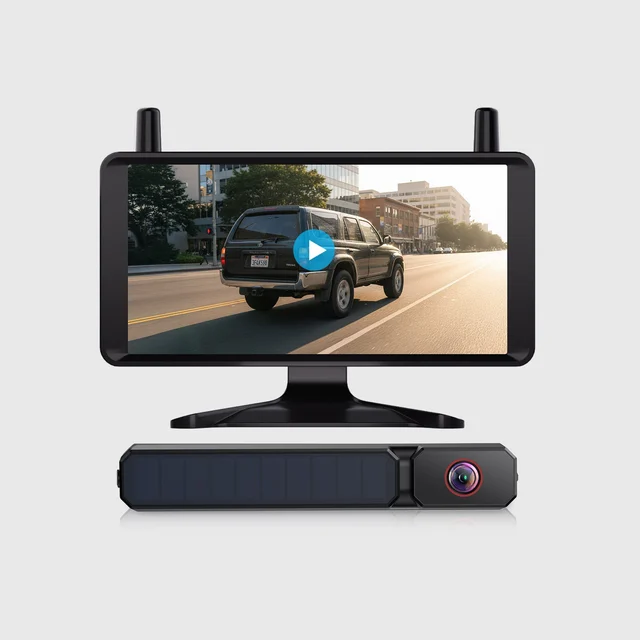
The easiest way to add a camera to a car that never had one — no video wiring, a solar-topped battery, and a big 6-inch screen in the box.
Best for: Anyone who wants the simplest possible bolt-on for a car or truck with no factory camera and no desire to run wires.
- Truly wireless install — the camera talks to the monitor, so there's no video cable to snake through the car
- Solar panel keeps the camera's battery topped up, so most owners rarely plug it in to recharge
- Comes with a large 6-inch monitor and uses digital wireless, which reviewers report is far steadier than old analog kits
- If you garage the car or park where sun is scarce, you'll still need to top the battery by USB occasionally
- A wireless link can show a brief lag or hiccup that a hardwired camera never will
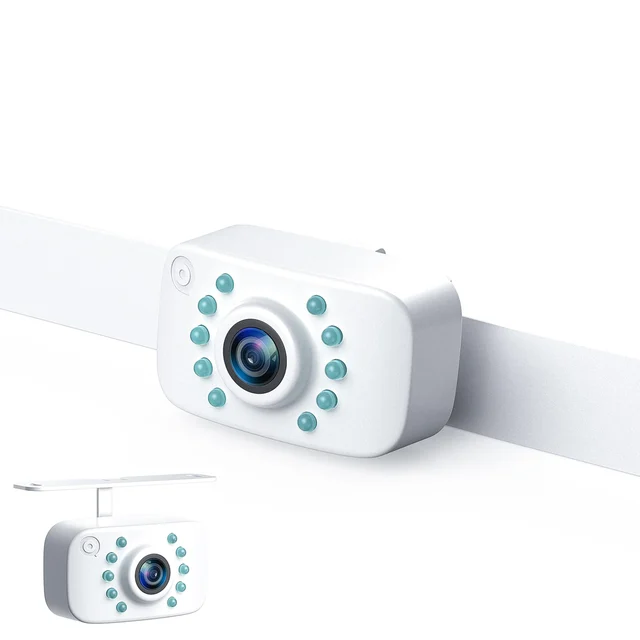
The no-nonsense wired plate camera that just works — for the least money of anything here.
Best for: DIYers who don't mind running a single wire and want the most reliability per dollar.
- A wired feed never lags or drops out, which is the most reliable setup you can buy
- About as inexpensive as a functional backup camera gets, and often sold bundled with a small monitor
- Wide 149-degree angle with weather-sealed IP69K housing and night vision that owners report is genuinely usable
- You have to run one cable from the reverse light forward to the monitor, so install takes real effort
- The bundled monitor is basic, and the whole setup is permanent rather than swappable between vehicles
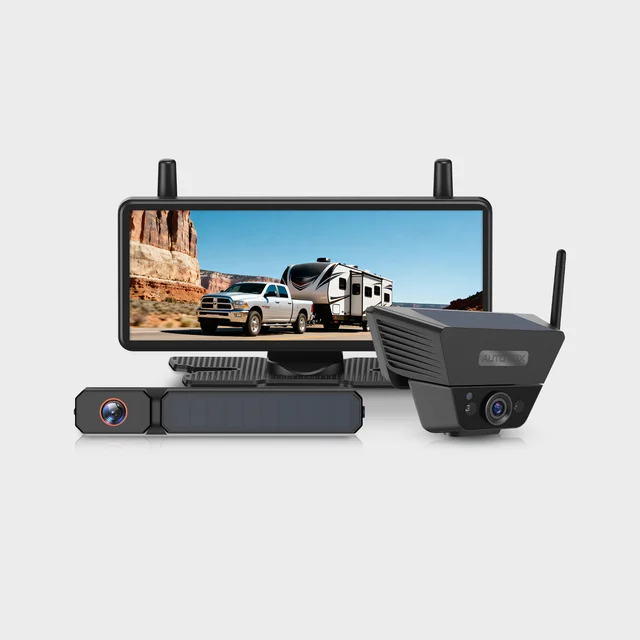
A two-camera, magnetic-or-plate system that's brilliant for towing but overkill for a basic commuter.
Best for: Truck, SUV, and RV owners who tow or want front-and-rear coverage, not commuters who just want to see the curb.
- Runs two cameras on a split screen — pair a rear view with a hitch or front camera
- Mount magnetically for quick swaps or bolt it to the license plate; solar assist keeps the batteries up
- Owners who tow report it's a big help lining up a trailer and watching a blind rear corner
- Costs and set-up effort are well above a single-camera kit
- The dual-camera features are wasted money if all you need is a simple rear view on a small car
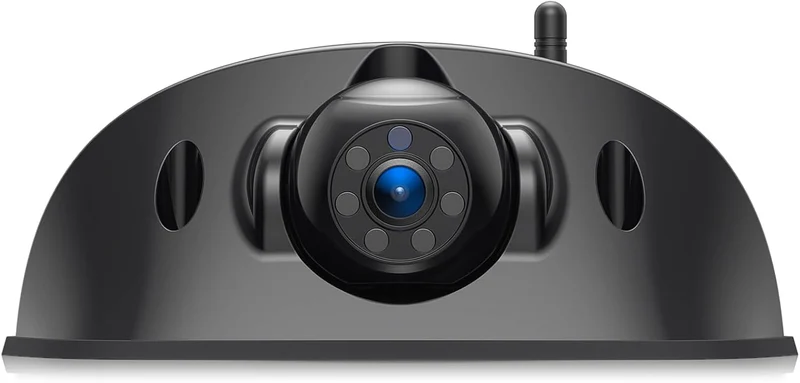
A perfectly fine wireless camera that the solar kit out-simplifies and the wired camera out-reliables.
Best for: Only worth it if you already own a compatible eRapta wireless monitor and just need to add or replace the camera.
- Genuinely wireless, so there's no video cable to run to the front of the car
- Compact, weather-resistant housing with night vision
- It's essentially a camera that still needs power run to it and a compatible monitor paired or purchased
- The wireless link can lag or drop like any wireless cam, so it doesn't beat the wired pick on reliability — or the solar kit on convenience
| Criteria | AUTO-VOX Solar1 Pro 6 Solar Wireless Backup Camera Top pick | eRapta ERT01 License Plate Backup Camera | AUTO-VOX Solar 5C Dual-Channel Backup Camera System | eRapta AY5 Wireless Backup Camera System |
|---|---|---|---|---|
| Verdict | Buy it | Buy it | It depends | Skip it |
| Best for | Anyone who wants the simplest possible bolt-on for a car or truck with no factory camera and no desire to run wires. | DIYers who don't mind running a single wire and want the most reliability per dollar. | Truck, SUV, and RV owners who tow or want front-and-rear coverage, not commuters who just want to see the curb. | Only worth it if you already own a compatible eRapta wireless monitor and just need to add or replace the camera. |
| Price tier | $$ · mid-range | $ · budget | $$$ · premium | $$ · mid-range |
| Install effort | Easiest — no video wiring | Moderate — run one cable | Involved — up to two cameras | Easy — wireless, but pair a monitor |
| Feed reliability | Good digital wireless | Best — wired, no lag | Good digital wireless | Wireless — can lag or drop |
| Mounting | License plate | License plate | Magnetic or license plate | Bracket / surface |
| Power | Solar-assisted battery | Wired 12V from reverse light | Solar-assisted battery | Power run to camera |
| Monitor included | Yes — 6-inch screen | Yes — small monitor (as a kit) | Yes — split screen | No — pair or buy separately |
| Best use | Any car, easiest add-on | Budget DIY, max reliability | Towing / front + rear | Existing eRapta wireless owners |
| Price tier | $$ · mid-range | $ · budget | $$$ · premium | $$ · mid-range |
Which one is right for you?
- Anyone who wants the simplest possible bolt-on for a car or truck with no factory camera and no desire to run wires. Buy it AUTO-VOX Solar1 Pro 6 Solar Wireless Backup Camera
- DIYers who don't mind running a single wire and want the most reliability per dollar. Buy it eRapta ERT01 License Plate Backup Camera
- Truck, SUV, and RV owners who tow or want front-and-rear coverage, not commuters who just want to see the curb. It depends AUTO-VOX Solar 5C Dual-Channel Backup Camera System
- Only worth it if you already own a compatible eRapta wireless monitor and just need to add or replace the camera. Skip it eRapta AY5 Wireless Backup Camera System
How we judged the field
We don’t run a lab. Instead we synthesize independent testing, owner reports, and the pattern of complaints and praise that builds up around each model, then weigh what actually matters when you’re bolting a camera onto a car that never had one.
Four things separated the good kits from the forgettable ones:
- Install effort. The single biggest decision is whether you’re willing to run a video cable. Wireless and solar kits let you avoid it; wired kits reward the work with a rock-steady feed.
- Feed reliability. A backup camera is a safety device, so a picture that lags or drops out at the wrong moment is a real problem. Wired always wins here; good digital wireless is a close second.
- Power and charging. Solar-assisted batteries mean you rarely touch the camera again. Wired cameras sip power from the reverse light and never need a recharge.
- What’s in the box. A camera alone isn’t a solution — you need a monitor. We favored kits that include a screen and dinged the one that makes you supply your own.
AUTO-VOX Solar1 Pro 6 Solar Wireless Backup Camera — buy
This is the pick for the person who just wants it done. Because the camera sends its picture wirelessly, there’s no cable to snake from the tailgate to the dash — the hardest part of a camera install simply disappears. The camera clips onto the license plate, a small solar panel keeps its battery topped in normal daylight parking, and a 6-inch monitor comes in the box. Reviewers consistently note that digital wireless like this holds a far steadier picture than the cheap analog kits of a few years ago. The honest caveats: if you garage the car you’ll top the battery by USB now and then, and a wireless link can still show the occasional split-second hiccup a wired camera won’t. For most drivers, that’s a fair trade for a 20-minute, no-wiring install.
eRapta ERT01 License Plate Backup Camera — buy
The value champion. It’s a plain wired camera that tucks into a license-plate bracket, and because the video runs down a physical cable, the feed never lags or drops — the most reliable arrangement you can buy, for the least money. Owners praise the wide 149-degree view, the weather-sealed housing, and night vision that’s genuinely usable rather than a marketing line. It’s frequently sold bundled with a small monitor, so it’s a complete solution. The catch is the install: you have to run that one cable from the reverse light forward to the screen, which means an hour with some trim tools rather than a five-minute clip-on. If you’re comfortable with that, nothing here gives you more reliable camera per dollar.
AUTO-VOX Solar 5C Dual-Channel Backup Camera System — it depends
This one is excellent — for the right vehicle. It runs two cameras on a split screen and lets you mount magnetically for quick swaps or bolt to the plate for a permanent install, with solar assist keeping the batteries up. Owners who tow report it’s a genuine help lining up a hitch and watching a long blind rear corner. But that flexibility is exactly why it’s a ‘depends’ rather than a straight buy: the cost and set-up effort are well above a single-camera kit, and if all you need is to see the curb behind a small commuter car, you’re paying for a second camera you’ll never use. Buy it if you tow or want front-and-rear coverage; otherwise the simpler picks do the job for less.
eRapta AY5 Wireless Backup Camera System — skip
There’s nothing wrong with this camera — that’s rather the point. It’s a competent wireless unit with night vision and a tidy housing. But for the job most people are trying to do, it’s the odd one out. You still have to get power to the camera, and it’s built around pairing with a matching monitor you either already own or have to buy, so it isn’t a complete, cheaper alternative to the wired kit. And being wireless, it carries the same possibility of lag or dropout without offering the solar kit’s charge-and-forget convenience. Unless you already have a compatible eRapta wireless monitor and just need to add a camera, the solar kit is easier and the wired camera is both cheaper and steadier.
AUTO-VOX Solar1 Pro 6 vs eRapta ERT01: which should you buy?
This is really a question about one wire. The Solar1 Pro 6 wins if you value your time and don’t want to touch the car’s wiring: it beams the picture to its own 6-inch screen and stays charged with solar, so the whole install is a clip and a stick. The ERT01 wins if you’ll trade an hour of labor for the steadiest possible feed and the lowest price — a wired camera simply cannot lag, and this one costs a fraction of the solar kit. Put bluntly: choose the Solar1 Pro 6 for maximum convenience, choose the ERT01 for maximum reliability and value. Both are honest recommendations; the deciding factor is whether running a single cable sounds like a fair afternoon’s work to you.
What to look for
- Decide on wiring first. If you won’t run a cable, go solar or wireless. If you will, a wired plate camera is cheaper and more reliable.
- Make sure a monitor is included — or that you already own a compatible one. A camera by itself is not a finished install.
- Favor digital wireless over analog if you go cordless; it holds a much steadier picture.
- Match the mount to the vehicle. Plate mounts are tidy and permanent; magnetic mounts are great for trucks, trailers, and swapping between vehicles.
- Check the field of view and night vision — a wide angle (roughly 130 degrees or more) and real low-light performance are what make the camera actually useful.
- Weather sealing matters. Look for a high IP rating so rain and car washes don’t kill the camera in a season.
Our final take
For the vast majority of people adding a reversing camera to a car that never had one, the AUTO-VOX Solar1 Pro 6 is the easy answer: no wiring, solar charging, and a big screen in the box make it the lowest-friction upgrade here. If you’re handy and want the steadiest picture for the least money, the wired eRapta ERT01 is the smarter buy and our value pick. Step up to the AUTO-VOX Solar 5C only if you tow or genuinely need two cameras — and skip the bare eRapta AY5 unless you already own the monitor it’s meant to pair with. Pick based on whether you’ll run a wire, and you’ll be happy either way.
Questions, answered
Do I have to run wires to add a backup camera?
Not always. Solar and wireless kits like the Solar1 Pro 6 skip the long video cable — the camera beams the picture to the monitor. Wired cameras like the eRapta ERT01 need one cable run from the reverse light to the screen, which is more work but gives the steadiest image.
Are wireless backup cameras laggy?
Modern digital wireless is much better than the old analog kits, and owners report it's fine for everyday reversing. That said, any wireless link can show a brief lag or momentary dropout, so if you want zero-delay reliability, a wired camera is the safe bet.
Does a solar backup camera ever need charging?
In normal daylight parking, the solar panel keeps the camera's battery topped up so you rarely think about it. If you keep the car in a garage or somewhere with little sun, plan on topping the battery by USB every so often.
License-plate mount or magnetic mount — which is better?
A license-plate mount is tidy and permanent, ideal for a car you'll keep the camera on. A magnetic mount is quick to move between vehicles and handy on trucks, trailers, and RVs, which is why the dual-camera Solar 5C offers both.
Is a backup camera the same as a dash cam?
No. A backup (reversing) camera shows what's behind you when you shift into reverse; a dash cam records the road while you drive. Some rear-view-mirror units combine both, but everything in this guide is a dedicated reversing camera.
More Automotive reviews
 The Best Car Phone Mounts: 4 Compared (and One to Skip)
  The Best Car Vacuums: 4 Compared (and One to Skip)
  The Best Dash Cams: Four Current Models Compared
  The Best Portable Jump Starters: 4 Compared (and One to Skip)
  The Best OBD2 Scanners: 4 Compared (and One to Skip)
  The Best Radar Detectors: 4 Compared (and One to Skip)