

Automotive
The Best All Purpose Cleaners: 4 Compared (and One to Skip)
We compared four automotive all purpose cleaners on strength, stated surfaces and dilution guidance, and only two of the four publish a dilution ratio.
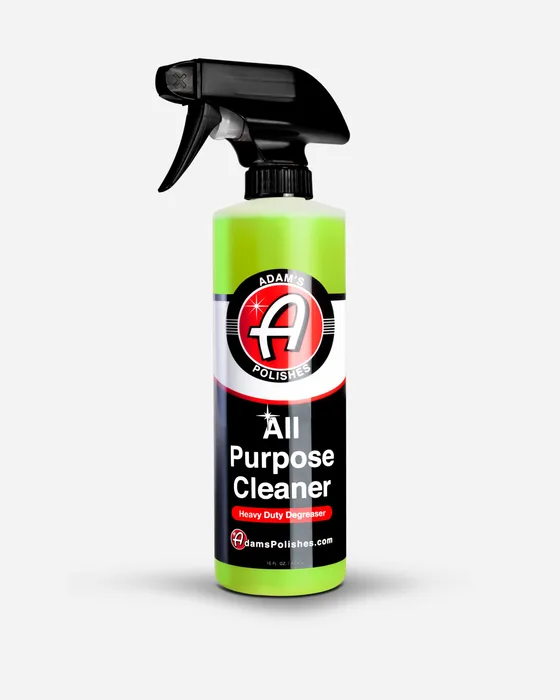
The short version
Adam's All Purpose Cleaner is the pick because it spells out how the product behaves at each strength: full strength for grease and buildup, diluted for body panels, interior components and even leather. P&S All Purpose Cleaner is the value buy and the trade option, sold in gallon and five gallon sizes with a clear list of the surfaces it is meant for, from carpet mats and upholstery to wheel wells and engine bays. Chemical Guys' Nonsense is the depends pick: colourless and odourless, which is genuinely useful on light interiors and headliners where a dyed cleaner leaves a mark. Skip Mothers Professional All-Purpose Cleaner Concentrate unless you proportion by the gallon. It prints the fullest mix table here but no pH figure, lists alkaline ingredients, is dyed and perfumed, and does not say which side of its ratios is water. Best for: anyone who wants one bottle for wheel wells, door jambs, carpets and trim, and would like to know what strength to use where.
Our picks at a glance
- Adam's Polishes All Purpose Cleaner - Buy. A bottle that tells you what it does at full strength and what it does diluted, and which surfaces belong to each.
- P&S Detail Products All Purpose Cleaner - Buy. The trade bottle, with the longest published surface list here and biodegradable detergents behind it.
- Chemical Guys Nonsense Invisible Super Cleaner - It depends. Colourless and odourless, which is the whole reason to own it and the reason it is a second bottle rather than a first.
- Mothers Professional All-Purpose Cleaner Concentrate - Skip. A trade gallon concentrate with the fullest mix table here, but no pH figure, a dye and perfume, and no word on which side of its ratios is water.
The verdict in 30 seconds
What mattered most
- Dilution ratio
- Behaviour at each strength described
- pH figure or claim
- Chemistry type
- Surfaces named
- Dye and fragrance
All purpose cleaner is the most useful bottle in a detailing cupboard and the most dangerous one, because the same liquid cleans a wheel well at full strength and ruins a leather seat at the same concentration. Dilution is what separates those two outcomes, which makes the ratio a safety instruction rather than an economy tip. Across four current products, every one is described as concentrated, and only two print a ratio.
A bottle that tells you what it does at full strength and what it does diluted, and which surfaces belong to each.
Best for: One bottle that has to cover engine bays, wheel wells, door jambs, carpets and interior trim, where knowing the strength matters more than the price.
- Describes full strength use for cutting heavy grease and buildup, and diluted use for body panels, interior components and leather.
- Explicitly described as dilutable for delicate surfaces, which frames dilution as a control rather than a saving.
- Sizes from 16 ounces to five gallons, so it works for a single car or a fleet.
- The brand states it is safe for use in full sun while recommending cool surfaces and shade, which is a useful caveat rather than a blanket claim.
- No dilution ratio published for any of the uses described.
- No pH figure given anywhere on the page.
- Heavily dyed neon yellow and citrus scented, which some people would rather not put on a headliner.
- The brand warns to rinse immediately and dry to avoid water spots or damage, which means it is not a wipe-and-walk-away product.
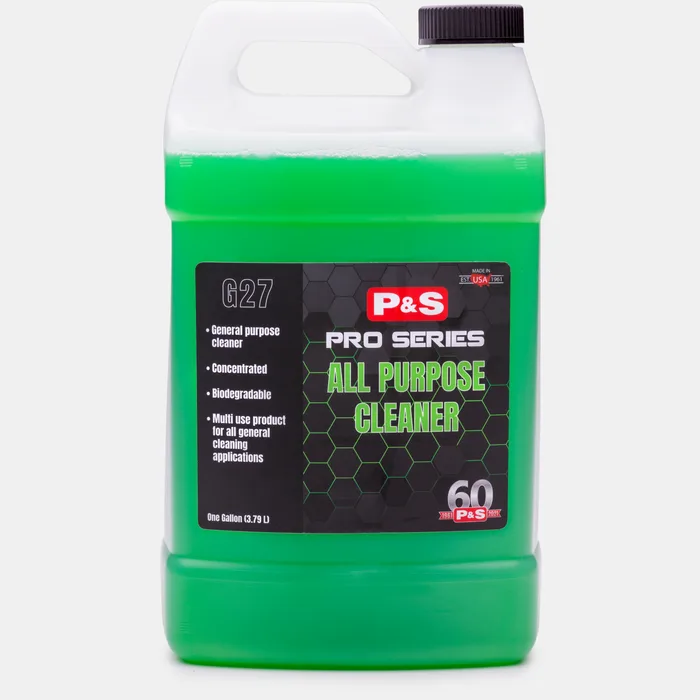
The trade bottle, with the longest published surface list here and biodegradable detergents behind it.
Best for: Anyone cleaning several vehicles, or refilling spray bottles regularly, who wants one concentrate covering interior and exterior.
- Names the surfaces directly: vinyl, rubber, carpet mats, tires, rims, upholstery, wheel wells and motor compartments.
- High efficiency biodegradable detergents stated, which matters if you rinse onto a driveway.
- Gallon and five gallon sizes, the right economics for anyone cleaning more than one vehicle.
- Formulated to break down grease and cut through dirt across both interior and exterior surfaces.
- No dilution ratio published despite being a trade concentrate meant to be proportioned.
- No pH figure and no pH claim.
- No smaller size, so the entry point is a gallon.
- The surface list includes both upholstery and wheel wells with no guidance on using different strengths for each.
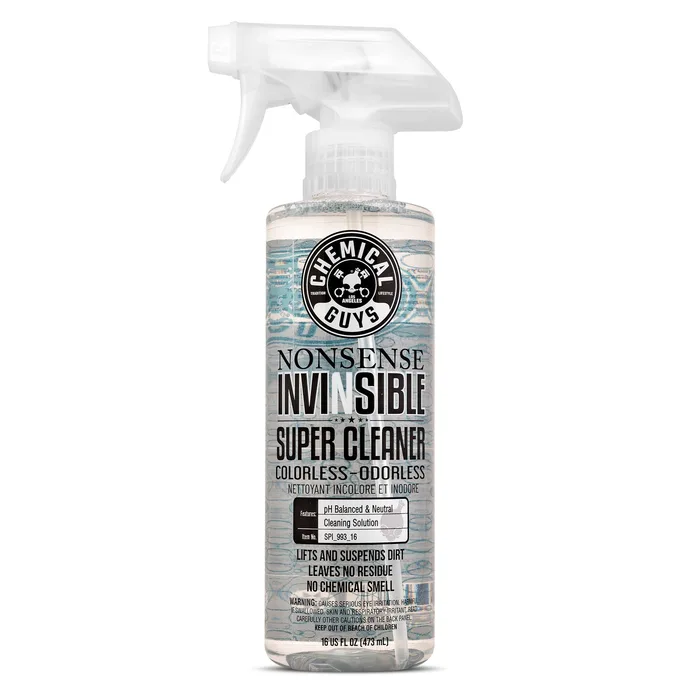
Colourless and odourless, which is the whole reason to own it and the reason it is a second bottle rather than a first.
Best for: Interior work on light or delicate materials where a dyed, fragranced cleaner would leave evidence of itself.
- Completely colourless and odourless, which is genuinely useful on light headliners, alcantara and pale upholstery where a dyed cleaner can stain.
- Described as safe for just about any surface including wheels and tires.
- Sold as a concentrate, with 16 ounce, 32 ounce and gallon sizes.
- No fragrance means no lingering smell in a closed cabin, which matters on interior work.
- The only ratio given is a loose approximately 20 to 1 or as needed, with no guidance for different surfaces.
- Described as pH-balanced, but no pH figure is given.
- Being colourless makes overspray harder to see and therefore harder to rinse off completely.
- The safe on just about any surface framing is broad enough to be unhelpful on the surfaces that actually need care.
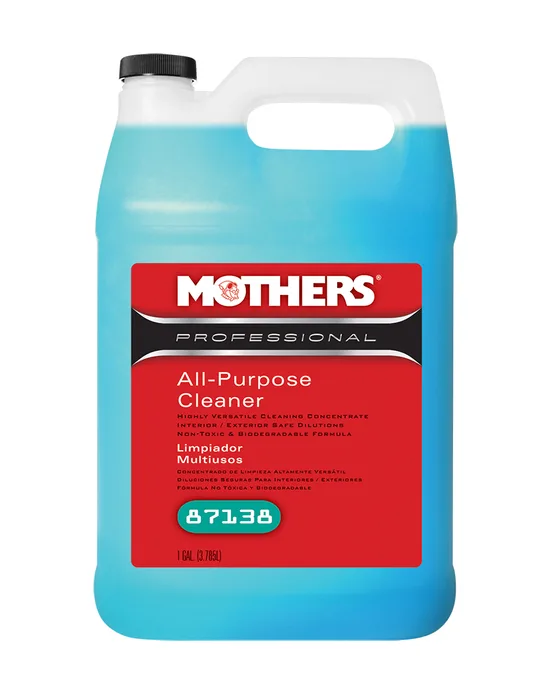
A trade gallon concentrate with the fullest mix table here, but no pH figure, a dye and perfume, and no word on which side of its ratios is water.
Best for: Someone who proportions concentrate by the gallon with measured dispensers and wants a printed mix for each job. Less suited to filling a single spray bottle for one car.
- Prints four named mixes by use, from 1:15 for general purpose to 1:3 for engines, tires and grease, the fullest table in this comparison.
- Names carpets, fabrics, vinyl upholstery, engine compartments, fender wells, door jambs, wheels, tires and whitewalls.
- Described as highly concentrated and biodegradable, with gallon sizes for refilling spray bottles.
- The page does not say which side of 1:15 or 1:3 is water, and brands differ on that convention.
- No pH figure on the page, and the safety data sheet lists pH as no data available, while the ingredient list names potassium hydroxide as a pH adjuster and sodium metasilicate.
- The safety data sheet describes a teal liquid with a perfume odour, and the ingredient list shows a dye and a fragrance, so both stay behind on trim and in a closed cabin.
- The data sheet classes it as a skin irritant and a serious eye irritant, so gloves and eye protection matter when mixing.
- Its mix for vinyl and upholstery is 1:10, stronger than the 20 to 1 interior mix another product here prints, with no mix given for plastic trim or leather.
- Sold by the gallon and up, with no small bottle.
| Criteria | All Purpose Cleaner Top pick Buy it Buy | All Purpose Cleaner Buy it Buy | Nonsense Invisible Super Cleaner It depends Buy | Professional All-Purpose Cleaner Concentrate Skip it Buy |
|---|---|---|---|---|
| Best for | One bottle that has to cover engine bays, wheel wells, door jambs, carpets and interior trim, where knowing the strength matters more than the price. | Anyone cleaning several vehicles, or refilling spray bottles regularly, who wants one concentrate covering interior and exterior. | Interior work on light or delicate materials where a dyed, fragranced cleaner would leave evidence of itself. | Someone who proportions concentrate by the gallon with measured dispensers and wants a printed mix for each job. Less suited to filling a single spray bottle for one car. |
| Price tier | $$ · mid-range | $$ · mid-range | $$ · mid-range | $$ · mid-range |
| Dilution ratio | Not published | Not published | About 20 to 1, or as needed | 1:15 general, 1:10 vinyl and upholstery, 1:5 heavy, 1:3 engines and tires |
| Behaviour at each strength described | Yes, full strength and diluted | No | One loose ratio only | Yes, four named mixes by use |
| pH figure or claim | Neither | Neither | pH-balanced claim, no figure | Neither, data sheet lists none |
| Chemistry type | General purpose concentrate | Biodegradable detergent | Colourless, odourless concentrate | Surfactant and glycol ether solvent concentrate |
| Surfaces named | Body panels, interior, leather, plus heavy grease | Vinyl, rubber, carpet, tires, rims, upholstery, wheel wells, engine bays | Just about any surface, wheels and tires | Carpets, fabrics, vinyl upholstery, engines, fender wells, door jambs, wheels, tires |
| Dye and fragrance | Neon yellow, citrus scent | Not stated | Colourless and odourless | Teal dye, perfumed |
| Sizes | 16 oz, gallon, 5 gallon | Gallon, 5 gallon | 16 oz, 32 oz, gallon | Gallon, 5 gallon |
| Biodegradable claim | Not stated | Yes | Not stated | Yes |
Which one is right for you?
- One bottle that has to cover engine bays, wheel wells, door jambs, carpets and interior trim, where knowing the strength matters more than the price. Buy it Adam's Polishes All Purpose Cleaner
- Anyone cleaning several vehicles, or refilling spray bottles regularly, who wants one concentrate covering interior and exterior. Buy it P&S Detail Products All Purpose Cleaner
- Interior work on light or delicate materials where a dyed, fragranced cleaner would leave evidence of itself. It depends Chemical Guys Nonsense Invisible Super Cleaner
- Someone who proportions concentrate by the gallon with measured dispensers and wants a printed mix for each job. Less suited to filling a single spray bottle for one car. Skip it Mothers Professional All-Purpose Cleaner Concentrate
How we judged the field
Five things decide an all purpose cleaner. Dilution guidance comes first, because on a concentrate the ratio is a safety instruction and not a cost tip, and it is what separates cleaning a wheel well from ruining a dashboard. Second is the chemistry type, since a citrus solvent degreaser and a detergent-based cleaner behave very differently on plastics and leather even when both are sold under the same label. Third is the stated surface list, which is the only place most brands hint at what the product is really for. Fourth is dye and fragrance, which sound cosmetic and matter a great deal on a light headliner or in a closed cabin. Fifth is size range, because a concentrate is only cheap if you can buy it in a size that reflects how much you use.
The field splits by what does the cleaning. Detergent-based cleaners lift soil with surfactants and are the safer default across a car. Solvent-based cleaners, usually citrus, dissolve grease and are far more effective on engine bays and much riskier on trim. A third group markets itself on what it lacks, being colourless and odourless for delicate interiors. We took two detergent concentrates, one colourless option and one trade concentrate that blends surfactants with a glycol ether solvent, which is how the same job gets done by someone cleaning cars for a living.
Adam’s Polishes All Purpose Cleaner
Buy itAdam’s All Purpose Cleaner is the one that treats dilution as information rather than an afterthought. The page describes the product working at full strength to cut heavy grease and buildup, and being gentle enough when diluted to clean body panels, interior components and even leather. Only one other page in this comparison connects strength to use, and it does so with a ratio rather than a description. That connection is what that decides whether an APC is a useful tool or an expensive mistake. There is a further useful caveat: the brand says the product is safe in full sun but recommends surfaces that are cool to the touch, and to rinse immediately and dry to avoid water spots or damage. Both are the kind of qualification that makes the rest of the page more credible. Sizes run from 16 ounces to five gallons. What is missing is the arithmetic, because there is no ratio for any of the uses described, and the neon yellow dye and citrus fragrance are not what you want on a light headliner.
P&S Detail Products All Purpose Cleaner
Buy itP&S All Purpose Cleaner is the same job for a working detailer. The strength of the page is its surface list, which is unusually specific: vinyl, rubber, carpet mats, tires, rims, upholstery, wheel wells and motor compartments. That covers the whole car, inside and out, and telling you the intended surfaces is the closest thing to guidance you get in this category. The formulation is described as high efficiency biodegradable detergents that break down grease and cut through dirt, and biodegradability is worth having if you rinse onto a driveway that drains to a storm sewer. Gallon and five gallon sizes make it the likeliest to be economical per use if you actually get through it. The gaps are the category’s gaps plus one of its own. There is no dilution ratio despite this being a trade concentrate, no pH claim, and the surface list puts upholstery and wheel wells in the same sentence without suggesting they want different strengths.
Chemical Guys Nonsense Invisible Super Cleaner
It dependsNonsense is worth owning and probably not first. Chemical Guys makes a virtue of what it leaves out: the cleaner is completely invisible, colourless and odourless, and on light-coloured headliners, alcantara and pale upholstery that matters more than any cleaning claim, because dye transfer onto a headliner is close to permanent and a strong fragrance lives in a closed cabin for days. It is described as safe for just about any surface including wheels and tires, and it comes in 16 ounce, 32 ounce and gallon sizes. The reservations are real though. It is sold as a concentrate with only a loose ratio, approximately 20 to 1 or as needed, and no strength guidance for different surfaces. Safe on just about any surface is broad enough to be unhelpful precisely where care is needed. And being colourless cuts both ways: you cannot see where the overspray went, so rinsing thoroughly takes more discipline.
Mothers Professional All-Purpose Cleaner Concentrate
Skip itMothers Professional All-Purpose Cleaner is the one to skip for most home buyers, though it is not a bad product. Its page prints the fullest set of mixes in this comparison: 1:15 for general purpose, 1:10 for carpet, vinyl and upholstery, 1:5 for spot and heavy cleaning and 1:3 for engines, tires and grease. The weaknesses sit around that table. The page does not say which side of each ratio is water, and brands differ on that convention. It gives no pH figure, and the safety data sheet lists pH as no data available, while the ingredient list names potassium hydroxide as a pH adjuster and sodium metasilicate next to a glycol ether solvent. The data sheet classes it as a skin irritant and a serious eye irritant, and describes a teal liquid with a perfume odour, so dye and fragrance both stay behind. Its 1:10 mix for vinyl and upholstery is also stronger than the 20 to 1 interior mix another product here prints, and the page gives no mix for plastic trim or leather. Sizes start at a gallon. For a trade user who proportions with measured dispensers it may be exactly right. For someone filling one spray bottle for one car it asks for more care than the other three.
Sources
Specs in this review come from these pages.
- Adam's All Purpose Cleaner product page (adamspolishes.com)
- P&S All Purpose Cleaner product page (psdetailproducts.com)
- Chemical Guys Nonsense product page (chemicalguys.com)
- Mothers Professional All-Purpose Cleaner Concentrate product page (mothers.com)
- Mothers Professional All-Purpose Cleaner safety data sheet (cdn.shopify.com)
- EPA, Safer Choice standard for cleaning products (epa.gov)
Adam’s Polishes All Purpose Cleaner vs P&S Detail Products All Purpose Cleaner: which should you buy?
Adam’s and the P&S bottle are both detergent concentrates covering the whole car, and the choice comes down to whether you want guidance or scale. Adam’s gives you the most useful sentence in the category, describing what the cleaner does at full strength and what it does diluted, and naming leather and interior components as the diluted use. For someone with one bottle covering an engine bay and a dashboard, that framing prevents the mistake the category is famous for.
P&S gives you a longer surface list and likely better economics. Vinyl, rubber, carpet mats, tires, rims, upholstery, wheel wells and motor compartments is a more complete account of where the product goes, and gallon and five gallon sizes should cost less per spray bottle. It is also the only one here stating biodegradable detergents. Buy Adam’s if this is your only APC and you want the brand to tell you how to think about strength. Buy P&S if you refill spray bottles regularly, clean more than one vehicle, and already know that interior surfaces want a weaker mix than wheel wells.
What to look for
- Any dilution guidance at all: only two of these print a ratio, so a page that at least describes full strength versus diluted behaviour is doing more than the rest.
- Chemistry type named: a citrus or solvent degreaser and a detergent cleaner are different products under the same all purpose label.
- A specific surface list: naming vinyl, leather, carpet and engine bays separately tells you more than safe on any surface ever will.
- Colourless and unfragranced for interiors: dye transfer onto a light headliner is close to permanent and fragrance lingers in a closed cabin.
- A biodegradable claim: it matters if your rinse water goes down a driveway to a storm drain rather than to treatment.
- A size that matches your use: a concentrate is only economical in a size you will get through before it separates.
Our final take
All purpose cleaner is the one detailing product where the missing number can actually cost you something, because dilution is the control that decides whether the same liquid degreases an engine bay or dries out a dashboard. Only two of these four publish a ratio, and neither covers every surface. Adam’s is the pick because it describes the two ends of the range and names leather and interior components as the diluted use. P&S is the better buy if you clean at volume, with the most specific surface list and biodegradable detergents. Nonsense earns a place as a second bottle for pale interiors where dye and fragrance are the risk. Mothers Professional is a gallon-sized trade concentrate with a full mix table and no pH figure, which suits someone proportioning by the gallon more than someone cleaning one car.
Questions, answered
Why does the dilution ratio matter so much on an APC?
Because it is the difference between cleaning a surface and damaging it. A concentrate strong enough to strip grease from an engine bay will also strip the plasticiser out of a dashboard and dry out leather, and the only thing standing between those two outcomes is how much water you added. Only two of the four print a ratio. Chemical Guys' Nonsense says about 20 to 1 or as needed, and Mothers prints four mixes from 1:15 to 1:3 without saying which side is water. Adam's describes full strength versus diluted use without numbers, and P&S gives neither.
Can I use the same APC on my interior and my wheel wells?
Yes, at different strengths, and that is the entire point of a concentrate. The usual approach is full strength or close to it for engine bays, wheel wells and tires, something around a third strength for door jambs, carpets and rubber, and much weaker still for interior plastics, vinyl and leather. Since most of these products do not give you those numbers, start far weaker than you think you need on any interior surface and work up, testing somewhere that does not show.
Is a citrus degreaser safe on interior plastics?
Not at full strength. Citrus solvents work by dissolving oils, and the surface finish on automotive plastics, along with the plasticisers that keep vinyl and leather flexible, are exactly the kind of thing they dissolve. Used strong and repeatedly, the result is dulled trim, a chalky feel and eventually cracking. Diluted heavily they are usable, but if the interior is the job, a cleaner that is not solvent-based is the safer starting point.
Why would I want a colourless, odourless cleaner?
Two practical reasons. Dye can transfer onto light-coloured headliners, alcantara and pale leather, and once a yellow or blue cleaner has stained a headliner it is very difficult to reverse. Fragrance lingers in a closed cabin for days and combines badly with whatever else is in there. A colourless odourless product removes both risks. The trade is that you cannot see overspray, so you have to be more disciplined about rinsing and wiping.
How do I test an APC safely on a new surface?
Dilute it weaker than you plan to use, apply to a small area that is hidden, such as under a seat edge or inside a door shut, and leave it the same length of time you would on the real job. Wipe and rinse, then look at it dry and in direct light. What you are watching for is dulling, colour lifting on the cloth, or a change in texture. Doing this once costs five minutes and is far cheaper than a dashboard.
Deciding between the top two? See our head-to-head: Adam's Polishes All Purpose Cleaner vs P&S Detail Products All Purpose Cleaner.
More in Automotive
All Purpose Cleaners, Explained Plain-English guide → Adam's Polishes All Purpose Cleaner vs P&S Detail Products All Purpose Cleaner Head-to-head →  The Best Applicator Pads: 4 Compared (and One to Skip)
  The Best Aftermarket Backup Cameras: 4 Compared (and One to Skip)
  The Best Car Battery and Load Testers: 4 Compared (and One to Skip)
  The Best Battery Tenders: 4 Compared (and One to Skip)