Explained
Double Strollers, Explained
After reading, you'll know whether you need a side-by-side or a tandem, what the specs really mean, and how to buy one that's safe and easy to push.
In this guide
A "double stroller" is really two very different products wearing the same name: side-by-sides that seat kids next to each other, and tandems that stack them front-to-back. The single biggest mistake first-time buyers make is choosing the shape before they've thought about their kids' ages, their doorways, and their car trunk. Get that decision right and most of the rest follows.
The 30-second version
- Shape beats brand. The side-by-side vs. tandem choice determines how the stroller fits your life far more than which logo is on it.
- Width and length are the hidden dealbreakers. The good side-by-sides squeak under about 30 inches to clear standard doorways; tandems trade width for a long body that's awkward to turn and store.
- "From birth" is conditional. A stroller is only newborn-ready if you pair it with a bassinet, a compatible infant car seat, or a fully-flat recline - the frame alone doesn't count.
- Twins have special needs. Carrying two babies lie-flat from day one needs a model whose maker explicitly supports it, so confirm the exact twin configuration first.
- Safety is standardized. Look for compliance with ASTM F833 and, ideally, a JPMA certification seal - a quick signal that an independent lab tested the model.
The products this guide is about
Our verdict on each, with the full reasoning on the companion review.
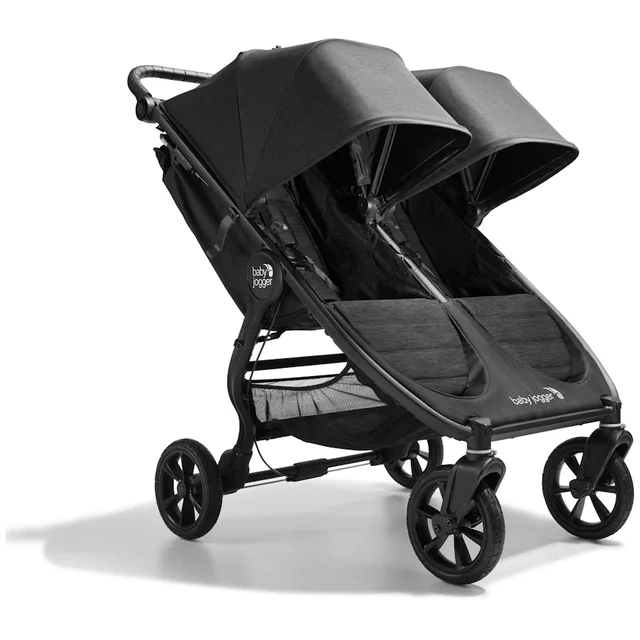
- Buy Baby Jogger City Mini GT2 Double The rare side-by-side that shrugs off curbs and gravel yet still squeezes through a standard doorway. Amazon
- Buy Mockingbird Single-to-Double Stroller A modular convert-as-you-grow tandem that delivers most of the flagship experience for far less. Amazon
- It depends UPPAbaby Vista V3 A superb modular system that grows from one child to three - if you can stomach the price and the heft. Amazon
- Skip Graco Ready2Grow 2.0 Double Stroller Cheap and flexible on paper, but a chore to push and cramped for the child riding in back. Amazon
What actually matters
- Configuration (side-by-side vs. tandem) - decides width, steering, views for each child, and which family situations it suits. This is your first and most consequential choice.
- Maneuverability and footprint - can you steer it one-handed, and will it fit through your front door, down store aisles, and into your trunk? Measure before you buy.
- Newborn and twin readiness - whether the stroller supports a bassinet, an infant car seat, or a flat recline, and whether it can carry two babies at once.
- Ride and terrain - suspension and tire type determine whether it glides over curbs, gravel, and grass or fights you on anything but smooth pavement.
- Fold, weight, and livability - how easily it collapses, how heavy it is to lift loaded, and whether the storage basket and seats are actually usable day to day.
- Modularity and longevity - some systems convert single-to-double or expand to a third seat, spreading the cost across years; others have a short useful life.
- Safety hardware - a five-point harness, an easy one-touch brake, and stable, lock-open frame are non-negotiable regardless of price.
The specs, in plain English
Green flags vs red flags
Green flags
- Meets ASTM F833 and carries a JPMA certification seal
- Genuine five-point harness on every seat, with an easy one-touch parking brake
- A side-by-side that stays under about 30 inches wide, or a tandem with a genuinely usable stadium rear seat
- Clear, model-specific per-seat weight and height limits printed on the stroller and in the manual
- A real path to newborn use - bassinet, flat recline, or named car-seat compatibility - if you need it
- Fold and weight that match your actual car and storage space
Red flags
- Vague or missing safety-standard information, or no listed weight and height limits
- Owner reports repeatedly describing heavy, fighting steering, especially when loaded
- A tandem where the rear seat is cramped, poorly reclining, or gives the back child no view
- "From birth" claims with no bassinet, flat recline, or car-seat option to back them up
- A folded footprint too long or heavy for your trunk and doorways
- Essential accessories (second seat, adapters, trays) sold separately with the total cost hidden
Who's who: the brands
- Baby Jogger - Known for the City Mini line and its one-step in-seat fold; a go-to for capable, doorway-friendly side-by-sides.
- UPPAbaby - Premium modular systems (the Vista) prized for build quality and the ability to expand to three kids.
- Mockingbird - Direct-to-consumer brand offering modular single-to-double strollers with flagship-style features at a mid-range price.
- Graco - Mass-market, budget-friendly brand with wide car-seat compatibility; value-focused rather than premium in ride and steering.
- Bugaboo - Design-led premium maker whose convertible systems emphasize smooth ride, compact fold, and long-term modularity.
- Thule - Best known for jogging and all-terrain doubles built for active parents who run or hit trails with two kids.
How to read a listing without getting fooled
Start with the two numbers a listing loves to bury: overall width and folded dimensions. A side-by-side that's wider than about 32 inches won't clear many doorways, and a tandem's folded length may not fit your trunk - so match both to a tape measure at home, not to a marketing photo. Next, separate what's included from what's extra: doubles often advertise a low headline price that doesn't include the second seat, adapters, or a bumper bar, so tally the real total. Treat "from birth" and "newborn ready" as claims to verify, not features - find the specific bassinet, flat-recline, or named car-seat option that makes it true. Read the per-seat weight and height limits (kids frequently hit the height cap first), and confirm the fold really is one-handed in double mode, since many strollers that fold easily as a single become a two-hand job with both seats on. Finally, look past the star average to what owners consistently say about steering and the rear seat - those are the day-to-day frustrations specs won't reveal.
How much should you spend?
Doubles span a wide range, and where you land should track how you'll actually use it. Budget models are tempting but often pay for their low price in heavy steering, cramped rear seats, and a short useful life - fine for occasional short trips, frustrating as a daily driver. The value sweet spot sits in the mid-range, where modular single-to-double systems deliver most of the flagship experience - reversible seats, near-flat recline, bassinet and car-seat compatibility - without the top-tier premium. Spending up to flagship territory genuinely pays off for two situations: twins, where you should confirm the maker's supported twin setup, and families committing to one system for years of two-under-two use, where modular longevity spreads the cost. It's rarely worth flagship money if you have two similarly-aged kids and just need a capable everyday pusher. Whatever tier you choose, budget for accessories - trays, consoles, adapters, and second seats are frequently sold separately and add up fast.
Questions, answered
What safety standards should a double stroller meet, and how do I check?
Look for compliance with ASTM F833, the current voluntary consumer safety specification for carriages and strollers, which is incorporated into the U.S. federal stroller rule (16 CFR Part 1227) enforced by the CPSC. The quickest shortcut is a JPMA certification seal: it means an independent lab tested that model against the current ASTM F833 requirements for brakes, stability, restraint systems, and locking mechanisms. Any reputable stroller sold in the U.S. should meet the applicable standard - but this is general product information, not a substitute for reading each model's own manual and safety labels.
Side-by-side or tandem - which should I get?
Neither is inherently better; they trade off. Side-by-sides keep both kids level with equal views and are usually easier to steer, but they're wider - the good ones stay under about 30 inches so they still clear standard doorways. Tandems (in-line) are narrower but longer, can be harder to turn, and often give the rear child a limited view. For twins, many parents prefer a side-by-side or a bassinet-capable modular system; for an infant plus an older toddler, a tandem that seats the toddler behind a reclined infant can make more sense.
Why does the harness matter so much, and when can a child stop using all five points?
The harness is the single most important safety feature - it keeps a child from standing, climbing, or being ejected if the stroller tips or is jolted. Strollers for infants use a five-point harness (two shoulder, two hip, one crotch strap), and independent testing consistently favors keeping younger, smaller children in all five points. Manufacturers set their own guidance on when an older child may transition to fewer points, so follow the specific model's manual rather than a rule of thumb, and always keep the straps snug enough that you can slip only one or two fingers underneath.
What are typical weight and age limits for double strollers?
Most full-size doubles carry roughly 45 to 50 pounds per seat, and many also list a height limit (often around 40 to 45 inches) that children reach before the weight cap. Newborns need either a bassinet, a compatible infant car seat, or a seat that reclines fully flat, because young babies can't support their own heads or airways upright - so a stroller's "from birth" claim depends on which accessory you pair with it. Always confirm the exact per-seat limits printed on the model you buy.
What daily habits keep a double stroller safe to use?
Engage the parking brake every time you stop, especially on any slope, and use the wrist or tether strap on hills. Don't hang heavy bags from the handlebar - the extra leverage over two seats is a real tip-over risk, so load the storage basket instead. Buckle both children into their harnesses on every trip, keep fingers clear of folding joints, and periodically check that the frame locks fully open and the wheels and brakes aren't worn. Register the stroller with the manufacturer so you're notified of any recall affecting your model.
Is a convertible single-to-double worth it over buying two separate strollers?
For a growing family it usually is. A modular single-to-double lets you buy once, start with a newborn in a single or bassinet configuration, and add a second seat when the next child arrives - which is typically cheaper and less cluttered than owning both a single and a full double. The trade-off is that these systems get long and heavy once the second seat is on, and some are sold direct-to-consumer only, so you can't test-push one in a store first.
Or jump to the head-to-head: Baby Jogger City Mini GT2 Double vs Mockingbird Single-to-Double Stroller.