

Baby & Family
The Best Double Strollers: 4 Compared (and One to Skip)
We compared four double strollers - side-by-side and tandem - on maneuverability, ride, newborn and twin readiness, fold, and value.
The short version
For most families of two, the Baby Jogger City Mini GT2 Double is the smartest buy: it handles real terrain, folds in one step, and still fits through standard doorways. The Mockingbird Single-to-Double is the value runner-up, offering modular single-to-double flexibility and newborn readiness for far less than flagship money. The UPPAbaby Vista V3 is genuinely excellent - and the right call for a long-term plan to grow from one child to three - but its price and heft make it overkill for many. Skip the Graco Ready2Grow 2.0 for daily double duty: it's cheap, but owners consistently flag heavy steering and a cramped rear seat. Best for: side-by-side all-terrain versatility, the City Mini GT2 Double; a family planning for up to three children, the Vista V3.
Our picks at a glance
- Baby Jogger City Mini GT2 Double - Buy. The rare side-by-side that shrugs off curbs and gravel yet still squeezes through a standard doorway.
- Mockingbird Single-to-Double Stroller - Buy. A modular convert-as-you-grow tandem that delivers most of the flagship experience for far less.
- UPPAbaby Vista V3 - It depends. A superb modular system that grows from one child to three - if you can stomach the price and the heft.
- Graco Ready2Grow 2.0 Double Stroller - Skip. Cheap and flexible on paper, but a chore to push and cramped for the child riding in back.
The verdict in 30 seconds
What mattered most
- Configuration
- Doorway & maneuverability
- Terrain & ride
- Newborn / twin readiness
- Fold & weight
- Per-seat weight limit
Two kids means one hard buying decision: side-by-side or tandem, and how much stroller you actually need. We synthesized independent testing and owner reports across four of the most-shopped 2026 doubles - from an all-terrain side-by-side to a flagship modular system to a budget in-line tandem. Two are easy recommendations, one is worth it only for a specific family, and one we'd steer most shoppers away from.
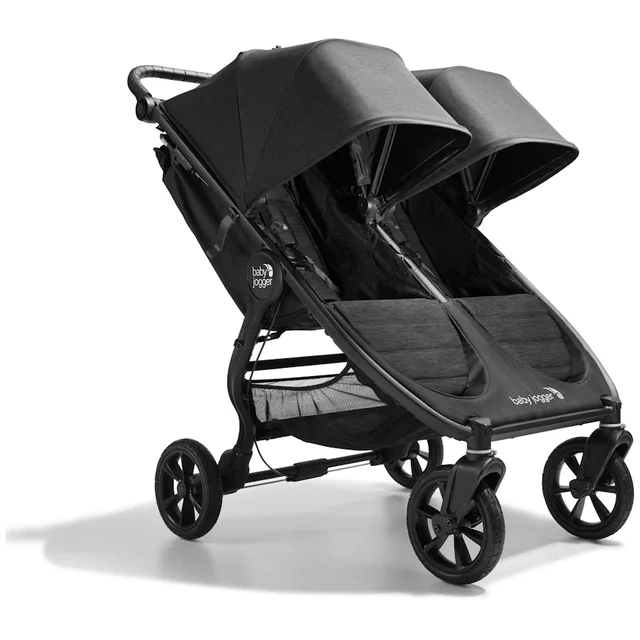
The rare side-by-side that shrugs off curbs and gravel yet still squeezes through a standard doorway.
Best for: Parents of two who want one do-everything side-by-side for city sidewalks, trails, and everyday errands.
- All-wheel suspension and forever-air rubber tires that never go flat handle sidewalks, grass, and gravel far better than budget doubles
- About 29 inches wide, so it clears most standard 32-inch doorways - unusual for a side-by-side
- One-step in-seat fold, and near-flat reclining seats
- Heavy to lift into a trunk, and the folded footprint is long
- No snack tray, parent console, or bumper bar included - accessories add up
Own the Baby Jogger City Mini GT2 Double? Tell us how it held up.
Thanks. Counted, and shown once enough owners have weighed in.
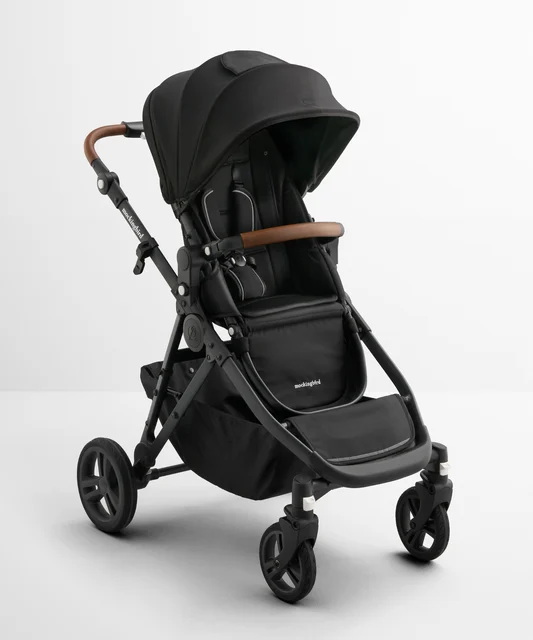
A modular convert-as-you-grow tandem that delivers most of the flagship experience for far less.
Best for: Growing families who want modular flexibility and newborn readiness without paying flagship money.
- Starts as a single and adds a stadium-style second seat, so it grows with a two-under-two family
- Reversible seats, near-flat recline, and bassinet plus most major car-seat compatibility
- Costs a fraction of premium modular systems for a similar feature set
- Sold direct-to-consumer only, so you can't test it in a store and restocks can lag
- Long and fairly heavy once the second seat is attached
Own the Mockingbird Single-to-Double Stroller? Tell us how it held up.
Thanks. Counted, and shown once enough owners have weighed in.
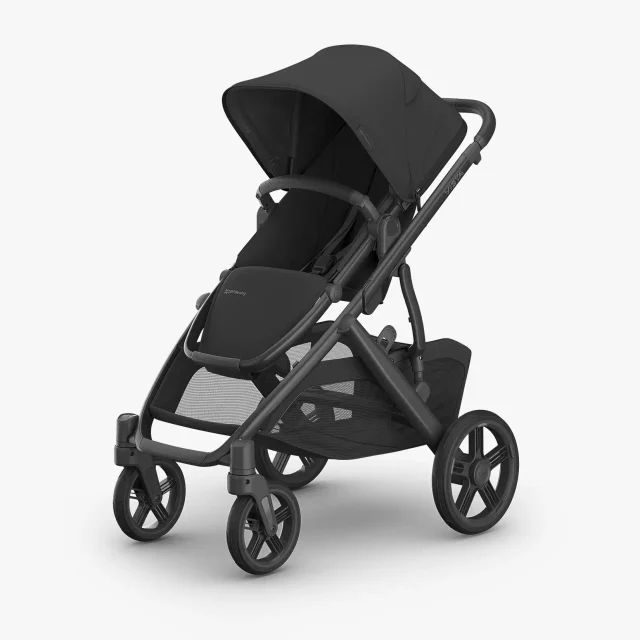
A superb modular system that grows from one child to three - if you can stomach the price and the heft.
Best for: Planners of two-under-two or three-child families who value one system for years and don't mind the cost.
- The seat is suitable from birth with the Infant SnugSeat or Bassinet accessory, and the Bassinet, Mesa and Aria car seats attach without adapters
- Excellent build, a huge storage basket, and a smooth, planted ride
- One frame expands to carry up to three children with added seats and a ride-along board
- Flagship price before you even add the second seat and adapters
- Heavy and bulky in double mode, and the loaded fold is awkward to lift
Own the UPPAbaby Vista V3? Tell us how it held up.
Thanks. Counted, and shown once enough owners have weighed in.
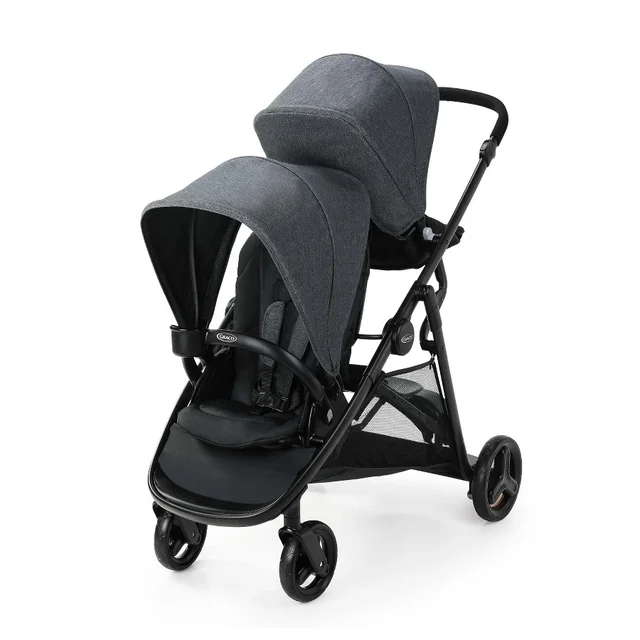
Cheap and flexible on paper, but a chore to push and cramped for the child riding in back.
Best for: Budget shoppers needing occasional, short-trip double capacity - though most will be happier spending up.
- Inexpensive and offers many riding configurations for two differently-aged kids
- Accepts two Graco infant car seats at once, and Graco says it folds like a single with a one-step, self-standing fold
- Owners report it's heavy and hard to steer, especially fully loaded
- The front seat blocks the rear child's view, and the back bench feels tight for bigger toddlers
- Graco lists a two-position recline for the front seat, and rates the rear seat to 40 lb versus 50 lb in front
Own the Graco Ready2Grow 2.0 Double Stroller? Tell us how it held up.
Thanks. Counted, and shown once enough owners have weighed in.
| Criteria | Baby Jogger City Mini GT2 Double Top pick Buy it Buy | Mockingbird Single-to-Double Stroller Buy it Buy | UPPAbaby Vista V3 It depends Buy | Graco Ready2Grow 2.0 Double Stroller Skip it Buy |
|---|---|---|---|---|
| Best for | Parents of two who want one do-everything side-by-side for city sidewalks, trails, and everyday errands. | Growing families who want modular flexibility and newborn readiness without paying flagship money. | Planners of two-under-two or three-child families who value one system for years and don't mind the cost. | Budget shoppers needing occasional, short-trip double capacity - though most will be happier spending up. |
| Price tier | $$$ · premium | $$ · mid-range | $$$$ · flagship | $ · budget |
| Configuration | Side-by-side | In-line / stadium tandem | In-line modular (seats stack front/back) | In-line sit-and-stand tandem |
| Doorway & maneuverability | Fits standard doorways; easy to steer | Standard width; longer turning | Wide and long in double mode | 25.6 in wide but long; owners report heavy steering |
| Terrain & ride | All-terrain, suspension, rubber tires | Smooth on pavement, light off-road | Very smooth, planted, heavy | Best on flat pavement only |
| Newborn / twin readiness | Car-seat adapters; no bassinet | Bassinet + car seat compatible | Bassinet or SnugSeat from birth; car seats attach without adapters | Accepts two Graco infant car seats at once |
| Fold & weight | One-step in-seat fold; heavy but manageable | Folds with seats; long and heavy | Bulky, awkward loaded fold | One-step self-standing fold; 32 lb; heavy to push |
| Per-seat weight limit | Up to ~50 lb each | Check the maker's manual | Up to ~50 lb each | 50 lb front seat, 40 lb rear seat |
| Modularity / longevity | Fixed double; simple | Single-to-double; grows with family | Expands single to double to triple | Multiple ride modes; short useful life |
| Price tier | $$$ · premium | $$ · mid-range | $$$$ · flagship | $ · budget |
Which one is right for you?
- Parents of two who want one do-everything side-by-side for city sidewalks, trails, and everyday errands. Buy it Baby Jogger City Mini GT2 Double
- Growing families who want modular flexibility and newborn readiness without paying flagship money. Buy it Mockingbird Single-to-Double Stroller
- Planners of two-under-two or three-child families who value one system for years and don't mind the cost. It depends UPPAbaby Vista V3
- Budget shoppers needing occasional, short-trip double capacity - though most will be happier spending up. Skip it Graco Ready2Grow 2.0 Double Stroller
How we judged the field
We don’t run our own crash lab. Instead, we synthesize the patterns that show up across independent testing and large volumes of owner reports, then weight them by what actually matters when you’re pushing two kids every day. Four criteria did the heavy lifting: maneuverability (can you steer it one-handed, and does it clear a doorway?), ride and terrain (suspension, tire type, and how it behaves off smooth pavement), newborn and twin readiness (bassinet or car-seat support, and whether it can carry two babies from birth), and fold, weight, and livability (getting it into a trunk, and how usable the storage and seats are). We also looked hard at value - a double stroller is a big purchase, and paying flagship money only pays off for specific families.
A quick vocabulary note, because “double” covers two very different shapes. Side-by-side strollers seat both children next to each other at the same level; they steer easily and give equal views but are wider. In-line and tandem strollers stack the seats front-to-back; they’re narrower but longer, and the child in back often gets a more limited view. The right shape depends on whether you have twins, two close-in-age kids, or an infant plus an older toddler.
Baby Jogger City Mini GT2 Double
Buy itThis is the one we recommend to the most people, because it solves the side-by-side’s biggest headache: width. At roughly 29 inches across it slips through most standard doorways, yet it rides like a far bigger stroller thanks to all-wheel suspension and forever-air rubber tires that soak up curbs, gravel, and grass. The signature one-step in-seat fold works even in the double, and the seats recline nearly flat, so a child can nap comfortably. The trade-offs are honest ones: it’s heavy to hoist into a trunk, the folded package is long, and Baby Jogger sells the snack trays, parent console, and bumper bars separately. For everyday two-kid life across mixed surfaces, none of that outweighs how capable and easy to push it is.
Mockingbird Single-to-Double Stroller
Buy itThe Mockingbird is the value story of this group. It starts life as a single and adds a stadium-style second seat, so a family expecting a second baby can buy once and grow into the double. It’s genuinely modular - reversible seats, near-flat recline, and compatibility with a bassinet and most major infant car seats - which means it works from newborn through the toddler years. Owner reports consistently praise how much stroller you get for a mid-range price that undercuts the flagship systems by a wide margin. The catch is that it’s sold direct-to-consumer only, so you can’t wheel one around a store before buying and restocks can occasionally lag, and it gets long and fairly heavy once the second seat is on. If you don’t specifically need a side-by-side, it’s the smart-money pick.
UPPAbaby Vista V3
It dependsThe Vista V3 is the best-built stroller here and, for one particular family, the clear right answer: a long-term plan to grow from one child to three. The seat is suitable from birth with the Infant SnugSeat or Bassinet accessory, Bassinet, Mesa and Aria car seats attach without adapters, and UPPAbaby lists RumbleSeat and PiggyBack accessories for up to three children. The ride is smooth and planted, the storage basket is enormous, and the whole system is built to last for years. So why “it depends”? Price and heft. It’s a flagship purchase before you add the second seat and adapters, it’s wide and long in double mode, and the loaded fold is awkward to lift. If you’re committing to a two-under-two or three-child system for the long haul, it earns its keep; for many other shoppers, it’s more stroller - and more money - than the situation calls for.
Graco Ready2Grow 2.0 Double Stroller
Skip itOn paper the Ready2Grow 2.0 is appealing: it’s inexpensive and offers a long list of riding configurations for two kids of different ages (two seats, a bench seat, and a standing platform), and it accepts two Graco infant car seats at once. Graco rates it for up to 50 lb in the front seat and 40 lb in the rear, and lists it at 32 lb and 25.6 inches wide. In practice, this is the model we’d steer most people away from for daily double duty. Owner reports repeatedly describe it as heavy and hard to steer, particularly once both kids are aboard, and the in-line layout means the front seat blocks the rear child’s view while the back bench feels cramped for bigger toddlers. Graco lists just a two-position recline for the front seat, and owners find several of the advertised positions short on comfort. It can serve as an occasional, short-trip stroller on a tight budget, but as an everyday driver it frustrates - and the money is better spent moving up to the Mockingbird.
Sources
Specs in this review come from these pages.
Baby Jogger City Mini GT2 Double vs Mockingbird Single-to-Double Stroller: which should you buy?
These are our two recommendations, and the choice is mostly about shape and stage. The City Mini GT2 Double is the pick if you want a side-by-side that handles real terrain and folds in one step - it’s the more capable everyday pusher across sidewalks, trails, and errands, and both kids always get an equal view. The Mockingbird wins on value and flexibility: it starts as a single, converts to a double as your family grows, supports a newborn from birth with a bassinet, and costs meaningfully less. If your two kids are the same size and you’re on the go across mixed surfaces, take the City Mini GT2 Double. If you’re growing a family, want newborn readiness, or simply want to spend less without dropping to budget-tier quality, the Mockingbird is the better fit.
What to look for
- Match the shape to your kids. Twins or same-age pairs often do best in a side-by-side or a bassinet-capable modular system; an infant plus an older toddler suits an in-line tandem.
- Measure your doorways and trunk. The best side-by-sides stay under about 30 inches wide; confirm the folded size fits your car before buying.
- Check newborn support. “From birth” only counts if the model offers a bassinet, a compatible infant car seat, or a fully flat recline.
- Confirm per-seat weight and height limits. Most doubles top out around 45 to 50 pounds per seat, and kids frequently hit the height limit first.
- Prioritize brakes, harness, and stability. Look for a five-point harness, an easy one-touch brake, and compliance with the current ASTM F833 standard (a JPMA seal is a quick signal).
- Budget for accessories. Trays, consoles, adapters, and second seats are often sold separately and can add up fast.
Our final take
Most families of two should buy the Baby Jogger City Mini GT2 Double: it’s the most broadly capable stroller here, easy to steer, genuinely all-terrain, and narrow enough to live with indoors. The Mockingbird Single-to-Double is the value runner-up and the right call if you’re growing into a double or want newborn flexibility without flagship pricing. Reserve the UPPAbaby Vista V3 for a long-term two-under-two or three-child plan where its modular longevity justifies the cost and weight. And skip the Graco Ready2Grow 2.0 as an everyday double; it’s cheap for a reason, and the daily frustration isn’t worth the savings. Whichever you choose, buckle both harnesses every time, set the brake on any slope, and register the stroller so you catch any recall.
Questions, answered
What safety standards should a double stroller meet in 2026?
Look for compliance with ASTM F833, the voluntary consumer safety specification for carriages and strollers, which is incorporated into the U.S. federal stroller rule (16 CFR Part 1227) enforced by the CPSC. A JPMA certification seal is a helpful shortcut - it means an independent lab tested the model against the current ASTM F833 requirements for things like brakes, stability, restraint systems, and locking mechanisms. All four strollers here are sold as meeting the applicable U.S. standard; this is general product information, not a substitute for reading each model's own manual and safety labels.
Why does the harness matter so much, and when can a child stop using all five points?
The harness is the single most important safety feature - it keeps a child from standing, climbing, or being ejected if the stroller tips or is jolted. Strollers designed for infants use a five-point harness (two shoulder, two hip, one crotch strap), and independent testing consistently favors keeping younger and smaller children in all five points. Manufacturers set their own guidance on when an older child may transition to fewer points, so follow the specific model's manual rather than a general rule of thumb, and always keep the harness snug enough that you can slip only one or two fingers under the straps.
What are typical weight and age limits for double strollers?
Most full-size doubles carry roughly 45 to 50 pounds per seat, and many also list a height limit (often around 40 to 45 inches) that children reach before the weight cap. Newborns need either a bassinet, a compatible infant car seat, or a seat that reclines fully flat, because young babies can't support their own heads or airways upright - so a stroller's 'from birth' claim depends on which accessory you pair with it. The Vista's Bassinet accessory, for example, allows lie-flat use from day one, while a standard seat is meant for babies who can already sit with support. Always confirm the exact per-seat limits printed on the model you buy.
Side-by-side or tandem - which is safer and easier for two kids?
Neither is inherently safer; they trade off differently. Side-by-sides (like the City Mini GT2 Double) keep both children level with equal views and are usually easier to steer, but they're wider - the good ones stay under about 30 inches so they still clear standard doorways. In-line and tandem strollers (the Mockingbird, Vista, and Graco here) are narrower but longer, can be harder to turn, and often give the rear child a more limited view. For twins, many parents prefer a side-by-side or a bassinet-capable modular system; for two different ages, a tandem that seats a toddler behind a reclined infant can make more sense.
What daily habits keep a double stroller safe to use?
Engage the parking brake every time you stop, especially on any slope, and use the wrist or tether strap on hills. Don't hang heavy bags from the handlebar - the extra leverage over two seats is a real tip-over risk, so load the storage basket instead. Buckle both children into their harnesses on every trip, keep fingers clear of folding joints, and periodically check that the frame locks fully open and the wheels and brakes aren't worn. Register the stroller with the manufacturer so you're notified of any recall affecting your model.
Deciding between the top two? See our head-to-head: Baby Jogger City Mini GT2 Double vs Mockingbird Single-to-Double Stroller.
More in Baby & Family
Double Strollers, Explained Plain-English guide → Baby Jogger City Mini GT2 Double vs Mockingbird Single-to-Double Stroller Head-to-head → 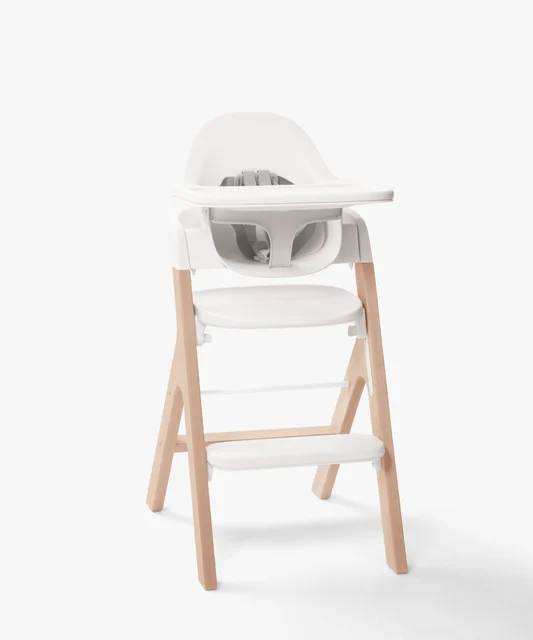 The Best High Chairs of 2026: Easy Cleanup, Better Posture, and One to Skip
 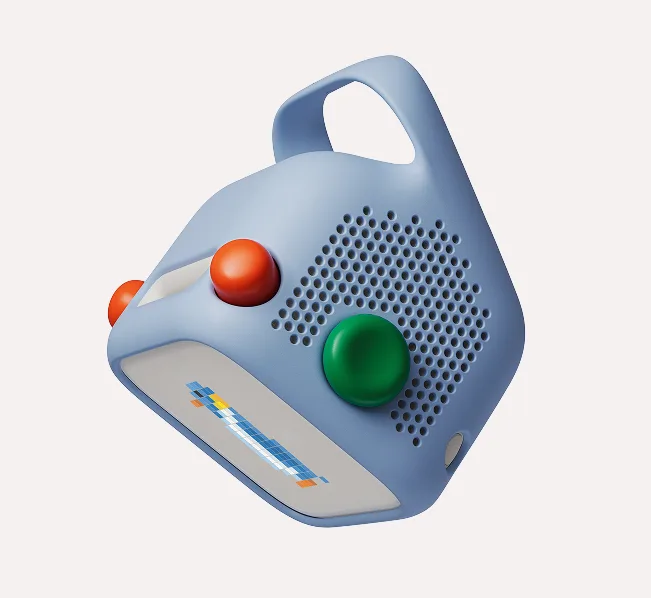 The Best Kids Audio Players: 4 Compared (and One to Skip)
 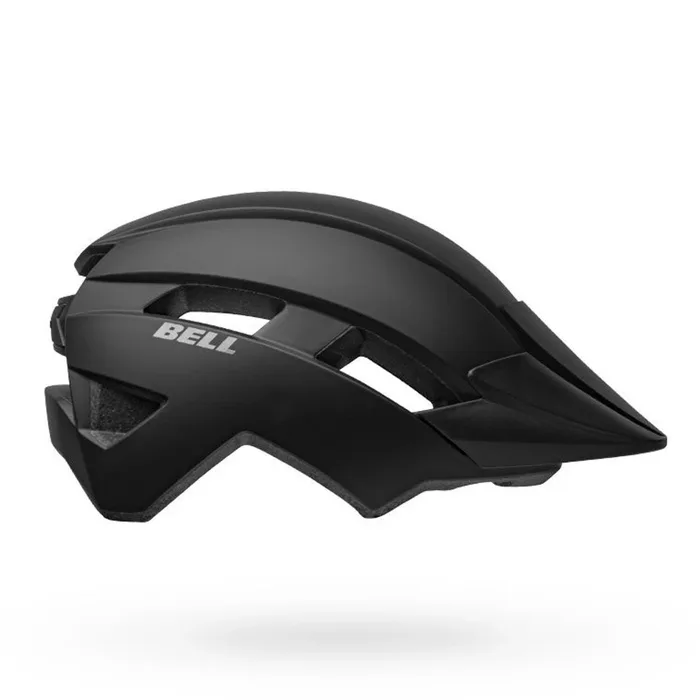 The Best Kids' Bike Helmets: 4 Compared (and One to Skip)
 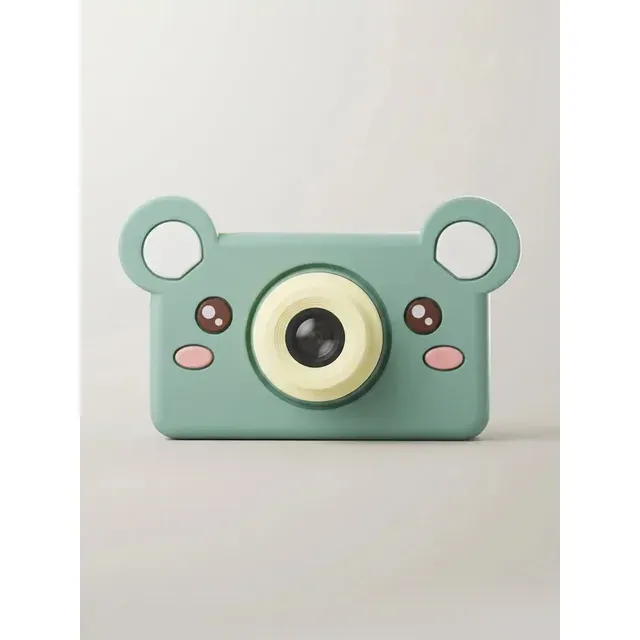 The Best Kids Cameras: 4 Compared (and One to Skip)