Explained
CPAP Cleaning, Explained
After reading, you'll understand what a CPAP sanitizer has actually been authorized to do, how to check that claim yourself, and what your mask manufacturer expects you to do instead.
In this guide
First time buyers get tripped up by one thing above all: the assumption that a CPAP cleaner is a cleaner. In regulatory terms almost none of them are. The category the FDA created is for add-on bacterial reduction after washing, on named parts, and the two products in it say so in their own labelling. Everything else is a box that emits light or gas and describes itself with words that carry no defined meaning. Learning to tell those apart takes about five minutes and saves a lot of money.
The 30-second version
- Soap and water is the baseline, and the FDA, Resmed and Philips Respironics point to it as the routine for most parts.
- Cleared does not mean replaces washing, because the FDA category is explicitly for an add-on step after the manufacturer's cleaning process.
- Compatibility lists are short, and a cleared device's labelling names the exact masks and tubing it was tested with.
- Ozone has a warranty cost, since Resmed's US limited warranty excludes damage to its machines caused by ozone devices.
- Wear beats sanitizing, as a silicone cushion that has passed its replacement window cannot be cleaned back to good condition.
The products this guide is about
Our verdict on each, with the full reasoning on the companion review.
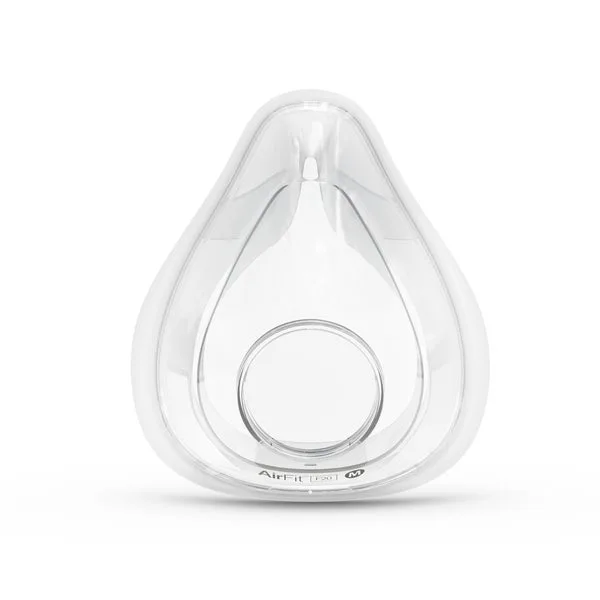
- Buy Resmed AirFit F20 Cushion The genuine silicone replacement cushion for the AirFit F20 full face mask, and the single most useful thing most CPAP users can spend money on for hygiene. Amazon
- Buy resplabs CPAP Mask Wipes, Unscented A canister of unscented mask wipes for the daily face oil and sweat that builds up on a cushion between proper washes. Amazon
- It depends SoClean 3+ The ozone bacterial reduction machine that actually went through the FDA, with a narrow validated compatibility list and a manufacturer warranty problem attached.
- Skip React Health Lumin UV-C Household Sanitizer A UV-C drawer cabinet that CPAP retailers still merchandise as a mask cleaner, even though its own manufacturer page now sells it as a household gadget.
What actually matters
- FDA clearance versus FDA registration - registration only means a company told the FDA it exists, while clearance or classification means the agency reviewed evidence for a specific claim. Sellers use the first to imply the second.
- Indications for use - this is the sentence the FDA actually authorized, and it names the parts, the claim and the limits. If a marketing page contradicts it, the labelling is what counts.
- Log reduction - the standard measure of how much a process cuts a bacterial population, tested in a lab rather than on your face. It says nothing on its own about whether you get sick less often.
- Ozone exposure - ozone works on bacteria at concentrations above what is considered safe for people, which is the whole tension in ozone based cleaning. The FDA has reported reports of unexpected asthma attacks, headaches and breathlessness after using ozone gas cleaners.
- UV coverage and shadowing - UV only disinfects surfaces the light physically reaches, so folds, elbows and hose interiors are the weak points. The FDA has said it has not received evidence UV cleans hose interiors.
- Material degradation - the FDA notes that both UV and ozone can break down CPAP accessories such as hoses and masks, which turns a cleaning routine into a replacement cost.
- Replacement cadence - published schedules exist for cushions, filters, tubing, headgear and water tubs, and following them is the highest impact hygiene action available to most users.
The specs, in plain English
Green flags vs red flags
Green flags
- The maker names a specific FDA submission number you can find in the public device databases.
- The product page states plainly that it does not replace the mask manufacturer's cleaning instructions.
- A compatibility list names actual masks and tubing rather than saying works with all CPAP.
- Cleaning consumables are unscented, alcohol free and described as safe on silicone.
- The seller publishes a replacement schedule for cushions, filters and tubing alongside the product.
Red flags
- Marketing leans on sanitizer, sterilizer or hospital grade without naming an authorized claim.
- The pitch implies you can stop washing your mask.
- A kill rate percentage appears with no organism list, no exposure time and no tested parts.
- FDA registered is presented as though it means FDA cleared.
- The product is sold as a CPAP cleaner by retailers but the manufacturer's own page never mentions CPAP.
Who's who: the brands
- Resmed - Publishes detailed cleaning and replacement guidance, and its US limited warranty excludes damage to its machines caused by ozone devices.
- Philips Respironics - States that ozone and UV cleaning products, including its own UV Light Sanitizer Box, are not approved cleaning methods for its devices or masks.
- Fisher & Paykel Healthcare - Publishes its own cleaning guidance for masks, tubing and headgear, so check its manuals for the routine it recommends.
- SoClean - Ozone based, and the first company to take a CPAP accessory bacterial reduction device through an FDA De Novo classification.
- React Health - Sells the Lumin UV-C cabinet, which its current product page positions as a household sanitizer rather than a CPAP cleaner.
How to read a listing without getting fooled
Start at the bottom of the listing, not the top. Find the sentence that names what the product was authorized to do and which parts it was tested with, and if there is no such sentence anywhere, treat every claim above it as marketing. Then look up the submission number in the FDA's public 510(k) and De Novo databases, where the clearance letter and summary spell out the indications in the maker's own words. Compare that against the retailer's product title, because the two often disagree and the retailer is the one improvising. Finally, cross check with your own mask and machine manuals: they will tell you the cleaning method the manufacturer stands behind and the replacement cadence for each part, and any product that conflicts with those is asking you to trade a warranty for convenience.
How much should you spend?
Budget tier covers the things that do most of the work: mild liquid detergent, unscented wipes, tube brushes and filters. Mid tier is where replacement cushions, tubing and humidifier tubs sit, and this is where the money is genuinely well spent, because these are wear parts with published replacement schedules rather than optional extras. The UV cabinets also cluster in the mid tier, which flatters them next to consumables that are objectively more useful. Premium tier is the FDA cleared ozone machine, and a useful way to frame the decision is to compare its cost with a year of diligent part replacement. If your budget is finite, spending it on cushions and filters on schedule beats spending it on a machine that is required to tell you it does not replace washing anyway.
Questions, answered
What is the difference between FDA registered and FDA cleared?
Registration means a manufacturer has listed itself and its product with the FDA, which is an administrative step and involves no review of whether the thing works. Clearance or classification means the agency looked at evidence for a specific claim and authorized that claim, with the exact wording recorded in a public letter. In this category, clearance also brings special controls covering microbial reduction testing, compatibility, biocompatibility and labelling. If a listing says registered, treat it as telling you nothing about performance.
Can I use vinegar to clean my CPAP parts?
The FDA's consumer page notes that some manufacturers recommend cleaning detachable CPAP parts with a combination of vinegar and water. That makes it a legitimate option when your own manual says so, and a bad idea when it does not, because mask materials differ. Always check your specific mask and humidifier instructions first. Whatever you use, rinse thoroughly and air dry out of direct sunlight.
Do I need distilled water in the humidifier?
Check your machine's manual, because this is a device specific instruction rather than a universal rule. What is clear is that mineral content matters over time: Resmed notes that humidifier water chambers become discoloured, cracked, cloudy or pitted due to the mineral levels found in most tap and drinking water, and that cracks in deteriorating material can trap bacteria. Distilled water is commonly used to slow that down. Either way the tub is a wear part with its own replacement window.
Is a UV wand or cabinet useful for anything?
For CPAP hygiene, the FDA has said it has not received evidence that UV cleans the inside surface of CPAP hoses, and that it lacks evidence these machines protect users from unsafe UV exposure. For other objects, makers of these cabinets now market them for phones, keys and headphones, and that is the use their own product pages describe. If you want one for that purpose, buy it for that purpose. Just do not let it replace the sink for your mask.
Or jump to the head-to-head: Resmed AirFit F20 Cushion vs resplabs CPAP Mask Wipes, Unscented.