Explained
Essential Oil Diffusers, Explained
After reading, you'll know which diffuser type fits your room, what the spec-sheet terms actually mean, and where your money is well spent.
In this guide
An essential oil diffuser has one job: scent a room evenly without being loud, fussy, or expensive to keep running. What trips people up is that not all diffusers work the same way, and the specs on the box, tank size, coverage claims, diffusion type, rarely say plainly what daily life with the thing will feel like. This guide decodes the terms so you can match a diffuser to your actual room and habits.
The 30-second version
- Diffusion type decides everything. Ultrasonic (water-based) is quiet, efficient, and cheap to run; nebulizing (waterless) is intense but drinks pure oil and needs constant upkeep.
- Match coverage to your room, not the biggest number. A small unit is perfect in a bedroom but underpowered in an open living space, while a big-tank model can overwhelm a small room.
- Quiet matters more than any feature for bedrooms. A faint but constant hum is the number-one reason a diffuser gets switched off and left in a drawer.
- Running cost is the hidden price tag. Waterless nebulizers use far more pure oil than ultrasonic units that stretch a few drops across a tank of water.
- A diffuser is not a humidifier. Water-based models add a little moisture, but they are engineered for fragrance, not for raising a room's humidity.
The products this guide is about
Our verdict on each, with the full reasoning on the companion review.
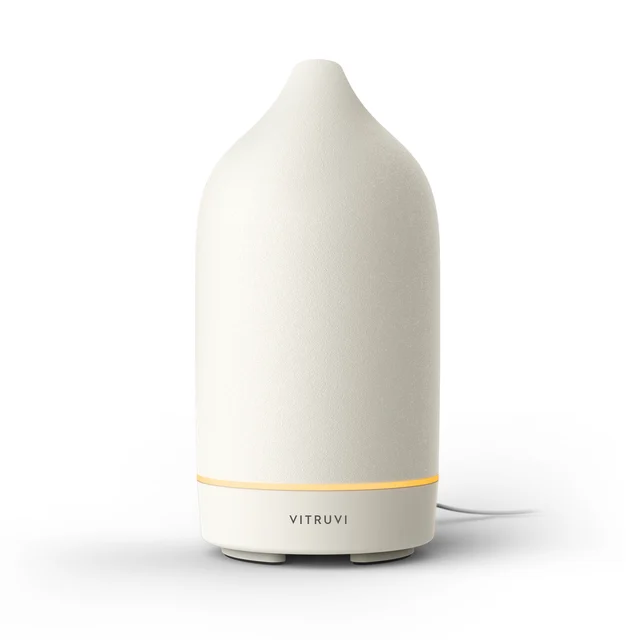
- Buy Vitruvi Stone Diffuser A matte ceramic diffuser that looks like pottery and diffuses cleanly without any visible plastic. Amazon
- Buy Stadler Form Jasmine Aroma Diffuser A minimalist Swiss-designed ultrasonic diffuser with a smart interval mode and near-silent operation. Amazon
- It depends ASAKUKI 500ml Premium Essential Oil Diffuser A big-tank budget diffuser loaded with features, if you can live with a chunkier, plastic build. Amazon
- It depends MUJI Ultrasonic Aroma Diffuser The minimalist small-room classic, with a precise room rating and a 3 hour timer ceiling.
- It depends InnoGear Essential Oil Diffuser The cheapest way to try a diffuser, with color lights and auto-off but a page that skips tank size and materials.
- Skip Organic Aromas Raindrop 2.0 Nebulizing Diffuser A stunning waterless nebulizer with intense, pure scent, and a running cost and upkeep burden most homes will regret. Amazon
What actually matters
- Diffusion type (ultrasonic vs nebulizing) sets the scent strength, noise, oil consumption, and maintenance you'll live with every day.
- Room coverage matters because a unit sized for a nightstand won't scent an open-plan living-dining space, and an oversized one can be overpowering in a small bedroom.
- Noise level is decisive for bedrooms and nurseries; near-silent operation is what keeps a diffuser in daily use.
- Tank size and run time determine how often you refill and whether it can run through the night or all day.
- Build quality and looks matter because a diffuser usually sits out on display, so ceramic or minimalist designs read as decor rather than a gadget.
- Running cost and maintenance separate cheap-to-own ultrasonic units from oil-hungry, cleaning-intensive nebulizers.
- Extras like remotes, timers, and color-changing lights are genuinely useful to some buyers and pure clutter to others.
The specs, in plain English
Green flags vs red flags
Green flags
- Owner reports consistently describe near-silent or very quiet operation
- An interval or intermittent mode to stretch a fill and avoid an overpowering scent
- Tank size that genuinely matches your room, small for a bedroom, larger for shared spaces
- Auto shut-off so it's safe to run overnight
- An easy-to-wipe reservoir that makes weekly cleaning painless
- Materials and design you'll be happy leaving out on a shelf
Red flags
- Reviews mention a constant audible hum or buzzing, especially in a quiet room
- A nebulizer being marketed as an everyday, all-day living-room diffuser (it's an oil-hungry, high-maintenance pick)
- Coverage claims that seem far larger than the tank or unit size could plausibly support
- A very bright, non-dimmable light that will glare in a dark bedroom
- Bulky plastic build sold at a premium price with no meaningful features to justify it
- No auto shut-off, which makes overnight use riskier
Who's who: the brands
- Vitruvi - Design-led brand known for matte ceramic ultrasonic diffusers that look like decor rather than gadgets.
- Stadler Form - Swiss design house making minimalist, near-silent ultrasonic diffusers well suited to bedrooms and small rooms.
- ASAKUKI - Budget-friendly brand offering big-tank ultrasonic units loaded with features like remotes, timers, and color lights.
- Organic Aromas - Specialist in waterless glass nebulizers for intense, undiluted scent, aimed at aromatherapy enthusiasts.
How to read a listing without getting fooled
Start with the diffusion type, because it tells you more than any other line on the box: 'ultrasonic' means quiet, water-based, and cheap to run, while 'nebulizing' means intense scent but heavy oil use and more cleaning. Next, sanity-check the coverage claim against the tank size and your actual room, an 'up to' figure is a best case, and a tiny unit will not fill an open living space no matter what the listing says. Treat a long list of extras (remote, timer, seven colors) as a tie-breaker, not a reason to buy, and weigh it against build quality and noise, which owner reports describe far more honestly than marketing copy. Finally, look for a mention of interval mode and auto shut-off; those two quietly determine how livable the diffuser is day to day.
How much should you spend?
You do not need to spend much to get a diffuser that works. Budget ultrasonic models often deliver the most features per dollar, big tanks, remotes, timers, and lights, and are a smart first buy if you can accept a plastic body that leans a bit toward humidifier territory. Paying more generally buys design and materials (ceramic or minimalist Swiss builds that look like decor) and quieter, more even diffusion rather than dramatically better performance, which is worth it if the diffuser will sit in a visible, shared space. Where extra spending can quietly backfire is a nebulizer: the unit itself sits mid-range, but because it atomizes pure essential oil, its ongoing oil cost dwarfs an ultrasonic model's over months. Budget for what it costs to run, not just to buy.
Questions, answered
What's the difference between an ultrasonic and a nebulizing diffuser?
An ultrasonic diffuser mixes a few drops of oil into water and uses vibration to release a fine, gentle mist, which is quiet and efficient. A nebulizing diffuser uses no water or heat and atomizes pure oil for a much stronger scent, but it consumes oil quickly and needs more upkeep. For everyday home scenting, ultrasonic is the easier, cheaper choice.
Is an essential oil diffuser the same as a humidifier?
No. Water-based diffusers do add a little moisture, but their job is fragrance, not raising a room's humidity. A humidifier holds far more water and is engineered to change humidity levels. If your main goal is dry-air relief rather than scent, buy a dedicated humidifier instead.
How do I match a diffuser to my room size?
Think about the space, not the biggest number on the box. A small ceramic unit is ideal for a bedroom but underpowered for an open living-dining area, while a big-tank model covers more ground but can be overpowering in a small room. Coverage claims are rough estimates, so err toward a unit sized for the room you'll actually use it in.
Why is a diffuser noisy, and how do I avoid that?
Some ultrasonic units have a faint hum from the vibrating disc, and nebulizers add an audible pump. For a bedroom or nursery, that constant sound is the top reason a diffuser gets switched off, so lean on owner reports that specifically describe near-silent operation rather than trusting a spec sheet.
How do I keep a diffuser clean and running well?
Empty and wipe the reservoir after each use, and every week or two clean it with a little water and a drop of dish soap or diluted vinegar, following the maker's instructions. Ultrasonic models need the disc kept free of oil residue; nebulizers need regular alcohol cleaning of the glass to prevent clogging, which is part of why they're more work to own.
Are essential oil diffusers safe around children and pets?
This is general product information, not medical advice. Some essential oils can affect children, pregnant people, and especially pets such as cats and dogs. Use diffusers in well-ventilated rooms, keep them out of reach, and consult a qualified healthcare or veterinary professional about specific oils before diffusing around them.
Or jump to the head-to-head: Vitruvi Stone Diffuser vs Stadler Form Jasmine Aroma Diffuser.