Explained
Hearing Protection, Explained
After reading, you'll understand what the NRR on a hearing protector is measuring, why OSHA, NIOSH and the manufacturers all discount it, and how to choose between an earplug, an earmuff and an electronic muff for your own noise.
In this guide
First time buyers usually pick the biggest number on the packaging and assume that is what they get. Two things break that assumption. The number comes from a laboratory test with trained subjects, and the amount of it you actually receive depends almost entirely on how well the protector seals against your head or inside your ear canal. Once you understand those two facts, the rest of the category becomes much easier to read.
The 30-second version
- The NRR is a federal label figure, required by EPA rule 40 CFR Part 211 and measured to the ANSI S3.19-1974 test method.
- It is a laboratory ceiling, and 3M's own datasheets recommend halving it to estimate typical workplace protection.
- OSHA's 7 dB subtraction is a weighting correction, not a real world safety margin, and it applies only when you measured the noise with A-weighting.
- Plugs and muffs do not add up, so OSHA's guidance for wearing both is to add 5 dB to the higher of the two NRRs rather than sum them.
- Fit is now the official answer, with NIOSH recommending individual quantitative fit testing since January 2025 in place of its old derating percentages.
The products this guide is about
Our verdict on each, with the full reasoning on the companion review.
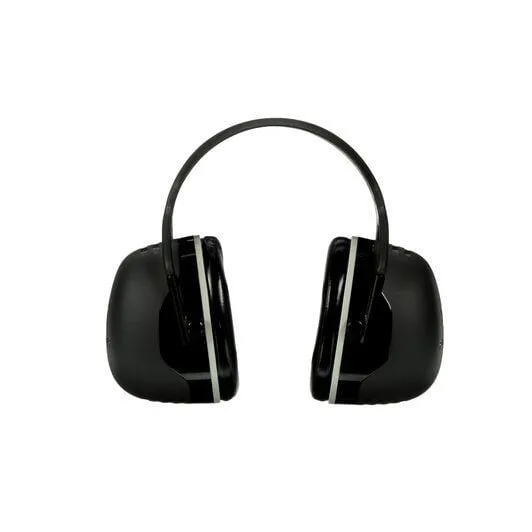
- Buy 3M PELTOR X5A Earmuffs The highest rated muff in 3M's X Series, and one of the few protectors where the maker publishes the full attenuation table behind the headline number. Amazon
- Buy Moldex Pura-Fit 6800 Uncorded Disposable Foam Earplugs The highest labeled NRR in this comparison, from a plug that costs almost nothing per pair, provided you actually roll it down and seat it. Amazon
- It depends Howard Leight Impact Sport Electronic Earmuff A level-dependent muff that amplifies quiet sound up to a capped 82 dB and stops amplifying when something loud happens, at the cost of the lowest NRR of the three we would buy. Amazon
- Skip Etymotic ER20XS High Fidelity Earplugs A well made plug for concerts and rehearsal rooms that carries an NRR of 13 dB, which is the wrong tool for a chainsaw or a firing line. Amazon
What actually matters
- Noise Reduction Rating (NRR) - the single number in decibels on every hearing protector sold in the United States, set by an EPA labeling rule. It is the only figure you can compare across brands on equal terms, which is exactly why it deserves scepticism rather than trust.
- Fit and seal - the gap between a laboratory result and your result is almost entirely a fit problem. A muff cushion broken by an eyeglass temple, or a foam plug pushed in with a thumb instead of rolled down, can cost you far more decibels than any difference between two models.
- Attenuation by frequency - one NRR hides very different behaviour across the spectrum. Machinery and engines put out a lot of low frequency energy, and protectors vary much more at 125 and 250 Hz than they do at 4000 Hz.
- Level dependent electronics - microphones and a limiter that let quiet sound through and shut off when things get loud. They buy situational awareness; they do not add attenuation to the cup.
- Impulse versus continuous noise - the NRR is measured with continuous noise, and manufacturers state in their own manuals that it may not indicate protection against impulsive noise such as gunfire.
- Comfort and wear time - a protector that hurts after twenty minutes gets taken off, and time unprotected in noise undoes protection very quickly. Comfort is a safety spec, not a luxury.
- Consumables - earmuff cushions harden and foam liners compress. 3M recommends replacing them at least twice a year to maintain acceptable noise reduction, so factor the hygiene kit into the decision.
The specs, in plain English
Green flags vs red flags
Green flags
- The maker publishes mean attenuation and standard deviation at each test frequency, not just the NRR.
- The listing states the NRR clearly and does not confuse it with a European SNR figure.
- Replacement cushions, foam inserts or hygiene kits are sold under a part number you can find.
- Earmuff models come in more than one attenuation level so you can match the protector to the noise.
- The manufacturer's own literature carries the fit caution and tells you to expect less than the label.
Red flags
- A very large decibel claim with no NRR anywhere on the listing or the packaging.
- The two numbers for combined plugs and muffs are simply added together in the marketing copy.
- A single-number claim about gunfire protection with no reference to how impulse performance was measured.
- Electronics described as if the circuitry itself is providing the noise reduction.
- No fitting instructions, which are actually required content under the EPA labeling rule.
Who's who: the brands
- 3M - Owner of the Peltor and E-A-R lines, and unusually thorough about publishing full attenuation tables and fit cautions on its technical datasheets.
- Moldex - A United States earplug specialist known for high NRR foam plugs, PVC-free materials and a strong focus on fit testing and personal attenuation ratings.
- Howard Leight - The shooting and industrial hearing brand behind the Impact Sport electronic muff, sold under Honeywell for years and now part of Protective Industrial Products.
- Etymotic - A hearing research company whose plugs aim for flat, even attenuation for musicians and audiences rather than maximum noise blocking.
- Walker's - A shooting sports brand focused on slim electronic muffs and in-ear devices designed around firearm use rather than industrial noise.
How to read a listing without getting fooled
Start with the NRR, because it is the only number regulated to a common method, then immediately look for what sits behind it. If the maker publishes an attenuation table, read the 125 Hz and 250 Hz figures rather than the high frequency ones, since those low bands are where machinery noise lives and where protectors differ most. Check whether any other decibel figure on the listing is an SNR, which comes from a different standard and cannot be compared with an NRR. For electronic muffs, separate the two claims: the amplification threshold tells you what you will hear, and the NRR tells you what you are protected by. Then look for the boring details that decide real performance, namely replaceable cushions, published weight, whether the cup clears whatever else you wear on your head, and whether the fitting instructions actually explain a roll-down for plugs.
How much should you spend?
This is a category where budget genuinely buys protection. Disposable foam earplugs sit firmly in the budget tier and carry some of the highest labeled NRR figures available, which means the cheapest option on the shelf can also be the highest rated. Passive earmuffs run from budget to mid-range, with the higher attenuation models toward the top of that band mostly because they use more material and heavier cups. Electronic level dependent muffs start at mid-range and climb into premium as you add Bluetooth, better microphones and slimmer profiles, and you are paying for awareness features rather than for attenuation. Premium spend is worth it when you need to hear while protected, or when comfort is the thing stopping you wearing protection at all. It is not worth it if you assume a higher price means a higher NRR, because frequently it does not.
Questions, answered
Are earplugs or earmuffs better?
Neither wins outright. Foam earplugs reach higher labeled NRR figures and work under hard hats and safety glasses, but the result depends heavily on insertion technique. Earmuffs give a more repeatable seal because the headband applies similar force every time, and they are far quicker to put on and take off. If you move in and out of noise constantly, muffs tend to win in practice.
Why has the EPA label not been updated?
It has been proposed but not finalised. EPA published proposed revisions to the labeling rule in August 2009 that would have adopted newer ANSI test methods, extended coverage to electronic and sound restoration devices, and replaced the single NRR with a range showing lesser and greater levels of protection. As of 2026 the regulation on the books is still the 1979 rule with its 1980 amendment, so the label you see in a store is the old one.
Do noise cancelling headphones count as hearing protection?
Not unless they are sold as a hearing protector and carry an NRR label. Active noise cancellation is generally tuned to steady low frequency sound such as engine drone and does little for the high frequency content of a saw or a gunshot. If a product does not carry an EPA hearing protector label, treat it as headphones.
How do I know my earplugs are in properly?
Roll the plug down thin, reach over your head and pull your ear up and back, insert it well into the canal, and hold it while the foam expands. Once it is in, your own voice should sound noticeably boomy and hollow, and background noise should drop sharply. A quick check is to cup your hands over your ears: if that makes much difference, the plugs are not seated deeply enough.
Or jump to the head-to-head: 3M PELTOR X5A Earmuffs vs Moldex Pura-Fit 6800 Uncorded Disposable Foam Earplugs.