Explained
Hot Water Bottles, Explained
After reading, you'll understand what a printed standard tells you, how to fill and use a bottle safely, and which claims on a listing are worth trusting.
In this guide
Hot water bottles look interchangeable, which is why first-time buyers focus on the cover. The cover matters less than the standard, the closure and the maker's warnings. Listings also mix bottles, microwavable warmers and wheat bags, which are heated differently. This guide separates the terms so you know what to check before you buy.
The 30-second version
- A named standard beats a vague claim, so look for BS 1970:2012 on the product page, as Hugo Frosch gives it.
- Never fill to the brim, because the makers we read advise filling to no more than two thirds.
- Do not use boiling water, as both Hugo Frosch and Fashy say in their warnings.
- Do not microwave a normal bottle, since only products sold as microwavable should go in the microwave.
- If the page is silent on material, standard and stopper, treat that as a reason to buy elsewhere.
The products this guide is about
Our verdict on each, with the full reasoning on the companion review.
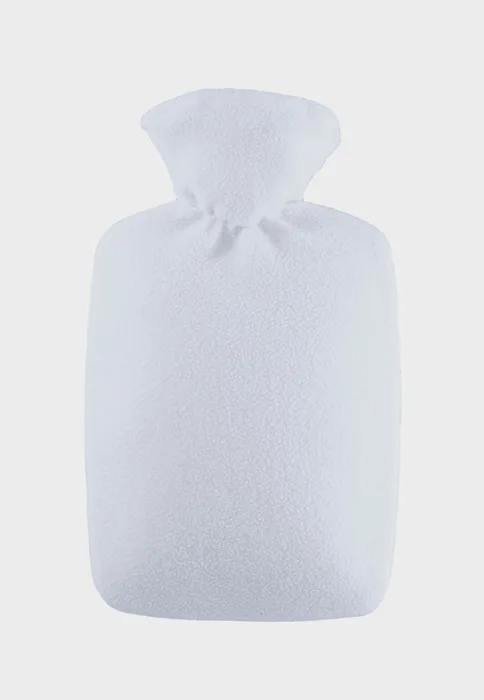
- Buy Hugo Frosch Classic 1.8 L Hot Water Bottle with Fleece Cover The only product here whose own page names BS 1970:2012, the bottle material and the cover care together.
- Buy Fashy Hot Water Bottle with Fleece Cover 2.0 L A large, plain fleece-covered bottle from a maker that publishes its testing and warnings clearly.
- It depends Warmies Plush Miffy Microwavable Warmer A weighted, lavender-scented plush you heat in the microwave, with no hot water to pour.
- Skip Mountain Warehouse Hot Water Bottle with Foot Compartment 2 L A cheap foot-pocket bottle whose maker page gives no safety standard, bottle material or stopper detail.
What actually matters
- Safety standard - A named standard is the one verifiable safety claim a bottle can make. Hugo Frosch cites BS 1970:2012 for its classic range.
- Bottle material - The material decides how the bottle handles hot water over time. Hugo Frosch names thermoplastic, while some listings name nothing at all.
- Stopper and cap - The closure is where a bottle leaks. Good pages describe it, and makers advise closing it hand-tight and checking it for wear before each use.
- Capacity versus fill limit - A 2.0 L label does not mean 2.0 L of water. Makers advise filling to no more than two thirds.
- Cover - A cover keeps hot plastic off skin. A removable one lets you wash it, and Hugo Frosch's fleece cover washes at 30 degrees C.
- Surface temperature guidance - Fashy advises keeping the surface under 42 degrees C for children or sensitive skin. Hugo Frosch gives 40 degrees C water for under-3s.
- Heating method - Water bottles take hot water, microwavable warmers take the microwave, and the two are not interchangeable.
The specs, in plain English
Green flags vs red flags
Green flags
- The product page names BS 1970:2012
- The bottle material is stated
- The cover is removable and washable
- The page gives a fill limit and a water temperature limit
- The page describes the stopper or cap
Red flags
- The page says only that the bottle is safety tested
- No material, standard or stopper is given
- No fill limit or temperature guidance appears
- A bottle sold for children with no child guidance
- A microwavable claim with no heating instructions
Who's who: the brands
- Hugo Frosch - A German maker whose classic range pages state BS 1970:2012 and independent laboratory monitoring.
- Fashy - A German maker that lists independent TÜV Süd testing and offers bottles, children's bottles and filled heat cushions.
- Warmies - A UK maker of microwavable plush warmers filled with natural grain and lightly scented with French lavender.
- Mountain Warehouse - An outdoor retailer with a budget foot-pocket bottle whose page lists few technical details.
How to read a listing without getting fooled
Start with the product page, not the photo. Look for the standard by name, then the bottle material, the capacity and the cap. Next look for the warnings: a good page gives a fill limit, says not to use boiling water and says who should not use the bottle. If the page lists only a capacity and a fabric, as the Mountain Warehouse page does, you have a cover and nothing to verify. For microwavable warmers, look for stated heating steps and supervision advice, as Warmies provides on its care page.
How much should you spend?
Price tiers are a weak guide here. A mid-range bottle from a maker that states its standard and testing is a better buy than a budget bottle with no detail, because the information is what you are paying for. A budget tier is fine if the page names the standard and the closure. A premium tier does not mean safer, so check the standard rather than the label. Microwavable warmers sit in a mid-range tier, and you are paying for the filling and the plush shell.
Questions, answered
Are rubber or plastic hot water bottles better?
We cannot say one material beats the other from the maker pages we read. Hugo Frosch names thermoplastic for its classic range, and other pages we read gave no material. What you can compare is the standard, the closure and the warnings. Pick whichever material comes with a named standard.
How full should I fill a hot water bottle?
Fashy advises filling no more than two thirds. Hugo Frosch gives the same limit and adds that you should not overfill. A bottle labelled 2.0 L therefore takes less water than its label suggests, and the rest of the space helps you close the cap.
How do I check a bottle is still safe to use?
Both makers advise checking the bottle and cap for wear or damage before each use. Look for cracks, a loose cap and leaks, and empty the bottle when not in use, as Hugo Frosch advises. If anything looks worn, stop using it.
Can I put a microwavable warmer in the freezer?
Warmies says its products can be chilled in a freezer, in a grip-seal freezer bag for up to 3 hours. That advice is specific to Warmies. Do not freeze a standard hot water bottle unless its maker says you can.
Or jump to the head-to-head: Hugo Frosch Classic 1.8 L Hot Water Bottle with Fleece Cover vs Fashy Hot Water Bottle with Fleece Cover 2.0 L.