Explained
Massage Guns, Explained
After reading, you will know which two numbers actually decide how a massage gun feels, and which spec-sheet claims to ignore.
In this guide
A massage gun (percussion massager) is a handheld device that pounds a soft head rapidly into muscle to ease soreness and stiffness. Almost every one calls itself 'professional grade,' yet the way they behave when you lean into a real knot varies enormously. The trap for first-time buyers is fixating on the big percussions-per-minute number on the box, which barely predicts how deep or how strong the massage feels.
The 30-second version
- Two numbers rule the rest. Amplitude sets how deep the head strokes and stall force sets how hard you can press before the motor bogs down; almost everything else is a tie-breaker.
- PPM is mostly marketing. Headline percussions-per-minute figures look impressive but rarely change how a gun performs against a tight muscle.
- Stall force is the spec buyers miss. A deep stroke is wasted if the motor slows the instant you apply real pressure, which is exactly when you want the power.
- Match the tool to your body and pressure. Heavier training and denser muscle call for more depth and stall force; light daily maintenance does not.
- Treat apps and screens as extras. Guided routines and OLED displays are conveniences, not reasons to buy, and never a substitute for raw performance.
The products this guide is about
Our verdict on each, with the full reasoning on the companion review.
- Buy Therabody Theragun Prime (Gen 6) The deepest, most ergonomic stroke here, if you'll pay for it and tolerate the noise. Amazon
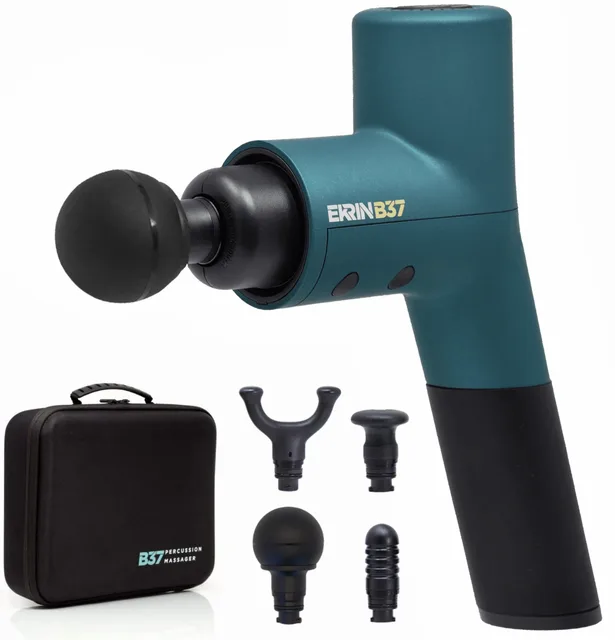
- Buy Ekrin Athletics B37 Near-flagship power and the longest battery here, without the flagship price.
- It depends Hyperice Hypervolt 2 One of the quietest and best-built guns, but you pay a brand premium for a lighter punch. Amazon
- Skip Therabody Theragun Mini (Gen 3) A lovely little travel gun that's a poor value as your only massager. Amazon
What actually matters
- Amplitude (stroke depth) decides how deep the head travels into muscle. Around 12mm suits general recovery, while 16mm reaches deeper layers for heavy training.
- Stall force is how much pressure the motor tolerates before it slows or stalls. A low stall force means the gun bogs exactly when you lean in on a knot, wasting the stroke it advertises.
- Battery life ranges from barely two hours to a full week of sessions on one charge. Weigh it against how often you are willing to recharge.
- Noise decides whether you will actually use the gun at night or near family. A powerful gun you avoid because it is loud helps nobody.
- Handle shape and weight determine whether you can reach your own back and shoulders without wrist strain. Angled or triangular grips help; a heavy body tires your arm.
- Attachments matter only to the extent you will realistically use them. Count the useful heads, not the total in the box.
- Warranty signals how much the maker trusts the motor. Coverage ranges from a single year to lifetime.
The specs, in plain English
Green flags vs red flags
Green flags
- A clearly stated stall force in the 40-pound-plus range if you want firm, deep work
- Amplitude listed in millimeters (12mm for maintenance, 16mm for deep tissue) rather than vague 'powerful' language
- A brushless motor paired with a battery rated for several hours per charge
- An angled or triangular handle that lets you reach your own back and shoulders
- A generous or lifetime warranty, signaling confidence in the motor
Red flags
- Marketing that leads with a huge percussions-per-minute number and hides amplitude and stall force
- No stall-force figure published anywhere, which often means it is low
- A price driven mainly by brand name rather than measured performance
- A mini or pocket gun sold as a full deep-tissue replacement despite a low stall force
- Heavy reliance on app 'coaching' or a screen to justify a premium price
Who's who: the brands
- Therabody (Theragun) - The category's best-known name, known for deep 16mm-amplitude strokes, ergonomic triangular grips, and app-guided routines at a premium.
- Ekrin Athletics - A value-focused challenger known for high stall force, long battery life, and lifetime warranties without flagship pricing.
- Hyperice (Hypervolt) - A premium recovery brand known for very quiet motors and light, well-built guns aimed at everyday maintenance.
How to read a listing without getting fooled
Start by ignoring the biggest, boldest number on the listing, which is almost always percussions per minute. Scroll down and hunt for two figures instead: amplitude in millimeters and stall force in pounds. If a listing trumpets PPM but never states stall force, treat that as a warning sign rather than an oversight. Read amplitude as depth (12mm everyday, 16mm deep tissue) and stall force as how much of that depth survives when you actually press in. Then check the battery rating in hours, the motor type (brushless is better), and the handle shape for self-reach. Treat OLED screens, Bluetooth apps, and long attachment lists as tie-breakers, not headline reasons to buy, and mentally discount any price that seems to rest on brand reputation more than measured performance.
How much should you spend?
Spend according to how hard you press and how often you train, not according to the logo. The value sweet spot sits in the mid-tier, where you can get near-flagship stall force and long battery life without paying the premium that established brands charge largely for their name and app ecosystem. Stepping up to a flagship is worth it only if you specifically want the deepest stroke or guided coaching and will genuinely use them. Spending more buys you diminishing returns once stall force clears the roughly forty-pound mark and amplitude reaches the deep-tissue range. Be especially wary of paying a full-size price for a pocket or mini gun, which is a finesse travel accessory rather than a primary massager, and of any premium justified mainly by connected features you will stop using after a week.
Questions, answered
Amplitude or stall force, which matters more?
Both, but stall force is the one buyers overlook. Amplitude sets how deep the head strokes, while stall force decides whether the motor keeps that stroke going when you press hard. A deep 16mm stroke is wasted if a low stall force lets the head bog the moment you lean in.
Is a higher percussions-per-minute number better?
Not really. PPM is the figure makers put on the box, but it barely predicts how a gun feels against a knot. A fast but shallow gun feels buzzy on the surface, while a slower, deeper-stroking gun with good stall force delivers the satisfying thud most people are actually after.
Can a mini massage gun be my only device?
For travel and light spot relief, yes; as your only tool, usually no. Mini guns tend to have low stall force, so they bog down on dense muscle like glutes or a thick back and cannot sustain deep work. A mini makes the most sense as a portable second gun alongside a stronger primary one.
Are massage guns safe, and can they cause harm?
This is general information, not medical advice. Most healthy adults use percussion massagers comfortably on large muscle groups, but you should avoid bones, joints, the spine, the neck, and injured or inflamed areas, and keep sessions short. If you are pregnant, take blood thinners, or have a condition such as neuropathy, a blood-clotting disorder, or recent surgery, consult a qualified healthcare professional before use.
How loud are massage guns in practice?
It varies by model and speed. Guns built around quieter brushless motors stay reasonable for late-night use, while some powerful models get noticeably louder at higher speeds. If you plan to use one near family or at night, prioritize a quieter model and test it at the top speed you will actually use.
Or jump to the head-to-head: Ekrin Athletics B37 vs Therabody Theragun Prime (Gen 6).