Explained
Neck Massagers, Explained
After reading, you'll know which neck-massager shape and features fit your tension, and how to read a listing without getting fooled.
In this guide
Neck massagers all promise to melt away tension, but they work in very different ways, and the shape of the device decides who it suits. The single biggest thing shoppers get wrong is buying for the picture instead of for where their pain actually lives. This guide decodes the styles, the spec-sheet jargon, and the trade-offs so you buy once and buy right.
The 30-second version
- The shape decides the fit. Draped units reach the shoulders, collars concentrate on the neck, and pillows go anywhere but can't be worn, so match the format to where your knots are.
- Real kneading beats vibration. Rotating or bidirectional shiatsu nodes actually work out knots, while pure vibration mostly feels pleasant on the surface.
- Cordless is the whole point. A rechargeable, hands-free unit lets you use it on the couch or in bed, and a cord quietly cancels the main benefit of the category.
- Heat is a nice-to-have, not a deciding factor. Warmth helps muscles relax and most people leave it on, but you want to be able to switch it off.
- Intensity control saves you from bruising. Firm nodes on a bare neck can be too much, so look for adjustable speed or plan to slip a thin layer of fabric underneath.
The products this guide is about
Our verdict on each, with the full reasoning on the companion review.
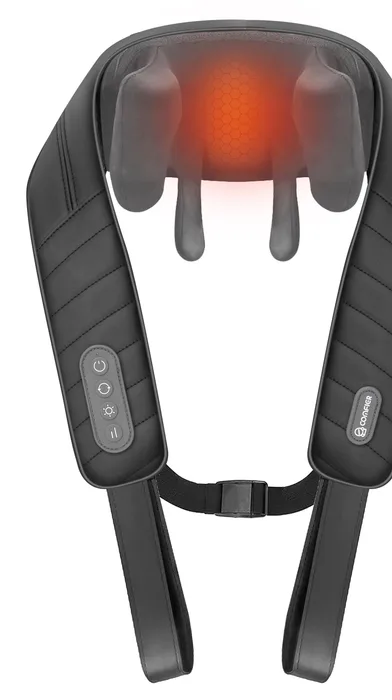
- Buy Comfier Cordless Neck Massager with Heat (CF-6811) The best all-rounder: a cordless shiatsu drape with eight kneading nodes and enough reach to work the shoulders as well as the neck. Amazon
- Buy HoMedics Deep Rhythmic Neck Massager A comfortable cordless U-collar that targets neck and upper-trap tension better than it does the wider back.
- It depends HoMedics Cordless Shiatsu Body Massage Pillow with Heat A cheap, versatile cordless shiatsu pillow that works anywhere on the body, as long as you don't need a hands-free wearable.
- Skip Naipo Neck and Back Massager with Heat A cheap draped shiatsu unit that runs off a wall or car adapter, in a category that's all about cutting the cord.
What actually matters
- Massage style - bidirectional shiatsu kneading and rotating 3D nodes relieve deep knots; rhythmic massage is typically gentler and comfort-focused; plain vibration barely counts.
- Coverage area - decide up front whether you need the neck alone, the neck plus both shoulders, or a do-anything device you can also press into your lower back and calves.
- Truly cordless and hands-free - a rechargeable battery plus straps or a collar shape lets you keep your hands free while it works; check that both are true, not just one.
- Heat - usable warmth loosens muscles and makes kneading feel better, but it should be optional so you can run it cold when the room is already hot.
- Adjustable intensity - speed or intensity settings let you dial the nodes down for a bare neck and up for thick trap muscles.
- Battery run-time - cordless convenience only matters if the charge lasts a real session, and this is where cheap units tend to disappoint.
- Owner-reported durability - motors and batteries in bargain units fail early, so long-term owner sentiment matters more than the day-one demo.
The specs, in plain English
Green flags vs red flags
Green flags
- Rotating or bidirectional shiatsu nodes, described as kneading rather than just 'vibrating' or 'massaging'
- Genuinely cordless and rechargeable, with a clear way to stay hands-free (straps or a collar)
- A shape that matches your pain: a drape for neck-and-shoulders, a collar for the neck, a pillow for whole-body flexibility
- Heat you can turn on or off, plus adjustable intensity or speed settings
- A large volume of long-term owner reports praising both effectiveness and battery durability
Red flags
- A cord in a category built around going cordless, unless you truly never move from one spot
- Marketing that leans on 'vibration' or 'relaxing tingles' instead of kneading or shiatsu action
- No intensity control on firm nodes, which almost guarantees it feels too harsh on a bare neck
- Owner sentiment skewing negative on battery life, motor noise, or nodes that quit working
- A pillow or gadget sold as a wearable when it clearly has to be pressed against a surface
Who's who: the brands
- Comfier - Massage brand selling cordless draped shiatsu units with heat, whose CF-6811 runs on built-in batteries and reaches across the shoulders.
- HoMedics - One of the biggest names in home massage, spanning comfortable cordless collars and affordable, versatile shiatsu pillows with heat.
- Naipo - Value-focused brand widely sold online for draped and pillow-style shiatsu massagers at accessible prices.
- RENPHO - Popular direct-to-consumer wellness brand offering cordless neck-and-shoulder and pillow massagers with app-friendly, modern styling.
- Snailax - Known for shiatsu pillows and massage cushions with heat, aimed at whole-body use rather than dedicated neck wearables.
How to read a listing without getting fooled
Start with the shape in the main photo and ask where it actually sits: a shawl draped over both shoulders reaches far more than a collar hugging just the neck, and a 'pillow' has to be leaned into, so it isn't hands-free no matter what the lifestyle shot suggests. Next, read the massage-style words carefully. 'Shiatsu,' 'kneading,' '3D rotating nodes,' and 'bidirectional' point to real knot work; 'vibration,' 'soothing pulses,' or vague 'massage' often mean something much lighter. Confirm the words 'cordless' and 'rechargeable' both appear, not just one, and check whether heat and intensity are adjustable rather than always-on. Finally, treat the star average as a starting point and scan recent owner reports for the two things spec sheets hide: real-world battery life and whether the motor and nodes are still working months later.
How much should you spend?
You're mostly paying for the quality of the mechanism and the convenience of the format, not for a longer feature list. The budget end is where cordless shiatsu pillows live: genuinely useful and flexible, but you trade away wearability and sometimes battery stamina. The mid-range is the value sweet spot for most people, buying a truly cordless draped unit with reversing nodes, heat, and enough reach to cover the shoulders. Paying up to premium is worth it when you specifically want a quieter, more comfortable collar or better build quality, and it's not worth it if you're really just buying a nicer-looking box around a plain-vibration motor. The one place spending less backfires is a cheap corded model: it saves money up front but tethers you to a wall, which defeats the entire point, so an inexpensive-but-tethered unit is rarely the bargain it looks like.
Questions, answered
Is a neck massager the same as a massage gun?
No. A neck massager uses rotating or kneading nodes (often with heat) to mimic a therapist's thumbs across the neck and shoulders, and many drape over you so your hands stay free. A massage gun is a handheld device that delivers rapid percussion to a spot you aim yourself. They solve different problems; this guide is about neck-and-shoulder massagers, not guns.
Draped shawl, collar, or shiatsu pillow: which should I pick?
Match the shape to your pain. A draped shawl reaches the neck and both shoulders and stays hands-free, making it the best all-rounder. A collar is the most comfortable and targeted choice if your tension lives mainly in the neck and upper traps. A shiatsu pillow is the cheapest and most versatile, working anywhere on the body, but you have to press into it rather than wear it.
Do I really need the heat feature?
It's optional but popular. Warmth helps muscles relax and makes the kneading feel more comfortable, so most people leave it on. If you run warm or use the massager in an already-hot room, just pick a model that lets you switch the heat off.
Are cordless models as strong as corded ones?
Good cordless units can knead about as firmly as corded ones for a typical session; the trade-off is run-time, since you'll recharge periodically. The upside is huge: you can use them on the couch, in bed, or at a desk without being anchored to an outlet, which is why cordless is the format worth prioritizing in this category.
Is a neck massager safe for my neck problems or an injury?
This is general information, not medical advice. These are consumer wellness devices, not treatments. If you have neck or spine issues, a recent injury, a pinched nerve, or circulation problems (or you're pregnant), check with a doctor before using one, keep the intensity low, and stop immediately if anything hurts or feels numb.
How long should I use one in a session?
Many units auto-shut-off after roughly 15 to 20 minutes, which is a sensible ceiling; check your model's manual. Short, moderate sessions are more comfortable and lower-risk than long, aggressive ones; if a spot feels sore afterward, shorten the session or reduce the intensity next time.
Or jump to the head-to-head: Comfier Cordless Neck Massager with Heat (CF-6811) vs HoMedics Deep Rhythmic Neck Massager.