Explained
Massage Chairs, Explained
After reading this, you'll be able to look at any massage chair listing and know whether it delivers real roller massage or an expensive airbag squeeze - and whether it will actually fit your body and your room.
In this guide
A massage chair is one of the biggest recovery purchases a household ever makes, and the marketing is built to confuse you: airbag counts, 'zero gravity', '4D AI massage', and track acronyms that mean nothing to a first-time buyer. The trap most people fall into is shopping the feature list instead of the mechanism - the rollers and track that do the actual work. This guide decodes the jargon so you can tell a genuinely therapeutic chair from a vibrating recliner in fancy clothes.
The 30-second version
- The rollers and track are the massage. Everything else - airbags, Bluetooth, voice control - is trim. A chair with a long track and a good 3D or 4D roller mechanism generally beats a chair that leans on airbags.
- Big airbag counts are a warning sign, not a feature. Some budget chairs lead with airbag numbers instead of roller detail; compression squeezing feels pleasant for a few minutes but doesn't knead muscle.
- Fit range matters as much as massage quality. Chairs are built around an assumed body size, and a mismatched chair puts rollers and airbags in the wrong places - check the stated height and weight range against everyone who will use it.
- Measure before you order. These chairs are furniture-sized and heavy; check doorway width, recline clearance behind the chair, and whether white-glove delivery is offered.
- Warranty and service network are part of the product. When a furniture-sized machine breaks, someone has to come fix it - check what the warranty covers and who services the chair in your area.
The products this guide is about
Our verdict on each, with the full reasoning on the companion review.
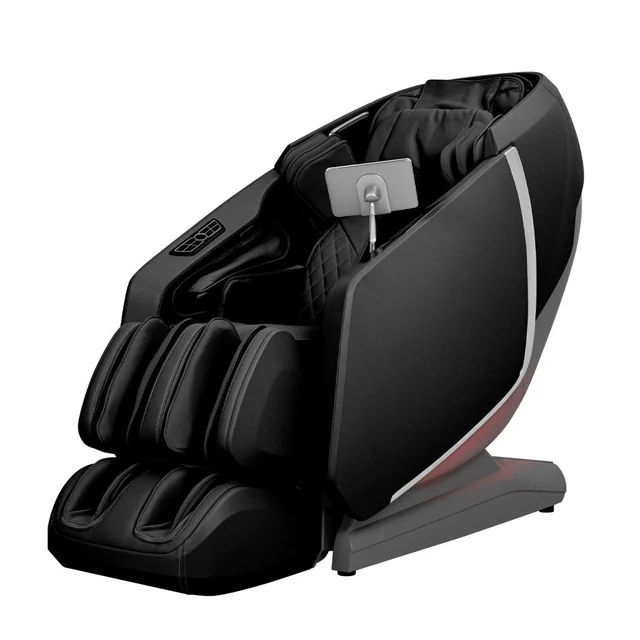
- Buy Osaki OS-Highpointe 4D A 4D SL-track chair priced below the flagship class. Amazon
- Buy Titan Jupiter LE Premium A big-and-tall focused chair that is also a mid-range value pick for everyone else. Amazon
- It depends Human Touch Super Novo 2.0 A flagship with a wide stated fit range, if the price does not make you flinch.
- Skip Real Relax Favor-03 A budget chair that leans on airbag squeezing rather than a track roller system.
What actually matters
- Roller mechanism (2D/3D/4D) - this is a major quality difference. 2D moves along the track, 3D adds adjustable depth into the muscle, and 4D adds speed and rhythm control mid-stroke, which is what makes the best chairs feel closest to human hands.
- Track type and length - the track is the rail the rollers travel on. Longer tracks (SL-type) reach from your neck down to your hamstrings; short tracks may only cover the upper and mid back.
- Fit range - every chair has a height and weight sweet spot. Too tall and the neck rollers hit your shoulders; too short and they hit the back of your head. Big-and-tall users especially need to check stated ranges, because many chairs are built around average builds.
- Heat placement - lumbar-only heat is the bare minimum and easy to advertise. Heat in the calves, seat, and full back adds coverage; check zones, not just the word 'heated'.
- Stretch and recline programs - zero-gravity recline takes pressure off the spine, and a real stretch program (the chair grips your legs and extends your back) is a feature worth looking for if your lower back is stiff.
- Space and delivery logistics - recline clearance behind the chair varies from a few inches (wall-saving designs) to a couple of feet, and the box may not fit through a standard doorway. Measure everything first.
- Warranty and repair support - ask who physically services the chair in your area. Multi-year parts-and-labor coverage with an actual technician network separates established brands from budget imports.
The specs, in plain English
Green flags vs red flags
Green flags
- The listing states roller type (3D/4D) and track type (S/L/SL) clearly, with a specific height and weight fit range
- Heat zones are itemized by location (back, seat, calves) rather than just the word 'heated'
- A real stretch program and body-scan fitting are described, not just recline positions
- Multi-year parts-and-labor warranty with an in-home technician network, and white-glove delivery offered
- The brand has an established dealer or service presence
Red flags
- The headline spec is an airbag count, with vague or missing details about the rollers and track
- No stated height/weight fit range, or a suspiciously universal 'fits everyone' claim
- '4D' or 'AI massage' claims on a very cheap chair - 4D claims deserve scrutiny
- Short limited warranty or no named service network
Who's who: the brands
- Osaki - Massage chair brand whose Highpointe 4D lists a 4D mechanism on an SL-track.
- Titan - Massage chair brand whose Jupiter LE Premium is positioned for bigger bodies and space-saving recline.
- Human Touch - Flagship-priced brand whose Super Novo 2.0 lists S- and L-track 3D massage, 38 auto programs and a 5-year limited warranty.
- Real Relax - Budget brand sold online; its Favor-03 ADV lists airbag massage alongside a dual-core roller system, a narrow stated height range and a 1-year warranty.
How to read a listing without getting fooled
Start every listing at the mechanism and work outward. First find the roller type (2D/3D/4D) and the track type (S, L, or SL) - if either is missing or buried, assume the worst. Next find the stated height and weight range and check it against every person who will use the chair; no stated range is itself an answer. Then look at heat: count the named zones instead of accepting the word 'heated'. Treat airbag counts, program counts, Bluetooth speakers, and voice control as tie-breakers at most - they are the cheapest specs to inflate. Finally, read the warranty terms like a contract: how many years of parts and labor, and does anyone actually come to your home to fix it? A listing that is specific about rollers, track, fit, and service is written by a brand with something real to describe; a listing that leads with airbags and mood lighting usually isn't.
How much should you spend?
Price in this category tracks the mechanism almost perfectly. The cheapest chairs substitute airbag compression for real roller work, and the roller system is simpler there - if that's the budget, a high-quality massage cushion can serve better than a weak chair. The value sweet spot sits in the mid-range, where you get genuine 3D rollers on a long track, real heat coverage, body scanning, and an established brand's warranty. Stepping up to the premium tier buys 4D roller control, more heat zones, and stronger stretch programming - worthwhile if massage quality is the whole point of the purchase. The flagship tier mostly buys refinement, exceptional fit range, and white-glove service rather than categorically more massage; it makes sense when the cost genuinely doesn't sting or your household spans extreme heights. Wherever you land, put your money into rollers, track, fit, and warranty before any convenience feature.
Questions, answered
Who should check with a doctor before using a massage chair?
This is general product information, not medical advice - but some situations clearly warrant a conversation with a doctor or physical therapist first. That includes anyone with a pacemaker or other implanted device, people with blood clots, DVT, or circulation problems, anyone who is pregnant, and anyone recovering from recent surgery, fractures, or a herniated disc. Conditions like osteoporosis or severe neuropathy also deserve a check-in. For everyone else: start on the gentlest settings, keep early sessions short, and stop if anything causes pain rather than relief.
Is 4D really better than 3D, or is it marketing?
It's real, with a caveat. 3D adds depth control - the rollers press harder or softer into your back. 4D adds control of speed and rhythm during the stroke, which is what makes top chairs feel more like human hands and less like a machine on rails. The caveat: a well-tuned 3D chair from an established brand beats a cheap chair slapping '4D' on the box. Genuine 4D mechanisms are expensive to build, so treat the claim on a bargain chair with suspicion.
Why do cheap chairs advertise so many airbags?
Because airbags are cheaper to add than a roller system. Airbags inflate and squeeze - pleasant, but fundamentally different from rollers kneading along your spine. Some budget chairs lead with airbag counts. Use it as a prompt: the more a listing talks about airbags, the harder you should look for what it says about the rollers.
How much room does a massage chair actually need?
Plan for a footprint about the size of a large recliner, plus recline clearance behind it - anywhere from a few inches for wall-saving designs to well over a foot for conventional ones. Also measure your doorways and any stairs or turns on the delivery path; these chairs ship in large, heavy boxes, and white-glove delivery (they bring it in and set it up) is usually worth taking when offered.
What if the same chair needs to fit a short person and a tall person?
Look for two things: a wide stated fit range and a good body-scan feature that re-maps roller targets for each user. Fit range is a genuine engineering constraint - most chairs are built around average builds, and only some brands design for the extremes. If your household spans very different heights, this spec should outrank almost everything else, because a chair that fits nobody well massages nobody well.
How long should a massage chair last?
Lifespan varies by brand and use, so the warranty is the most checkable signal. Listed terms we saw ranged from 5 years on the Osaki and Human Touch pages to 1 year on the Real Relax Favor-03 ADV page. Since replacing a broken chair means repeating a furniture-sized purchase, the warranty and service network deserve as much attention as the massage specs.
Or jump to the head-to-head: Osaki OS-Highpointe 4D vs Titan Jupiter LE Premium.