

Health & Wellness
The Best Massage Chairs for Home: 4 Compared (and One to Skip)
We compared four full-body massage chairs on roller quality, fit range, heat, stretch programs, and long-term reliability.
The short version
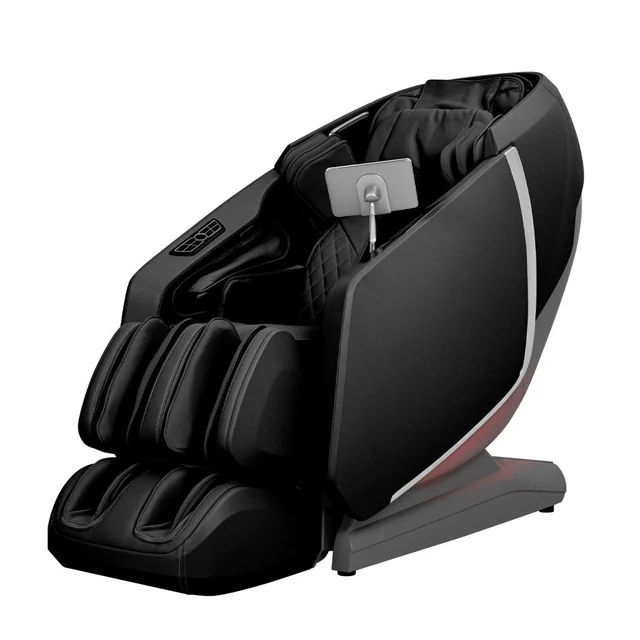
The Osaki OS-Highpointe 4D is the massage chair to buy: Osaki lists a 4D massage mechanism on an SL-track, deep calf kneading, lumbar and calf heat, zero gravity and a 5-year warranty, at a price below the flagship class. The Titan Jupiter LE Premium is the other buy, positioned for tall and broad users at a mid-range price. The Human Touch Super Novo 2.0 is a legitimate flagship with a wide stated fit range, but you are paying far more than the Osaki for refinement rather than an obviously different mechanism. The Real Relax Favor-03 is the skip: its airbag-heavy design is not a substitute for a track roller system, and its listed height range is narrow. Best for: the Osaki OS-Highpointe 4D for most homes; the Titan Jupiter LE Premium for big-and-tall users or mid-range budgets.
Our picks at a glance
- Osaki OS-Highpointe 4D - Buy. A 4D SL-track chair priced below the flagship class.
- Titan Jupiter LE Premium - Buy. A big-and-tall focused chair that is also a mid-range value pick for everyone else.
- Human Touch Super Novo 2.0 - It depends. A flagship with a wide stated fit range, if the price does not make you flinch.
- Real Relax Favor-03 - Skip. A budget chair that leans on airbag squeezing rather than a track roller system.
The verdict in 30 seconds
What mattered most
- Massage mechanism
- Track coverage
- Heat therapy
- Fit range
- Stretch and recline
- Warranty and support
A good massage chair is the biggest-ticket recovery purchase most households ever make, and the gap between a genuinely therapeutic chair and an expensive vibrating recliner is enormous. We compared maker specifications across four full-body chairs, a premium 4D pick, a big-and-tall value option, a flagship luxury model, and a budget option. Two earn a clear buy, one depends entirely on your budget and body, and one we'd skip despite its tempting price.
A 4D SL-track chair priced below the flagship class.
Best for: Anyone who wants deep-tissue, near-flagship massage quality without paying the flagship premium.
- Osaki lists a 4D massage mechanism on an SL-track, with a touchscreen controller and voice control
- Lumbar and calf heat with a heating shawl, plus deep calf kneading and a 3-roller foot and calf massage
- Zero-gravity recline and computerized body scanning
- A deep, firm massage, so smaller or sensitive users should start on the softer settings
- The touchscreen interface takes some learning, and the chair needs real floor space
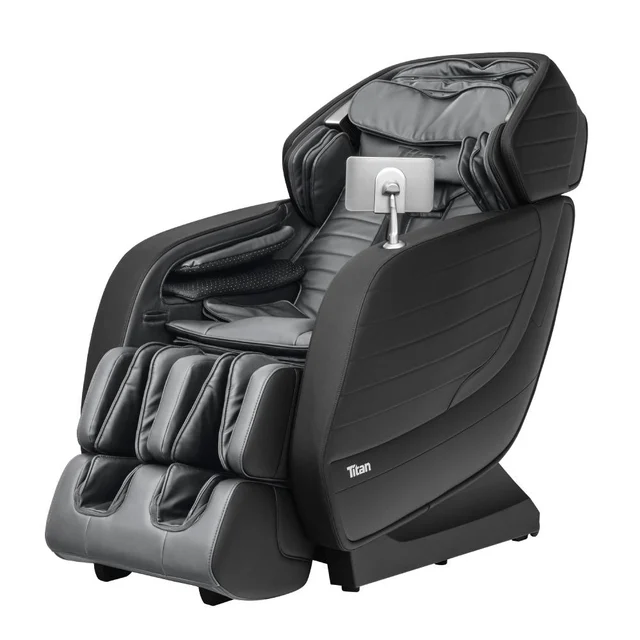
A big-and-tall focused chair that is also a mid-range value pick for everyone else.
Best for: Big and tall users, and anyone who wants strong full-body coverage at a mid-range outlay.
- Positioned as a big-and-tall chair, so check the maker's stated height and weight range against your household
- 3D L-track rollers with air cell massage and heat, check the maker's page for exact zones
- Space-saving recline design that needs less wall clearance than conventional chairs
- L-track can't recline fully flat the way S-track and SL-track chairs do
- Voice control is a nice-to-have rather than a reason to buy
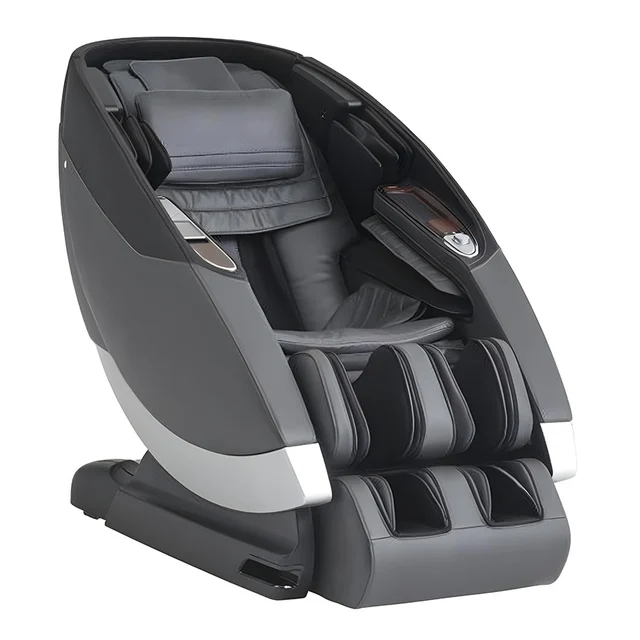
A flagship with a wide stated fit range, if the price does not make you flinch.
Best for: Households with very tall or very short users, or buyers who want flagship refinement and service and can absorb the cost.
- S- and L-track 3D massage with Intellitrack, and both 3D and 4D massage programs per Human Touch
- Human Touch's fit graphic shows a range from about five feet to six-foot-nine
- 38 auto-wellness programs and a 5-year limited warranty
- Costs far more than the Osaki and Titan picks
- The extra spend buys fit range and refinement, not an obviously different massage mechanism on the spec sheet
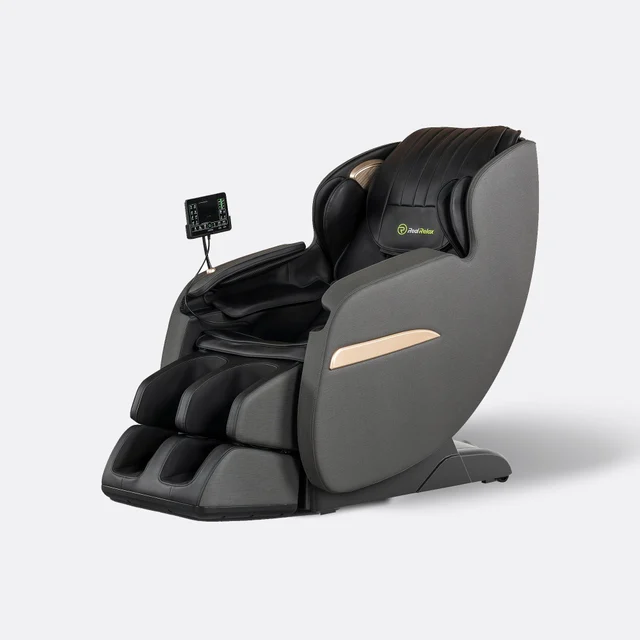
A budget chair that leans on airbag squeezing rather than a track roller system.
Best for: Few people - if the budget is fixed, a top-tier massage cushion or a used mid-range chair serves better.
- Costs a fraction of the others and includes zero-gravity recline and built-in speakers
- Airbag compression gives a full-body squeeze some casual users enjoy
- The massage leans on airbags, and the roller system is simpler than the track chairs here
- The stated height range is narrow, about 5.2 to 6.1 ft on the Favor-03 ADV page, so shorter and taller users may fit poorly
- A 1-year warranty is listed on the Favor-03 ADV page, shorter than the 5 years listed for the Osaki and Human Touch
| Criteria | Osaki OS-Highpointe 4D Top pick | Titan Jupiter LE Premium | Human Touch Super Novo 2.0 | Real Relax Favor-03 |
|---|---|---|---|---|
| Verdict | Buy it | Buy it | It depends | Skip it |
| Best for | Anyone who wants deep-tissue, near-flagship massage quality without paying the flagship premium. | Big and tall users, and anyone who wants strong full-body coverage at a mid-range outlay. | Households with very tall or very short users, or buyers who want flagship refinement and service and can absorb the cost. | Few people - if the budget is fixed, a top-tier massage cushion or a used mid-range chair serves better. |
| Price tier | $$$ · premium | $$ · mid-range | $$$$ · flagship | $ · budget |
| Massage mechanism | 4D massage mechanism | 3D L-track rollers | S- and L-track 3D with Intellitrack | Dual-core rollers plus airbags |
| Track coverage | SL-track | L-track | S- and L-track | Not clearly stated |
| Heat therapy | Lumbar and calf heat, plus heating shawl | Check maker's page for zones | Not clearly stated | Waist and calf heat |
| Fit range | Not stated on the page | Positioned for big and tall | About 5 ft to 6 ft 9 in per Human Touch's graphic | About 5.2 to 6.1 ft listed |
| Stretch and recline | Zero gravity reclining | Zero gravity, space-saving recline | 38 auto-wellness programs | One-button zero gravity |
| Warranty and support | 5 years listed (3 full service plus 2 parts) | Check the maker's page | 5-year limited warranty | 1 year listed (Favor-03 ADV) |
| Price tier | $$$ · premium | $$ · mid-range | $$$$ · flagship | $ · budget |
Which one is right for you?
- Anyone who wants deep-tissue, near-flagship massage quality without paying the flagship premium. Buy it Osaki OS-Highpointe 4D
- Big and tall users, and anyone who wants strong full-body coverage at a mid-range outlay. Buy it Titan Jupiter LE Premium
- Households with very tall or very short users, or buyers who want flagship refinement and service and can absorb the cost. It depends Human Touch Super Novo 2.0
- Few people - if the budget is fixed, a top-tier massage cushion or a used mid-range chair serves better. Skip it Real Relax Favor-03
How we judged the field
We do not run a lab. We compared the makers’ own product pages for four criteria: roller mechanism and coverage (the difference between therapy and a gimmick), fit range (a chair that does not match your height puts pressure in the wrong places), heat, stretch, and recline features, and warranty and support (a massage chair is furniture-sized; when it breaks, someone has to come fix it). Price tier was the lens, not the ranking: we asked what each chair delivers relative to what it asks.
Osaki OS-Highpointe 4D
Buy itThe Highpointe is the chair to look at when you want a 4D mechanism below the flagship tier. Osaki lists a 4D massage mechanism on an SL-track, deep calf kneading with a 3-roller foot and calf massage, lumbar and calf heat plus a heating shawl, computerized body scanning, zero gravity recline, and a touchscreen controller with voice control. It carries a 5-year warranty listing, split into 3 years of full service and 2 years of parts.
The caveats are practical. A chair with a deep, firm massage can feel strong, so smaller or sensitive users should start on the softer settings. The touchscreen interface also takes some learning, the chair needs real floor space, and Osaki does not state a user height range on its page, so check fit before you buy. None of that changes the verdict: as a massage-per-dollar proposition within this field, it is the one we would start with.
Titan Jupiter LE Premium
Buy itMany massage chairs are built around average heights. The Jupiter LE Premium is positioned for tall and broad users, and Titan is a sister brand to Osaki. It is a 3D L-track chair with air cell massage and heat. We could not load Titan’s product page, so confirm the stated height and weight range, the heat zones, the width and the wall clearance before you buy.
The trade-offs are the usual L-track ones: an L-track design hugs the glutes and hamstrings but generally cannot lay you as flat as an S-track chair. At a mid-range outlay, this is the value buy of the group, and for very tall users it is the one to check first.
Human Touch Super Novo 2.0
It dependsThe Super Novo 2.0 is the flagship pick if someone else is paying. Human Touch lists S- and L-track 3D massage technology with Intellitrack, both 3D and 4D massage programs, 38 auto-wellness programs and a 5-year limited warranty, and its fit graphic shows a range from roughly five feet to six-foot-nine.
So why not a straight buy? Price, mostly. This is a flagship-tier chair that costs far more than the Osaki and Titan, and the extra spend buys refinement, fit range, and brand assurance rather than an obviously different mechanism on the spec sheet. If your household spans extreme heights, or you want the most polished experience and the cost genuinely does not sting, it will not disappoint. For everyone else, the Osaki gets you a 4D mechanism for far less.
Real Relax Favor-03
Skip itThe Favor-03 is a budget chair, and we understand the appeal: it costs a fraction of anything else here and lists zero gravity, built-in speakers and airbag massage. Real Relax’s current store lists the Favor-03 ADV, which is marked sold out, so check which model you are actually buying. But the spec sheet is the problem. On the ADV page the massage is a dual-core roller system plus 20 airbags, with a listed height range of about 5.2 to 6.1 feet and a 1-year warranty. Compression squeezing feels pleasant for a few minutes; it does not knead muscle the way a track chair does.
If this is the budget, a high-quality massage cushion or saving toward the Titan is a better route than a chair with a narrow fit range and a short warranty.
Osaki OS-Highpointe 4D vs Titan Jupiter LE Premium: which should you buy?
This is a cleaner decision than most head-to-heads. Buy the Osaki OS-Highpointe 4D if massage mechanism is the point. It lists a 4D mechanism, SL-track coverage, lumbar and calf heat, and a 5-year warranty. Buy the Titan Jupiter LE Premium if you are tall, broad, on a tighter budget, or short on space, after confirming its stated fit range with the maker. The Osaki is the better-specified massage; the Titan is the more likely fit for bigger bodies. Neither is a compromise you will regret, which is why they are the two buys.
What to look for
- Rollers over airbags. Track length and roller mechanism (3D/4D) determine massage quality. A big airbag count on a budget chair is not a substitute for a roller mechanism.
- Track type. SL-track generally gives the longest coverage and flatter recline; L-track reaches the glutes but tends to limit recline; short-track chairs can miss the lower body.
- Fit range first. Check the stated height and weight range against everyone who’ll use the chair - a mismatched chair puts rollers in the wrong places.
- Heat placement. Lumbar-only heat is common; check whether the chair also lists calf or seat heat.
- Recline clearance. Wall-saving designs need less space behind them than conventional designs. Measure doorways too.
- Warranty and service network. Ask who physically repairs the chair in your area. Compare the listed warranty terms, which differ widely between brands.
Our final take
The massage chair market punishes spec-sheet shopping and rewards mechanism shopping. The Osaki OS-Highpointe 4D wins because it lists a 4D mechanism, SL-track and a 5-year warranty below the flagship class; the Titan Jupiter LE Premium earns the second buy as the pick for bigger bodies at a mid-range price, once you confirm its stated fit range. The Human Touch Super Novo 2.0 is a flagship whose verdict depends on your budget and your household’s height spread. And the Real Relax Favor-03 is the cautionary tale: an airbag-heavy design with a narrow fit range and a short warranty. Buy the mechanism, not the feature list.
Questions, answered
Are massage chairs actually worth it compared to paying for massages?
It depends on how often you would use one. A chair you use several times a week can cost less per session than regular professional massage over the years you own it, but the math only works if you buy a chair with a real roller mechanism and a warranty you can rely on, which is where budget models tend to fall down.
Is a massage chair safe for everyone to use?
This guide is general product information, not medical advice. Most healthy adults tolerate massage chairs well, but people with certain conditions, including osteoporosis, blood clots or clotting disorders, recent surgery, herniated discs, pacemakers, or pregnancy, should check with a doctor or physical therapist before regular use. Start on the gentlest settings regardless, and stop if anything causes pain rather than relief.
What is the real difference between 2D, 3D, and 4D massage chairs?
In general, 2D rollers move up and down and side to side along the track. 3D adds depth, pushing into the muscle with adjustable pressure. 4D adds variable speed or rhythm on top of that, which brands market as closer to human hands. Makers define these terms differently, so check what each brand actually lists. Chairs that lean on airbag counts offer compression, which feels pleasant but does not knead muscle the way rollers do.
How much space does a massage chair need?
Plan for a footprint about the size of a large recliner, plus recline clearance. Wall-saving designs slide forward as they recline and need less space behind the chair than conventional designs. Also measure your doorways before ordering, because these chairs ship large and heavy, and white-glove delivery is worth considering.
How long do massage chairs last, and what should I know about warranties?
Lifespan varies by brand and use, so the warranty is the most checkable signal. The Osaki page lists 5 years (3 years full service plus 2 years of parts) and Human Touch lists a 5-year limited warranty on the Super Novo 2.0, while the Real Relax Favor-03 ADV page lists 1 year. Read what is covered, who services the chair in your area, and whether parts and labor are both included.
Deciding between the top two? See our head-to-head: Osaki OS-Highpointe 4D vs Titan Jupiter LE Premium.
More Health & Wellness reviews
 Best Massage Guns: Percussion Power vs Marketing Hype
  The Best Mattress Toppers: 4 Compared (and One to Skip)
  The Best Meditation Cushions: 4 Compared (and One to Skip)
  The Best Mouth Tape: 4 Compared (and One to Skip)
  The Best Nebulizers: 4 Compared (and One to Skip)
  The Best Neck & Shoulder Massagers: 4 Compared (and One to Skip)