

Health & Wellness
The Best Nebulizers: 4 Compared (and One to Skip)
We compared four home nebulizers across tabletop compressors and portable mesh units on particle size, speed, noise, portability, and cleaning.
The short version
For most households, a plug-in compressor remains the most trustworthy home nebulizer, and the Omron CompAir NE-C801 is our pick: quiet, inexpensive, with a fine ~3-micron particle and compatibility with the widest range of prescribed medications. Step up to the PARI Vios with LC Sprint if you nebulize daily and want a rugged, fast, clinic-grade system built to last for years. The Omron MicroAIR U100 is the mesh unit to reach for when silence and pocket portability matter, best as a travel companion to a home compressor rather than a sole device. The bargain Sunset NEB402 handheld looks appealing but the reliability and medication limits make it hard to recommend as your main nebulizer. Best for: anyone who wants prescribed medication delivered dependably, treatment after treatment.
The verdict in 30 seconds
What mattered most
- Type
- Particle size (MMAD)
- Treatment speed
- Noise
- Power & portability
- Medication compatibility
A nebulizer earns its keep by turning prescribed liquid medication into a mist fine enough to reach the lungs, reliably, treatment after treatment. We synthesized independent testing and a large body of owner reports across two very different designs: the plug-in tabletop compressors that respiratory clinicians still lean on, and the pocket-size mesh units built for travel. The picture that emerged is that the right choice depends heavily on what you value, and that the cheapest handheld mesh units cut corners you feel later, which is why we singled one out as the one to skip.
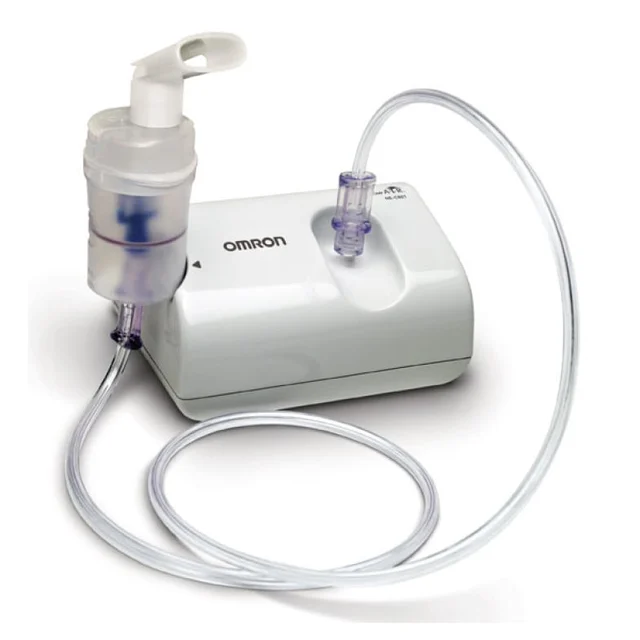
A quiet, dependable tabletop compressor that delivers a genuinely small particle at a budget price.
Best for: Most households wanting one reliable, low-cost home unit that works with the widest range of prescribed medications.
- Compressor design handles solutions and thicker suspension medications (such as inhaled steroids) that mesh and ultrasonic units can struggle with
- Delivers a fine ~3-micron average particle, squarely in the range that reaches the lower airways
- Virtual Valve Technology cuts wasted medication and keeps the setup simple to assemble and rinse
- Quieter than most compressors at roughly the level of an electric toothbrush, with a multi-year warranty on the compressor
- Corded and mains-powered only, so it stays on the nightstand rather than in a bag
- A standard dose takes several minutes, slower than the fastest premium compressors
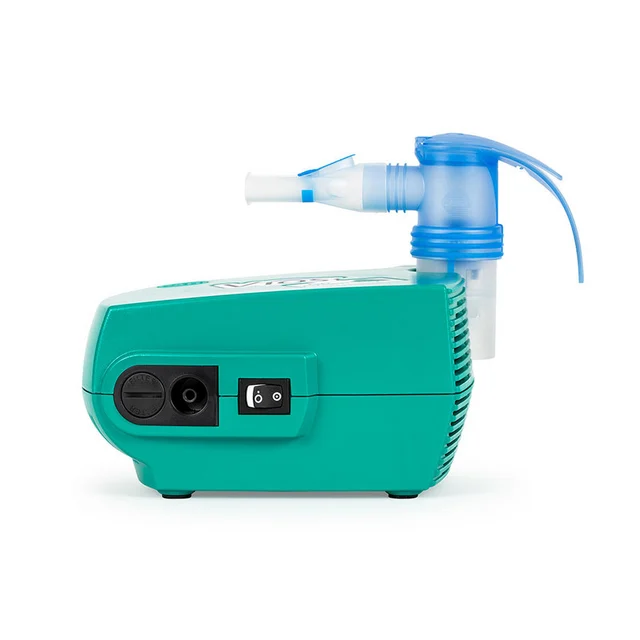
The clinic-grade compressor built to be used every day for years, with fast, consistent treatments.
Best for: Daily users and caregivers who want a durable, fast, do-everything home system and will pay for longevity.
- Breath-enhanced LC Sprint nebulizer cup delivers a large share of the dose as fine, respirable particles
- Consistently fast treatments, typically around five to six minutes for a standard dose
- Rugged compressor with a reputation among long-term owners for holding up to heavy daily use
- Handles the full range of nebulized medications, including suspensions that require a jet compressor
- Premium price, and the reusable cup should be replaced periodically
- Corded tabletop unit with an audible compressor hum; not something you travel light with

A near-silent, pocket-size mesh unit that shines on the go but asks for care in return.
Best for: People who already have a home unit and want a silent, packable nebulizer for travel and daytime doses.
- Vibrating-mesh design runs almost silently (around a whisper) and works at any angle, even reclined
- Truly portable: pocket-size, battery-powered, with roughly four hours of use on a set of AA batteries
- No cord, tubing, or compressor to lug around, so treatments are discreet away from home
- From a maker with a long track record in respiratory devices, with quiet operation kids tend to tolerate well
- Average particle size is larger than the compressors here, so deep-lung deposition can be a touch less efficient
- The mesh must be cleaned meticulously or it clogs, and it can struggle with thicker suspension medications
- Premium price for a device many buyers use as a travel backup rather than a primary unit

Cheap, tiny, and quiet, but the reliability and medication limits make it a poor primary device.
Best for: Bargain hunters wanting a spare travel mister for simple solutions, not a device to rely on daily.
- Very light and genuinely pocketable, with quiet operation and a rechargeable battery
- Fast mist output on paper and an all-in-one handheld body with no separate compressor or tubing
- Inexpensive entry point into mesh nebulizers for occasional, on-the-go use
- Owner reports repeatedly describe budget mesh units like this clogging or losing output over time
- Battery runs only about an hour and the mesh membrane is a wear part with a short effective life
- Like other mesh units, it is a poor match for thicker suspension medications, and its particle output is less clearly documented than the established brands
| Criteria | Omron CompAir NE-C801 Compressor Nebulizer Top pick | PARI Vios Aerosol Delivery System with LC Sprint | Omron MicroAIR U100 Portable Mesh Nebulizer | Sunset NEB402 Handheld Mesh Nebulizer |
|---|---|---|---|---|
| Verdict | Buy it | Buy it | It depends | Skip it |
| Best for | Most households wanting one reliable, low-cost home unit that works with the widest range of prescribed medications. | Daily users and caregivers who want a durable, fast, do-everything home system and will pay for longevity. | People who already have a home unit and want a silent, packable nebulizer for travel and daytime doses. | Bargain hunters wanting a spare travel mister for simple solutions, not a device to rely on daily. |
| Price tier | $ · budget | $$$ · premium | $$$ · premium | $$ · mid-range |
| Type | Tabletop jet compressor | Tabletop jet compressor | Portable vibrating mesh | Portable handheld mesh |
| Particle size (MMAD) | ~3 microns | Fine, respirable range | ~4.5 microns | Fine mist, less clearly published |
| Treatment speed | ~0.3 mL/min; several minutes per dose | Fast, ~5-6 min per dose | Moderate | Fast output claimed |
| Noise | ~52 dB (electric-toothbrush level) | Moderate compressor hum | ~23 dB (near-silent) | Quiet |
| Power & portability | Corded, mains only | Corded, mains only | 2 AA, ~4 hr, pocket-size | Rechargeable, ~1 hr, handheld |
| Medication compatibility | Solutions and suspensions | Solutions and suspensions | Best for solutions; mesh needs care | Limited with thick suspensions |
| Cleaning & durability | Simple, hard-wearing | Simple, clinic-grade durability | Mesh needs meticulous cleaning | Mesh prone to clogging |
| Price tier | $ · budget | $$$ · premium | $$$ · premium | $$ · mid-range |
Which one is right for you?
- Most households wanting one reliable, low-cost home unit that works with the widest range of prescribed medications. Buy it Omron CompAir NE-C801 Compressor Nebulizer
- Daily users and caregivers who want a durable, fast, do-everything home system and will pay for longevity. Buy it PARI Vios Aerosol Delivery System with LC Sprint
- People who already have a home unit and want a silent, packable nebulizer for travel and daytime doses. It depends Omron MicroAIR U100 Portable Mesh Nebulizer
- Bargain hunters wanting a spare travel mister for simple solutions, not a device to rely on daily. Skip it Sunset Healthcare Sunset NEB402 Handheld Mesh Nebulizer
How we judged the field
We do not run a respiratory lab, and we are not going to pretend we do. What we did was read across independent testing and pull together what owners consistently report after living with these devices through daily therapy, then turn that into one clear verdict per product. For a nebulizer, a handful of things matter above the rest, and we weighted them in roughly this order: whether the device delivers a fine enough particle to actually reach the lungs, whether it works with the medication you have been prescribed, how quickly a treatment finishes, how loud it is, how portable it is, and how much upkeep the design demands. We treated particle size and medication compatibility as non-negotiable, because a nebulizer that mists the wrong droplet size or cannot handle your medication is not doing its job no matter how convenient it is. We also went in expecting to name one popular category as a skip, because the cheapest handheld mesh units are easy to buy and easy to regret.
Omron CompAir NE-C801 Compressor Nebulizer — buy
The unglamorous plug-in compressor keeps winning, and this is our overall pick. It uses a small air compressor to blast liquid medication into an aerosol, and that jet design is exactly why it is so versatile: it handles ordinary solutions and the thicker suspension medications, such as certain inhaled steroids, that mesh and ultrasonic units can deliver poorly or not at all. Its average particle lands around three microns, comfortably inside the range that reaches the lower airways, and Omron’s Virtual Valve Technology keeps the parts count low and the medication waste down. Owners consistently note that it is quieter than they expected, closer to an electric toothbrush than the angry buzz of older compressors, and that it simply keeps working, backed by a multi-year warranty on the compressor. The honest trade-offs are that it is corded and mains-only, so it lives on a nightstand rather than in a bag, and a full dose takes several minutes rather than the faster times of premium units. For the money, nothing here matches its combination of particle quality, medication compatibility, and reliability.
PARI Vios Aerosol Delivery System with LC Sprint — buy
This is the compressor clinicians recognize, and it is our runner-up. The pairing is the point: a rugged PARI compressor driving the breath-enhanced LC Sprint nebulizer cup, which is engineered to put a large share of each dose into the fine, respirable particle range and to do it quickly, with treatments that typically run about five to six minutes. Long-term owners praise how well the compressor holds up to heavy, everyday use, which is the quality that justifies its price for people who nebulize every day or care for someone who does. Like the Omron, it handles the full spread of nebulized medications, suspensions included, because it is a true jet system. The catches are the ones you would expect from a premium tabletop unit: it costs meaningfully more, the reusable cup needs periodic replacement to stay efficient, and it is a corded device with an audible hum that you are not slipping into a jacket pocket. If durability and speed matter more to you than portability or price, it earns every bit of its place.
Omron MicroAIR U100 Portable Mesh Nebulizer — it depends
The MicroAIR U100 is the device you want when a compressor is simply too much to carry. Instead of a noisy air pump, it uses a vibrating mesh to push medication through thousands of tiny holes, which makes it near-silent, roughly the level of a whisper, and small enough to disappear into a pocket. It runs about four hours on a set of AA batteries, works at any angle including lying down, and comes from a maker with a deep respiratory track record. As a travel and daytime device it is genuinely excellent. But the experience splits along its design. Its average particle is larger than the compressors here, so deep-lung deposition can be a little less efficient, and the mesh itself is a demanding part: let medication dry on it and it clogs, which is far and away the most common complaint owners raise about mesh nebulizers, and it is not the tool for thicker suspension medications. At a premium price, it makes the most sense as a silent, packable second device rather than your only one. Buy it if portability and quiet are worth the upkeep; look to a compressor if you want one do-everything unit.
Sunset NEB402 Handheld Mesh Nebulizer — skip
This is the tempting one, because on paper it does a lot for a little: a tiny handheld mesh unit, quiet, rechargeable, light enough to forget you are carrying it, and inexpensive. As an occasional travel mister for simple solutions, it can get the job done. But for the role that actually matters here, being a nebulizer you rely on, it is the weakest of the group, and the pattern in owner reports is hard to ignore. Budget mesh units like this one draw repeated complaints about clogging and fading output, the mesh membrane is a wear part with a short effective life, and the battery stretches to only about an hour. It shares the mesh family’s poor fit with thicker suspension medications, and its particle output is documented less clearly than the established brands publish. None of that makes it dangerous or useless, but when a device is delivering prescribed medication, dependability is the whole point, so we would put the money toward a proven compressor or the Omron mesh unit and skip this one as a primary nebulizer.
Omron CompAir NE-C801 vs PARI Vios: which should you buy?
Both are trustworthy compressors, so the decision comes down to how hard you will use it and how much you will spend. Choose the Omron CompAir NE-C801 if you want the best value, a genuinely small particle, quiet operation, and broad medication compatibility, and you can accept a treatment that takes a few minutes. Choose the PARI Vios with LC Sprint if you nebulize daily or care for someone who does, and you want faster treatments and a compressor built to shrug off years of heavy use, with the premium price and periodic cup replacement that come with it. A once-in-a-while user is well served by the Omron and will struggle to justify the Vios; a household running multiple treatments a day, every day, will feel where the Vios earns its keep.
What to look for
- Match the technology to your medication: a jet compressor handles both solutions and suspensions, while mesh and ultrasonic units are best for solutions and can struggle with thicker suspensions.
- Prioritize a fine average particle, roughly one to five microns, so the mist can actually reach the lower airways.
- Weigh speed and noise against portability: compressors are faster and cheaper but corded and louder; mesh units are silent and packable but pricier and more delicate.
- Plan for upkeep, especially with mesh: the membrane must be cleaned promptly every time or output fades, and reusable compressor cups need periodic replacement.
- Confirm the device suits the intended user, and use an appropriately sized mask or mouthpiece for children.
Our final take
The Omron CompAir NE-C801 is our overall pick because it delivers where it counts, a fine particle and broad medication compatibility, quietly and at the lowest cost. The PARI Vios with LC Sprint is the runner-up and the right buy when daily durability and fast treatments justify the premium. The Omron MicroAIR U100 is the mesh unit to own when silence and pocket portability matter, ideally alongside a home compressor rather than in place of one. And the bargain Sunset NEB402, for all its convenience, is the one to skip as a primary device. Whichever you choose, follow your prescription and your clinician’s guidance, keep the parts clean, and the machine will do the quiet, unglamorous work of getting medication where it needs to go.
Questions, answered
Compressor or mesh nebulizer, which should I get?
For a primary home device, a jet compressor like the Omron CompAir NE-C801 or PARI Vios is the safer default: it produces a fine particle, handles both solution and suspension medications, and is hard-wearing. Portable mesh units such as the Omron MicroAIR U100 win on silence and pocket portability, which makes them excellent travel companions, but they cost more, need careful cleaning, and are less suited to thicker suspension medications. Many people end up owning one of each.
What does particle size (MMAD) mean and why does it matter?
MMAD, or mass median aerodynamic diameter, describes the average size of the mist droplets. Particles in roughly the one-to-five-micron range are small enough to travel past the mouth and throat and deposit in the lower airways, which is where most inhaled respiratory medication needs to reach. A device advertising a fine particle around three microns, like the compressors here, is aiming squarely at that window; a larger average particle can mean slightly less efficient deep-lung delivery.
Are these nebulizers safe to use with any medication, and is this medical advice?
This is general product information, not medical advice, and it should not replace guidance from a professional. Nebulizers deliver medication that a clinician prescribes, and some medications specify a particular type of device, for example a jet compressor rather than a mesh or ultrasonic unit. Always follow your prescription and the medication's instructions, and consult your doctor or pharmacist about which nebulizer suits your treatment and about dosing.
How do I keep a nebulizer working and hygienic?
Rinse the medication cup and mouthpiece or mask after each use and let them air-dry, then disinfect on the schedule the manufacturer specifies. Compressors are forgiving here and last for years with basic care. Mesh units demand more discipline: the tiny mesh membrane clogs if medication is allowed to dry on it, which is the single most common reason owners report a mesh nebulizer's output fading, so clean it promptly and gently every time.
Which of these is best for a child?
A quiet device helps enormously with young children. The near-silent Omron MicroAIR U100 mesh unit is often better tolerated because there is no loud compressor, and it works even while a child is reclined. For a primary home device that must handle every prescribed medication, however, a compressor such as the Omron CompAir NE-C801 with an appropriately sized child mask remains a dependable choice. Follow your pediatrician's guidance on the medication and setup.
More Health & Wellness reviews
 The Best Neck & Shoulder Massagers: 4 Compared (and One to Skip)
  The Best OTC Hearing Aids: 4 Compared (and One to Skip)
  The Best Bed Pillows: 4 Compared (and One to Skip)
  The Best Posture Correctors: 4 Compared (and One to Skip)
  The Best Pulse Oximeters: 4 Compared (and One to Skip)
  The Best At-Home Red Light Therapy Devices: 4 Compared (and One to Skip)