Explained
Light Therapy Lamps, Explained
After reading, you will know why the headline lux number matters far less than the distance and panel size at which a lamp delivers it.
In this guide
Light therapy lamps aim to flood your eyes with bright light in the morning to ease the winter blues and nudge a drifting body clock back on schedule. Almost every lamp advertises the same headline number, 10,000 lux, which makes them look interchangeable when they are not. What trips people up is that light fades quickly with distance, so a lamp's rating only counts at the exact distance it was measured, and the size of the panel decides how forgiving it is of how you actually sit.
The 30-second version
- Lux is only half the story. The number that matters is how much light reaches your eyes at a distance you can comfortably maintain, not the peak figure measured with your nose against the panel.
- Bigger panels are more forgiving. A large illuminated surface keeps you in the effective zone even when your head drifts, while a small panel punishes every small movement.
- Consistency beats specs. The best lamp is the one you will sit in front of every morning, so simple controls, a timer, and a comfortable form factor matter more than a spec-sheet edge.
- UV filtering and flicker-free output are baseline. Reputable lamps filter ultraviolet light and run without visible flicker or glare; treat these as requirements, not premium features.
The products this guide is about
Our verdict on each, with the full reasoning on the companion review.
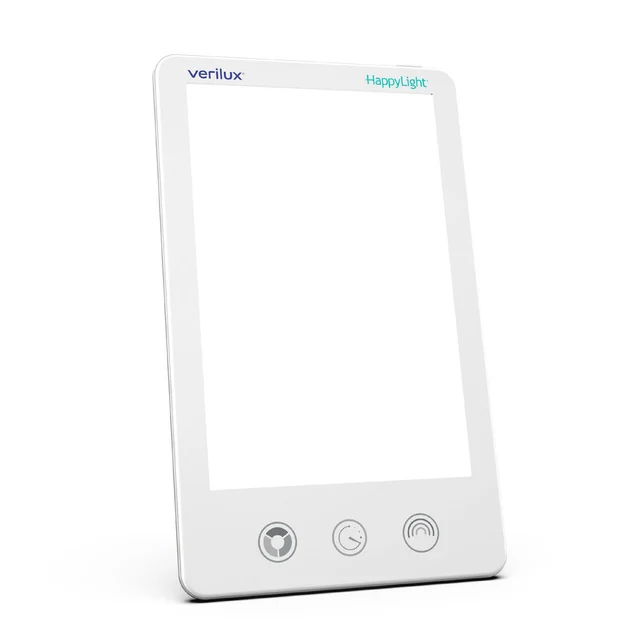
- Buy Verilux HappyLight Luxe The lamp most people should buy: 10,000 lux, genuinely useful controls, and a slim tablet form at a sane price. Amazon
- Buy Carex Day-Light Elite The pick when you want maximum, forgiving intensity from a large adjustable panel.
- It depends Circadian Optics Lumos 2.0 A compact folding lamp with a small desk footprint, but the maker publishes no distance rating, so sit close.
- Skip Northern Light Technologies BOXelite Desk Lamp A serious light box with a long working distance, but its bulk, fluorescent tubes, and flagship price are hard to justify for most buyers. Amazon
What actually matters
- Usable distance - the distance at which the lamp still delivers its rated intensity is the single most important factor, because it determines whether you get the full dose while sitting normally rather than pressed against the panel.
- Panel size and coverage - a larger surface throws a wider field of light, so your head can move without dropping you out of the effective zone; small panels demand you hold position.
- Intensity at your eyes - the therapeutic target is roughly 10,000 lux measured where your eyes are, which is very different from 10,000 lux measured at the glass.
- Adjustability - multiple brightness levels and color temperatures let you run a strong, cool morning session and something gentler at other times.
- Timer and controls - a built-in countdown makes it easy to hit a consistent session length, and controls you can operate half-awake keep you using the lamp.
- UV filtering and flicker-free output - standard on quality lamps and worth confirming, since they protect your eyes and comfort during longer sits.
- Form factor and portability - decide whether you need a slim or folding lamp for travel or a large box that stays on a desk, because size drives where and how often you use it.
The specs, in plain English
Green flags vs red flags
Green flags
- The lamp states its lux rating together with the distance it was measured at, and that distance is one you can realistically sit at.
- A large or generously sized panel that stays effective even if your head shifts.
- Explicit UV filtering and flicker-free, glare-free output.
- Multiple brightness levels and a built-in timer for repeatable sessions.
- Adjustable height, tilt, or a stand that keeps light above your direct line of sight.
Red flags
- A big 10,000-lux claim with no distance specified, or a rating that only holds within a few inches of a small panel.
- A tiny panel that forces you to hold your head perfectly still to stay in the effective zone.
- No mention of UV filtering or flicker control.
- Fixed single output with no timer, making consistent sessions harder.
- A stand or base that looks flimsy or unstable.
Who's who: the brands
- Verilux - Maker of the HappyLight line of slim LED tablet lamps known for useful brightness and color-temperature controls at accessible prices.
- Carex - Maker of the Day-Light series of large LED panels with adjustable height and tilt.
- Circadian Optics - Known for compact, affordable, folding LED lamps aimed at desks and travel.
- Northern Light Technologies - Maker of large light boxes, including fluorescent-tube models such as the BOXelite.
How to read a listing without getting fooled
Start with the lux figure, then immediately look for the distance beside it: 10,000 lux at a foot or so is very different from 10,000 lux measured against the glass. If a listing quotes lux with no distance, treat that as a gap rather than a strength. Next, size up the panel, because a larger surface is more forgiving of how you actually sit and reduces the need to stay frozen in place. Confirm the light source (LED or fluorescent), that UV is filtered, and that output is flicker- and glare-free. Finally, check for practical touches, brightness levels, adjustable color temperature, a timer, and a stand or mount, since these decide whether you will keep using the lamp. Photos that show the lamp beside a person hint at real-world scale better than a spec table alone.
How much should you spend?
Spending is less about a peak price and more about matching the lamp to your space and habits. Slim LED tablet lamps sit at the affordable end and are the sensible starting point for most people, delivering the target intensity at a sittable distance without dominating a desk. Paying more typically buys a larger panel and adjustable height and tilt, which is worth it if you value generous coverage and easy positioning or expect long daily sessions. The most expensive fluorescent boxes are hard to justify for the average buyer because comparable LED panels match their brightness for less and skip tube replacements. Compact folding lamps can suit travel, but check whether the maker states the distance its rating applies at, and treat rock-bottom price as a portability trade-off, not a bargain on effectiveness.
Questions, answered
How far away should I sit, and for how long?
Bright-light protocols generally aim for about 10,000 lux at your eyes for roughly 20 to 30 minutes, usually in the morning. Because lux drops sharply with distance, a lamp's rating only counts at the distance it was measured. Larger panels are more forgiving of head movement, while compact lamps require you to sit closer to get the full dose.
Do I really need exactly 10,000 lux?
10,000 lux is the intensity most commonly referenced for shorter 20-to-30-minute sessions. Lower intensities can still be used but typically require longer daily exposure. Since most lamps are marketed at 10,000 lux, the practical differences come down to the distance and panel size at which each one actually delivers it.
Is light therapy safe, and will it help my mood?
This is general product and wellness information, not medical advice. Bright-light therapy is widely used for seasonal low mood and circadian timing, and reputable lamps filter UV, but responses vary and it is not a substitute for professional care. Please consult a qualified healthcare professional before starting, especially if you have an eye condition, take photosensitizing medication, or have a condition such as bipolar disorder, since bright light can occasionally trigger issues.
Does the light source, LED or fluorescent, matter?
For therapy the factors that count are intensity at your eyes, even coverage, UV filtering, and freedom from flicker and glare, all of which quality LED and fluorescent lamps can provide. LEDs run cooler, last longer, and need no tube replacements, which is why most modern picks are LED. Fluorescent boxes can produce an even field but rely on replaceable tubes.
When during the day should I use one?
Morning use is the most common recommendation for both mood and shifting a delayed body clock earlier, and many owners build it into a breakfast or desk routine. Using a bright lamp late in the evening can make it harder for some people to fall asleep. The timing that best suits your situation is worth confirming with a healthcare professional.
Or jump to the head-to-head: Verilux HappyLight Luxe vs Carex Day-Light Elite.