Explained
Foot Massagers, Explained
After reading this, you'll be able to look at any foot massager listing and know whether it will actually feel good on your feet - before you buy it.
In this guide
Foot massagers have moved from spa novelty to everyday recovery tool, and most machines now advertise the same trio: shiatsu kneading, air compression, and heat. What listings hide is how differently those features are tuned - and the single biggest reason people return a foot massager isn't a missing feature, it's a machine that's too intense (or too weak) for their feet with no way to adjust it.
The 30-second version
- Adjustability beats everything else. A machine with several kneading and compression levels fits almost anyone; a fixed-intensity machine is a gamble on your personal pain tolerance.
- Coverage is the real price divider. Feet-only units are smaller and cheaper; you only pay up for a design that reaches ankles and calves - and only if your legs actually need it.
- Heat is a bonus, not a therapy. In this category, heat means gentle warmth on nearly every machine - never buy one expecting heating-pad temperatures.
- Owner reports reveal what spec sheets hide. "Five pressure levels" means nothing if the top three are painful; long-term owner feedback is where comfort tuning shows up.
- Certain health conditions change the calculus. Diabetes, neuropathy, and circulation problems mean checking with a doctor before buying - reduced foot sensation makes intensity harder to self-judge.
The products this guide is about
Our verdict on each, with the full reasoning on the companion review.
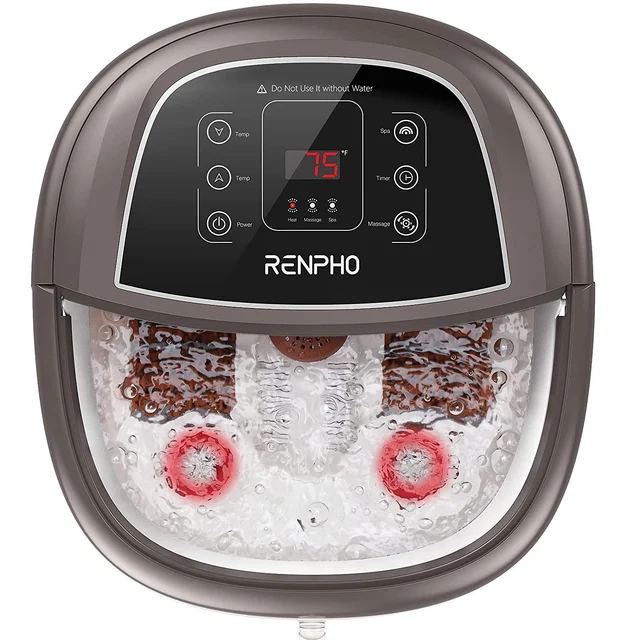
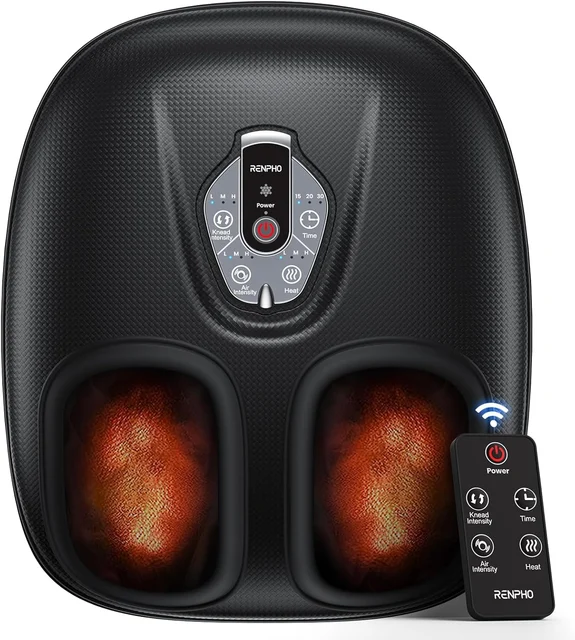
- Buy RENPHO Foot Massager Machine with Heat (2026 Upgraded) The best all-around blend of kneading, compression, and heat - easy to customize and easy to live with.
- Buy Cloud Massage Shiatsu Foot Massager with Heat The premium pick - the only one here that properly massages ankles and calves, not just feet. Amazon
- It depends Nekteck Shiatsu Foot Massager Machine with Heat A no-frills budget workhorse with firm, fixed kneading - great value if strong pressure suits you. Amazon
- Skip Miko Shiatsu Foot Massager with Heat Five pressure levels on paper, but a painful top end and weak heat make it hard to justify over the RENPHO. Amazon
What actually matters
- Intensity adjustment - the single biggest comfort factor. Look for multiple kneading levels and multiple air-compression levels, separately adjustable. Fixed-intensity machines only work if firm pressure happens to suit you.
- Coverage - most machines massage feet only. A few use an adjustable tilt design that also reaches ankles and calves; that broader coverage is usually the main thing a premium price buys.
- Massage mechanism - kneading rollers do the real therapeutic work on arches and heels; air compression adds a squeeze-and-release feel. Machines that lean on vibration alone feel buzzy, not massaged.
- Control placement - a wireless remote sounds trivial until you're folded in half mid-session reaching for foot-level buttons. You will adjust settings more than you think.
- Hygiene design - removable, washable foot liners are close to non-negotiable for a device your bare feet live inside.
- Fit for your foot size - enclosed shells have real size limits. If you wear large sizes, check the listing's stated fit range before anything else.
- Comfort at the top settings - the hidden differentiator. Some machines stay pleasant across every level; others are frequently described by owners as painful at maximum. Spec sheets never tell you this; owner reports do.
The specs, in plain English
Green flags vs red flags
Green flags
- Kneading and air-compression intensity are adjustable separately, with at least three levels each
- A wireless remote is included, so you never reach down mid-session
- Foot liners detach and are machine-washable
- Long-term owner reports specifically praise comfort at both the lowest and highest settings
- The listing states a clear foot-size fit range instead of vague 'fits most' language
- An adjustable tilt design if you want ankle and calf coverage - the honest reason to pay a premium
Red flags
- Fixed kneading intensity with no way to dial it down - a gamble for sensitive feet
- Owner reports repeatedly calling the top settings painful, which quietly shrinks a 'five-level' machine to two or three usable ones
- Heat described by owners as barely warm even on the high setting
- Controls only at foot level with no remote
- Listings that lead with vibration modes and mood-lighting extras instead of roller and compression detail
- No mention of removable liners or any way to clean the foot chambers
Who's who: the brands
- RENPHO - High-volume wellness-gadget brand; its foot massagers are known for well-judged adjustability and remotes at a mid-range tier.
- Cloud Massage - Premium-leaning specialist known for adjustable-tilt machines that cover feet, ankles, and calves with a spa-like deep massage.
- Nekteck - Budget brand with a wide range of shiatsu foot machines, so check the exact model for remote control and intensity options.
- Miko - Mid-range brand with generous-looking spec sheets; owner feedback often flags harsh top settings and weak heat.
- HoMedics - Long-established mainstream massage brand sold widely in retail; broad range from simple vibration units to shiatsu machines.
- Comfier - Value-oriented brand covering foot, leg, and back massagers; frequent alternative pick in the budget-to-mid tiers.
How to read a listing without getting fooled
Start with the mechanism, not the feature count. Confirm the machine uses kneading rollers plus air compression - not just vibration - then check whether each is separately adjustable and how many levels it really has. Treat any heat claim as 'gentle warmth' unless owners say otherwise. Next, check coverage: unless the listing shows an adjustable tilt design, assume it's feet only, no matter what the photos of relaxed calves imply. Verify the stated foot-size range against your own feet, and look for washable liners and a remote. Finally, spend two minutes in the critical owner reviews specifically searching for 'painful', 'too intense', and 'barely warm' - those three phrases expose more about a foot massager than the entire spec sheet.
How much should you spend?
What drives cost in this category is coverage and tuning, not the presence of features - nearly every machine lists kneading, compression, and heat. Budget machines get you real shiatsu rollers but some have fixed, firm intensity and no remote, so check the listing first. The value sweet spot is the mid-range, where you gain separately adjustable kneading and compression levels, a wireless remote, and washable liners - the combination that fits the widest range of feet and moods. Spending more than that buys one meaningful thing: an adjustable design that reaches ankles and calves along with a deeper, more spa-like massage. That premium is worth it for runners, people who stand all day, or anyone whose legs ache as much as their feet - and not worth it if your soreness lives only in your soles.
Questions, answered
Who should check with a doctor before buying a foot massager?
This is general product information, not medical advice - but some situations genuinely warrant a conversation with a doctor or podiatrist first. If you have diabetes or peripheral neuropathy, reduced sensation in your feet means you may not feel when pressure or heat is too intense, so a machine that feels 'fine' could still be too much. If you have poor circulation, a history of blood clots or deep vein thrombosis, open wounds or foot ulcers, severe varicose veins, or you're pregnant, ask a professional before using compression or heat on your feet and legs. None of this means foot massagers are off-limits - it means a quick check-in decides intensity, heat use, and session length for your situation better than a product listing can.
What's the actual difference between shiatsu kneading and air compression?
Shiatsu kneading uses rotating rollers to press into the soles like a therapist's thumbs - that's what targets arches, heels, and pressure points. Air compression inflates cuffs that squeeze the foot and release, which feels more like a firm circulation-style squeeze than a massage. Most good machines combine both, but how adjustable each one is varies enormously between models, and that adjustability is what determines whether the machine fits you.
Do foot massagers really help with plantar fasciitis?
Some owners report relief from plantar fasciitis symptoms, though that is anecdotal. A massager complements - it doesn't replace - stretching, supportive footwear, and professional treatment. If heel pain is persistent, see a podiatrist rather than relying on a machine alone.
How intense are these machines - will it hurt?
It can, and this is the most under-discussed spec in the category. Even among well-reviewed machines, some are comfortable at every level while others are frequently described as painful at their top settings, and budget machines often have firm intensity you can't turn down at all. Whatever you buy: start at the lowest setting, work up slowly, and know that wearing socks is a legitimate way to soften a machine that runs firm.
Should I get a foot-only massager or one that does calves too?
If your soreness lives in your soles, arches, and heels, a foot-only unit is smaller, cheaper, and does the job. If you run or train regularly, stand all day, or deal with tired calves and swollen ankles, an adjustable-tilt machine that covers feet, ankles, and calves earns its premium - that broader coverage is the main thing the higher tier buys.
How long and how often should I use a foot massager?
Most machines auto-shut-off after a set session, often 15 to 30 minutes, and short regular sessions are a sensible default. If your feet feel bruised, tingly, or numb afterward, the setting is too strong or the session too long; and if you have any of the medical conditions mentioned above, let a professional set your limits.
Or jump to the head-to-head: RENPHO Foot Massager Machine with Heat (2026 Upgraded) vs Cloud Massage Shiatsu Foot Massager with Heat.