Explained
Digital Thermometers, Explained
After reading, you will understand how each thermometer type measures temperature, why the measurement site matters more than the brand, and how to pick one that gives a fever reading you can actually act on.
In this guide
A digital thermometer is only useful if you can trust the number it shows, and the biggest thing shoppers get wrong is assuming every type is equally accurate. Where the device measures, whether that site suits the person's age, and how carefully you use it all shape the result far more than the logo on the box. This guide decodes the categories and specs so you can buy for accuracy rather than convenience.
The 30-second version
- The measurement site matters more than the brand. so decide between contact (oral, rectal, underarm) and non-contact (ear, forehead) before you compare individual models.
- Contact core-site readings are the most trustworthy. a stick thermometer used rectally for infants or orally for older children and adults has the strongest accuracy record.
- No-touch forehead scanners are screeners, not deciders. they are fast and hygienic but miss too many real fevers to confirm one on their own.
- Match the device to the youngest person who will use it. because age determines which measurement sites are safe and reliable, especially for the youngest babies.
- Technique changes the number. so ear positioning, forehead distance, and recent eating or drinking can all move a reading enough to mislead you.
The products this guide is about
Our verdict on each, with the full reasoning on the companion review.
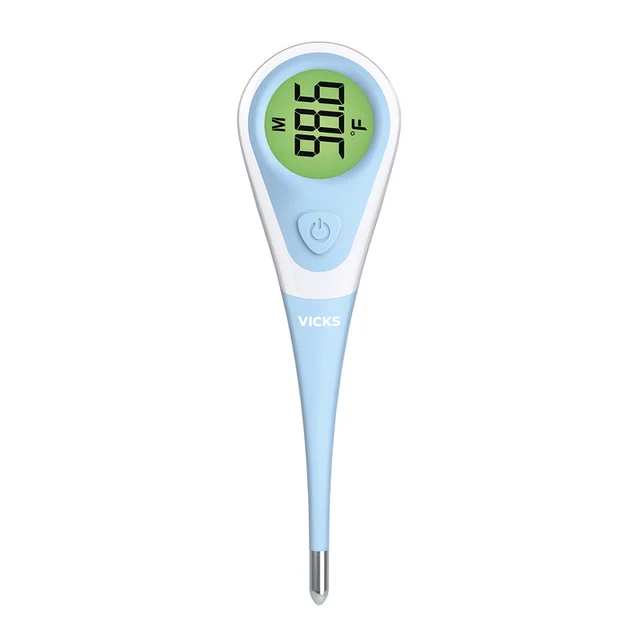
- Buy Vicks ComfortFlex Digital Thermometer (V966) A flexible-tip stick that reads oral, rectal, or underarm and holds up best where accuracy matters most. Amazon
- Buy Braun ThermoScan 7 (IRT6520) The ear thermometer clinicians reach for, with age-adjusted fever guidance and fast reads. Amazon
- It depends iProven DMT-489 Ear and Forehead Thermometer A versatile forehead-and-ear scanner that screens fast but wants careful ear positioning. Amazon
- Skip iHealth No-Touch Forehead Thermometer (PT3) A sleek, touch-free scanner that is great for screening but unreliable for confirming a fever. Amazon
What actually matters
- Measurement site decides accuracy: rectal and oral readings track true core temperature closely, ear readings are close behind with good technique, and forehead readings are the least dependable for confirming a fever.
- Age suitability narrows your choices fast: newborns and the youngest babies are usually advised a rectal stick reading, while ear and forehead devices are aimed at older children and adults; follow each maker's age guidance.
- Repeatability tells you whether you can trust a result: a device that gives the same number on two back-to-back reads is more useful than one that swings between attempts.
- Read speed is a convenience trade-off: contact readings take several seconds, non-contact readings are near-instant, but speed should never outrank accuracy for a fever check.
- Fever indication helps you interpret the number: color-coded displays or age-adjusted fever thresholds beat squinting at a bare figure and guessing.
- Ongoing cost separates truly cheap from cheap-to-buy: some ear thermometers need disposable probe covers, while sticks and most forehead units have no consumables.
- Hygiene and shared use matter in a busy household: non-contact and wipe-clean designs are easier to use across several people without cross-contamination.
The specs, in plain English
Green flags vs red flags
Green flags
- A stated accuracy spec and evidence of repeatable readings, not just a fast headline read time.
- A measurement site that matches the intended user's age, such as a rectal-capable stick for a home with an infant.
- A clear fever indicator, ideally color-coded or age-adjusted, rather than a bare number.
- A design that is easy to position correctly, since technique is where most infrared readings go wrong.
- No hidden running costs, or clearly labeled and affordable replacement probe covers if it uses them.
Red flags
- Marketing that leans entirely on speed or touch-free convenience while staying vague about accuracy.
- A non-contact forehead device pitched as a definitive fever test rather than a quick screen.
- Owner reports of readings that swing widely or repeat implausibly regardless of the person's condition.
- An ear or forehead unit recommended for newborns, where contact rectal readings are the standard.
- No stated accuracy margin anywhere in the listing or manual.
Who's who: the brands
- Vicks - Consumer health brand whose flexible-tip digital sticks are a common, low-cost pick for all-ages contact readings.
- Braun - Known for ear (tympanic) thermometers with age-adjusted fever guidance, widely recognized in clinical-style home use.
- iProven - Makes versatile dual-mode ear-and-forehead scanners aimed at households that want more than one measurement option.
- iHealth - Design-led maker of sleek no-touch forehead scanners, strong for hygienic screening but weaker for fever confirmation.
How to read a listing without getting fooled
Start by finding the measurement site, because it tells you more than any other line on the box. A stick that lists oral, rectal, and underarm is a contact device with the best accuracy record; anything described as ear or forehead is infrared and depends heavily on technique. Next, look for a stated accuracy margin in degrees rather than vague claims like 'clinically accurate' or 'hospital grade,' which mean little on their own. Treat headline read times as a convenience feature, not proof of quality, and do not let a one-second scan distract you from whether the number can be trusted. Check whether the device needs disposable probe covers, since that is a recurring cost the sticker price hides. Finally, read owner reports for the same phrases repeating across many buyers, especially complaints about readings that swing or refuse to change, which are the clearest sign a device fails at the one job that matters.
How much should you spend?
You do not have to spend much to get the most trustworthy option: a simple flexible-tip contact stick is typically the least expensive category and also the most accurate where it counts, which makes it the value sweet spot for most households. Paying up mainly buys speed and comfort rather than better accuracy, and it can be worth it for a squirmy child, where a fast ear reading with age-adjusted guidance saves a real struggle. Remember that a low sticker price is not the whole story if the device needs disposable probe covers, because those add up over time while a stick has nothing to replace. Spending more on a no-touch forehead scanner buys convenience and hygiene, not reliability, so it is worth it only if you understand you are buying a screener rather than a decider. The honest rule of thumb is to buy the cheapest device that reads the right site for the youngest person in your home, then spend extra only for a specific comfort or speed need you can name.
Questions, answered
Which type of digital thermometer is the most accurate?
Contact core-site methods lead. A stick thermometer used rectally for infants or orally for older children and adults has the strongest accuracy record, and a good ear thermometer is close behind when positioned correctly. No-touch forehead scanning is the least reliable for confirming a fever.
Are no-touch forehead thermometers good enough to rule out a fever?
They are excellent for fast, hygienic screening of several people, but independent testing and clinical studies link non-contact forehead devices to frequent false negatives, and their readings are easily thrown off by sunlight, drafts, sweat, and how far you hold the device. Confirm any borderline result with an oral, rectal, or ear reading.
What should I use for a newborn or a baby under three months?
For the youngest babies, guidance consistently points to a digital stick thermometer used rectally. Ear thermometers can have age limits, so check the maker's guidance, and a home with an infant should keep a contact stick regardless of what else it owns.
Why do two thermometers give the same person different numbers?
Different sites read slightly different temperatures by design, and technique varies the result, so ear positioning, forehead distance, and recent eating or drinking all shift the number. When two readings disagree, a contact reading is the more dependable tiebreaker.
Do digital thermometers have ongoing costs?
Some ear thermometers require disposable lens or probe covers and will not operate without one in place, which is a recurring cost. Most contact sticks and no-touch forehead units have no consumables, so factor covers into the true price before you buy.
Can this guide tell me whether my reading means I need care?
No. This is general information to help you choose and use a thermometer, not medical advice. What counts as a concerning temperature depends on age, symptoms, and history, so consult a qualified healthcare professional for guidance on any specific reading or illness.
Or jump to the head-to-head: Vicks ComfortFlex Digital Thermometer (V966) vs Braun ThermoScan 7 (IRT6520).