

Health & Wellness
The Best Digital Thermometers: 4 Compared (and One to Skip)
We compared four popular fever thermometers across oral, ear, and forehead methods to find the ones worth trusting and the one to skip.
The short version
For most households, a simple flexible-tip stick thermometer remains the most trustworthy choice: the Vicks ComfortFlex reads oral, rectal, or underarm, works from newborns to adults, and costs the least. If you want speed and squirm-free reads for an older baby or child, the Braun ThermoScan 7 is the ear thermometer worth paying up for. The iProven DMT-489 is a fine two-in-one all-rounder if you treat its forehead mode as a screen and its ear mode as the check. Independent testing and clinical evidence agree that no-touch forehead scanners like the iHealth PT3 miss too many real fevers to trust for confirmation. Best for: anyone who wants a reading they can actually act on.
Our picks at a glance
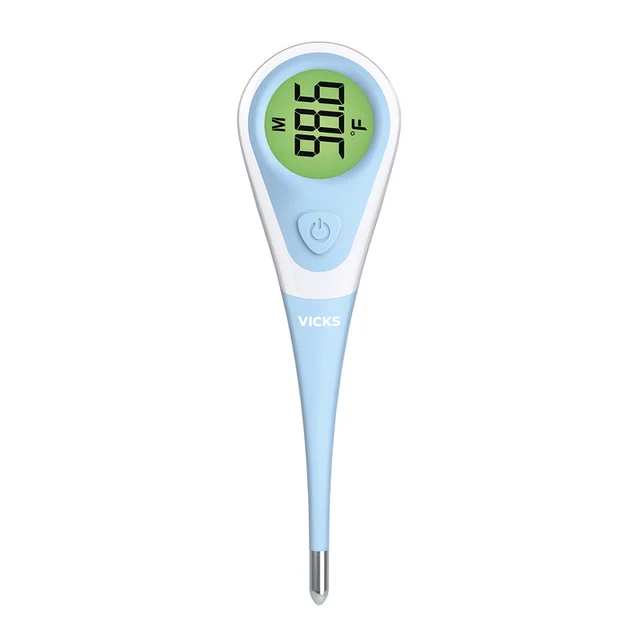
- Vicks ComfortFlex Digital Thermometer (V966) - Buy. A flexible-tip stick that reads oral, rectal, or underarm and holds up best where accuracy matters most.
- Braun ThermoScan 7 (IRT6520) - Buy. The ear thermometer clinicians reach for, with age-adjusted fever guidance and fast reads.
- iProven DMT-489 Ear and Forehead Thermometer - It depends. A versatile forehead-and-ear scanner that screens fast but wants careful ear positioning.
- iHealth No-Touch Forehead Thermometer (PT3) - Skip. A sleek, touch-free scanner that is great for screening but unreliable for confirming a fever.
The verdict in 30 seconds
What mattered most
- Measurement site
- Time to read
- Best age range
- Clinical accuracy
- Fever alert
- Repeat-reading consistency
A fever thermometer only earns its place if you can trust the number it gives you. We synthesized independent testing and a large body of owner reports across oral, ear, and no-touch forehead devices, and the picture was clearer than expected: the measurement method matters as much as the brand. One hugely popular category is convenient but repeatedly misses real fevers, so we singled it out as the one to skip.
A flexible-tip stick that reads oral, rectal, or underarm and holds up best where accuracy matters most.
Best for: Families who want one dependable, low-cost thermometer that works from newborns to adults.
- Works oral, rectal, and underarm, covering newborns through adults
- Contact core-site reading is the most consistently accurate method in independent testing
- Clear green/yellow/red fever indicator and no consumables to buy
- Least expensive device in the group
- Slowest read of the four, as a contact stick
- A minority of owners report the reading drifting over long-term use
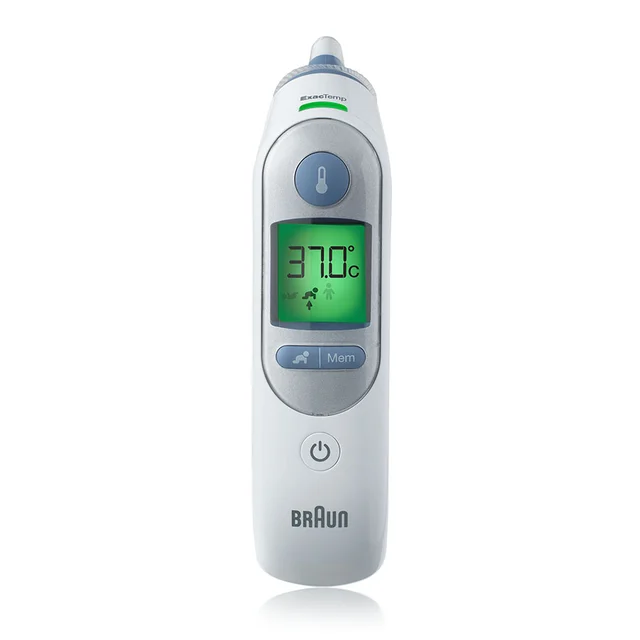
The ear thermometer clinicians reach for, with age-adjusted fever guidance and fast reads.
Best for: Parents of older babies and children who want fast, repeatable ear reads with age-based fever guidance.
- Age Precision adjusts the fever threshold by age group
- Pre-warmed tip and fast reads; well tolerated by squirmy children
- Reviewers report accurate, repeatable readings with correct technique
- Backlit color-coded display and memory recall
- Premium price plus the ongoing cost of replacement lens filters
- Forgets the selected age range at power-on and cannot mute the beep
- Repeat readings can vary if positioning is off; check Braun's stated age guidance before using on infants
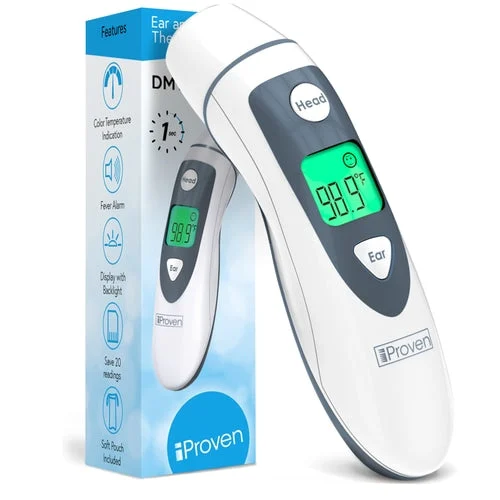
A versatile forehead-and-ear scanner that screens fast but wants careful ear positioning.
Best for: Households that want a quick forehead screen with an ear reading available as a backup check.
- Two modes in one device: quick forehead screen plus a more exact ear reading
- One-to-two-second reads with a built-in fever indicator
- 20-reading memory recall and a backlit display
- Owners often struggle to get a stable ear reading and must reposition
- Forehead and ear modes can differ by about a degree
- Best results demand more technique than a single-site device
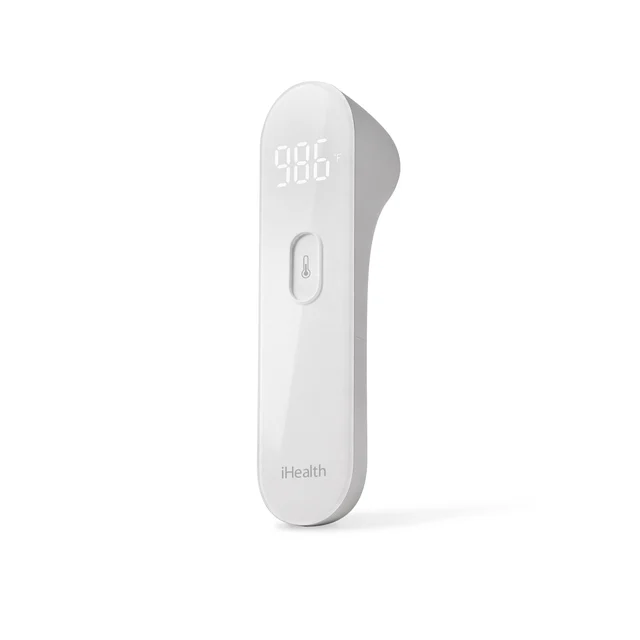
A sleek, touch-free scanner that is great for screening but unreliable for confirming a fever.
Best for: Quick, hygienic screening of several people, not confirming whether someone truly has a fever.
- Truly contactless and hygienic for checking many people quickly
- One-second reads with a quiet vibration alert and large, clear LED digits
- Simple one-button design that is easy to use
- Independent testing and clinical literature link no-touch forehead devices to frequent false negatives
- Readings swing with sunlight, drafts, sweat, and hold distance
- Owners report inconsistent or implausibly repetitive numbers
| Criteria | Vicks ComfortFlex Digital Thermometer (V966) Top pick | Braun ThermoScan 7 (IRT6520) | iProven DMT-489 Ear and Forehead Thermometer | iHealth No-Touch Forehead Thermometer (PT3) |
|---|---|---|---|---|
| Verdict | Buy it | Buy it | It depends | Skip it |
| Best for | Families who want one dependable, low-cost thermometer that works from newborns to adults. | Parents of older babies and children who want fast, repeatable ear reads with age-based fever guidance. | Households that want a quick forehead screen with an ear reading available as a backup check. | Quick, hygienic screening of several people, not confirming whether someone truly has a fever. |
| Price tier | $ · budget | $$$ · premium | $$ · mid-range | $$ · mid-range |
| Measurement site | Oral, rectal, underarm | Ear (tympanic) | Forehead + ear | Forehead (no-touch) |
| Time to read | Slowest of the four | A few seconds | 1 to 2 seconds | ~1 second |
| Best age range | Wide range; rectal for infants | Check Braun's age guidance | Check maker's age guidance | Check maker's age guidance |
| Clinical accuracy | High at rectal/oral | High with correct technique | Ear good, forehead indicative | Prone to false negatives |
| Fever alert | Color-coded display | Color-coded + age guide | Fever indicator | Vibration alert |
| Repeat-reading consistency | Consistent | Consistent with technique | Mixed on ear mode | Variable |
| Ongoing cost | None | Replacement lens filters | None | None |
| Price tier | $ · budget | $$$ · premium | $$ · mid-range | $$ · mid-range |
Which one is right for you?
- Families who want one dependable, low-cost thermometer that works from newborns to adults. Buy it Vicks ComfortFlex Digital Thermometer (V966)
- Parents of older babies and children who want fast, repeatable ear reads with age-based fever guidance. Buy it Braun ThermoScan 7 (IRT6520)
- Households that want a quick forehead screen with an ear reading available as a backup check. It depends iProven DMT-489 Ear and Forehead Thermometer
- Quick, hygienic screening of several people, not confirming whether someone truly has a fever. Skip it iHealth No-Touch Forehead Thermometer (PT3)
How we judged the field
We do not run a clinical lab, and we do not pretend to. What we do is read across independent testing and pull together what owners consistently report after living with these thermometers through real fevers, then translate that into one verdict per product. For a fever thermometer, we weighted a handful of things above everything else: the site it measures and whether that site suits the user’s age, how accurate and repeatable the reading is, how clearly it flags a fever, how fast it reads, and whether it costs anything to keep using. We put accuracy and repeatability ahead of speed on purpose - a number you cannot trust is worse than no number at all. We also went in expecting to name one popular category as a skip, because the most-bought option is not always the most trustworthy.
Vicks ComfortFlex Digital Thermometer (V966)
Buy itThe unglamorous stick thermometer keeps winning, and this one is our overall pick. It reads oral, rectal, or underarm, which is the whole point: rectal readings in infants and oral readings in older children and adults are the methods with the strongest accuracy track record, and a single inexpensive device covers all of them. The flexible tip is more comfortable than a rigid probe, the Fever InSight display glows green, yellow, or red so the result is obvious at a glance, and there are no filters or consumables to buy. Reviewers repeatedly note that it is among the least expensive devices yet still delivers solid, consistent reads. The trade-offs are honest ones: at roughly eight seconds it is the slowest here, and a minority of owners report the reading drifting after long-term use. For the money, nothing else matches its accuracy-where-it-counts across every age.
Braun ThermoScan 7 (IRT6520)
Buy itThis is the ear thermometer clinicians recognize, and it is our runner-up. Its Age Precision feature adjusts the fever threshold to the user’s age, a pre-warmed tip helps keep the reading stable, and results land quickly with the same clear color coding. Owners praise how quickly and painlessly it reads on a squirming child. The catches are real: it sits at a premium price, it needs replacement lens filters to function, it forgets the selected age range every time it powers on, and it cannot be muted. Some owners see readings vary between repeat attempts when positioning is off, and you should check Braun’s age guidance before using it on infants. If you want speed and child-friendliness and will pay for it, it earns its place.
iProven DMT-489 Ear and Forehead Thermometer
It dependsThe DMT-489 is a genuine two-in-one: a fast forehead scan plus an ear mode you unlock by removing the sensor cap, with a one-to-two-second read, a built-in fever indicator, and 20-reading memory. As a household all-rounder it is appealing and mid-priced. But the experience splits along its two modes. Reviewers find the forehead reading quick and consistent as a screen, while the ear mode is the more exact measurement - and also the more finicky, with owners frequently reporting they had to reposition repeatedly to get a stable read. Forehead and ear can differ by about a degree, which is fine if you understand that the forehead is indicative and the ear is the check, and frustrating if you wanted one confident number every time. Buy it if you value versatility and will learn its quirks; look elsewhere if you want effortless one-and-done reads.
iHealth No-Touch Forehead Thermometer (PT3)
Skip itThis is the hardest one to walk past, because it is genuinely lovely: a clean design, a one-second read, a gentle vibration instead of a beep, and big, bright digits. As a screening tool for checking several people quickly and hygienically, it is excellent. But for the job that actually matters here - confirming whether someone has a fever - it is the weakest of the group, and the evidence is not subtle. Independent testing and the broader clinical literature link no-touch forehead devices to frequent false negatives, and their readings shift with sunlight, drafts, sweat, and how far you hold the device. Owners echo the pattern, describing wildly swinging numbers or a reading that barely changes no matter the time of day. It is a fine screener and a poor decider, so for fever confirmation we would skip it in favor of a contact or ear method.
Vicks ComfortFlex vs Braun ThermoScan 7: which should you buy?
Both are trustworthy, so the choice comes down to household and tolerance for cost. Choose the Vicks ComfortFlex if you want the broadest accuracy, the lowest price, coverage from newborns to adults, and no consumables - accepting the slowest read of the group. Choose the Braun ThermoScan 7 if you want a fast read, painless use on a restless child, and age-adjusted fever guidance, and you are comfortable paying a premium plus ongoing filters for an older baby or child. A home with an infant should keep a stick thermometer regardless, because rectal remains the reference method for the very young. A busy household of older kids and adults chasing quick checks will feel the Braun earns its price.
What to look for
- Match the measurement site to the user’s age: rectal or oral for the youngest, ear or oral for older children and adults.
- Prioritize a stated accuracy spec and evidence of repeatable readings over raw speed.
- Favor a clear fever indicator - color coding or an age-adjusted guide beats interpreting a bare number.
- Account for running costs: only the Braun here needs consumables.
- Treat no-touch forehead scanning as a screen, not a verdict, and remember it is sensitive to sunlight, drafts, and hold distance.
Our final take
The Vicks ComfortFlex is our overall pick because it delivers accuracy where it counts, across every age, at the lowest cost and with nothing to replace. The Braun ThermoScan 7 is the runner-up and the right buy when speed and squirm-free reads justify the premium. The iProven DMT-489 is a capable all-rounder if you respect the difference between its screening and confirming modes. And the iHealth PT3, for all its polish, is the one to skip when the question is whether a fever is real. When two readings disagree or you simply want to be sure, a contact reading is the tiebreaker worth trusting.
Questions, answered
Which thermometer type is most accurate for a fever?
Contact core-site methods lead: a stick thermometer used rectally (for infants) or orally (for older children and adults) has the strongest accuracy record in independent testing, and a good ear thermometer is close behind when positioned correctly. No-touch forehead scanning is the least reliable for confirming a fever.
What is the best option for a newborn or baby under three months?
Reviewers and device guidance consistently point to a digital stick thermometer used rectally for the youngest babies. Ear thermometers such as the Braun ThermoScan 7 may have age limits for the youngest babies, so check the maker's age guidance.
Are no-touch forehead thermometers accurate enough to rule out a fever?
They are convenient for fast, hygienic screening, but independent testing and clinical studies show no-touch forehead devices produce frequent false negatives, and readings are easily thrown off by sunlight, drafts, and hold distance. Confirm any borderline result with an oral, rectal, or ear reading.
Do any of these have ongoing costs after purchase?
The Braun ThermoScan 7 requires disposable lens filters and will not operate without one in place. The Vicks ComfortFlex, iProven DMT-489, and iHealth PT3 have no consumables.
Why does the same person get different numbers from different thermometers?
Different sites read slightly different temperatures by design, and technique varies the result - ear positioning, forehead distance, and recent eating or drinking all shift the number. When two readings disagree, a contact reading is the more dependable tiebreaker.
Deciding between the top two? See our head-to-head: Vicks ComfortFlex Digital Thermometer (V966) vs Braun ThermoScan 7 (IRT6520).
More Health & Wellness reviews
 The Best Ear Wax Removal Kits: 4 Compared (and One to Skip)
  The Best Earplugs for Sleeping: 4 Compared (and One to Skip)
  The Best Electric Heated Blankets: 4 Compared (and One to Skip)
  The Best Escape Ladders: 4 Compared (and One to Skip)
  The Best Essential Oil Diffusers for Home: 4 Compared (and One to Skip)
  The Best Eye Wash Stations: 4 Compared (and One to Skip)