Explained
Electric Blankets, Explained
After reading this, you'll be able to look at any electric blanket listing and know which specs matter, which are marketing noise, and which safety features are non-negotiable.
In this guide
An electric blanket is one of the cheapest ways to stay warm at night - it heats you and the bed instead of the whole room. But listings lean hard on numbers that sound impressive (20 heat levels! 12-hour timer!) while burying the things that actually separate a good blanket from a frustrating one: even heat with no cold spots, a controller that survives more than one winter, and legitimate safety certification. This guide decodes the jargon so you can shop the category without getting fooled.
The 30-second version
- Safety certification is the first filter, not a bonus feature - only consider blankets with UL or ETL marks and built-in overheat protection.
- Evenness beats maximum heat. Cold spots are the most common complaint in the category; a blanket that spreads moderate heat evenly feels better than one that runs hot in patches.
- The controller is the weak point. When electric blankets fail, it's usually the controller or its cord connection, so owner reports on multi-season reliability matter more than any spec.
- Dual-zone control is the killer feature for couples - queen and king sizes should ship with two controllers so each side of the bed heats independently.
- Heat-level counts are mostly marketing. The jump from 10 to 20 settings gives finer graduations, but fabric weight, preheat mode, and wire layout change your nightly experience far more.
The products this guide is about
Our verdict on each, with the full reasoning on the companion review.
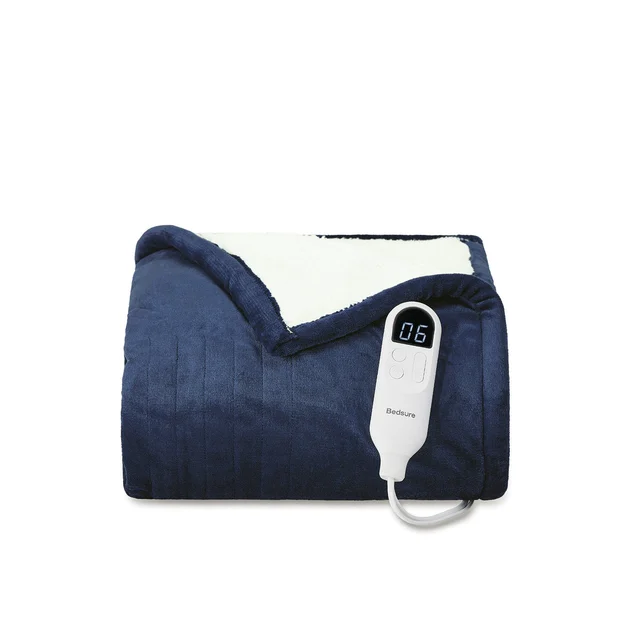
- Buy Bedsure GentleSoft Heated Blanket (Queen) A mid-range heated blanket with dual-zone controls and a preheat mode. Amazon
- Buy Beautyrest Heated Microlight to Berber Blanket (Queen) The premium pick: finer temperature control and a plush berber reverse that feels like real bedding.
- It depends Sunbeam Royal Ultra Fleece Heated Blanket (Queen) The legacy budget option: easy to find and cheap, but the fleece is thin by comparison. Amazon
- Skip Degrees of Comfort Advanced Microplush Heated Blanket (Queen) Feature-rich on paper, but the maker's own website no longer resolves to a product page, which is a support red flag.
What actually matters
- Safety certification (UL or ETL) - an independent lab has tested the blanket's electrical design against fire and shock standards. No mark, no purchase, full stop.
- Heating evenness - how uniformly the wires spread warmth across the fabric. Uneven blankets create hot stripes and cold corners, which is the top owner complaint in the category.
- Auto shut-off - the blanket turns itself off after a set period (typically 8-12 hours). It's both a safety backstop and the reason you can fall asleep without worrying.
- Controller quality - you'll use it half-asleep in the dark. Backlit, legible controllers with memory for your last setting are a genuine daily upgrade; flimsy ones are the number-one failure point.
- Fabric weight and type - flannel, microplush, and berber hold warmth and hide the heating wires; thin fleece feels cheap, loses heat faster, and lets you feel the wires through it.
- Dual-zone controls - on queen and king sizes, two controllers run each half of the bed separately, so partners with different temperature preferences both sleep happy.
- Washability - modern blankets should have detachable controllers and machine-washable construction. Anything that can't be washed will be retired by spring.
The specs, in plain English
Green flags vs red flags
Green flags
- UL or ETL mark stated plainly in the listing, along with overheat protection and an auto shut-off
- Detachable controllers and clear machine-wash instructions
- Two controllers included on queen and king sizes
- Owner reviews that mention the blanket still working in its second or third winter
- Preheat mode plus an adjustable (not just fixed) shut-off timer
- Substantial fabric - flannel, microplush, or berber - described consistently by owners as hiding the wires
Red flags
- No safety certification mentioned anywhere in the listing - this alone should end the conversation
- A pattern of owner reports describing controllers flashing error codes or dying, especially on replacement units too
- A long advertised warranty paired with owner complaints that customer service never responds
- Thin fleece at a suspiciously low price, with reviews mentioning cold spots or feeling the wires
- Spec-sheet overload - 20 levels, big timer numbers - from a brand with no track record and few multi-season reviews
- Reviews mentioning scorched smells, hot spots, or fraying cords, at any price
Who's who: the brands
- Sunbeam - A long-established name in the category, widely stocked and usually affordable. Check controller and warranty terms before buying.
- Beautyrest - The bedding brand's heated line sits at the premium end, with plush fabrics and finer heat control. Confirm certification on the label.
- Bedsure - A newer direct-to-consumer bedding brand whose current heated blankets list ETL certification and an auto shut-off at mid-range prices.
- Degrees of Comfort - An online brand whose original website now redirects elsewhere, so check how you would reach support and warranty before buying.
- Sealy / Serta (licensed lines) - Mattress-brand names licensed onto heated bedding of varying origin - judge each model on its own certifications and reviews rather than the logo.
How to read a listing without getting fooled
Start at the bottom of the listing, not the top. First, find the safety certification - UL or ETL should be stated explicitly, and if you can't find it, close the tab. Second, check the shut-off: how many hours, and is it adjustable? Third, confirm what's actually in the box for your size - dual controllers on queen/king is standard now, but some listings quietly ship one. Then get skeptical about the headline numbers: '20 heat levels' and '12-hour timer' are cheap to print and tell you nothing about evenness or durability. For that, go to owner reviews and search for the words that matter - 'second winter,' 'controller,' 'error,' 'cold spots,' 'wires.' A blanket with modest specs and consistent multi-season praise beats a spec monster with a cluster of dead-controller reports every time.
How much should you spend?
What drives cost in this category is mostly fabric quality and control refinement, not warmth - nearly every certified blanket gets plenty warm. Budget models save money with thin fleece, fewer heat levels, and simpler controllers; they warm a bed fine but feel flimsy, show their wires, and are where most reliability complaints cluster. The value sweet spot is mid-range: that's where you get substantial flannel or microplush fabric, preheat modes, adjustable timers, dual-zone controllers, and a better chance of a reachable maker. Spending up to premium buys finer temperature graduations, low-EMF designs, plusher bedding-grade fabric, and longer warranties from established brands; it's worth it if you're sensitive to small temperature differences or want the longest-proven reliability record, and skippable if you just want a warm bed. Never pay a premium for heat-level counts alone, and never accept a missing safety certification at any price.
Questions, answered
What are the basic safety rules for using an electric blanket?
A few habits cover almost everything: buy only UL- or ETL-certified blankets with overheat protection, always use the auto shut-off rather than defeating it, and keep the blanket flat while it's on - never fold it, bunch it, or trap it under heavy objects, since that concentrates heat around the wires. Don't run other bedding or a mattress pad's cords across it, don't tuck the controller under pillows, and retire any blanket immediately if you notice frayed wires, scorch marks, or a burnt smell. Electric blankets should never be used for infants, and they're not appropriate for anyone who can't feel heat properly or move away from it. This is general product guidance, not medical advice - if you have a condition that affects heat sensitivity or circulation, check with a professional first.
Is it safe to sleep under an electric blanket all night?
Many owners do, and modern certified blankets are designed with that in mind: the auto shut-off (typically 8-12 hours) cuts power partway through the night, and overheat protection watches for faults. If you sleep under one, use a low-to-medium setting rather than maximum, keep it flat and untucked from heavy layers, and let the shut-off do its job. Some people prefer using preheat to warm the bed and then turning the blanket off entirely at lights-out - a perfectly good approach if all-night power makes you uneasy.
Do electric blankets use a lot of electricity?
No - they're among the cheapest ways to stay warm. A blanket draws a small fraction of the power a space heater does, because it's warming you and the bed rather than the whole room. Many owners drop their thermostat a few degrees at night and let the blanket cover the difference, which can meaningfully cut winter heating costs.
Can you machine wash an electric blanket?
Modern blankets, yes - detach the controller(s) first, then run a gentle cold cycle without bleach, and tumble dry low or line dry. The critical step is making sure the cord connection points are completely dry before you plug back in. If a blanket you're considering isn't machine washable with detachable controllers, that's a sign of a dated design.
What's the difference between an electric blanket and a heated mattress pad?
A blanket goes over you; a mattress pad goes under you, beneath the fitted sheet. Pads heat you more efficiently because heat rises through you and your bedding traps it, and they stay flat by design. Blankets are more flexible - usable on the couch, easier to share as a top layer, and simpler to move between rooms. Couples who fight over temperature often find dual-zone versions of either solve the argument; some cold sleepers eventually run one of each.
How long should an electric blanket last, and when should I replace it?
A well-made blanket from a reputable brand typically gives several winters of service; the controller and its cord connection usually fail before the wires do. Replace the blanket - don't attempt repairs - if the controller behaves erratically, if any area heats noticeably hotter than the rest, or if you see fraying, scorch marks, or smell anything burnt. Warranties in this category commonly run several years, but they're only as good as the brand's customer service, which is worth checking in owner reviews before you buy.
Or jump to the head-to-head: Bedsure GentleSoft Heated Blanket (Queen) vs Beautyrest Heated Microlight to Berber Blanket (Queen).