

Health & Wellness
The Best CPAP Cleaning Supplies: 4 Compared (and One to Skip)
We compared CPAP cleaning products against what the FDA has actually authorized and what Resmed and Philips Respironics tell their own patients to do.
The short version
The honest answer is that the best CPAP cleaner is a sink, mild detergent and a replacement schedule. The pick is a genuine replacement mask cushion, because Resmed's own guidance says a full face cushion may need replacing as often as monthly and a worn cushion is the part you cannot scrub back to new. The value buy is a canister of unscented mask wipes for the mornings when a full wash is not going to happen. The SoClean 3+ is the conditional one: it is the ozone device that actually went through the FDA and holds a De Novo classification as an add-on bacterial reduction step, but it is validated on a short list of Resmed parts, runs a 90 minute cycle, and Resmed states that damage from it is not covered by warranty. The skip is the Lumin UV-C sanitizer, which retailers still sell as a CPAP cleaner even though React Health's own product page now lists keys, wallets, jewellery, headphones and phones and makes no CPAP claim. Nothing in this category replaces washing, and the cleared devices say so in their own labelling. Best for: anyone who wants a CPAP hygiene routine that matches what the FDA and the mask makers actually recommend, instead of what the ads promise.
Our picks at a glance
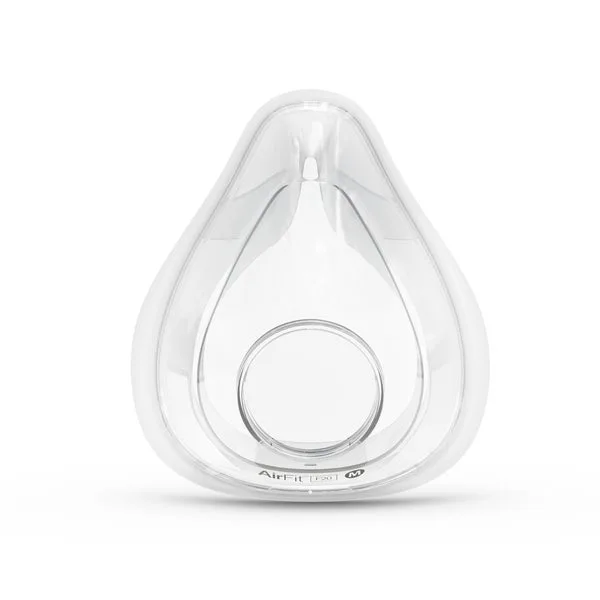
- Resmed AirFit F20 Cushion - Buy. The genuine silicone replacement cushion for the AirFit F20 full face mask, and the single most useful thing most CPAP users can spend money on for hygiene.
- resplabs CPAP Mask Wipes, Unscented - Buy. A canister of unscented mask wipes for the daily face oil and sweat that builds up on a cushion between proper washes.
- SoClean 3+ - It depends. The ozone bacterial reduction machine that actually went through the FDA, with a narrow validated compatibility list and a manufacturer warranty problem attached.
- React Health Lumin UV-C Household Sanitizer - Skip. A UV-C drawer cabinet that CPAP retailers still merchandise as a mask cleaner, even though its own manufacturer page now sells it as a household gadget.
The verdict in 30 seconds
What mattered most
- What it actually is
- FDA status for CPAP hygiene
- Replaces washing?
- Validated compatibility
- Time per use
- Produces ozone
Search for a CPAP cleaner and you get machines: ozone chambers, UV cabinets, one-touch cycles that promise a sanitized mask in minutes. Then you read the FDA's own consumer page and the manufacturers' own cleaning instructions, and the picture inverts. The regulator says most CPAP parts need nothing more than mild soap and water, and the mask and machine makers say the same thing in their user guides. So this comparison is built the way the evidence points: two consumables that genuinely earn their place in a CPAP routine, one machine that is right for a narrow set of people, and one very popular gadget whose own manufacturer no longer markets it for CPAP at all.
The genuine silicone replacement cushion for the AirFit F20 full face mask, and the single most useful thing most CPAP users can spend money on for hygiene.
Best for: AirFit F20 users who want the biggest real hygiene improvement available and are currently stretching one cushion across many months.
- Resmed's own replacement guidance says a full face cushion may need replacing as often as every month, which makes this the part that keeps a mask hygienic.
- Silicone washes clean with mild detergent and warm water, exactly the method Resmed and the FDA both describe.
- Sold in small, medium and large so an existing frame and headgear carry over.
- It is a mask part, not a cleaning device, so it does nothing for tubing or the humidifier tub.
- Only fits the AirFit F20 family, so owners of nasal or pillow masks need the equivalent cushion for their own mask.
- Buying cushions at the recommended cadence adds up over a year if insurance does not cover resupply.
- The memory foam AirTouch F20 cushion is a different part and Resmed excludes it from normal washing.
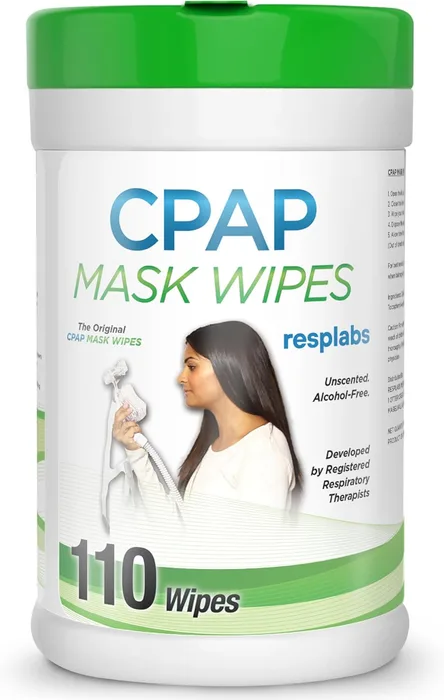
A canister of unscented mask wipes for the daily face oil and sweat that builds up on a cushion between proper washes.
Best for: Anyone who wants their mask to feel clean every morning without a sink ritual, as a supplement to a proper weekly wash.
- Unscented, which matters because Resmed's cleaning FAQ specifically discourages strong smelling products and alcohol on mask parts.
- Sold by a respiratory therapist run brand as a morning wipe for mask oil and smell, so it is not tied to one mask family.
- A canister of 110 lasts roughly a quarter at one wipe per morning, which makes daily upkeep realistic.
- A wipe is upkeep, not cleaning, and it does not substitute for the weekly wash the mask makers describe.
- Cannot reach the inside of tubing, which is the part hardest to clean and the part the FDA says it has received no evidence ozone or UV can clean.
- No FDA authorization exists for wipes as a disinfection step, and none is claimed.
- A canister left open dries out, so the lid discipline matters more than with a bottle of detergent.
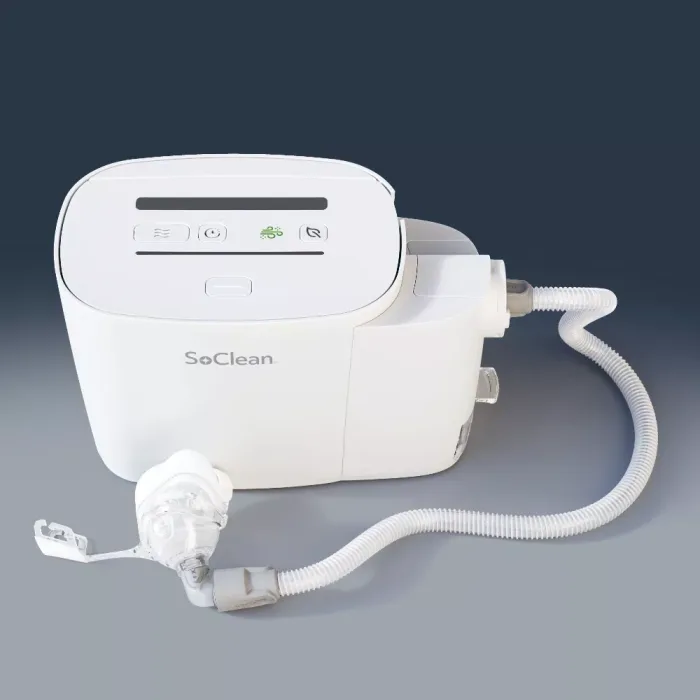
The ozone bacterial reduction machine that actually went through the FDA, with a narrow validated compatibility list and a manufacturer warranty problem attached.
Best for: A person on the exact Resmed hardware in its indications, with no ozone sensitivity, who wants an extra step on top of washing and accepts the warranty position.
- Holds an FDA De Novo classification granted in August 2024 as a respiratory accessory microbial reduction device.
- FDA labelling records an in vitro 3 log bacterial reduction on the tested parts for eight named organisms after a complete cycle.
- Its 90 minute cycle and labelling are on the public FDA record, which most machines in this category cannot say.
- Its FDA indications limit tested use to the Resmed Mirage FX nasal mask with ClimateLine Air or SlimLine tubing on an AirSense 10, and state that safe use with anything else has not been established.
- Resmed says the SoClean 3+ has not been tested or approved by Resmed, and that damage including discoloration caused by it is not covered by the Resmed limited warranty.
- It generates ozone, and the SoClean manual, as quoted in the FDA's recall notice for earlier units, tells people with asthma, COPD or cardiovascular disease to consult a health care provider first.
- The cycle runs 90 minutes and the FDA labelling is explicit that it must not replace the cleaning procedures the mask and hose makers recommend.
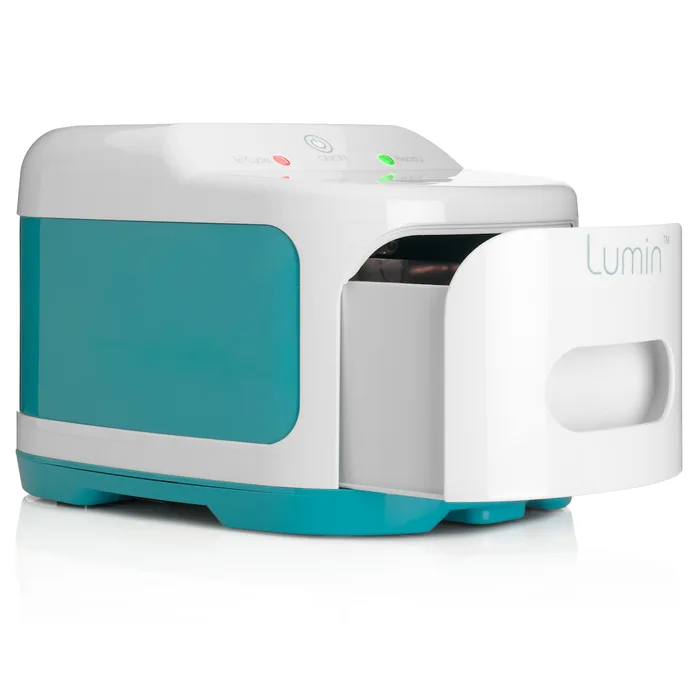
A UV-C drawer cabinet that CPAP retailers still merchandise as a mask cleaner, even though its own manufacturer page now sells it as a household gadget.
Best for: Nobody buying it for CPAP hygiene. If you want the cabinet for phones and keys, that is what its maker now describes.
- The five minute cycle and one button operation are genuinely simple compared with anything involving a sink.
- React Health rates the UV-C bulb to 9,000 hours, so consumable cost over the life of the unit is low.
- No water or chemicals, which is a real convenience for the household items its maker actually lists.
- React Health's own product page describes it as sanitizing keys, wallets, jewellery, headphones, smartphones, tablets and e-readers, and makes no CPAP mask claim at all.
- It carries no FDA authorization as a respiratory accessory microbial reduction device, the category the FDA created for exactly this purpose.
- The FDA states it has not received evidence that UV light can clean the inside surface of CPAP hoses, and that UV can break down hoses and masks.
- Buyers treat it as a replacement for washing, which the cleared devices in this category say it is not.
| Criteria | AirFit F20 Cushion Top pick | CPAP Mask Wipes, Unscented | SoClean 3+ | Lumin UV-C Household Sanitizer |
|---|---|---|---|---|
| Verdict | Buy it | Buy it | It depends | Skip it |
| Best for | AirFit F20 users who want the biggest real hygiene improvement available and are currently stretching one cushion across many months. | Anyone who wants their mask to feel clean every morning without a sink ritual, as a supplement to a proper weekly wash. | A person on the exact Resmed hardware in its indications, with no ozone sensitivity, who wants an extra step on top of washing and accepts the warranty position. | Nobody buying it for CPAP hygiene. If you want the cabinet for phones and keys, that is what its maker now describes. |
| Price tier | $$ · mid-range | $ · budget | $$$ · premium | $$ · mid-range |
| What it actually is | Replacement silicone mask cushion | Pre-moistened cleaning wipes | Ozone bacterial reduction machine | UV-C drawer cabinet |
| FDA status for CPAP hygiene | A mask component, not a cleaning device | A consumable, not a device | De Novo classified 2024 | No FDA authorization in this device category |
| Replaces washing? | No, it is the part you wash | No, upkeep between washes | No, its own labelling forbids it | No CPAP cleaning claim from the maker |
| Validated compatibility | AirFit F20 and AirFit F20 for Her frames | Mask cushions generally, check the listing | Named Resmed mask and tubing on an AirSense 10 | Household items listed by the maker, not CPAP parts |
| Time per use | Seconds to swap | About a minute | 90 minute cycle | 5 minute cycle |
| Produces ozone | No | No | Yes, ozone stream | No, UV-C light |
| Resmed warranty position | Genuine Resmed part | No stated warranty effect | Resmed says resulting damage is not covered | Resmed's exclusion names ozone, not UV |
| Ongoing cost | New cushion as often as monthly for full face | 110 wipes per canister | Consumables per maker | Bulb rated to 9,000 hours |
Which one is right for you?
- AirFit F20 users who want the biggest real hygiene improvement available and are currently stretching one cushion across many months. Buy it Resmed AirFit F20 Cushion
- Anyone who wants their mask to feel clean every morning without a sink ritual, as a supplement to a proper weekly wash. Buy it resplabs CPAP Mask Wipes, Unscented
- A person on the exact Resmed hardware in its indications, with no ozone sensitivity, who wants an extra step on top of washing and accepts the warranty position. It depends SoClean 3+
- Nobody buying it for CPAP hygiene. If you want the cabinet for phones and keys, that is what its maker now describes. Skip it React Health Lumin UV-C Household Sanitizer
How we judged the field
Five things decide whether a CPAP hygiene product is worth money. First, regulatory standing: has the FDA authorized this thing for the job it is being sold for, or is the seller relying on the vague word sanitizer. Second, what the device maker says about it, because Resmed and Philips Respironics publish cleaning instructions and warranty terms that a cleaning gadget can put you on the wrong side of. Third, coverage: the inside of the tubing is the hardest surface to reach and the FDA has said plainly that it has not received evidence ozone or UV cleans it. Fourth, what the product asks of you, since a 90 minute cycle and a 5 minute cycle produce very different real world habits. Fifth, whether it addresses wear, because silicone cushions degrade against skin and no amount of light or gas restores them.
Judged that way the field splits cleanly in two. On one side are consumables that do work the manufacturers actually endorse: replacement cushions, filters, tubing, wipes and plain detergent. On the other side are machines, and that side has recently gained real structure. The FDA now has a specific classification for add-on microbial reduction devices, and two products sit in it, the SoClean 3+ and the LiViliti Paptizer 360. Everything else in the category, including some of the best selling boxes, sits outside it. So we picked one representative of each position: the cushion and the wipes to stand for the consumables, the SoClean 3+ as the machine that went through the process and still has caveats, and the Lumin to stand for the large group of UV boxes that people buy for CPAP and that the makers no longer describe that way.
Resmed AirFit F20 Cushion
Buy itThe AirFit F20 cushion is an unglamorous pick and it is the right one. Resmed’s published replacement guidance says a full face cushion may need replacing as often as every month, because silicone that has spent thirty nights against skin becomes worn, damaged or unable to be cleaned thoroughly. That is the hygiene problem most CPAP users actually have, and it is the one problem no sanitizing machine touches. A fresh cushion also fixes the seal, which quietly determines whether therapy works at all. Practically, you keep the frame and headgear and swap only the cushion, in small, medium or large. The trade-off is that this is a mask part and not a cleaning system, so it does nothing for your tubing or humidifier tub, and it only fits the AirFit F20 family. Owners of nasal or pillow masks should buy the equivalent cushion for their own mask, on the shorter cadence Resmed gives for those. For AirFit F20 users stretching one cushion across a year, this is the highest value change available.
resplabs CPAP Mask Wipes, Unscented
Buy itWipes solve a behaviour problem rather than a microbiology one, and that is why they belong here. Almost nobody washes a cushion at the sink every single morning, and the gap between intention and habit is where face oil and sweat accumulate. A canister of unscented, alcohol free cotton wipes turns the daily step into ten seconds. Unscented matters more than it sounds: Resmed’s own cleaning FAQ discourages strongly scented soaps and alcohol on mask parts, on the basis that residual vapours can be harmful if inhaled, so a citrus wipe is working against the manufacturer’s advice. Check that the listing fits your mask, and note that 110 in a canister is roughly a quarter of a year of daily use. The limits are worth stating: a wipe is not disinfection, no FDA authorization exists for wipes in this role and none is claimed, and nothing you can do with a wipe reaches the inside of a hose. Buy them as the daily habit that sits alongside a proper weekly wash, not instead of it.
SoClean 3+
It dependsThe SoClean 3+ is the one machine here that did the regulatory work, and it is still a conditional recommendation. The FDA classified it by De Novo in August 2024 as a respiratory accessory microbial reduction device. Its labelling records an in vitro 3 log reduction for eight named organisms after a complete cycle, and the FDA authorized it after the earlier SoClean2 and SoClean3 units were recalled in 2023 over ozone exposure. The catch is how narrow the authorization is. Tested use covers the Resmed Mirage FX nasal mask with ClimateLine Air or SlimLine tubing on an AirSense 10, and the labelling states that safe use with anything else has not been established. Resmed’s response is blunt: the device has not been tested or approved by Resmed, and damage from it including discoloration is not covered by warranty. It is ozone, the cycle is 90 minutes, and it explicitly cannot replace washing. Right for a narrow buyer, wrong for most.
React Health Lumin UV-C Household Sanitizer
Skip itThe Lumin is the clearest skip in this category, and the reason is not an accusation, it is the manufacturer’s own page. React Health lists the Lumin as a UV-C household sanitizer for keys, wallets, jewellery, headphones, smartphones, tablets and e-readers. There is no CPAP mask claim on it. Yet CPAP retailers still shelve it as a mask and accessory cleaner, and that gap is where buyers get misled. It holds no FDA authorization in the respiratory accessory microbial reduction category that we could find, a category that now exists and has two entrants. The FDA’s position on UV boxes generally is that it has not received evidence that UV can clean the inside surface of CPAP hoses, that it lacks evidence these machines protect users from unsafe UV exposure, and that UV can break down hoses and masks. A five minute cycle and a long life bulb are genuinely convenient. They are convenient for the household items the maker actually names. For CPAP hygiene, spend the money on cushions.
Sources
Specs in this review come from these pages.
- FDA: Do You Need a Device That Claims to Clean a CPAP Machine? (fda.gov)
- FDA Safety Communication: Voluntary Recall of SoClean Equipment Intended for Use with CPAP Devices and Accessories (fda.gov)
- FDA De Novo DEN210037: SoClean 3+ Bacterial Reduction Device classification order (accessdata.fda.gov)
- FDA 510(k) K252471: LiViliti Paptizer 360 clearance and summary (accessdata.fda.gov)
- Resmed: Cleaning CPAP equipment, and Resmed US warranty information (resmed.com)
- Philips Sleep and Respiratory Care: Ozone cleaner information (usa.philips.com)
Resmed AirFit F20 Cushion vs resplabs CPAP Mask Wipes, Unscented: which should you buy?
The cushion and the wipes are not really competitors, they are the two halves of one routine, but if you can only buy one this month the cushion wins and it is not close. A worn cushion cannot be cleaned back to new, and Resmed’s own guidance treats a full face cushion as a monthly consumable for that reason. Wipes improve how the mask feels and how consistently you touch it; a fresh cushion improves both hygiene and seal, and seal is the thing that determines whether the therapy is doing its job. If your cushion is more than a couple of months old, start there.
After that, the order flips depending on your habits. If you already replace parts on schedule through a resupply programme and your problem is that mornings are chaotic, the wipes are the better spend, because the failure mode they fix is the one you actually have. If you have a nasal or pillow mask rather than an AirFit F20, buy the correct cushion for your mask on the shorter cadence Resmed publishes for those, and treat the wipes as automatic. Either way, the sink and a mild liquid detergent stay in the routine. Both products are supplements to that, not substitutes, which is exactly the language the FDA uses about the machines too.
What to look for
- Check the actual authorization, not the word: sanitizer, sterilizer and hospital grade mean nothing on their own, whereas a real product will name a De Novo or 510(k) number you can look up in the FDA device databases.
- Read the tested compatibility list: the two FDA cleared devices in this category are validated on a handful of specific Resmed parts, and both state that safe use with anything else has not been established.
- Assume it is an add-on, never a replacement: the cleared devices in the category say they do not replace the mask and hose maker’s cleaning instructions, so if a product implies you can stop washing, that alone is disqualifying.
- Check your warranty before your cart: Resmed’s US limited warranty excludes damage to its machines from ozone devices, and Philips Respironics states that ozone and UV products are not approved cleaning methods for its devices or masks.
- Prioritise wear parts over gadgets: cushions, filters, tubing and humidifier tubs all have published replacement cadences, and hitting those does more than any cycle you can run.
- Watch out for scent and strength: Resmed discourages antibacterial soaps, dish detergents and strongly scented products on mask parts, so mild and unscented is the safer default for both liquids and wipes.
Our final take
This is a category where the honest recommendation is mostly to stop shopping. The FDA’s live guidance is that machines claiming to clean CPAP equipment are not necessary and that mild soap and water covers most parts, and Resmed and Philips Respironics say the same in their own instructions. Two devices have now been cleared as add-on bacterial reduction steps, which is genuine progress, but both are narrowly validated and both say they do not replace washing. Spend the money on the parts that wear out, keep an unscented wipe by the bed, and treat every sanitizing box with the same question: what exactly did its maker get authorized, and for which parts?
Questions, answered
What has the FDA actually said about ozone and UV CPAP cleaners?
The FDA's live consumer page on CPAP cleaning machines says these machines are not necessary, and that most masks, hoses and humidifier tanks can be cleaned with mild soap and water as described in the owner's manual. It states that the agency has received reports from CPAP users of unexpected asthma attacks, headaches and breathlessness after using ozone gas cleaners, that ozone can leak into the home during a cycle, and that ozone levels inside the equipment can be above safe limits even several hours after cleaning finishes. On UV it says the agency does not have evidence that these machines protect users from unsafe levels of UV exposure, and that it has not received evidence that UV can clean the inside surface of CPAP hoses. It also notes that both UV light and ozone can break down accessories like hoses and masks.
Is any CPAP sanitizer FDA cleared, or is that always marketing?
Some of it is real now, and the picture changed recently. The FDA created a device category called a respiratory accessory microbial reduction device, and the SoClean 3+ was classified into it by De Novo in August 2024, A second product, the LiViliti Paptizer 360, a UV-C LED device for the AirFit F20 mask cushion only, was later cleared by 510(k) K252471 into the same category. Both are authorized only as an add-on after normal cleaning, both are limited to a short list of tested parts, and both carry labelling saying they must not replace the cleaning procedures the mask maker recommends. SoClean's marketing still describes the 3+ as the first and only cleared device of its kind, which was true when it was written and is no longer accurate.
Will an ozone or UV cleaner void my CPAP warranty?
For ozone with Resmed hardware, effectively yes. Resmed's US limited warranty excludes damage to Resmed machines caused by ozone devices, and Resmed says prolonged repeated ozone use can cause internal damage leading to increased motor noise. Resmed went further after the SoClean 3+ clearance and stated that the device has not been tested or approved by Resmed and that damage from it, including discoloration, will not be covered. Philips Respironics published guidance saying both ozone and UV products, including its own UV Light Sanitizer Box, are not approved cleaning methods for its devices or masks. Check your own warranty document, because these positions are written per manufacturer and change over time.
So what should I actually use on the mask and hose?
Follow your own manufacturer's instructions first, because they differ in the details, and Fisher & Paykel and other makers publish their own. Resmed tells users to clean the cushion daily and the headgear and frame weekly with mild liquid detergent and warm drinking quality water, and to rinse tubing weekly. The FDA adds that some manufacturers recommend diluted vinegar, and that filters should be replaced or rinsed on the maker's schedule. Resmed's own FAQ specifically discourages antibacterial soaps, dish detergents and strongly scented soaps on mask parts because residual vapours can be harmful if inhaled, so plain and mild beats powerful here.
How often do the parts actually need replacing?
Resmed publishes a replacement schedule for its own equipment based on CMS guidelines, and it is more frequent than most people expect. Full face cushions may need replacing as often as every month, and nasal cushions or pillows as often as twice a month, because silicone wears and eventually cannot be cleaned thoroughly. Disposable filters may need changing as often as twice a month depending on the environment, tubing as often as every three months, headgear and the humidifier water tub around every six months. Resmed notes that mineral levels in most tap and drinking water discolour, cloud and crack water tubs over time. Replacing on that cadence does more for hygiene than any add-on machine.
Deciding between the top two? See our head-to-head: Resmed AirFit F20 Cushion vs resplabs CPAP Mask Wipes, Unscented.
More Health & Wellness reviews
 The Best Digital Thermometers: 4 Compared (and One to Skip)
  The Best Ear Wax Removal Kits: 4 Compared (and One to Skip)
  The Best Earplugs for Sleeping: 4 Compared (and One to Skip)
  The Best Electric Heated Blankets: 4 Compared (and One to Skip)
  The Best Escape Ladders: 4 Compared (and One to Skip)
  The Best Essential Oil Diffusers for Home: 4 Compared (and One to Skip)