Explained
Cordless Drills, Explained
After reading this, you'll be able to look at any cordless drill listing and know exactly which specs matter, which are marketing noise, and which battery family you're really signing up for.
In this guide
A cordless drill/driver is usually the first power tool a home ever owns, and the listings are a wall of jargon: volts, amp-hours, brushless, UWO, clutch settings, chuck sizes. What trips most first-time buyers up is that the cheapest name-brand drill on the shelf is often the worst value, and that your first drill quietly locks you into a battery family you'll live with for years. This guide decodes the specs so you can tell a genuine workhorse from a bargain-bin false economy.
The 30-second version
- Brushless is the dividing line. A brushless motor is the single clearest quality marker in drills - more power from the same battery, less heat, and no brushes to wear out. Brushed budget drills are the ones owners outgrow within months.
- You're buying a battery platform, not a drill. Your first cordless tool locks you into a battery family (DeWalt 20V MAX, RYOBI ONE+, Milwaukee M18, etc.), and that choice matters more long-term than the drill itself.
- A 2-speed gearbox and 1/2-inch chuck future-proof you. Low gear drives screws with control, high gear drills fast, and the bigger chuck accepts the full range of bits and hole saws. Single-speed, 3/8-inch drills box you in.
- Voltage numbers are mostly marketing. '20V MAX' and '18V' describe the same class of battery measured differently - motor quality and design matter far more than the number on the label.
- Kits are for first-timers; bare tools are the value play later. Buy a kit with battery and charger if you're starting from zero; once you own batteries, bare-tool versions of the same brand are the cheaper, smarter buy.
The products this guide is about
Our verdict on each, with the full reasoning on the companion review.
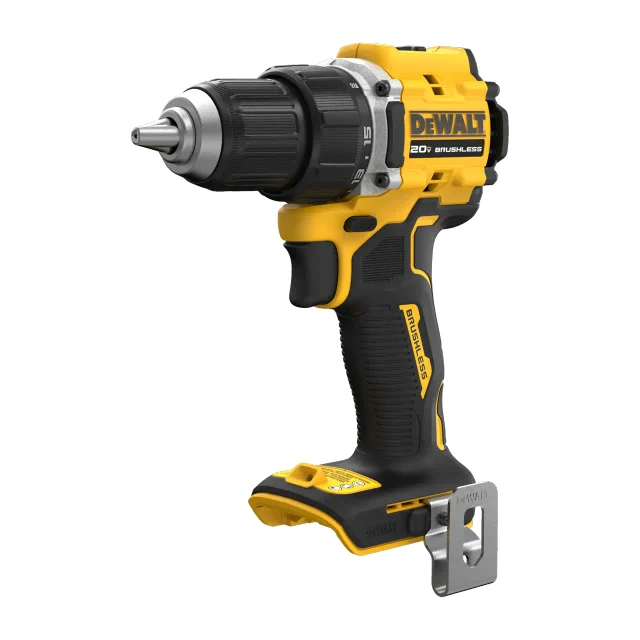
- Buy DeWalt ATOMIC DCD794 20V MAX Brushless Compact Drill/Driver The best balance of power, size, and comfort for home use - a pro-grade compact at a homeowner-friendly price. Amazon
- Buy RYOBI 18V ONE+ HP Brushless Compact Drill/Driver Kit (PBLDD02K1) Nearly top-tier driving performance in a complete ready-to-go kit, on one of the most affordable big battery platforms. Amazon
- It depends Milwaukee M18 Compact Brushless Drill/Driver (3601) A beautifully built compact with all-metal chuck and gear case - worth it if you're on the M18 platform, hard to justify if you're not. Amazon
- Skip BLACK+DECKER 20V MAX POWERCONNECT Cordless Drill/Driver (BCD702C1) The current entry-level BLACK+DECKER drill, and on paper it is a light-duty tool that falls behind everything else here. Amazon
What actually matters
- Motor type (brushless vs brushed) - the biggest single quality difference. Brushless motors deliver more torque per battery charge, run cooler, and last longer. Many of the drills owners regret buying are brushed.
- Battery platform depth - the batteries outlive the drill and power dozens of other tools. Pick the ecosystem (pro-grade like DeWalt or Milwaukee, or budget-wide like RYOBI) you'll want in five years, because switching later means rebuying everything.
- Chuck size and quality - a 1/2-inch chuck accepts every common bit and hole saw; 3/8-inch limits your options as projects grow. Ratcheting and all-metal chucks grip bits harder so they don't slip mid-hole.
- Gearbox speeds - a 2-speed gearbox gives you a low, high-torque gear for driving screws and a fast gear for drilling. Single-speed drills compromise both jobs and are a hallmark of the bargain bin.
- Size and balance - most home drilling happens in awkward spots: inside cabinets, between studs, over your head. A compact, well-balanced body matters more day-to-day than peak power numbers.
- Clutch settings - the numbered collar behind the chuck that stops the drill from over-driving. More positions mean finer control, which is what saves you from stripped screws and cracked furniture.
- What's actually in the box - 'bare tool' listings look cheap because they include no battery or charger. Compare kit-to-kit or bare-to-bare, never across.
The specs, in plain English
Green flags vs red flags
Green flags
- Brushless motor stated plainly in the listing, not buried or absent
- 1/2-inch chuck - ratcheting or all-metal is even better
- 2-speed gearbox with a wide clutch range
- Belongs to a deep battery platform with many other tools you'd actually use
- Kit versions that include battery, charger, and case for a modest premium over the bare tool
- Owner reports months after purchase still praise it for driving long screws without stalling
Red flags
- No mention of 'brushless' anywhere - it's almost certainly a brushed motor
- Single-speed gearbox, a hallmark of outdated budget designs
- 3/8-inch chuck on a drill pitched as a do-everything tool
- Multi-hour charge times, or owner reports of batteries that stop taking a charge
- An orphan or shallow battery platform with few other tools, so your battery investment goes nowhere
- Torque claims that lean on made-up-sounding units with no clear definition behind them
Who's who: the brands
- DeWalt - Pro-grade mainstay whose 20V MAX platform is one of the deepest available; its compact ATOMIC line brings pro engineering to homeowner prices.
- Milwaukee - Premium pro brand; the M18 platform is one of the deepest professional battery ecosystems, and its compacts are famously well built - at a price.
- RYOBI - The value king of home tools; the 18V ONE+ platform spans a huge range of affordable home and yard tools, and its HP brushless drills punch far above their price.
- Makita - Japanese pro brand with a strong reputation for refinement and smoothness; its 18V LXT platform is broad and well established.
- BLACK+DECKER - The homeowner budget brand; ubiquitous and affordable. Its range includes brushless and 2-speed models, but its entry-level drills are the ones owners tend to outgrow, on a shallower battery platform.
- Bosch - German engineering with well-regarded compact drills and reliable electronics; its 18V home/pro lines are solid, if less ubiquitous in North American home centers.
How to read a listing without getting fooled
Start with the motor: if the listing doesn't say 'brushless,' assume it's brushed and move on. Next, find the chuck size - 1/2-inch is what you want - and check for a 2-speed gearbox, which cheap drills quietly omit. Ignore the voltage headline ('20V MAX' vs '18V' is a measurement trick, not a power difference) and be skeptical of torque figures, since brands measure them in incompatible units designed to look impressive. Then check what's actually in the box: a suspiciously cheap price usually means a bare tool with no battery or charger. Finally, look past the drill to the battery logo on it - search how many other tools run on that same platform, because that's the ecosystem you're marrying.
How much should you spend?
The drill market punishes buying at the very bottom and rewards spending just slightly above it. The cheapest name-brand drills on the shelf are often brushed, entry-level designs that owners outgrow within months - a false economy. One small step up buys a brushless compact kit from a value platform with battery and charger included, and that's the sweet spot for most first-time buyers. Mid-range pro-brand compacts cost more but add better chucks, tighter build quality, and deeper battery ecosystems that keep paying off for years. Premium pro models are beautifully made, but for household jobs they do nothing the mid-range can't - they only make financial sense if you're already invested in that brand's batteries or plan to build a serious tool collection around them.
Questions, answered
Is a brushless drill really worth paying more for?
Yes - it's the clearest quality dividing line in drills. Brushless motors deliver more power from the same battery, run cooler, and last longer because there are no brushes to wear out. Owner reports show budget brushless compacts often outperform brushed drills that cost nearly as much, and brushed models are the ones people replace first.
What's the difference between 18V and 20V MAX?
Nothing meaningful - they're the same class of battery measured differently. '20V MAX' quotes the brief peak voltage of a fresh battery; '18V' quotes the working voltage under load. It's a labeling convention, not a power advantage, so never choose a drill because its voltage number is bigger.
Do I need a hammer drill instead of a drill/driver?
Only if you regularly drill into concrete, brick, or stone. For wood, drywall, metal, and plastic - which covers nearly all household jobs - a standard drill/driver is lighter, cheaper, and easier to control. Most major brands sell hammer-drill versions on the same batteries, so you can add one later if masonry enters your life.
How important is the battery platform, really?
More important than the drill itself. Your first cordless tool locks you into a battery family, and batteries are where the ongoing money goes. A wide platform means one set of packs can run your future saw, leaf blower, or inflator; a shallow one means your investment dead-ends. Check how many tools share the battery before you commit to any drill.
Should I buy a bare tool or a kit?
If this is your first cordless tool, buy a kit - you need the battery and charger, and kits bundle them cheaper than buying separately. Once you own batteries from a brand, bare tools become the smart buy: you pay only for the tool and reuse the packs you already have. Just be careful comparing prices, because bare-tool listings look artificially cheap.
How many clutch settings do I actually need?
Enough to give fine control at the low end - most good drills offer somewhere around 15 to 20 plus a dedicated drill mode, and that's plenty. What matters is using it: set the clutch low for small screws in soft wood or flat-pack furniture so the drill stops before the screw strips or the material cracks, and step up until the screw seats flush.
Or jump to the head-to-head: DeWalt ATOMIC DCD794 20V MAX Brushless Compact Drill/Driver vs RYOBI 18V ONE+ HP Brushless Compact Drill/Driver Kit (PBLDD02K1).