Explained
Cellular Shades, Explained
After reading, you'll know what the honeycomb cells actually do, which specs change comfort in your rooms, and how to measure and choose without overpaying for a badge.
In this guide
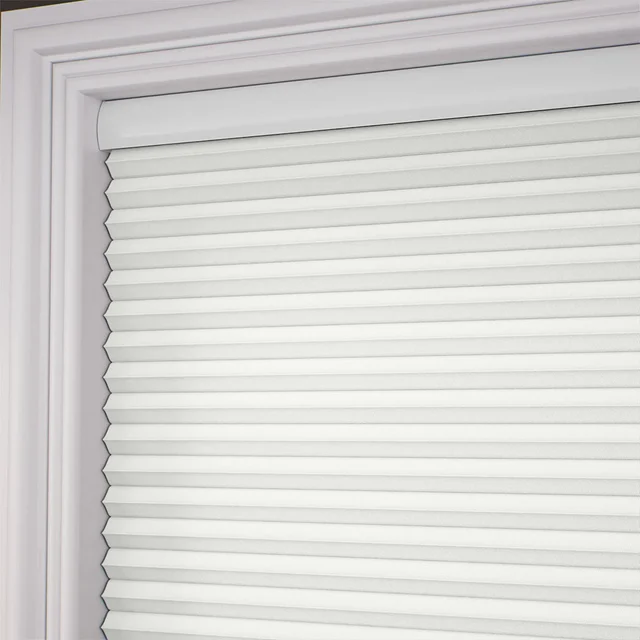
Cellular shades — also called honeycomb shades — are the window treatment that pays you back in comfort, because the folded fabric cells trap a layer of still air against the glass and slow heat moving in or out. The trouble is that the category stretches from flimsy stick-up paper shades to dealer-installed premium honeycombs, and the four things that actually matter (cell count, light control, cordless operation, and a precise fit) get buried under marketing language. This guide decodes all of it so you can match the right shade to the right room.
The 30-second version
- The cells are the whole point. Honeycomb shades insulate because each folded pocket holds still air against the glass — more and deeper cells trap more air and block more heat transfer.
- Cell count follows the climate. Single-cell is plenty for mild rooms; double-cell earns its keep on hot west-facing windows, drafty single-pane glass, and cold winters.
- "Blackout" describes the fabric, not the install. Even blackout cloth leaks a rim of light around the edges on an inside mount unless you add side channels or use an outside mount.
- Cordless is the safe default. No dangling pull cords is the child- and pet-safe choice and looks cleaner, and top-down/bottom-up adds daytime privacy without giving up light.
- A careful measurement beats the brand name. A great shade cut to the wrong size still fits poorly, so getting the opening right matters more than which label is on the headrail.
The products this guide is about
Our verdict on each, with the full reasoning on the companion review.
- Buy Levolor Cordless Cellular Shade The best all-rounder — custom-cut cordless honeycomb you can buy in-store or online, with single- or double-cell and light-filtering to blackout on every window.
- Buy SelectBlinds Cordless Light Filtering Cellular Shade Online made-to-measure honeycomb at a value price, with the widest menu of cell sizes, opacities, and top-down/bottom-up options.
- It depends Hunter Douglas Duette Honeycomb Shades The insulation and build benchmark — including double-honeycomb Architella cells — but priced like a splurge and sold through dealers.
- Skip Redi Shade Original Light Filtering Pleated Paper Shade A fine cut-to-fit stopgap for move-in day, but a poor permanent buy — it is pleated paper, not an insulating honeycomb.
What actually matters
- Cell structure and insulation — the trapped air is what makes a honeycomb shade work; double-cell (two stacked rows of pockets) insulates better than single-cell, and a few premium fabrics nest a cell inside a cell for even more still air.
- Light control opacity — light-filtering, room-darkening, and blackout are different fabrics; pick honestly for the room's job (a soft glow, knocked-down brightness, or real sleep darkness).
- Operation and safety — cordless lifts remove the strangulation hazard of hanging cords and look tidier; top-down/bottom-up lets you open from the top for daylight while keeping the bottom up for privacy.
- Fit and mount type — an inside mount sits inside the frame for a built-in look with small edge gaps, while an outside mount overlaps the frame for better darkening; both live or die on accurate measuring.
- Fabric type and energy angle — the R-value (insulation rating) rises with cell count and fabric loft, which is where the real winter-draft and summer-heat savings come from.
- Custom cut-to-fit vs temporary — a made-to-measure shade seals the opening properly; cheap trim-at-home paper shades are a stopgap, not real insulation.
The specs, in plain English
Green flags vs red flags
Green flags
- Made-to-measure and cut to your exact opening, so it seals cleanly on an inside or outside mount
- Offered in both single-cell and double-cell so you can match insulation to the room
- Cordless standard, ideally with top-down/bottom-up available
- Honest opacity labeling — light-filtering, room-darkening, and blackout described as different fabrics, with side channels offered for real darkness
- A real warranty and easy way to reorder a matching shade later
Red flags
- Single-layer pleated paper sold as a permanent shade — no honeycomb pocket means little real insulation
- "Blackout" claimed without any mention of edge light leak, side channels, or outside mount
- One-size or generic sizing you're expected to force into an inside mount
- Dangling pull cords marketed as standard, especially for homes with kids or pets
- Adhesive headers and clips as the mounting method for anything you want to last (they loosen, sag, and yellow over months)
Who's who: the brands
- Levolor - Big-box and online custom shades; the easy all-rounder, cordless with single- or double-cell and light-filtering to blackout at a fair mid-range price.
- SelectBlinds - Online made-to-measure specialist with the widest configuration menu and frequent discounts; the value pick if you'll measure and mount yourself.
- Hunter Douglas - The premium benchmark, known for double-honeycomb Architella construction and the finest build and fabrics; sold and installed through dealers.
- Redi Shade - Known for cheap cut-to-fit stick-up paper and pleated shades — genuinely handy as a temporary cover, but pleated paper, not an insulating honeycomb.
- Bali - A widely available custom-cellular line often sold alongside Levolor, covering the mainstream single- and double-cell, cordless, and opacity options.
How to read a listing without getting fooled
Start with the construction line, not the hero photo. Confirm whether it's single-cell, double-cell, or a double-honeycomb design — that one detail predicts insulation better than any "energy-saving" banner. Next, read the opacity as a fabric spec: "blackout" means the cloth blocks light, so look separately for whether side channels or an outside mount are offered before you trust it to darken a bedroom. Check that cordless is included rather than an upcharge, and see if top-down/bottom-up is available if you want daytime privacy. Then find the sizing section: a real cellular shade is cut to your measurements, so if a listing offers only fixed sizes or a trim-at-home paper product, you're looking at a stopgap, not an insulating shade. Finally, skim owner reports for the honest failure modes — cordless tension loosening on very large shades, or a fabric reading lighter or darker than the on-screen swatch — so nothing surprises you.
How much should you spend?
Think of price as a ladder with three rungs. The temporary paper shades sit at the bottom and are worth it only as a short-term cover — buying them as a permanent treatment just means paying twice when they sag and yellow. The broad middle is custom-cut cordless honeycombs from the mainstream custom brands; this is the value sweet spot where most people should shop, and it's where single- versus double-cell and light-filtering versus blackout are the choices that move the needle, not the label. Ordering online instead of in-store usually stretches your money further if you're comfortable measuring and mounting yourself, and sitewide discounts are common enough that it's worth timing a purchase to one. The top rung — dealer-installed premium honeycombs — costs several times a big-box custom shade for the same window, and it's only worth it when you genuinely have a hard window (a sun-blasted west room, a drafty wall of single-pane glass) and plan to stay for years to bank the insulation and finish. For an average room, spending more than the mid-range rarely buys comfort you'll actually feel.
Questions, answered
Single-cell or double-cell — which should I get?
Double-cell stacks two rows of honeycomb pockets, so it traps more still air and insulates noticeably better against heat and cold — worth it for hot west-facing rooms, drafty single-pane windows, and cold winters. Single-cell is thinner, lighter, and cheaper, and it's perfectly fine in mild climates or rooms where insulation isn't the priority. When in doubt for a comfort-critical room, spend the little extra on double-cell.
Do "blackout" cellular shades really block all the light?
The fabric blocks light well, but on a standard inside mount you'll still see a thin halo leaking around the sides and top, because the shade sits inside the frame with small gaps. For true darkness you need side channels (light-blocking tracks) or an outside mount that overlaps the frame. Set expectations accordingly: "blackout" describes the cloth, not the whole installation.
Cordless or corded, and what does top-down/bottom-up mean?
Cordless is the better default for most homes: no hanging cords, which is the child- and pet-safe choice, and it looks cleaner. Corded lifts still exist and can help on very tall shades. Top-down/bottom-up is a separate feature that lets the shade open from the top as well as the bottom, so you can lower the top for daylight while keeping the lower half up for privacy.
Inside mount or outside mount, and how do I measure?
An inside mount sits within the frame for a clean, built-in look but needs enough depth and leaves small light gaps at the edges. An outside mount attaches above and beyond the frame, covering it for better light blocking and privacy. For inside mounts, measure the exact opening width at top, middle, and bottom and use the narrowest figure; for outside mounts, add overlap on each side. A careful measurement matters more than which brand you choose — a great shade cut to the wrong size still fits poorly.
Are cheap cut-to-fit temporary paper shades worth buying?
As a stopgap, yes — they cost little, trim with scissors, and go up in minutes, which is great for move-in week or a rental you can't drill into. As a permanent window treatment, no. They're single-layer pleated paper with no honeycomb air pocket, so they do little for insulation, and owners report they sag, crease, and yellow over months while the adhesive and clips loosen. Treat them as disposable, not as a real cellular shade.
Do cellular shades actually save on heating and cooling?
They can, because the trapped-air cells slow heat moving through the glass — the effect is real but modest, and it grows with cell count and fabric loft. Expect the most noticeable difference on your worst windows: a room that bakes in afternoon sun or a drafty single-pane window in winter. Double-cell and double-honeycomb constructions carry higher insulation ratings and are the ones to choose when energy comfort is the goal.
Or jump to the head-to-head: Levolor Cordless Cellular Shade vs SelectBlinds Cordless Light Filtering Cellular Shade.