Explained
Clothes Drying Racks, Explained
You'll be able to read a drying rack listing and know exactly how much laundry it holds, whether it will rust, and which shape fits your space.
In this guide
Clothes drying racks look like a simple purchase until you start comparing listings full of unfamiliar terms like linear feet, gullwing, and load capacity. The shape of the rack matters more than the brand name on the box, and getting that shape wrong is a common source of buyer regret. This guide breaks down the specs so you can match a rack to your space and laundry habits before you buy.
The 30-second version
- Capacity is measured in linear feet of bar space, not "loads," and how tightly you hang items changes how much actually fits.
- Frame material decides whether a rack survives a bathroom or patio, with powder-coated steel and aluminum holding up far better than bare metal or plastic.
- The three main shapes trade capacity for footprint, so pick gullwing or standing racks for open floor space, and a tower if space is tight.
- Heated racks trade an electric bill for faster drying, and only pay off in homes without a dryer in a damp climate.
- How a rack folds determines whether you'll actually store it, so check the collapsed profile, not just the open dimensions.
The products this guide is about
Our verdict on each, with the full reasoning on the companion review.
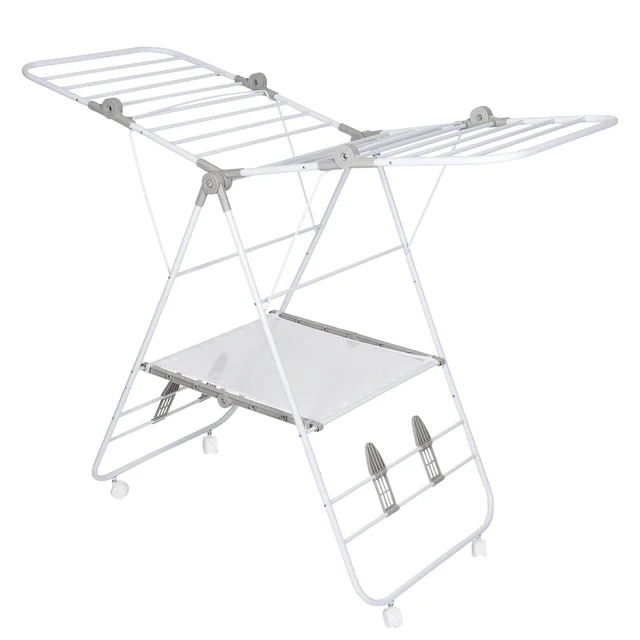
- Buy Honey-Can-Do Folding Gullwing Clothes Drying Rack with Wheels The best all-rounder: huge winged capacity, a flat-dry mesh shelf, wheels, and it still folds to a slim profile. Amazon
- Buy Leifheit Pegasus 200 Solid Standing Dryer The sturdiest folding standing rack we looked at, with parallel legs that stay planted indoors or out. Amazon
- It depends Brabantia HangOn Tower Drying Rack A rolling vertical tower that packs long drying lengths into a tiny floor footprint — if you can justify the flagship price. Amazon
- Skip BLACK+DECKER 3-Tier Heated Clothes Airer A heated electric airer that speeds up drying — but for most homes the running cost and bulk outweigh the payoff.
What actually matters
- Linear feet of hanging space decides real capacity. Two racks quoted at similar overall size can hold very different amounts of laundry depending on how the bars are spaced and stacked.
- Frame material determines whether the rack rusts, wobbles, or lasts. Powder-coated steel and aluminum resist corrosion; bare or thinly coated metal doesn't.
- Rack shape (gullwing, accordion, standing, or tower) trades floor footprint against drying area. The right shape depends on your room, not your budget.
- Stability of the base stops the rack from tipping once it's loaded with wet, heavy items like towels or jeans.
- Indoor vs. outdoor rating matters if you plan to dry laundry on a patio or balcony, since sun and rain accelerate rust on lower-grade metal.
- Folded footprint is what you live with day to day. A rack that opens huge but folds down flat is far easier to keep than one that stays bulky.
- Heating element (if present) speeds evaporation but adds running cost and usually needs a cover to work well.
The specs, in plain English
Green flags vs red flags
Green flags
- Clear linear-feet or total bar-length spec listed, not just an overall folded/unfolded size
- Wide, parallel-leg base described as stable under load, not just "sturdy" marketing copy
- Powder-coated or aluminum construction called out by name, especially for bathroom or outdoor use
- A folded depth measurement given, so you know it will actually fit where you plan to store it
- Owner reports consistently mention the rack staying put when loaded with heavy wet items like towels or jeans
Red flags
- No mention of frame material or coating, which usually means bare or low-grade metal that rusts
- Capacity claims like "holds 2 loads" with no linear-feet or bar-count backup
- Thin, closely spaced legs with no wide stance, a common precursor to tipping
- Heated racks marketed without mentioning ongoing running cost or the need for a cover
- Reviews or owner reports repeatedly flagging wobble, rust spots, or a fold mechanism that jams
Who's who: the brands
- Honey-Can-Do - Budget-to-mid-range home goods brand known for gullwing and standing racks with practical extras like wheels and flat-dry shelves.
- Leifheit - German brand focused on durable, heavy-duty standing dryers built for frequent, heavy laundry use.
- Brabantia - Premium Dutch brand known for space-saving, engineered designs like rolling vertical towers, usually at a flagship price.
- BLACK+DECKER - Mainstream appliance brand that also makes heated electric airers aimed at dryer-less households.
- Whitmor - Value-focused brand with simple accordion and tabletop racks for smaller loads and tight budgets.
How to read a listing without getting fooled
Start with the capacity claim and look past the marketing phrase to the actual measurement. "Holds 2 loads" is a soft estimate; a linear-feet or total-bar-length number tells you what you're really getting, and it lets you compare across brands. Next, find the frame material. If a listing doesn't say powder-coated steel, aluminum, or another rust-resistant finish, assume it's a lower grade that may corrode, especially in a humid bathroom or outdoors. Then check both dimensions: the open footprint (can your room fit it extended?) and the folded depth (can you actually store it?). A rack that's huge open but bulky folded is a common source of buyer's remorse. Finally, if a heated rack catches your eye, look for whether a cover is included or sold separately, since the heating only works efficiently when the warm air is trapped around the clothes.
How much should you spend?
Cost mostly tracks two things: how much drying space you get for the footprint, and how well the frame resists rust and wobble over years of use. A basic accordion or small standing rack sits at the low end and works fine for occasional, light loads. Mid-range gullwing and standing racks add wider capacity, better coatings, and small conveniences like wheels or a flat-dry shelf, and this is where most households find their sweet spot. Spending more buys you either serious durability, like a standing rack built to handle heavy loads for years without wobbling, or serious space efficiency, like a vertical tower that packs a lot of drying length into a tiny footprint. Heated racks carry a premium price plus an ongoing electricity cost, so they're worth paying for only if you genuinely need faster indoor drying without a clothes dryer. For most buyers, paying for a quality coating and a stable base delivers more everyday value than paying for extra bells and whistles.
Questions, answered
What does "linear feet of drying space" actually mean?
It's the total length of bar or rail space on the rack, added together across every wing, tier, or shelf. It's the most reliable way to compare capacity between racks, though real-world capacity still depends on what you're drying: bulky items like towels use more space per item than thin shirts.
Gullwing, accordion, standing, or tower: which shape should I get?
Match the shape to your space. A gullwing or standing rack gives the most open drying area but needs floor room when extended. An accordion rack folds thinnest but holds less. A vertical tower saves floor space by stacking tiers, at the cost of slower airflow for tightly packed loads.
Will a metal drying rack rust?
It depends on the coating. Powder-coated steel and aluminum resist rust well and are the safer choice for humid bathrooms or outdoor use. Bare or thinly coated metal can develop rust spots over time, especially with regular moisture exposure.
Are heated drying racks worth the extra cost?
Only in specific situations. If you have no clothes dryer and live in a damp climate, a heated rack genuinely speeds drying, especially when paired with a fitted cover that traps warm air. But it adds an ongoing electricity cost, so if you have a dryer or good airflow, a passive rack does nearly as well for less.
How do I know if a rack will fit where I want to store it?
Check the folded depth measurement, not just the open dimensions. A rack that opens to a huge drying area but only folds down a few inches thinner isn't much easier to store than leaving it set up. Look for a specific folded-depth figure in the listing.
Why do some racks tip over when loaded?
Stability comes down to the base. Racks with wide, parallel-set legs stay planted even under heavy wet laundry, while narrow or top-heavy designs, especially tall towers and fully loaded gullwings, are more prone to tipping. Distributing weight evenly across the frame also helps.
Or jump to the head-to-head: Honey-Can-Do Folding Gullwing Clothes Drying Rack with Wheels vs Leifheit Pegasus 200 Solid Standing Dryer.