Explained
Cordless Stick Vacuums, Explained
After reading, you will understand what every cordless stick vacuum spec actually means and how to match a machine to your floors, pets and cleaning habits.
In this guide
Cordless stick vacuums are now good enough to be a main vacuum, but they are marketed on peak-watt numbers and 'up to' runtimes that rarely survive contact with a carpet. The single biggest thing that trips people up is buying on headline figures instead of matching the machine to their actual floors, hair situation and how they clean.
The 30-second version
- Your floors decide the machine. Hard-floor homes want a soft roller and good dust visibility, while carpet-heavy homes need a strong, stiff brushroll, so start there before comparing anything else.
- Advertised runtime is a best case. Those figures assume the lowest suction with a non-powered tool, so on carpet or boost mode you should expect far less and buy for the mode you will actually use.
- Anti-tangle brush design is essential with pets. A brush that strips hair off the roller instead of letting it wrap is the difference between a two-minute clean and a scissors session, so treat it as a requirement, not a bonus.
- Balance matters more than total weight. A top-heavy machine tires your wrist during above-floor and overhead work even if the number on the box looks light.
- Dirt sensors help at the margins, not miracles. Automatic suction adjustment stretches battery on light messes and boosts power on heavy ones, but it never replaces good technique on edges and corners.
The products this guide is about
Our verdict on each, with the full reasoning on the companion review.
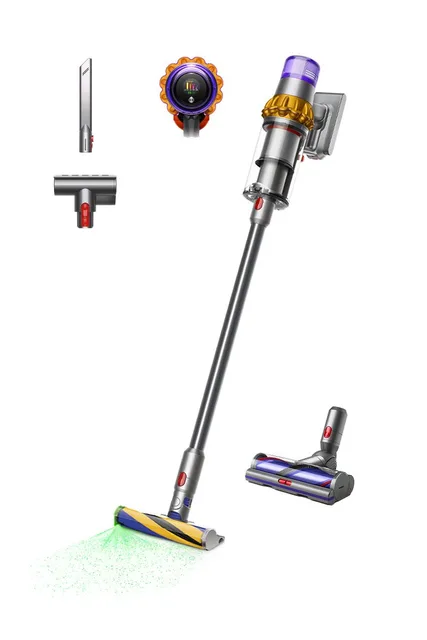
- Buy Dyson V15 Detect The deepest-cleaning cordless you can buy, if you can stomach the price. Amazon
- Buy Shark PowerDetect Cordless Near-Dyson cleaning with a self-emptying dock, one price tier down. Amazon
- It depends Tineco Pure One S15 The one you'll actually reach for daily, as long as your carpets aren't deep pile.
- Skip Black+Decker POWERSERIES Extreme (BSV2020G) Fine as a cheap backup, but underpowered as your only vacuum. Amazon
What actually matters
- Floor type match because a soft roller glides on hard floors while a stiff brushroll digs debris out of carpet, and no single head is perfect at both.
- Real-world runtime because you clean in the mode your floors demand, not the eco mode the marketing figure assumes, so plan for the shorter number.
- Anti-tangle brushroll because pet and long hair wrapping the roller kills performance and forces constant manual cleaning.
- Sealed HEPA filtration because a vacuum that leaks fine dust back into the room defeats the point if anyone in the home has allergies or asthma.
- Weight and balance because a wand-heavy machine is tiring for stairs, curtains and ceiling corners regardless of its listed weight.
- Dust disposal method because a manual bin is cheap and simple, while an auto-empty dock means weeks between touching dust but takes floor space.
- Battery removability because a swappable battery lets you buy a spare and double your effective runtime, and it is far cheaper to replace than the whole vacuum later.
The specs, in plain English
Green flags vs red flags
Green flags
- A removable battery, ideally with a spare available, so you can extend runtime and replace it cheaply later.
- A genuine anti-tangle brushroll rather than a plain bristle bar, especially if you have pets or long hair.
- Sealed HEPA filtration stated explicitly, not just 'HEPA filter' with an unsealed body.
- An honest runtime spec that separates eco, mid and boost modes instead of quoting one big 'up to' number.
- A head or lighting feature that suits your dominant floor type, and clear, easy bin emptying.
Red flags
- A listing that leads with peak motor watts or huge Pascal figures and stays quiet about air watts or head performance.
- A single advertised runtime with no mention of which mode or tool it assumes.
- A fixed, non-removable battery on a machine you intend as your only vacuum.
- No mention of filtration sealing, or a vague 'HEPA-style' claim.
- A front bumper or head design that cannot reach flush to walls if edge cleaning matters to you.
- Owner reports of slow charging, rapid battery fade, or a brushroll that clogs on hair.
Who's who: the brands
- Dyson - The premium benchmark, known for the strongest suction, dust-revealing laser heads and particle-counting displays, at flagship prices.
- Shark - Value-focused mainstream brand known for automatic suction sensing, strong low-pile carpet pickup and auto-empty docks.
- Tineco - The smart-sensor challenger, known for iLoop dirt metering, clear color displays and lightweight, nimble handling.
- Black+Decker - A budget household name; capable for light carpet duty and backup cleaning but underpowered as a sole vacuum.
- LG and Samsung - Electronics majors offering premium cordless lines with twin batteries and all-in-one docks, competing on convenience features.
How to read a listing without getting fooled
Read a cordless stick vacuum listing from the floor up, not from the motor down. Ignore the biggest number on the page, usually peak motor watts or a giant Pascal figure, and look instead for air watts and, more importantly, described pickup results on the floor types you own. When you see a runtime, mentally halve it and ask which mode and tool it assumes; the real number is runtime with the powered head in the mode your floors demand. Check whether the brushroll is a soft roller, a stiff bristle bar, or a combination, and confirm there is a genuine anti-tangle design if you have pets. Confirm the filtration is sealed, not just 'HEPA'. Finally, decide whether you want a manual bin or an auto-empty dock, and check whether the battery is removable, because those two choices shape both convenience and long-term cost more than the suction spec ever will.
How much should you spend?
Spend based on your floors and hair, not on the highest suction number. Entry-level cordless vacuums are fine as a lightweight second machine for quick tidy-ups, but they tend to fade on carpet, embedded pet hair and above-floor work, so they disappoint as a sole vacuum. The value sweet spot sits in the upper-mid tier, where you get strong carpet and hard-floor pickup, a genuine anti-tangle brushroll, sealed filtration and often an auto-empty dock, without paying the flagship premium. Paying the most is worth it only if you specifically want the extra visibility features like a laser head and particle counting, or the deepest possible carpet clean in a heavy-pet home; for most buyers that last increment buys refinement rather than a meaningfully cleaner floor. Remember to factor ongoing costs like replacement filters, batteries and dock bags, which add up over the life of the machine and can quietly close the gap between tiers.
Questions, answered
Can a cordless stick vacuum really be my only vacuum?
For most homes, yes. Mid-tier and premium models now clean carpet and hard floors well enough for whole-home duty, especially with a removable battery for a spare. The exception is very large homes, deep shag carpet, or tight budgets, where an underpowered model will leave you wanting a corded backup.
Why is the real runtime so much shorter than advertised?
Advertised times assume the lowest suction setting with a plain, non-powered tool. The moment you switch on the powered brushroll or a boost mode, draw goes up and runtime drops, often to less than half the headline. Buy for the mode you will actually use, and consider a spare battery if you clean a large area at once.
Do the dirt sensors actually help?
Somewhat. Sensors that raise and lower suction with floor dirtiness do stretch battery on light messes and add power on heavy ones. Systems built around visibility, like a laser head and particle count, are more about showing you the dust than automating power. None of them replaces good technique on edges and corners.
Which type is best for pet hair?
Prioritize a genuine anti-tangle brushroll, often conical or V-shaped, that strips hair off the roller instead of letting it wrap. Combine that with strong suction and sealed filtration to trap dander. Even good anti-tangle rollers can occasionally clog with heavy shedders during long sessions, so expect the occasional quick clear.
Is an auto-empty dock worth it?
It depends on your tolerance for dust and floor space. A dock means weeks between touching the bin, which is a real quality-of-life gain and helps allergy sufferers avoid the dust cloud of manual emptying. The trade-offs are a bulky base that occupies floor space and ongoing bag costs. If space is tight or budget matters, a hygienic manual bin is perfectly fine.
Or jump to the head-to-head: Dyson V15 Detect vs Shark PowerDetect Cordless.