Explained
Cutting Boards, Explained
After reading, you will understand what actually separates a good cutting board from a bad one, and which trade-offs matter for how you cook.
In this guide
A cutting board looks like the simplest thing in the kitchen, but the material and how it is built quietly decide whether your knives stay sharp, whether the surface stays sanitary as it ages, and how much upkeep you sign up for. First-time buyers usually fixate on size and looks and get blindsided by the real questions: wood versus composite versus plastic, how the grain runs, and whether they will actually oil and hand-wash a board or need something dishwasher-safe. This guide untangles those choices in plain language.
The 30-second version
- Material is the whole decision. Wood, paper composite, and plastic behave completely differently on knife care, hygiene as they age, and upkeep, so pick the material family first and the specific board second.
- Grain direction matters more than brand. Edge-grain and end-grain wood surfaces let knife edges sink into fibers that partly close back up, while hard composite and flat-grain surfaces are firmer and dull edges faster.
- The hygiene problem is grooves, not material. Every board is easy to sanitize when new; the real risk is deep knife scars that trap food, and plastic develops those fastest with no way to resurface it.
- Match upkeep to how you actually clean. Wood needs periodic oiling and hand washing; composite and plastic are dishwasher-safe and maintenance-free, so be honest about the routine you will keep.
- Weight and grip are a safety feature. A board that slides while you chop is more dangerous than any spec on the box, so heft plus non-slip feet or a damp-towel base earns its keep.
The products this guide is about
Our verdict on each, with the full reasoning on the companion review.
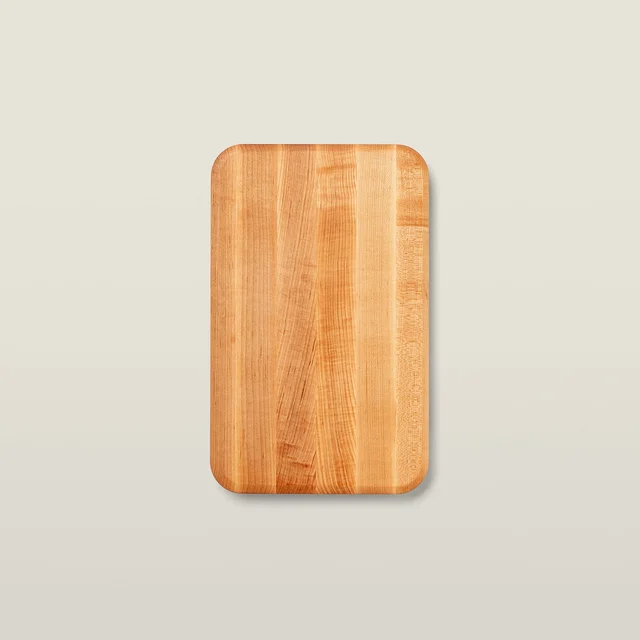
- Buy John Boos Reversible Maple Cutting Board (Chop-N-Slice Series) A thick, edge-grain hard-maple slab that behaves like a buy-it-for-life heirloom. Amazon
- Buy Teakhaus by Proteak Edge-Grain Cutting Board (Professional Carving Board with Juice Canal) FSC-certified teak with natural oils, a juice canal and integrated hand grips. Amazon
- It depends Epicurean Kitchen Series Cutting Board A thin, dishwasher-safe paper-composite board that trades some knife-friendliness for zero maintenance. Amazon
- Skip OXO Good Grips Utility Cutting Board A well-designed plastic board that still ages into a scarred, harder-to-sanitize surface. Amazon
What actually matters
- Material family - wood, paper composite, and plastic each strike a different balance of knife-friendliness, hygiene, and upkeep; this is the first choice that shapes everything else.
- Grain direction - edge-grain and end-grain wood are gentlest on knife edges, while flat-grain wood and hard composite surfaces preserve edges less well.
- Knife-friendliness - how much the surface preserves or dulls your edge over months of daily use, which is the single trait that most affects your cooking.
- How it ages - wood can be re-oiled and sanded smooth again, whereas plastic accumulates permanent grooves and composite can dull edges even as it stays flat.
- Maintenance burden - whether the board demands oiling and hand washing or shrugs off the dishwasher, and whether that matches your real habits.
- Stability while chopping - enough weight, non-slip feet, or grip to stay planted so the board does not skate across the counter.
- Size, thickness, and certifications - a footprint that fits your counter and storage, plus signals like NSF certification and FSC-certified wood that indicate food-safety and sustainability standards.
The specs, in plain English
Green flags vs red flags
Green flags
- Edge-grain or end-grain hardwood such as maple or teak, which signals real knife-friendliness
- Enough thickness and weight, or non-slip feet, to stay planted while you chop
- NSF certification and, for wood, FSC-certified sourcing
- A clear maintenance story that matches your habits: dishwasher-safe if you want zero upkeep, or oil-and-hand-wash if you want the best surface
- Reversible faces, inset grips, or a juice canal that show the board was designed for real use
Red flags
- A plastic board sold as a buy-it-for-life primary surface, since it will scar and cannot be resurfaced
- Thin, lightweight wood boards that are prone to warping and feel unstable under a knife
- Any wood board marketed as dishwasher-safe, which invites warping and cracking
- Glass, marble, or stone boards, which look nice but quickly dull and can chip knife edges
- Vague material descriptions like 'natural wood' with no mention of grain, species, or how to care for it
Who's who: the brands
- John Boos - American maker of heavy edge-grain and end-grain hard-maple boards and butcher blocks, widely treated as buy-it-for-life wood.
- Teakhaus (by Proteak) - Specialists in FSC-certified teak boards whose natural oils resist moisture; the maker recommends regular oiling.
- Epicurean - US maker of thin, dishwasher-safe paper composite boards that trade some knife care for zero maintenance.
- OXO (Good Grips) - Housewares brand known for well-designed, affordable plastic boards with non-slip edges.
- Boardsmith / small-batch makers - Artisan woodworkers who build premium end-grain boards; excellent surfaces but priced and maintained like heirlooms.
How to read a listing without getting fooled
Start with the material and grain, because a product photo cannot tell you how a board treats your knives. Look for the words edge-grain or end-grain on wood boards and the specific species (maple and teak are safe bets); if a listing only says 'wood' or 'bamboo' without detail, assume it is a firmer, flat-grain surface. Read the care instructions before the marketing: 'dishwasher safe' on a solid-wood board is a warning sign, while 'requires oiling, hand wash only' is honest and expected for good wood. Treat certifications like NSF and FSC as tie-breakers, not headlines. Finally, sanity-check the dimensions against your counter, sink, and cabinet, and weigh 'reversible,' 'juice canal,' and 'non-slip feet' as genuine usefulness rather than filler features.
How much should you spend?
Spend according to how much cutting you actually do. If a board is your daily surface and knife care matters to you, a mid-range wood board is where value peaks: you get most of the knife-friendliness and longevity of a premium block without the top-tier price or the heaviest upkeep. Paying up for a thick premium maple or end-grain board is worth it only if you will commit to oiling and hand washing and genuinely want an heirloom you keep for decades. On the low end, an inexpensive plastic or composite board earns its place as a secondary board for raw meat or quick cleanup, but treating the cheapest option as your only board tends to cost you in dulled knives and a scarred surface sooner than you would like. The reliable move is one good mid-range board you will maintain, plus a cheap dishwasher-safe backup.
Questions, answered
Is wood, composite, or plastic the most hygienic cutting board?
The condition of the surface matters more than the material. Hardwoods like maple and teak can be sanded smooth again, composite is stain-resistant and dishwasher-safe, and any new board is easy to sanitize. The real hygiene problem is deep knife grooves that trap food, and plastic develops those fastest with no way to resurface it. This is general product information, not food-safety or medical advice; follow your local food-handling guidance and consult a professional if you have specific concerns.
What is the difference between edge-grain and end-grain?
Edge-grain boards show the long side of the wood fibers on the cutting face; they are gentle on knives, stable, and lower-maintenance. End-grain boards present the cut ends of the fibers, so the blade slips between them and the surface is even kinder to edges, but end-grain boards are heavier, more expensive, and need more frequent oiling.
How often does a wood board need oiling?
A common routine is to condition a new wood board with food-grade mineral oil every week or two at first, then monthly, then whenever the surface starts to look dry or pale. Even naturally oily woods like teak need regular oiling (one teak maker says two or three times a month for daily use), and a periodic coat helps any wood board resist moisture and cracking.
Can I put my cutting board in the dishwasher?
Only if it is composite or plastic. Paper composite and polypropylene boards are dishwasher-safe, but solid-wood boards must be hand washed and dried upright, because dishwasher heat and prolonged water exposure can warp or crack them.
Which surface is gentlest on my knives?
End-grain wood is the gentlest, followed closely by edge-grain wood such as maple and teak. Hard paper composite is firmer and dulls edges faster, and plastic falls in between but scars quickly. Glass, stone, and ceramic boards are the worst for edges and are best avoided if you care about your knives.
Do I really need more than one cutting board?
Many cooks keep a primary wood or composite board for produce and general prep, plus a cheaper dishwasher-safe board dedicated to raw meat to simplify cleanup and reduce cross-contamination. It is not mandatory, but a two-board setup is a practical, low-cost way to cover both knife care and easy sanitizing.
Or jump to the head-to-head: John Boos Reversible Maple Cutting Board (Chop-N-Slice Series) vs Teakhaus by Proteak Edge-Grain Cutting Board (Professional Carving Board with Juice Canal).