

Home & Kitchen
The Best Cutting Boards: 4 Compared (and One to Skip)
We compared four current cutting boards across wood, composite, and plastic on knife-friendliness, hygiene, maintenance, and durability.
The short version
Across wood, composite, and plastic, the two wood boards win on the thing that matters most: they are kindest to your knives and tend to last the longest. The John Boos edge-grain maple board is the buy-it-for-life pick if you will oil and hand-wash it, while the Teakhaus teak board delivers similar knife care for less money. The Epicurean composite board is a reasonable it-depends choice when dishwasher convenience outranks knife-friendliness. The OXO plastic board is well-designed but scars over time into a surface that is harder to keep clean, so it is best kept as a cheap secondary board. Best for: cooks who want one durable, knife-friendly board they will maintain should choose the John Boos maple.
Our picks at a glance
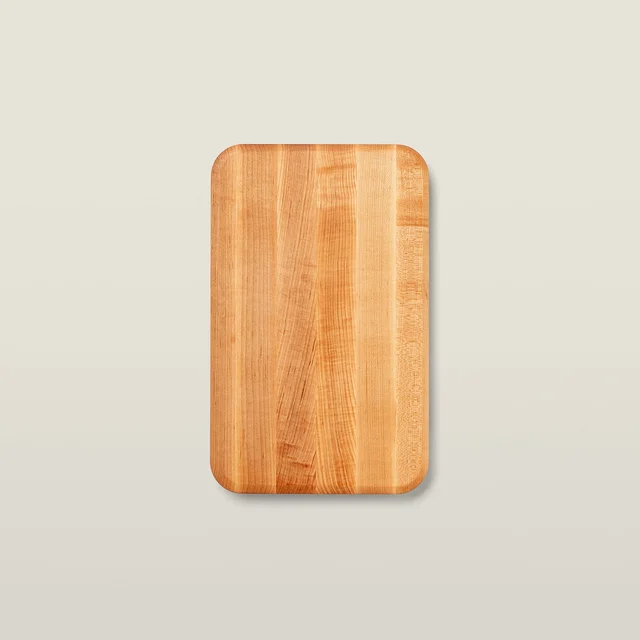
- John Boos Reversible Maple Cutting Board (Chop-N-Slice Series) - Buy. A thick, edge-grain hard-maple slab that behaves like a buy-it-for-life heirloom.
- Teakhaus by Proteak Edge-Grain Cutting Board (Professional Carving Board with Juice Canal) - Buy. FSC-certified teak with natural oils, a juice canal and integrated hand grips.
- Epicurean Kitchen Series Cutting Board - It depends. A thin, dishwasher-safe paper-composite board that trades some knife-friendliness for zero maintenance.
- OXO Good Grips Utility Cutting Board - Skip. A well-designed plastic board that still ages into a scarred, harder-to-sanitize surface.
The verdict in 30 seconds
What mattered most
- Material
- Knife friendliness
- Maintenance
- Dishwasher safe
- Stability while chopping
- Expected longevity
A cutting board is the one kitchen surface you touch every single day, so the trade-offs between wood, composite, and plastic matter more than the price tag suggests. We synthesized long-run owner reports across four boards spanning every material family. Two earn a clear recommendation, one is a genuine it-depends, and one plastic favorite is hard to recommend once you see how it ages.
A thick, edge-grain hard-maple slab that behaves like a buy-it-for-life heirloom.
Best for: Home cooks who want one serious wood board to keep for decades and will maintain it.
- Edge-grain Northern hard rock maple is genuinely gentle on knife edges and self-heals shallow cuts
- A substantial slab that stays planted while you chop, with reversible faces and eased corners
- Made in the USA, NSF-certified, and reported by long-term owners to last decades with basic care
- Requires periodic mineral-oil conditioning and hand washing; not dishwasher safe
- Heavy and premium-priced, which makes it a commitment rather than a grab-and-go board
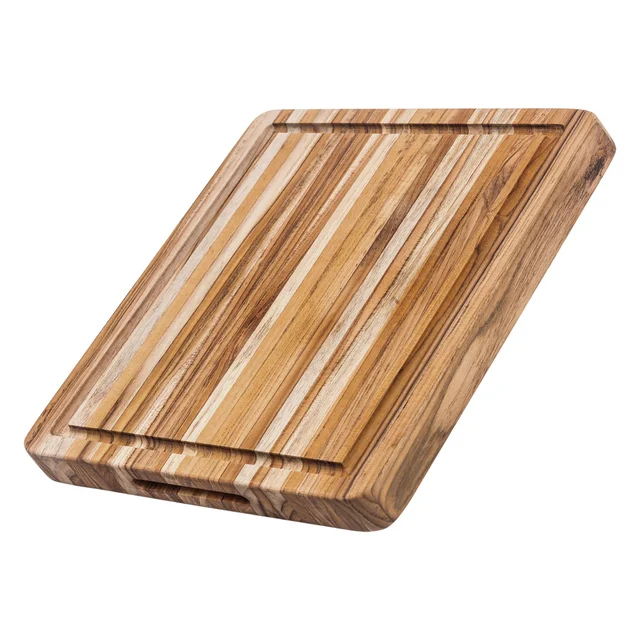
FSC-certified teak with natural oils, a juice canal and integrated hand grips.
Best for: Buyers who want wood's knife-friendliness and a carving-ready board with a juice canal.
- Naturally oily teak resists moisture, per the maker
- Juice canal plus integrated hand grips make it practical for carving and easy to carry
- Made from FSC-certified teak
- Teak is a dense wood, and some cooks find it wears edges slightly faster than softer maple
- Needs regular oiling (the maker says two or three times a month for daily use) and hand washing, so it is not a set-and-forget board
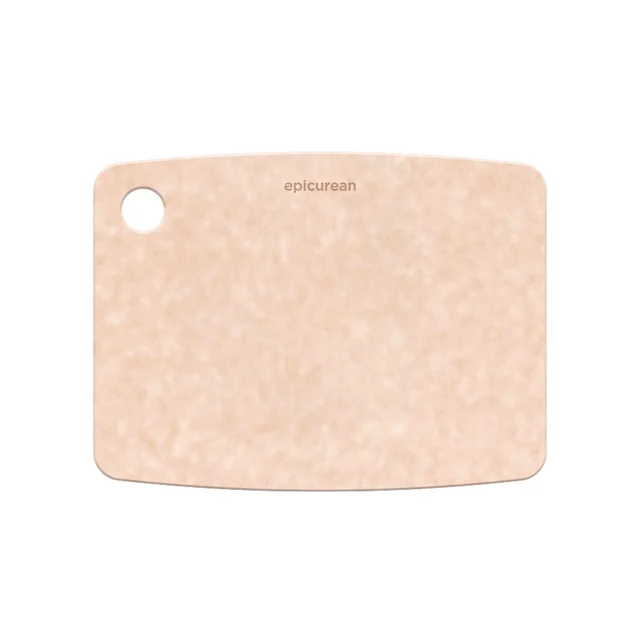
A thin, dishwasher-safe paper-composite board that trades some knife-friendliness for zero maintenance.
Best for: Cooks who prioritize dishwasher convenience and low maintenance over maximum knife care.
- Made from a paper composite that is stain resistant, dishwasher safe and needs no oiling
- Thin (a 1/4 inch profile), lightweight, and heat-resistant; owners report it stays flat for years without warping
- NSF-certified and made in the USA, with a low-profile design that stores easily
- The hard composite surface is firmer than wood and reported to dull knife edges faster
- Thinness and light weight make it feel less stable than a heavy board for aggressive chopping
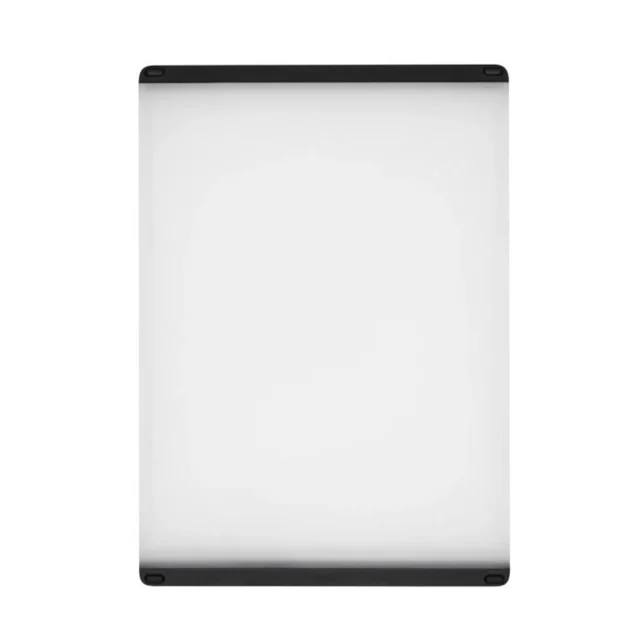
A well-designed plastic board that still ages into a scarred, harder-to-sanitize surface.
Best for: A cheap, dishwasher-safe secondary board for raw meat, not a primary daily surface.
- Non-slip edges keep it planted
- Inexpensive, lightweight, and dishwasher safe for quick cleanup
- Comfortable tapered handles and a sensible size for everyday prep
- Plastic develops deep knife grooves over time that owners note can trap food and bacteria
- Softer plastic is less forgiving on knife edges than wood and cannot be resurfaced
| Criteria | John Boos Reversible Maple Cutting Board (Chop-N-Slice Series) Top pick Buy it Buy | Teakhaus by Proteak Edge-Grain Cutting Board (Professional Carving Board with Juice Canal) Buy it Buy | Epicurean Kitchen Series Cutting Board It depends Buy | OXO Good Grips Utility Cutting Board Skip it Buy |
|---|---|---|---|---|
| Best for | Home cooks who want one serious wood board to keep for decades and will maintain it. | Buyers who want wood's knife-friendliness and a carving-ready board with a juice canal. | Cooks who prioritize dishwasher convenience and low maintenance over maximum knife care. | A cheap, dishwasher-safe secondary board for raw meat, not a primary daily surface. |
| Price tier | $$$ · premium | $$ · mid-range | $$ · mid-range | $ · budget |
| Material | Edge-grain hard maple | Edge-grain teak | Paper composite | Plastic |
| Knife friendliness | Excellent | Very good | Fair | Fair |
| Maintenance | Regular oiling, hand wash | Regular oiling, hand wash | Minimal, no oiling | Minimal, no oiling |
| Dishwasher safe | No | No | Yes | Yes |
| Stability while chopping | Excellent (heavy) | Very good | Fair (thin, light) | Good (non-slip feet) |
| Expected longevity | Long-lasting with care | Long-lasting with care | Many years, stays flat | Scars over time |
| Price tier | $$$ · premium | $$ · mid-range | $$ · mid-range | $ · budget |
Which one is right for you?
- Home cooks who want one serious wood board to keep for decades and will maintain it. Buy it John Boos Reversible Maple Cutting Board (Chop-N-Slice Series)
- Buyers who want wood's knife-friendliness and a carving-ready board with a juice canal. Buy it Teakhaus by Proteak Edge-Grain Cutting Board (Professional Carving Board with Juice Canal)
- Cooks who prioritize dishwasher convenience and low maintenance over maximum knife care. It depends Epicurean Kitchen Series Cutting Board
- A cheap, dishwasher-safe secondary board for raw meat, not a primary daily surface. Skip it OXO Good Grips Utility Cutting Board
How we judged the field
We do not run our own lab. Instead, we synthesized long-run owner reports across four boards, chosen to represent every material family: edge-grain maple, edge-grain teak, paper composite, and plastic. The criteria that mattered most were knife-friendliness (how much the surface preserves or dulls an edge), hygiene as the board ages, maintenance burden, stability while chopping, and realistic longevity. We weighted daily-use durability heavily, because a cutting board is a surface you touch every time you cook, and we discounted looks except where they intersect with function.
John Boos Reversible Maple Cutting Board (Chop-N-Slice Series)
Buy itThe edge-grain Northern hard rock maple is dense yet forgiving, so knives bite into fibers that partly close back up rather than scoring permanent tracks. It is NSF-certified, made in the USA, and substantial enough to stay put while you work, with eased corners and two usable faces. Long-term owners routinely describe it as a buy-it-for-life piece that they expect to pass down. The catch is upkeep: it needs regular mineral-oil conditioning, must be hand washed and dried upright, and it is both substantial and premium-priced. If you accept that maintenance, nothing else here matches it for knife care.
Teakhaus by Proteak Edge-Grain Cutting Board (Professional Carving Board with Juice Canal)
Buy itThe Teakhaus teak board is a 1.5 inch thick edge-grain teak board. Teak’s natural oils resist moisture, per the maker. A juice canal catches carving runoff and integrated hand grips make it easy to move, and the teak is FSC-certified. It is gentle on knives, though as a dense wood it may wear edges slightly faster than soft maple, and it needs regular oiling (the maker says two or three times a month for daily use) and hand washing. For most buyers it is the smart-money choice: much of the maple experience for less money.
Epicurean Kitchen Series Cutting Board
It dependsEpicurean’s paper-composite board is the one that solves the maintenance problem. Made from paper composite, it is stain resistant, NSF-certified, dishwasher safe, heat-resistant, and made in the USA. Owners report it stays dead flat for years and shrugs off the moisture cycles that split solid wood. The trade-off is real, though: the surface is noticeably harder than wood and is reported to dull knife edges faster, and its thin, lightweight build feels less planted than a heavy board during aggressive chopping. Whether it is right for you comes down to a single question of priorities: dishwasher convenience and zero upkeep, or maximum knife care.
OXO Good Grips Utility Cutting Board
Skip itThe OXO board is thoughtfully designed for the money. It has non-slip edges and comfortable handles, and it is cheap and dishwasher safe. The problem is how plastic ages. Owner reports agree that plastic develops deep knife grooves over time, and those scars trap food and are harder to sanitize than a fresh surface, with no option to sand the board smooth again. It is a fine cheap board for raw meat that goes straight into the dishwasher, but as a primary daily surface it is outclassed by the wood and composite options here.
John Boos vs Teakhaus: which should you buy?
Both are edge-grain wood boards that treat your knives well and, with care, last for years, so the decision comes down to upkeep, weight, and price. The John Boos maple is the more forgiving cutting surface and the more substantial, planted feel, and it is the one to buy if you want the ultimate heirloom board and will commit to oiling and hand washing it. The Teakhaus teak costs less and includes a juice canal and hand grips that make it more practical for carving and carrying. Choose the John Boos if maximum knife care is the point; choose the Teakhaus if you want a similar knife-friendly surface at a friendlier price.
What to look for
- Grain direction: Edge-grain and end-grain wood boards are kindest to knife edges; flat-grain and hard composite surfaces are firmer.
- Weight and grip: Heft plus non-slip feet or grips keep a board from sliding, which matters more for safety than any spec.
- Maintenance reality: Wood needs oiling and hand washing; composite and plastic are dishwasher safe. Match this to how you actually clean.
- How it ages: Wood can be re-oiled and sanded; plastic accumulates permanent grooves. Factor in the surface you will have in three years, not day one.
- Certifications and origin: NSF certification and FSC-certified wood are useful signals of food-safety and sustainability standards.
Our final take
The material families sort themselves out clearly here. The two wood boards win on the things that matter across years of daily use, and the John Boos edge-grain maple is our top pick for anyone who wants one durable, knife-friendly board and will maintain it. The Teakhaus teak board is the runner-up and arguably the better value, delivering much of that knife care for less money. The Epicurean composite board is a legitimate choice when dishwasher convenience outranks edge preservation, which is why it lands as an it-depends. The OXO plastic board is well-designed and cheap, but because it scars into a harder-to-clean surface, we would keep it only as a secondary board rather than trust it as your daily one.
Questions, answered
Is wood, composite, or plastic the most hygienic cutting board?
The material matters less than the condition of the surface. Hardwoods like maple and teak can be sanded smooth, composite is stain resistant and dishwasher safe, and new plastic is easy to sanitize. The real hygiene problem is deep knife grooves on any board that trap food; plastic tends to develop these fastest and cannot be resurfaced. This is general product information, not food-safety or medical advice; follow your local food-handling guidance and consult a professional if you have specific concerns.
How often do the wood boards need oiling?
Owners generally condition maple with food-grade mineral oil every few weeks when new, then monthly or whenever the surface looks dry. Teakhaus says to oil its teak board two or three times a month for daily use, and a periodic oil coat helps both boards resist moisture and cracking.
Which of these can go in the dishwasher?
Only the Epicurean composite and the OXO plastic board are dishwasher safe. The John Boos maple and Teakhaus teak boards must be hand washed and dried upright; dishwasher heat and prolonged water exposure can warp or crack solid wood.
Which board is gentlest on knife edges?
Edge-grain wood is the gentlest, so the John Boos maple leads, with the Teakhaus teak very close behind. The hard Epicurean composite surface is firmer and reported to dull edges faster, while plastic falls in between but scars quickly.
Do I really need more than one cutting board?
Many cooks keep a primary wood or composite board for produce and a cheaper dishwasher-safe board for raw meat to simplify cleanup. That is exactly the role the inexpensive OXO plastic board fills well, even though we would not recommend it as your only board.
Deciding between the top two? See our head-to-head: John Boos Reversible Maple Cutting Board (Chop-N-Slice Series) vs Teakhaus by Proteak Edge-Grain Cutting Board (Professional Carving Board with Juice Canal).
More in Home & Kitchen
Cutting Boards, Explained Plain-English guide → John Boos Reversible Maple Cutting Board (Chop-N-Slice Series) vs Teakhaus by Proteak Edge-Grain Cutting Board (Professional Carving Board with Juice Canal) Head-to-head →  The Best Home Deep Fryers: 4 Compared (and One to Skip)
  The Best Dehumidifiers of 2026: 3 Worth Buying and 1 to Skip
  The Best Everyday Dinnerware Sets: 4 Compared (and One to Skip)
  The Best Dish Drying Racks: 4 Compared (and One to Skip)