

Home & Kitchen
The Best Dehumidifiers of 2026: 3 Worth Buying and 1 to Skip
We compared four dehumidifiers people actually buy in 2026: an efficient smart pick, a solid runner-up, a no-frills workhorse, and one tiny mini to skip.
The short version
For most damp homes the Midea Cube 50-pint is the pick: it dries fast on low power, its pump can push water to a sink, and it folds down to store. The Frigidaire FHDD5034W1 is the steadier runner-up on newer R-32 refrigerant, best where gravity draining works. The Honeywell TP70WKN trades smarts for a five-year warranty and simplicity. Skip the Pro Breeze mini for anything larger than a closet, because it cannot keep up with a real room.
Our picks at a glance
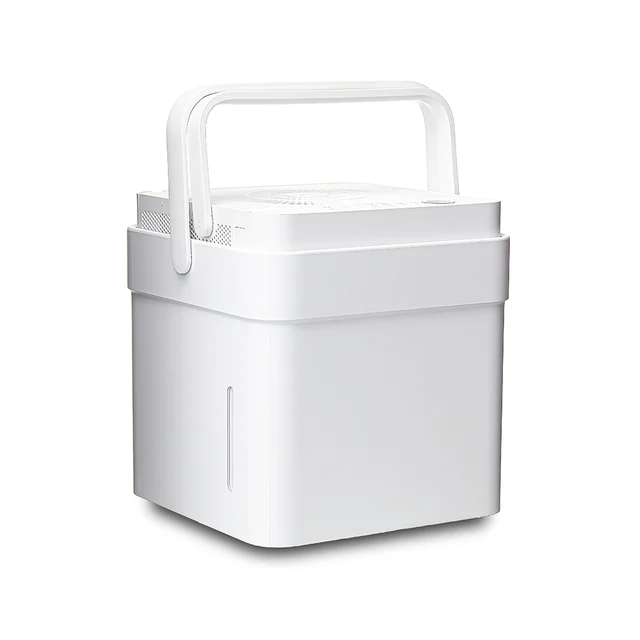
- Midea Cube 50-Pint Smart Dehumidifier (MAD50PS1QWT) - Buy. The most efficient 50-pint unit we found, with a collapsible body and a pump, if you can accept some reliability variance.
- Frigidaire FHDD5034W1 50-Pint Dehumidifier - Buy. A steady, quick-drying runner-up on the newer R-32 refrigerant, best where gravity draining works.
- Honeywell TP70WKN 50-Pint Dehumidifier - It depends. A no-frills workhorse with a five-year warranty and an easy-to-read display, but no smart features.
- Pro Breeze 500ml Mini Dehumidifier (PB-02) - Skip. A silent Peltier mini that is fine for a closet and wrong for any real damp problem.
The verdict in 30 seconds
What mattered most
- Type & capacity
- Best coverage
- Draining
- Smart control
- Standout point
- Verdict
A dehumidifier runs for months at a stretch, so efficiency, draining, and long-term reliability matter more than a spec sheet suggests. We synthesized independent expert testing and long-run owner reports across the units people actually buy in 2026, focusing on 50-pint compressor models that handle a real damp room or basement. Three earn a recommendation; one small thermoelectric unit is here as a warning.
The most efficient 50-pint unit we found, with a collapsible body and a pump, if you can accept some reliability variance.
Best for: Basements and large rooms without a nearby floor drain, where efficiency and compact off-season storage matter.
- Among the fastest 50-pint units at lowering humidity while drawing notably less power at the same setting
- Collapsible Cube design nests to store in about half the height, and the pump model lifts water up to a sink or window
- Owner reports show a worrying cluster of failures around the one-year mark, including compressor lockups
- Onboard humidity sensor can read several points off, and app setup only joins 2.4 GHz networks
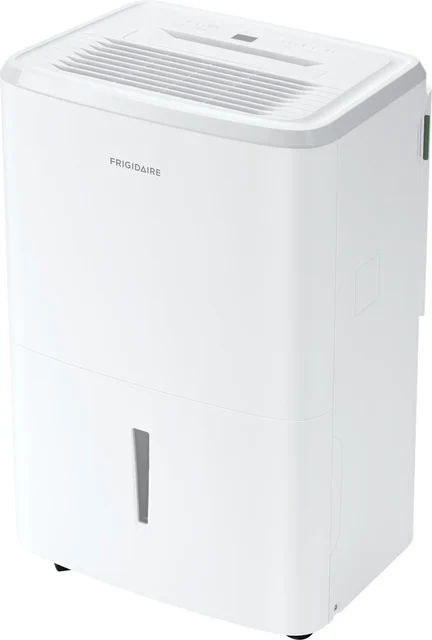
A steady, quick-drying runner-up on the newer R-32 refrigerant, best where gravity draining works.
Best for: Homes with a floor drain that want dependable drying, a modern refrigerant, and useful app scheduling.
- Near-top extraction speed in independent testing, with three fan speeds and custom targets from 35 to 85 percent
- Uses lower-impact R-32 refrigerant and operates down to about 41°F for cool basements, with built-in Wi-Fi
- No built-in pump, so continuous draining relies on gravity through a hose to a point below the unit
- Average-sized bucket means truly hands-off use really requires plumbing it to a floor drain
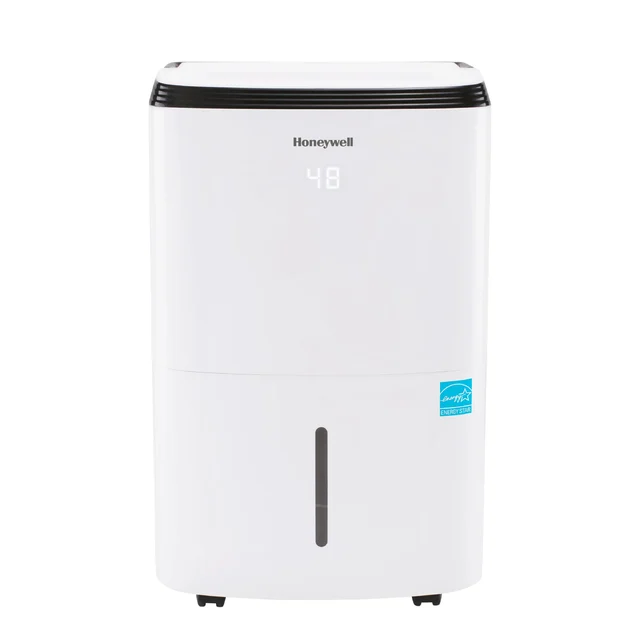
A no-frills workhorse with a five-year warranty and an easy-to-read display, but no smart features.
Best for: Buyers who prioritize simplicity, portability, and long warranty support over apps and scheduling.
- Five-year warranty outlasts most rivals, with fewer electronics to fail
- Front Mirage display, a heavy-duty handle, a cord winder, and smooth casters make a 40-pound unit easy to move
- No Wi-Fi, app, or voice control, and no built-in pump for upward draining
- Fairly large footprint for the capacity
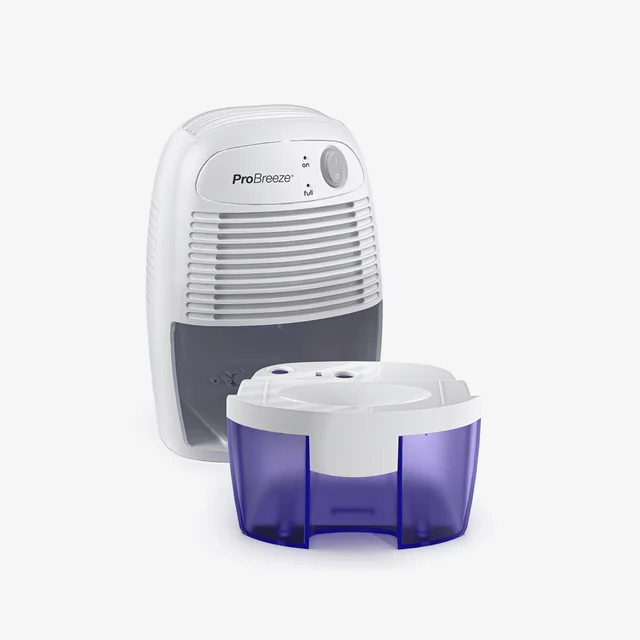
A silent Peltier mini that is fine for a closet and wrong for any real damp problem.
Best for: A single closet, safe, or small cabinet, not a room, bathroom, or basement.
- Near-silent and very compact, with auto shut-off when the 500 ml tank fills
- Low running cost and light enough to move anywhere
- Removes only a small fraction of a pint per day, far too little for a room or basement
- Peltier design sheds most of its energy as waste heat and cannot keep up with room-level damp
| Criteria | Midea Cube 50-Pint Smart Dehumidifier (MAD50PS1QWT) Top pick | Frigidaire FHDD5034W1 50-Pint Dehumidifier | Honeywell TP70WKN 50-Pint Dehumidifier | Pro Breeze 500ml Mini Dehumidifier (PB-02) |
|---|---|---|---|---|
| Verdict | Buy it | Buy it | It depends | Skip it |
| Best for | Basements and large rooms without a nearby floor drain, where efficiency and compact off-season storage matter. | Homes with a floor drain that want dependable drying, a modern refrigerant, and useful app scheduling. | Buyers who prioritize simplicity, portability, and long warranty support over apps and scheduling. | A single closet, safe, or small cabinet, not a room, bathroom, or basement. |
| Price tier | $$$ · premium | $$ · mid-range | $$ · mid-range | $ · budget |
| Type & capacity | Compressor · 50 pt/day | Compressor · 50 pt/day | Compressor · 50 pt (70 pt DOE) | Peltier · ~0.5 pt/day |
| Best coverage | Large rooms & basements | Large rooms & basements | Large rooms, high-humidity spaces | Closet / small cabinet only |
| Draining | Bucket + built-in pump | Bucket + gravity hose | Bucket + gravity hose | 500 ml tank, manual empty |
| Smart control | Wi-Fi, Alexa & Google | Wi-Fi, Alexa & Google | None (digital humidistat) | None |
| Standout point | Low power draw, folds to store | R-32 refrigerant, 3 fan speeds | 5-year warranty, Mirage display | Near-silent, tiny |
| Verdict | Buy | Buy | Depends | Skip |
Which one is right for you?
- Basements and large rooms without a nearby floor drain, where efficiency and compact off-season storage matter. Buy it Midea Cube 50-Pint Smart Dehumidifier (MAD50PS1QWT)
- Homes with a floor drain that want dependable drying, a modern refrigerant, and useful app scheduling. Buy it Frigidaire FHDD5034W1 50-Pint Dehumidifier
- Buyers who prioritize simplicity, portability, and long warranty support over apps and scheduling. It depends Honeywell TP70WKN 50-Pint Dehumidifier
- A single closet, safe, or small cabinet, not a room, bathroom, or basement. Skip it Pro Breeze 500ml Mini Dehumidifier (PB-02)
How we judged the field
We do not run a humidity lab. Instead we synthesize independent expert testing and long-run owner reports, then weigh the trade-offs that surface after weeks of daily use: how quickly a unit pulls a room down to a target, how much electricity it burns to get there, how you get the water out, and whether it is still running a year later. For most homes the honest sweet spot is a 50-pint compressor unit, which covers a damp basement, a large living area, or a humid bedroom without straining. We also included one small thermoelectric unit, because those get bought by mistake more than almost any other category, and it deserves a clear warning. Every recommendation below is in production in 2026 and uses a refrigerant that meets today’s phase-down rules.
Midea Cube 50-Pint (with Pump): Buy
Buy itThe Cube earns the top spot on efficiency and design rather than gimmicks. Its defining trick is a collapsible two-piece body: the tank nests inside the housing, so the whole unit lifts and twists apart to store in roughly half the height of a normal machine. Independent testing consistently ranks it among the fastest 50-pint units at dropping room humidity, and it does so while drawing noticeably less power than most rivals at the same setting, which matters because a dehumidifier often runs for months. The pump model moves water upward to a sink or out a window, and Wi-Fi with Alexa and Google support lets you set a target from your phone.
What we liked more: it removes moisture quickly on low power and stores compactly once the damp season ends. What we liked less: owner reports include a cluster of failures around the one-year mark, the onboard humidity sensor can read several points off, and the app only joins 2.4 GHz networks, which trips up some routers. Buy it for the efficiency, but register it and keep the receipt.
Frigidaire FHDD5034W1 50-Pint: Buy
Buy itThis is the sensible runner-up, and for many buyers it is the smarter purchase. It uses R-32 refrigerant, a lower-impact choice than the older blends being retired, and pairs strong moisture removal with three fan speeds and custom humidity targets from 35 to 85 percent. Independent testing puts it near the front of the pack for extraction speed, just behind the Cube. Wi-Fi with Alexa and Google is built in, it runs down to about 41 degrees for cool basements, and it stays reasonably quiet on its lowest fan.
What we liked more: dependable, quick drying with a modern refrigerant and genuinely useful app scheduling. What we liked less: there is no built-in pump, so continuous draining relies on gravity through a hose, and the drain point has to sit below the unit. The bucket is average-sized, so hands-off operation really means plumbing it to a floor drain.
Honeywell TP70WKN 50-Pint: Depends
It dependsThe Honeywell is the plain workhorse. It skips Wi-Fi entirely and instead leans on a digital humidistat and a front Mirage display you can read across a room. The reasons to choose it are practical: a five-year warranty that outlasts most competitors, a heavy-duty handle rated to carry the full unit, a cord winder, and smooth casters that make a 40-pound machine easy to reposition. It is rated for large, high-humidity spaces and drains continuously through an included hose.
What we liked more: the long warranty and the no-nonsense reliability of a unit with fewer things to break. What we liked less: no app or voice control, no built-in pump, and a fairly large footprint. If you value simplicity and support over smart features, it fits. If you want scheduling or pump-assisted draining, look at the two picks above.
Pro Breeze 500ml Mini Dehumidifier: Skip
Skip itThis is the unit to avoid for any real damp problem. It uses Peltier thermoelectric cooling instead of a compressor, which keeps it silent and cheap to run, but that also caps what it can do. In practice it pulls a small fraction of a pint per day, a tiny share of what the compressor units above remove, and the technology sheds most of its energy as waste heat that can warm a small room. For a shoe closet, a safe, or a cupboard it is fine. For a bedroom, a bathroom that actually gets steamy, or anything basement-sized, it will run constantly and never catch up.
What we liked more: near-silent and genuinely tiny. What we liked less: the output is far too low for a room, and the marketing implies otherwise. Match it to a closet or skip it.
Midea Cube vs Frigidaire FHDD5034W1: which should you buy?
These two cover most buyers, and the decision comes down to draining and risk tolerance. The Cube is faster, sips less electricity, stores compactly, and its pump model can lift water to a sink, which is the feature to have when there is no floor drain nearby. The catch is the reliability spread in owner reports around the year mark. The Frigidaire is a touch slower but still quick, uses the newer R-32 refrigerant, and tends to draw fewer complaints, though it can only drain downhill by gravity. If you need pumped drainage or the smallest storage footprint, take the Cube. If you have a floor drain and want the steadier bet, take the Frigidaire.
What to look for
Start with capacity. A 50-pint class unit is the right default for a basement, a large room, or a persistently humid bedroom; smaller compressor units suit a single bathroom or laundry room. Next decide how the water leaves: a bucket you empty by hand is fine for occasional use, gravity draining needs a drain below the unit, and a built-in pump is the only option that moves water upward to a sink or out a window. Consider temperature, since a basement below the mid-40s needs auto-defrost and low-temperature operation. Then weigh smart features honestly; app scheduling is convenient but not essential, while a longer warranty carries real value on an appliance that runs for months at a time. Finally, ignore thermoelectric minis unless your target is a closet.
Our final take
For most homes the Midea Cube 50-Pint is the unit to buy, thanks to fast, low-power drying, pumped draining, and a body that stores away when the season ends, provided you accept some reliability variance and register it. The Frigidaire FHDD5034W1 is the steadier runner-up with a modern refrigerant, ideal where a floor drain lets gravity do the work. The Honeywell TP70WKN suits buyers who want a simple, well-warrantied workhorse over smart features. The Pro Breeze mini is only for a closet, not a room.
Questions, answered
What size dehumidifier do I need?
For a basement, a large living area, or a persistently humid bedroom, a 50-pint class compressor unit is the right default. Reserve smaller compressor models for a single bathroom or laundry room, and use mini thermoelectric units only for closets or cabinets.
Do I need a built-in pump?
Only if you must move water upward or far away. Gravity draining works when a floor drain sits below the unit; a pump is required to push condensate up into a sink or out a window. Otherwise you empty the bucket by hand.
Are mini Peltier dehumidifiers any good?
For closets, safes, or small cabinets, yes. For a room, no. Thermoelectric minis remove only a fraction of a pint per day, a tiny share of what a compressor unit pulls, so in a damp room they run constantly and never catch up.
What humidity level should I set?
Aim for 45 to 50 percent in living spaces to discourage mold and dust mites without over-drying. In a damp basement, targeting around 50 percent is usually enough. Lower settings force longer runtimes and higher energy use for little added benefit.
Does R-32 refrigerant in newer units matter?
For buyers, mainly for longevity. R-32 meets current environmental phase-down rules, so newer units built around it are less likely to face servicing or availability issues later. Day-to-day drying differences are minor compared with capacity and drainage choices.
Deciding between the top two? See our head-to-head: Midea Cube 50-Pint Smart Dehumidifier (MAD50PS1QWT) vs Frigidaire FHDD5034W1 50-Pint Dehumidifier.
More Home & Kitchen reviews
 The Best Everyday Dinnerware Sets: 4 Compared (and One to Skip)
  The Best Dish Drying Racks: 4 Compared (and One to Skip)
  The Best Door Draft Stoppers and Window Insulation: 4 Compared (and One to Skip)
  The Best Down Comforters: 4 Compared (and One to Skip)
  The Best Enameled Cast-Iron Dutch Ovens: 4 Compared (and One to Skip)
  The Best Electric Egg Cookers: 4 Compared (and One to Skip)