Explained
Dinnerware Sets, Explained
You'll understand which dinnerware material actually survives daily use, why open-stock availability matters more than looks, and how to read a listing without overpaying for pretty fragility.
In this guide
Almost every dinnerware roundup leads with color and styling, but the single thing that decides how long a set survives is the material it's made from. Vitrified porcelain, tempered glass, stoneware, and bone china look similar on a shelf yet behave completely differently after a year of dishwashers, microwaves, and the occasional drop. The trap most buyers fall into is paying premium money for a trendy 'farmhouse' look that chips within months.
The 30-second version
- Material decides longevity, not styling. Dense high-fired porcelain and tempered glass shrug off years of abuse; softer stoneware chips fast at the rim.
- Open-stock is the most underrated feature. If each piece is sold individually, you replace one broken plate instead of rebuying the entire boxed set.
- The rim is where sets die. Thin rims and exposed, unglazed clay edges take every knock, so chip resistance at the rim matters more than overall thickness.
- Weight and stackability are real constraints. Glass is lightest and stacks thinnest; stoneware is heavy and bulky, which punishes small cabinets and whoever does the dishes.
- Pretty stoneware is where people overpay. Trendy matte, organic sets photograph beautifully and are soft, porous, and fragile for the money you pay.
The products this guide is about
Our verdict on each, with the full reasoning on the companion review.
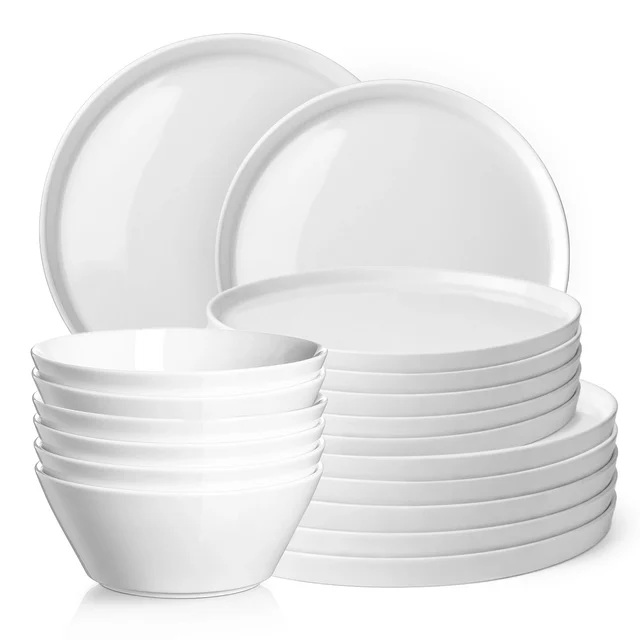
- Buy DOWAN Wedding White 18-Piece Porcelain Dinnerware Set Restaurant-style high-fired white porcelain that resists chips, sells every piece open-stock, and costs less than the trendy sets it outlasts.
- Buy Corelle Winter Frost White 18-Piece Dinnerware Set The near-unbreakable, feather-light tempered-glass classic — the smartest buy for kids, renters, and anyone who drops things.
- It depends Mikasa Madison 12-Piece Bone China Dinnerware Set (Misty Blue) Elegant, thin bone china that looks lovely on the table — but you trade some everyday toughness for the good looks.
- Skip Our Place Complete Plates + Bowls Set (Stoneware) A beautiful, on-trend stoneware set — and a textbook case of paying a premium for a material that chips fast.
What actually matters
- Material — this is the headline. Vitrified/high-fired porcelain and tempered glass are the durable everyday choices; bone china is elegant but more chip-prone; stoneware looks warm but is soft and porous.
- Chip and scratch resistance at the rim — the rim absorbs every stack, knock, and dishwasher jostle, so rim durability tells you more about real-world lifespan than anything in the marketing copy.
- Open-stock availability — whether you can buy a single replacement plate is the difference between a set that lasts a decade and one you rebuild from a whole new box.
- Microwave, dishwasher, and oven safety — an everyday set has to take everyday abuse, so match the safe-use ratings to how you actually reheat and cook, and watch for metallic-trim caveats.
- Weight and stackability — matters for small cabinets, and for households where kids or the elderly carry stacks of plates.
- Break resistance — if young kids, renters, or a history of dropped plates are in the picture, near-unbreakable material beats a premium feel every time.
- Look — it matters, but treat it as the tiebreaker between two durable options, not the reason you buy.
The specs, in plain English
Green flags vs red flags
Green flags
- Described as vitrified, high-fired, or restaurant/hotel-grade porcelain, or as three-layer tempered glass
- Every component is available open-stock so you can replace one broken piece
- Clearly rated microwave-, dishwasher-, and (ideally) oven-safe with no fine-print exceptions
- Fully glazed rims with no exposed raw clay edges
- Light or medium weight that stacks cleanly, especially if cabinet space is tight
- A large body of long-term owner reports describing the set as still chip-free after a year or more
Red flags
- Trendy matte stoneware with visible unglazed clay rims sold at a premium price
- Sold only as a fixed boxed set with no way to buy individual replacement pieces
- Owner reports clustering around rim chips 'within months' or crazing and staining
- Metallic trim paired with a claim that it's fully microwave-safe
- Heavy, bulky pieces marketed mainly on how they photograph
- Vague material wording like 'ceramic' or 'artisan clay' with no firing or durability detail
Who's who: the brands
- DOWAN - Value-focused maker of dense, high-fired white porcelain sold open-stock, in the restaurant-white durability lane.
- Corelle - The icon of near-unbreakable, feather-light tempered (Vitrelle) glass; widely stocked for easy replacement.
- Mikasa - Long-running tableware brand known for elegant bone china and dressier everyday patterns.
- Our Place - Design-led direct-to-consumer brand known for on-trend, photogenic matte stoneware sets.
How to read a listing without getting fooled
Start with the material line and don't let the lifestyle photos distract you. If a listing says 'vitrified,' 'high-fired,' 'restaurant-grade' porcelain, or 'tempered' or 'triple-layer' glass, you're looking at the durable end of the spectrum. Vague words like 'ceramic,' 'artisan,' or 'reactive glaze' usually signal stoneware, which means softer and more chip-prone, and 'reactive' or 'organic' rims often mean exposed clay that chips first. Next, hunt for the words 'open stock' or check whether individual plates and bowls are listed separately; if the only way to buy is one big boxed bundle, a single break is expensive. Read the microwave/dishwasher/oven line literally and watch for metallic-trim exceptions. Finally, sort the owner reports by the most recent and lowest ratings and read what people say after a year: chips, cracks, crazing, and staining show up there long before they show up in the headline description.
How much should you spend?
Spend on the material, not the mood board. The counterintuitive truth of this category is that the most durable everyday materials, dense high-fired porcelain and tempered glass, tend to sit at the budget end, while the most fragile trendy stoneware often carries the highest price. That means you rarely need to reach for a premium tier to get longevity; a mid or budget porcelain set sold open-stock will usually outlast and out-value a pricier designer stoneware one. Where paying more is genuinely worth it is bone china, if you specifically want an elegant, refined look you'll treat with a little care, since you're buying craftsmanship and appearance rather than raw toughness. And factor in the hidden cost of replacement: a cheap set you rebuy every year because it chips is more expensive than a plain one you keep whole for a decade, so the smart-money move is to weigh the sticker price against how easily and cheaply you can replace a single broken piece.
Questions, answered
Which dinnerware material is least likely to chip?
Tempered glass and dense, high-fired vitrified porcelain are the most chip- and break-resistant everyday materials. Bone china sits in the middle: refined and tougher than it looks, but with thinner, more vulnerable rims. Stoneware chips the most because it's fired softer and more porous, and trendy versions with exposed clay edges are especially prone to it.
Is porcelain or stoneware better for everyday use?
For pure durability, porcelain wins. It's fired denser and harder, so it resists chips, scratches, and staining better than stoneware. Stoneware gives you a warm, handmade, matte look, but it's heavier, more porous, and more likely to chip or craze over time, so it's the better fit only if aesthetics matter to you more than longevity.
Why does open-stock availability matter so much?
Open stock means each plate, bowl, and mug is sold individually. When one piece breaks, you replace just that piece instead of rebuying a whole boxed set. It's the single most underrated durability feature: widely stocked open-stock sets are cheap and easy to top up, while trendy boxed-only sets can force you to buy everything again.
Are dinnerware sets microwave, dishwasher, and oven safe?
Most modern everyday sets are microwave- and dishwasher-safe, but oven-safe is less universal, so check the specific listing. As general guidance, avoid microwaving any piece with metallic (gold or platinum) trim, and let very hot ceramics cool before plunging them into cold water to reduce thermal-shock cracking. Melamine and other picnic plastics are not microwave-safe at all.
Is tempered glass dinnerware actually as unbreakable as people claim?
It's far more break-, chip-, and scratch-resistant than ordinary ceramic, which is why it's a longtime durability favorite, but it's not literally indestructible. On the rare occasion it does fail, tempered glass can shatter into many small pieces rather than a few large shards. This is general product information, so always follow the manufacturer's care and temperature guidance.
Or jump to the head-to-head: DOWAN Wedding White 18-Piece Porcelain Dinnerware Set vs Corelle Winter Frost White 18-Piece Dinnerware Set.