Explained
Door Draft Stoppers and Window Insulation, Explained
After reading, you'll understand which type of draft stopper fits which gap and how to read a maker's size and install details.
In this guide
Draft stoppers look similar on a shelf, but they work in different ways. A snake, a sweep and a door shoe all go at the bottom of a door, and window film does a separate job. First-time buyers often buy by length alone and end up with a product that does not touch the threshold. Knowing the type and the gap you have is most of the decision.
The 30-second version
- Match the type to the gap, since a sweep closes it and a snake only covers it.
- Screw-on lasts longest, while stick-on is easier but depends on the surface.
- Check the stated size, including length and the largest gap the product lists.
- Look for a named material, because vague pages tell you less about durability.
- Window film is seasonal, so plan to take it down in spring.
The products this guide is about
Our verdict on each, with the full reasoning on the companion review.
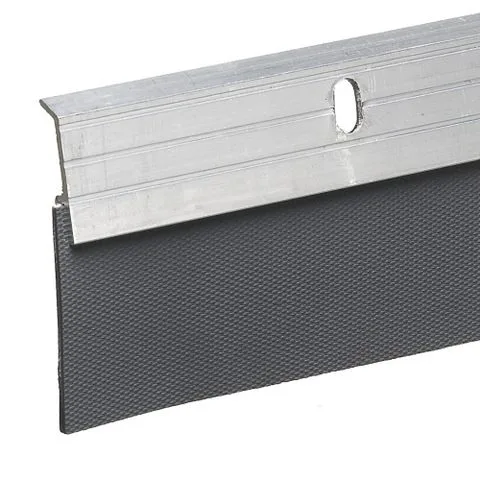
- Buy Frost King Premium Aluminum and Reinforced Rubber Door Sweep (A79/36A) A screw-on aluminum and rubber sweep with a lifetime guarantee on its weathersealing, and the one to get for an exterior door.
- Buy Duck Brand Rolled Shrink Film Window Insulation Kit, 62 in. x 210 in. (5 windows) The cheapest way to stop a drafty window from leaking heat for the winter, with a roll format that needs no measuring.
- It depends M-D Building Products Aluminum and Vinyl CINCH Self-Adhesive Door Sweep (43301) A stick-on sweep with a triple-fin vinyl seal that suits flat thresholds and renters, and is only as good as the surface it sticks to.
- Skip Frost King Door or Window Double Draft Stop (DDS1) A fabric-covered foam snake that slides on under a door, with a maker page that says little about what it is made of or how much it helps.
What actually matters
- Type - The type decides whether the gap is sealed or just covered. Sweeps attach to the door, snakes sit on the floor, and film covers glass.
- Install method - Screws, adhesive and tape each suit different doors. Pick the one you will actually do properly.
- Length - Most sweeps here are listed at 36 inches. Compare that with your door width and trim if you need to.
- Gap range - Makers sometimes list the largest gap a product seals. The CINCH lists gaps up to 1 inch.
- Material - Aluminum with rubber or vinyl is a common combination for sweeps. Check that the page names it.
- Guarantee - A named guarantee, like the lifetime guarantee on the Frost King A79 rubber, is a sign the maker stands behind the seal part.
- Surface compatibility - Film and adhesives have limits. The Duck page warns against plaster, drywall, wallboard and unfinished wood.
The specs, in plain English
Green flags vs red flags
Green flags
- The maker page lists the size and the material.
- A named guarantee is stated.
- The product can be cut to length.
- Install steps or an instruction sheet are available.
- Surface limits and warnings are spelled out.
Red flags
- The page makes general energy claims with no figures.
- The material is not named.
- The product only sits loose on the floor.
- No size range for gaps or windows is given.
- The listing promises to stop all bugs or all drafts.
Who's who: the brands
- Frost King - A weatherization brand with a wide range of door sweeps, thresholds and window kits.
- Duck - Known for window insulation kits, tapes and door bottom seals.
- M-D Building Products - Sells weatherization products including self-adhesive and commercial door sweeps.
- Suptikes - A smaller maker of draft stoppers and door seal products.
- Gardner Bender - A brand we did not verify a current draft stopper from, so none is in our picks.
How to read a listing without getting fooled
Start with the type, then check length, the gap range and the install method. Look for a named material and a stated guarantee. Be wary of pages that rely on general phrases such as blocks drafts and reduces energy loss without any size or gap information. If the page gives a limit, such as surfaces film is not safe on, read it before buying. Measure your door width and the gap under it, and compare those numbers with the page.
How much should you spend?
These are budget to mid-range products. Window film kits and fabric snakes sit in the budget tier, while aluminum sweeps with a rubber or vinyl seal sit in the mid-range. The extra money for a sweep goes into a fixed, durable seal. A cheap snake is not a bargain if it does not close the gap, so pick by type before price.
Questions, answered
What is the difference between a door sweep and a door bottom?
A sweep attaches to the face of the door and has a seal that touches the threshold. A door bottom or shoe wraps the bottom edge of the door. Both close the gap under the door. Check which style suits your door and threshold.
Can I cut a door sweep to length?
Most aluminum sweeps can be cut with a hacksaw, and the vinyl or rubber trimmed with scissors. The M-D CINCH page says exactly that. Check the product page for your model before cutting.
Do I need a hair dryer for window film?
Yes, for shrink film kits. You apply the film with tape, then heat it with a hair dryer so it tightens. The Duck kit lists scissors and a hair dryer as the tools needed.
When should I take window film down?
In spring, once the cold season is over. Remove it carefully from painted surfaces to avoid lifting paint.
Or jump to the head-to-head: Frost King Premium Aluminum and Reinforced Rubber Door Sweep (A79/36A) vs Duck Brand Rolled Shrink Film Window Insulation Kit, 62 in. x 210 in. (5 windows).