Explained
Countertop Ice Makers, Explained
After reading this, you will know which ice type suits you, which specs matter for your habits, and how to avoid the machine that becomes a cleaning chore.
In this guide
A countertop ice maker sits on your counter, plugs into an outlet, and makes ice on demand in minutes, with no plumbing hookup. The category looks simple, but two things trip up first-time buyers: none of these units keep ice frozen after it drops, and the biggest choice is not brand or price but ice shape, because nugget and bullet ice behave completely differently in a glass.
The 30-second version
- Ice shape is the first decision. so choose soft, chewable nugget ice if you like to eat your ice, and harder bullet ice if you want cubes that keep drinks cold without diluting them.
- None of them keep ice frozen, so match the machine to your habits and make ice shortly before you need it rather than stockpiling it in the uncooled bin.
- Match output to how you actually use ice, because a couple of drinks a day needs far less than hosting, and an oversized machine only adds noise and eats counter space.
- Cleaning is the hidden cost, so favor a self-clean cycle and, on premium units, UV or filtration, and expect to descale regularly, especially with hard water.
- Tank size drives convenience, because a portable machine refills by hand, so a small reservoir means frequent top-ups during heavy use.
The products this guide is about
Our verdict on each, with the full reasoning on the companion review.
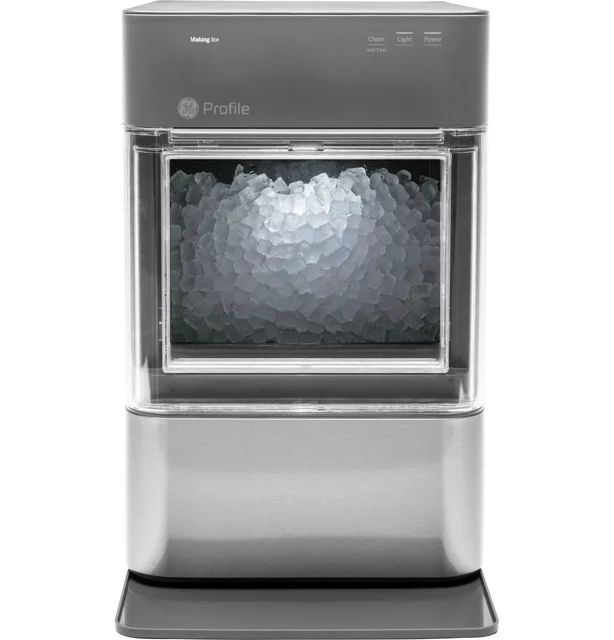
- Buy GE Profile Opal 2.0 Nugget Ice Maker The nugget-ice benchmark: soft chewable pellets, UV-and-filter cleanliness, and genuine app control. Amazon
- Buy Euhomy Pearl H1 Nugget Ice Maker Near-Opal nugget texture, quieter and far cheaper, with a small tank as the main trade-off.
- It depends NewAir AI-215SS Countertop Ice Maker A 50-pound-a-day bullet workhorse for entertaining, at the cost of noise and counter space.
- Skip Silonn Countertop Bullet Ice Maker Cheap and quick, but mold-prone upkeep and wet, fast-melting ice make it a pass. Amazon
What actually matters
- Ice type (nugget vs bullet) - nugget is soft, porous, and flavor-absorbing but melts fast; bullet is firmer, partly hollow, and melts slower. This single choice shapes everything else about how the machine fits your life.
- Daily output - the pounds of ice a machine can produce in 24 hours. A light user needs far less than someone entertaining, and buying more capacity than you use just adds noise and bulk.
- First-batch and cycle time - how quickly the first ice appears and how fast batches follow. Faster cycles matter more if you make ice on demand rather than running it continuously.
- Reservoir capacity - how much water the tank holds between hand refills. A small tank means more interruptions during parties or heavy use since these machines are not plumbed.
- Cleaning and sanitation - whether the unit has a self-clean cycle and any UV light or water filter. This is the difference between a low-maintenance appliance and a weekly scrubbing chore.
- Noise - how loud the machine runs, measured in decibels. Nugget augers tend to be busier than bullet machines, which matters in an open kitchen.
- Footprint and portability - how much counter it occupies and whether it has a handle. High-output units are noticeably larger, while portable models move easily between kitchen, RV, and gatherings.
The specs, in plain English
Green flags vs red flags
Green flags
- A clearly stated ice type that matches how you use ice, whether that is chewable nugget or slow-melting bullet
- A self-clean cycle plus easy access to the reservoir for manual descaling and wiping
- UV light or a water filter on premium units, which keeps ice tasting cleaner over time
- A first batch in roughly six to ten minutes and output that comfortably covers your real daily need
- A carry handle and reasonable footprint if you plan to move it or have limited counter space
Red flags
- Owner reports of pink algae, mold, or scale that returns unless you clean weekly
- A very small reservoir paired with claims of high output, which means constant refilling
- Ice that consistently drops wet and melts fast, signaling the bin is not keeping up
- Vague or missing noise figures on a machine you will run in an open kitchen
- Recurring longevity complaints in long-term reviews, a warning sign for cheap units
Who's who: the brands
- GE Profile - Maker of the Opal nugget line, widely treated as the home benchmark for soft chewable ice with UV, filtration, and app control.
- Euhomy - Value-focused brand known for near-premium nugget texture at a much lower price, with quiet operation and portability.
- NewAir - Specializes in higher-output bullet machines aimed at entertaining and small home bars, trading refinement for volume.
- Silonn - Popular budget bullet maker; inexpensive and quick, but often flagged for mold-prone upkeep and reliability questions.
How to read a listing without getting fooled
When you read a product listing, start by confirming the ice type, because nugget and bullet are not interchangeable and the marketing photos can look similar. Treat the headline daily-output figure as a best-case ceiling measured in a cool room with cold water, not what you will get on a warm afternoon, and pair it mentally with the reservoir size: a big output number next to a tiny tank means you will be refilling constantly. Look past the first-batch time, which is easy to advertise, and check whether the listing mentions ongoing cleaning, a self-clean cycle, and any UV or filter, since those decide how much maintenance you are signing up for. Finally, weigh noise and footprint honestly against where the machine will live, and read long-term owner reports for the durability and mold patterns that a spec sheet will never show you.
How much should you spend?
Spending is mostly a question of how central ice is to your daily routine. Budget bullet machines are cheap and quick, but the savings often come back as a cleaning chore and shorter service life, so they make sense only for very light, occasional use by someone willing to stay on top of maintenance. The value sweet spot sits in the mid-range, where a solid nugget or bullet machine gives you the texture and output most households want without paying for extras you will not use. Paying up to the premium tier is worth it when nugget ice is a near-daily ritual and you want the least hands-on upkeep, because that is where UV sanitation, filtration, real app scheduling, and side-tank options live. If you only want good ice occasionally and will clean diligently, a simpler mid-range machine is the smarter buy.
Questions, answered
What is the difference between nugget and bullet ice?
Nugget ice is soft, porous, and chewable, absorbs drink flavor, and melts quickly. Bullet ice is harder and partly hollow, melts more slowly, and keeps drinks cold longer without diluting them. Choose nugget if you like to chew your ice, bullet for cocktails and coolers.
Do countertop ice makers keep ice frozen?
No. They make ice on demand but do not refrigerate the storage bin, so cubes start melting once they drop and the meltwater usually recycles back into the reservoir. Make ice shortly before you need it, or move a batch to your freezer for longer storage.
Do they need a plumbing connection?
No. Every countertop model is portable and fills from a reservoir you top up by hand, so it works anywhere with an outlet, including RVs and offices. That is also why tank size and refill frequency matter more than on a plumbed machine.
How often do they need cleaning?
Plan on roughly weekly, and more with hard water. Reservoirs collect scale and, on cheaper units, pink algae or mold. Most models have a self-clean cycle, but you should still descale with vinegar or a maker solution and wipe the bin so the ice keeps tasting clean.
How much ice do I really need per day?
Match output to your habits. A household making a few drinks a day needs far less than someone entertaining regularly. Oversizing the machine only adds noise and takes up counter space, so estimate your busiest normal day rather than an extreme.
Are premium nugget makers worth it over cheaper ones?
For daily nugget-ice users, usually yes: UV and filtration keep ice tasting cleaner over time, app scheduling adds convenience, and side-tank options extend runtime. If you only want the texture occasionally and will clean diligently, a good value model delivers most of the same experience for much less.
Or jump to the head-to-head: GE Profile Opal 2.0 Nugget Ice Maker vs Euhomy Pearl H1 Nugget Ice Maker.