Explained
Countertop Blenders, Explained
After reading, you will understand what blender specs actually mean and how to pick the right machine for the food you make.
In this guide
A blender looks simple, but the sticker is covered in numbers that rarely tell you how smooth your smoothie will be. Wattage, peak horsepower, jar shape and blade design all matter, yet manufacturers lean hardest on the one that photographs best: the big power number. The trick to buying well is matching the machine to what you actually blend, not to whichever spec is printed largest.
The 30-second version
- Watts measure electricity, not smoothness. A high wattage tells you how much power the motor draws, but jar shape, blade design and blending time decide whether kale stems actually disappear.
- Match the machine to your recipes. Daily nut butters and hot soup demand a premium full-size motor, while frozen drinks and smoothies are well served by a mid-range preset blender.
- Jar material and shape are underrated. Tall jars fight your cabinets, square pitchers trap chunks in the corners, and glass resists odor and scratching that plastic picks up over time.
- The warranty signals real durability. A long, full-coverage warranty is a manufacturer betting its own money that the motor and drive will survive years of daily use.
- Personal blenders are not countertop blenders. Single-serve cups make one or two portions and often struggle to crush ice alone, so they cannot replace a full-size jar for batches or soup.
The products this guide is about
Our verdict on each, with the full reasoning on the companion review.
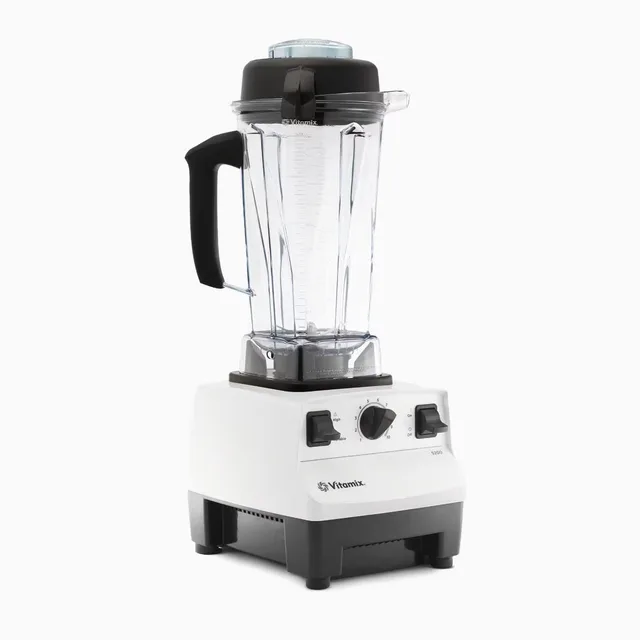
- Buy Vitamix 5200 The buy-it-once workhorse that truly pulverizes everything - if you can stomach the price and the height. Amazon
- Buy Ninja Professional Plus Blender with Auto-iQ (BN701) A frozen-drink and smoothie bargain - just don't expect silky soups or Vitamix-grade nut butters. Amazon
- Buy Oster Pro 1200 The budget champ - glass jar, real power, and about a quarter of a Vitamix's price. Amazon
- Skip Beast Mighty 850 A gorgeous personal blender you're mostly paying to look at - cheaper single-serve models blend just as well. Amazon
What actually matters
- Real-world power - the combination of motor strength, blade design and jar shape that determines whether tough loads like frozen fruit, greens and nut butters actually break down smoothly, rather than the headline wattage alone.
- Jar design and material - capacity, height under your cabinets, whether the shape funnels food onto the blades, and whether it is glass or plastic all shape daily usability.
- Durability and drive coupling - the part connecting the motor to the blades is a common failure point, and a metal coupling outlasts a plastic one under heavy load.
- Ease of cleaning - a smooth single-blade jar you fill with soap and water rinses fastest, while stacked or removable blade towers mean handling sharp parts by hand.
- Presets versus manual control - one-touch programs remove guesswork for frozen drinks, while a variable-speed dial gives you finer control over texture.
- Noise - every powerful blender is loud, but some are markedly louder, which matters in an open kitchen or early morning.
- Warranty length and coverage - a longer full warranty reflects the manufacturer's confidence and protects you against premature motor or drive failure.
The specs, in plain English
Green flags vs red flags
Green flags
- A long, full-coverage warranty measured in years rather than months
- A metal drive coupling instead of a plastic gear
- A jar shape that funnels ingredients back onto the blades, or a reversing blade that pulls food down
- An included tamper if you plan to make nut butters or thick, frozen mixtures
- A container height you have confirmed fits under your cabinets
- Owner reports of years of reliable daily service, not just glowing first-week impressions
Red flags
- Marketing that leads with peak horsepower while staying quiet about sustained performance
- A square pitcher that traps chunks in the corners, away from the blades
- Reports of the motor or drive failing within the first year
- A single-serve personal blender being sold as a full-size countertop machine
- A short warranty that hints the maker does not expect long life
- A blade tower that is fiddly and unsafe to clean by hand
Who's who: the brands
- Vitamix - Premium, buy-it-for-life machines known for the smoothest texture on tough loads and long full warranties.
- Ninja - Value-focused power and presets, strongest at ice crushing and frozen drinks with foolproof one-touch programs.
- Oster - Budget-friendly all-rounders, often with durable glass jars and metal drive couplings that punch above their price.
- Beast - Design-led personal blenders prized for looks and compact single-serve smoothies rather than full-size versatility.
How to read a listing without getting fooled
Start by ignoring the largest number on the box. Peak horsepower and headline wattage tell you what the motor can spike to, not what it sustains, so read them as ceilings rather than promises. Instead, look for the jar's real capacity and assembled height, the material (glass resists odor and scratching that plastic collects), and whether the shape or a reversing blade actually pushes food onto the blades. Check whether the blade assembly is a simple single unit you can rinse or a stacked tower you must wash around. Find the warranty and read its length and what it covers, because a manufacturer offering many years of full coverage is signaling genuine confidence. Finally, weigh independent testing and long-term owner reports over first-week impressions, and be skeptical of preset buttons that promise a one-touch result the motor cannot always deliver.
How much should you spend?
Spend according to what you make, not according to the biggest number you can afford. If you blend daily and want silky greens, emulsified nut butters and friction-heated soup, the premium tier genuinely buys you better texture, a sturdier metal drive and a warranty long enough to amortize the cost over many years of use. If you mostly make smoothies, shakes and frozen drinks, a mid-range machine delivers the great majority of that experience for far less, and the extra money at the top mostly buys durability and finesse you may never call on. At the budget end, a capable glass-jar all-rounder covers everyday smoothies and sauces well; the main compromise is ultimate smoothness on the toughest loads. Be most wary of paying a premium for styling alone, where a design-led personal blender costs more than full-size machines that simply blend better.
Questions, answered
Do more watts mean a better blender?
Not on their own. Wattage measures how much power the motor draws, but the smoothness of your result depends just as much on jar shape, blade design and how long you blend. A well-designed mid-power blender can outperform a poorly designed high-wattage one on real food.
What is the difference between a personal blender and a countertop blender?
A personal blender makes one or two servings directly in a cup you can carry, and many struggle to crush ice on their own. A full-size countertop blender uses a larger jar for family batches, soups and tougher jobs. If you need volume or versatility, a personal blender cannot substitute.
Is a glass jar better than plastic?
Each has trade-offs. Glass, especially borosilicate, resists odor, staining and scratching, tolerates hot liquids and never imparts a plastic taste, but it is heavier to lift and pour. Plastic is lighter and less fragile but can cloud, scratch and hold smells over time.
Why can some blenders make hot soup?
A powerful blender run long enough generates heat through blade friction alone, warming the contents as it blends. This is a feature of high-end full-size machines. Most blenders, including personal models and glass-jar budget units, cannot heat cold ingredients this way even if the jar tolerates hot liquid poured in.
How much does the warranty really tell me?
Quite a lot. A long, full-coverage warranty is the manufacturer betting its own money that the motor and drive will last, and it protects you if they do not. A short warranty often signals more modest expectations for the machine's lifespan under daily use.
Or jump to the head-to-head: Vitamix 5200 vs Ninja Professional Plus Blender with Auto-iQ (BN701).