Explained
Countertop & Portable Dishwashers, Explained
After reading this you'll understand how countertop and portable dishwashers differ, what their specs really mean, and how to match one to your kitchen and household.
In this guide
A countertop or portable dishwasher is the honest workaround when your kitchen has no room for a built-in. But the category hides two very different machines behind similar names, and spec sheets lean on jargon like 'place settings' and 'condensation drying' that most first-time buyers have never had to decode. The thing that trips people up most is buying for the spec that sounds impressive instead of the one that fits their space and the size of their loads.
The 30-second version
- Countertop and portable are not the same thing. A countertop unit is a small box that sits on your worktop; a portable is a floor-standing machine on wheels that holds far more - pick based on whether you can spare counter space or floor space.
- Capacity is measured in place settings, and it's the number that decides whether a machine keeps up with your household - roughly six suits one person, eight covers a couple, and only a full-size portable handles a family.
- Drying is the near-universal weak point, so plan on using rinse aid and cracking the door open regardless of which model you buy; only heated or sanitize options dry noticeably better.
- None of these need plumbing, they connect to a standard kitchen faucet with a quick-connect adapter and drain into the sink, which also means you can only run them while the sink is free.
- Watch for finish upcharges, because a pricier 'designer' or stainless version of the same machine rarely cleans or dries any better than its cheaper twin.
The products this guide is about
Our verdict on each, with the full reasoning on the companion review.
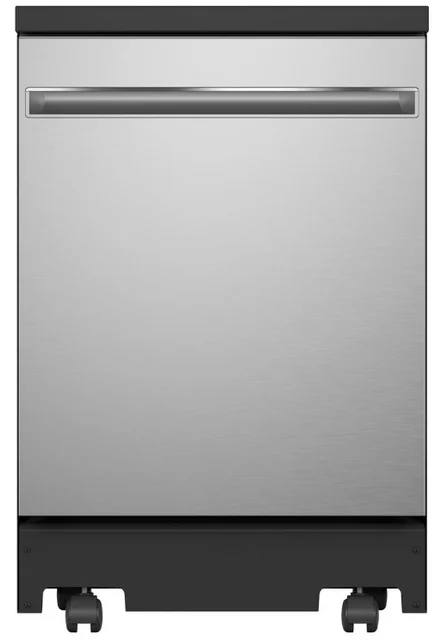
- Buy GE Appliances GE GPT225SSLSS 24-Inch Portable Dishwasher A full-size, built-in-quality wash that rolls up to your sink - the best cleaner here if you can spare the floor space.
- Buy Danby DDW1805EWP 18-Inch Portable Dishwasher The value portable: a slimmer 18-inch cart that still holds a real 8-place load for less money.
- It depends Danby DDW631SDB 6-Place Countertop Dishwasher A true counter-top box for the tiniest kitchens - brilliant for one, frustrating for a household.
- Skip SPT SD-9263SS 18-Inch Portable Dishwasher An 18-inch stainless portable whose own maker page lists residual heat drying only and warns that side-sprayer faucets leak on hookup. Amazon
What actually matters
- Footprint - countertop units cost you worktop space while portables cost you floor space; measure the spot you'll actually keep it before you fall for the spec sheet.
- Capacity (place settings) - this is the single number that determines whether one run clears your dishes or leaves you running the machine twice; match it honestly to how many people you cook for.
- Cleaning performance - real power on baked-on food varies more than you'd expect, and owner reports generally rate full-size portables above small countertop boxes.
- Drying method - heated drying and a sanitize cycle leave dishes genuinely usable, while basic condensation drying leaves plastics and cups damp; know which you're getting.
- Noise - these machines live in the room with you, often in an open-plan space, so a quieter unit is worth paying for in a way it isn't for a built-in tucked under a counter.
- Faucet compatibility - quick-connect adapters fit standard faucets but often won't attach to pull-out or specialty sprayers, so verify your tap before you buy.
- Value versus finish - decide whether you're paying for a better machine or just a fancier front, since near-identical units can sit far apart on price.
The specs, in plain English
Green flags vs red flags
Green flags
- Capacity in place settings is clearly stated and comfortably matches your household size
- A heated or sanitize drying option is listed, not just plain condensation drying
- The listing specifies a quick-connect adapter and notes which faucet types it fits
- Owner reports describe it as quiet enough for an open-plan room
- Simple, durable controls (or a strong reliability track record) on the version you're buying
- The price reflects real capability, not just a stainless or 'designer' finish
Red flags
- Capacity is vague or clearly too small for how many people you cook for
- Only basic condensation drying, with no heated or sanitize option mentioned, if dry dishes matter to you
- A 'designer' or stainless model priced well above a near-identical base version for the same performance
- No mention of faucet compatibility, especially if you have a pull-out or sprayer tap
- Reviews repeatedly flag it as loud in a room you'll be sitting in
- Marketing leans on finish and looks while staying quiet about wash and dry performance
Who's who: the brands
- GE Appliances - A long-established American appliance maker whose full-size portables are known for built-in-level cleaning, quieter operation and stronger drying, including sanitize cycles.
- Danby - A specialist in compact and apartment-sized appliances, offering the widest range of small-kitchen options from true countertop boxes to slim 18-inch portable carts.
- Farberware - A familiar housewares name that markets small countertop dishwashers aimed at studios, RVs and single-person kitchens.
- hOmeLabs - A budget-focused brand known for compact countertop dishwashers pitched at renters and tiny spaces.
How to read a listing without getting fooled
Start with the two numbers that actually decide the buy: capacity in place settings and the machine's width, then be honest about your household and the spot you'll keep it. Treat a big-sounding feature list as secondary to those. Next, read the drying line carefully - if it only says 'condensation drying,' assume damp plastics and plan for rinse aid; only 'heated' or 'sanitize' promises meaningfully drier dishes. Check the water hookup description against your own tap, since a quick-connect adapter is useless if it won't clamp to a pull-out sprayer. Finally, when two models look almost identical but sit far apart on price, look hard for the functional difference; often the pricier one is just wearing a stainless or 'designer' coat, and the extra money buys you a finish, not a better wash.
How much should you spend?
Spend based on capacity and drying, because those are what you'll notice every day. The cheapest route in is a small countertop box, and it's genuinely worth it if you're washing for one and floor space is zero - paying up here buys you little the tiny tub can use. Stepping up to a slim portable is where most small households find the value sweet spot: a real eight-place load and no-plumbing convenience for a modest premium over a countertop unit. Spending the most gets you a full-size portable that cleans, dries and sanitizes like a built-in, which is worth it only if you have the floor space and the household to justify a dozen place settings. The spend that's almost never worth it is the 'designer' upcharge for a stainless version of a machine you can buy cheaper in white - put that difference toward good detergent and rinse aid instead.
Questions, answered
Do countertop and portable dishwashers need special plumbing?
No. Both connect to a standard kitchen faucet using a quick-connect adapter, run the cycle, and drain back into the sink. The trade-off is that you can only wash while the sink is free, and you attach and detach the hose each time - a small daily chore most owners stop noticing quickly.
What's the difference between a countertop and a portable dishwasher?
A countertop dishwasher is a small box that sits on your worktop and typically holds around six place settings. A portable is a floor-standing unit on wheels with far more capacity, often eight to twelve settings. Countertop units save floor space but take counter space and hold less; portables clean more at once but need somewhere to park.
How many place settings do I actually need?
Roughly six place settings suits one person, eight comfortably covers a couple and can manage a small family's daily dishes in one full run, and only a full-size portable at around a dozen keeps up with a busy household without running twice. Buy for how many people you regularly cook for, not the largest number on the shelf.
Will these actually get my dishes dry?
Partly. Models with a heated or sanitize option dry best but still leave some water on plastics; those relying on basic condensation drying leave cups and containers noticeably damp. Whichever you choose, using a rinse aid and cracking the door open at the end makes a real difference.
Are they any good in hard-water areas?
They clean fine, but hard water leaves spots and can build up film over time on any dishwasher. Use a rinse aid, run an occasional dishwasher cleaner or vinegar cycle, and check whether your model has a built-in water softener setting. It's just more visible on these machines because their gentler drying leaves more residue behind.
Is the pricier stainless or 'designer' version worth it?
Usually only for the looks. When a 'designer' model shares the same size, capacity, wash and drying as a cheaper sibling, you're paying mainly for the finish - which also tends to show fingerprints. Unless the appearance genuinely matters to you, the near-identical base model is the smarter buy.
Or jump to the head-to-head: GE Appliances GE GPT225SSLSS 24-Inch Portable Dishwasher vs Danby DDW1805EWP 18-Inch Portable Dishwasher.