Explained
Chef's Knives, Explained
After reading, you will understand what a chef's knife's specs mean and be able to pick one that fits your hands, your habits, and your willingness to maintain it.
In this guide
The 8-inch chef's knife is the tool you will reach for more than any other, so the choice matters more than most kitchen purchases. Buyers get tripped up by spec sheets full of steel names, hardness numbers, and edge angles that sound precise but rarely explain how a knife feels in a real, wet-handed prep session. This guide decodes those terms so you can judge a knife on the things that actually matter after months of use.
The 30-second version
- Fit beats prestige. A knife matched to your hand size and cooking habits will serve you better than a famous name that feels wrong to hold.
- Steel is a trade-off, not a ranking. Harder steel holds an edge longer but chips more easily and demands careful sharpening; softer steel dulls sooner but forgives abuse and is quick to revive.
- Grip is the safety spec. A handle that turns slippery when wet is the single most common reason a good blade becomes a bad knife.
- Maintenance appetite drives the decision. Be honest about whether you will learn a whetstone; it determines whether a premium blade is worth it or wasted.
- One good knife beats a block set. A single well-chosen 8-inch chef's knife handles most kitchen tasks, so put your budget there rather than into a drawer of rarely-used blades.
The products this guide is about
Our verdict on each, with the full reasoning on the companion review.
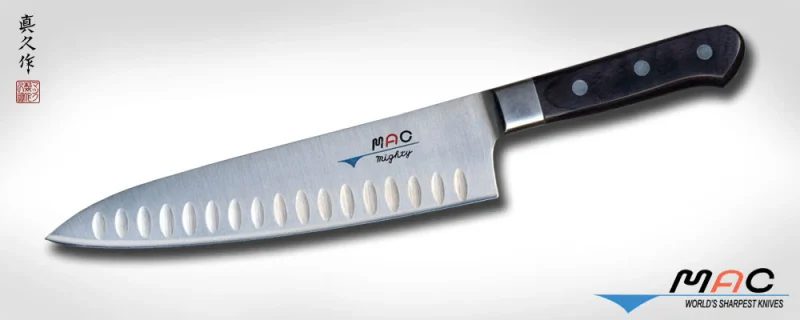
- Buy Mac Professional MTH-80 (8-inch) A thin, keen Japanese blade that makes daily prep easier, if you'll keep it sharp. Amazon
- Buy Victorinox Fibrox Pro (8-inch) The forgiving value pick: inexpensive, grippy when wet, and quick to resharpen. Amazon
- Buy Wüsthof Classic (8-inch) Forged German heft for cooks who want one durable knife they won't baby. Amazon
- Skip Global G-2 (8-inch) Distinctive looks and sharp steel, undercut by a handle that slips when wet. Amazon
What actually matters
- Blade length and weight - eight inches suits most kitchens, balancing control and cutting reach; weight determines whether the knife feels agile for long sessions or hefty for tough jobs.
- Steel hardness - how long the edge lasts between sharpenings, and how much care the blade needs to avoid chipping.
- Edge geometry - how thin and how acute the cutting edge is, which governs how easily the knife glides through dense food.
- Grip security when wet - whether the handle stays put with wet, greasy, or soapy hands, which is the difference between confident and nervous cutting.
- Balance and feel - how the knife's weight distributes between blade and handle during a long prep session, affecting fatigue and control.
- Maintenance demands - whether the steel is happy with a quick pull-through touch-up or truly rewards a whetstone and careful use.
- Construction - forged versus stamped, and whether a full bolster helps or hinders sharpening and use of the whole edge.
The specs, in plain English
Green flags vs red flags
Green flags
- A textured or contoured handle that is described as secure with wet, greasy, or soapy hands.
- A clear steel and hardness spec that matches your maintenance appetite, whether that is low-fuss or whetstone-ready.
- A blade that arrives genuinely sharp out of the box, per consistent owner reports.
- Sold by a retailer with a real return window so you can hold it before committing.
- A model currently in production, so replacement and warranty support are realistic.
- Balance and weight described in a way that fits your hands and typical prep length.
Red flags
- A smooth or dimpled metal handle repeatedly described as slippery when wet.
- Very hard steel paired with no mention of careful use, if you have no intention of learning a whetstone.
- Marketing that leans entirely on looks or brand prestige with little said about grip or edge.
- A full bolster on a knife you will want to sharpen fully or use the heel of.
- A discontinued 'unicorn' model you would have to chase on resale sites.
- Claims of being dishwasher-safe used to imply the dishwasher is a good idea; it is not for any good knife.
Who's who: the brands
- Mac - Japanese maker known for thin, keen, harder-steel blades that cut easily and hold an edge, favored by cooks who maintain them.
- Victorinox - Swiss maker whose stamped, budget-friendly knives are known for grippy handles and being easy to resharpen; the perennial value pick.
- Wüsthof - German maker of forged, heavier knives valued for durability and heft, suited to cooks who want one robust blade for tougher tasks.
- Global - Japanese maker with a distinctive one-piece, all-steel design; sharp blades whose dimpled steel handles divide opinion on wet grip.
How to read a listing without getting fooled
Read a chef's knife listing from your hands outward, not from the brand down. Start with length and weight: eight inches suits most kitchens, and a stated ounce weight tells you whether it will feel agile or hefty over a long session. Next, translate the steel and hardness rating into a maintenance promise, not a bragging right: a high HRC number means a longer-lasting edge that you must sharpen carefully and keep off bones and frozen food, while a lower number means more frequent but easier touch-ups. Treat the edge angle as a hint about keenness versus sturdiness rather than a precise guarantee. Above all, hunt for how the handle behaves when wet, because a spec sheet will happily list steel and geometry while staying silent on the one trait that most often ruins the experience. If the listing says nothing about wet grip, treat that as a gap to fill from owner reports, not as reassurance.
How much should you spend?
Spend according to how often you cook and whether you will maintain the blade, not according to prestige. The value sweet spot for most kitchens is a well-made budget or mid-range knife with a secure grip and steel that is easy to resharpen; it will cut well and forgive the occasional mistake. Paying more buys thinner, harder steel that holds a keener edge for longer and a more refined feel in the hand, but that premium only pays off if you cook frequently and are willing to learn a whetstone. If you would rather never think about maintenance, spending more can actively work against you, since the fancier steel demands the most care. Put your money into one good knife rather than a block set, and favor sellers with a genuine return window so a mismatch costs you nothing.
Questions, answered
What size chef's knife should I buy?
Eight inches suits most people and most kitchens, balancing control against cutting reach so it handles everything from herbs to squash. If you have small hands or a cramped cutting board, a 6- or 7-inch may feel more comfortable; if you regularly break down large produce or proteins, a 10-inch gives you more blade.
Japanese or German steel - which is better?
Neither is better; they suit different cooks. Harder Japanese steel holds a keener edge longer but wants a whetstone and careful use, avoiding bones and frozen food. Softer German steel is more forgiving, quick to resharpen, and tolerates tougher tasks, at the cost of dulling sooner. Choose based on how much maintenance you are willing to do.
Do I really need an expensive knife?
No. A good budget knife cuts well, resharpens easily, and can grip securely when wet, which covers most people's needs. Spending more buys thinner, harder steel that stays sharp longer and a more refined feel, but that only pays off if you cook often and keep the edge maintained.
Can I put a chef's knife in the dishwasher?
Avoid it, even on models labeled dishwasher-safe. Heat, harsh detergent, and knocking against other items dull the edge and can pit the steel or degrade the handle. Hand-wash and dry it immediately; it takes seconds and meaningfully extends both sharpness and the knife's life.
Why does the handle matter so much?
Because a secure grip is a knife's most important safety trait. A handle that turns slippery once your hands are wet, greasy, or soapy makes you cut nervously and tire faster, which is exactly when accidents happen. A blade can be beautifully sharp and still be the wrong knife if you cannot hold it confidently.
How do I keep a chef's knife sharp?
Match the method to the steel. Softer European steels revive quickly on a honing steel or a stone, while harder Japanese steels reward a whetstone and careful technique. Hone regularly to realign the edge, sharpen when honing no longer restores bite, and always hand-wash and dry to protect the edge between sessions.
Or jump to the head-to-head: Mac Professional MTH-80 (8-inch) vs Victorinox Fibrox Pro (8-inch).