

Home & Kitchen
The Best Cellular Shades: 4 Compared (and One to Skip)
Four honeycomb window shades compared on insulation, cell structure, light control, cordless safety, fit, and price.
The short version
Cellular shades earn their keep on insulation, and the choices that matter are cell count and fit, not the badge on the box. Buy a custom-cut cordless honeycomb: the Levolor is the easiest all-rounder, and SelectBlinds does almost the same online for less. Step up to Hunter Douglas Duette only if you have a genuinely drafty or sun-blasted room and want the best insulation and finish money can buy. Skip a stick-up paper shade like the Redi Shade Original as anything but a short-term stopgap — it is pleated paper with no real insulation, and it sags and yellows. Choose single-cell for mild climates and double-cell for hot or cold rooms, and remember that a precise measurement beats any brand name. Best for: anyone who wants quieter, better-insulated windows with clean cordless lines and honest light control.
Our picks at a glance
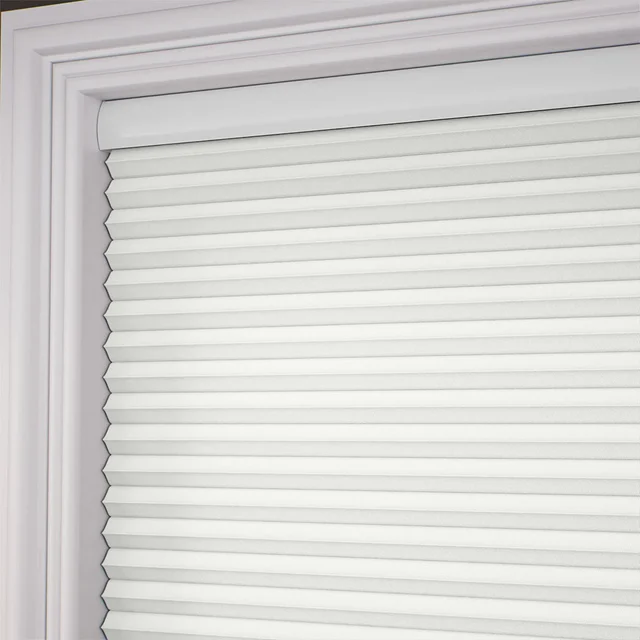
- Levolor Cordless Cellular Shade - Buy. The best all-rounder — custom-cut cordless honeycomb you can buy in-store or online, with single- or double-cell and light-filtering to blackout on every window.
- SelectBlinds Cordless Light Filtering Cellular Shade - Buy. Online made-to-measure honeycomb at a value price, with the widest menu of cell sizes, opacities, and top-down/bottom-up options.
- Hunter Douglas Duette Honeycomb Shades - It depends. The insulation and build benchmark — including double-honeycomb Architella cells — but priced like a splurge and sold through dealers.
- Redi Shade Original Light Filtering Pleated Paper Shade - Skip. A fine cut-to-fit stopgap for move-in day, but a poor permanent buy — it is pleated paper, not an insulating honeycomb.
The verdict in 30 seconds
What mattered most
- Cell structure
- Insulation
- Light control
- Cordless / child-safe
- Fit
- Where to buy
Cellular (honeycomb) shades win on insulation because the folded cells trap a layer of still air against the glass, cutting heat gain in summer and drafts in winter. But the category runs from disposable stick-up paper shades to dealer-installed premium honeycombs, and the differences that actually matter — single-cell versus double-cell, light-filtering versus real blackout, cordless versus corded, and a proper custom fit — get buried under marketing. We synthesized independent testing and owner reports to sort four current options: two easy buys, one that only makes sense in the right room, and one flimsy paper shade to skip as a permanent fix.
The best all-rounder — custom-cut cordless honeycomb you can buy in-store or online, with single- or double-cell and light-filtering to blackout on every window.
Best for: Most people who want a proper made-to-measure honeycomb without stepping up to premium pricing.
- Made to your exact opening, so it fits cleanly on inside or outside mounts
- Offered in single-cell (lighter, cheaper) and double-cell (more air trapped, better insulation) so you match the shade to the room
- Cordless standard — no dangling pull cords, which is the child- and pet-safe choice and gives a cleaner look
- Fabric choices span light-filtering, room-darkening, and blackout, with top-down/bottom-up available
- Even the blackout fabric leaks a rim of light around the edges on an inside mount unless you add side channels
- Owners report the cordless lift can lose some tension after years of daily use on tall or wide shades
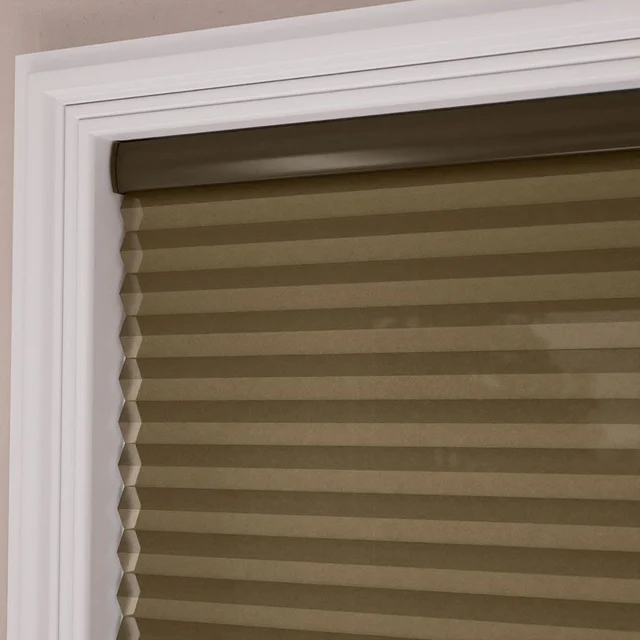
Online made-to-measure honeycomb at a value price, with the widest menu of cell sizes, opacities, and top-down/bottom-up options.
Best for: Confident DIY measurers who want the most configuration options for the money.
- Fully customized online and cut to size, usually for less than an equivalent big-box custom shade
- Broad choice of single- and double-cell constructions and light-filtering through blackout opacities
- Cordless is standard, with top-down/bottom-up and motorized upgrades for privacy and light control
- Frequent sitewide discounts make it the value pick for custom cellular shades
- You measure and mount it yourself — there is no in-store associate to check your numbers
- Ships made-to-order, so there is a lead time, and owners occasionally note a fabric color reading lighter or darker than the online swatch
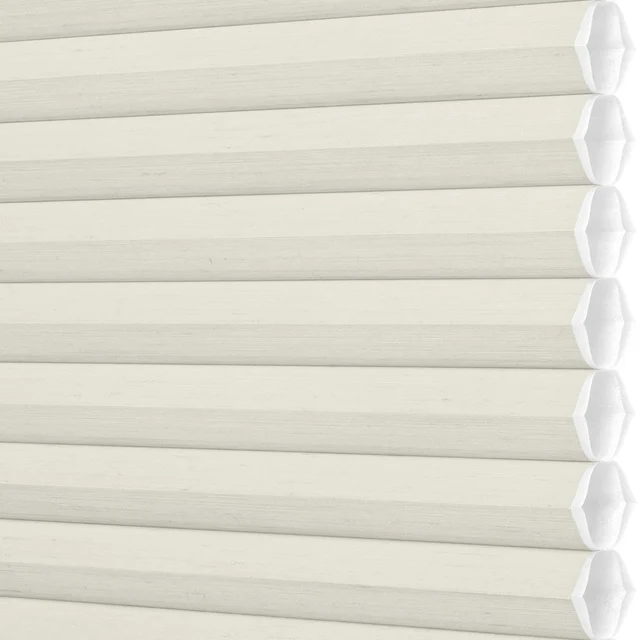
The insulation and build benchmark — including double-honeycomb Architella cells — but priced like a splurge and sold through dealers.
Best for: Owners of drafty or sun-blasted rooms who plan to stay for years and want maximum insulation and finish.
- Available in a double-honeycomb (Architella) construction that traps more air than a standard cell for real, measurable energy savings
- Quietest, smoothest operation and the most refined fabrics of anything here, per owner reports
- Excellent for extreme windows — hot west-facing rooms or drafty single-pane glass — and backed by a strong warranty
- Side-channel and blackout options that genuinely darken a room when installed properly
- Costs several times a big-box custom cellular shade for the same window
- Sold and typically installed through dealers rather than off the shelf, so it is a bigger commitment
- The extra insulation is overkill for mild climates or rooms you rarely heat and cool
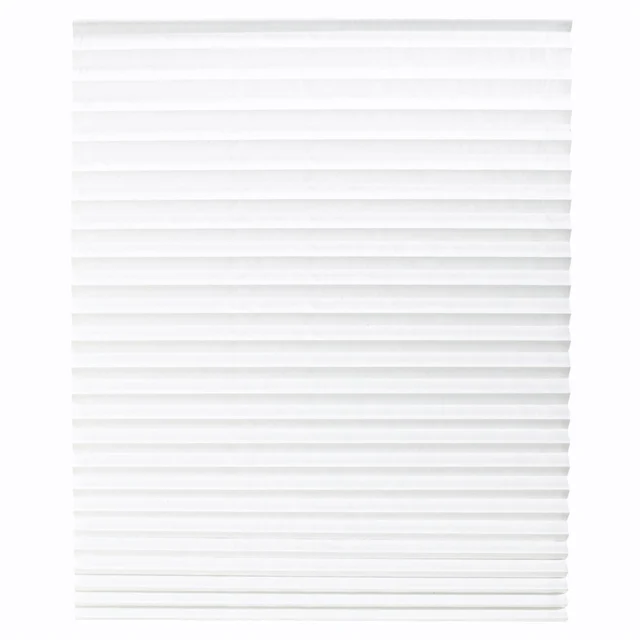
A fine cut-to-fit stopgap for move-in day, but a poor permanent buy — it is pleated paper, not an insulating honeycomb.
Best for: Renters or a brand-new home that needs cheap privacy this week — not a forever solution.
- Very cheap and sold in multipacks, so you can cover a whole house for little money
- Trims down with scissors and sticks up in minutes with no tools or hardware
- Genuinely useful as a temporary privacy cover while you wait on real shades
- It is single-layer pleated paper with no honeycomb air pocket, so it provides little real insulation
- Owners report it sags, creases, and yellows within months of sun exposure
- The adhesive header and clips loosen over time and it looks flimsy as a long-term window treatment
| Criteria | Levolor Cordless Cellular Shade Top pick | SelectBlinds Cordless Light Filtering Cellular Shade | Hunter Douglas Duette Honeycomb Shades | Redi Shade Original Light Filtering Pleated Paper Shade |
|---|---|---|---|---|
| Verdict | Buy it | Buy it | It depends | Skip it |
| Best for | Most people who want a proper made-to-measure honeycomb without stepping up to premium pricing. | Confident DIY measurers who want the most configuration options for the money. | Owners of drafty or sun-blasted rooms who plan to stay for years and want maximum insulation and finish. | Renters or a brand-new home that needs cheap privacy this week — not a forever solution. |
| Price tier | $$ · mid-range | $ · budget | $$$$ · flagship | $ · budget |
| Cell structure | Single- or double-cell | Single- or double-cell | Single or double-honeycomb (Architella) | Single-layer paper (no cell) |
| Insulation | Good; better with double cell | Good; better with double cell | Best in class | Minimal |
| Light control | Light-filtering to blackout | Light-filtering to blackout | Light-filtering to blackout, side channels available | Light-filtering or room-darkening only |
| Cordless / child-safe | Cordless standard | Cordless standard; motorized option | Cordless; motorized option | Cordless (clips) |
| Fit | Custom cut to size | Custom cut to size (order online) | Custom, dealer-measured | Trim-to-fit at home (temporary) |
| Where to buy | Big-box & online | Online | Dealers | Big-box & online |
| Price tier | $$ · mid-range | $ · budget | $$$$ · flagship | $ · budget |
Which one is right for you?
- Most people who want a proper made-to-measure honeycomb without stepping up to premium pricing. Buy it Levolor Cordless Cellular Shade
- Confident DIY measurers who want the most configuration options for the money. Buy it SelectBlinds Cordless Light Filtering Cellular Shade
- Owners of drafty or sun-blasted rooms who plan to stay for years and want maximum insulation and finish. It depends Hunter Douglas Duette Honeycomb Shades
- Renters or a brand-new home that needs cheap privacy this week — not a forever solution. Skip it Redi Shade Original Light Filtering Pleated Paper Shade
How we judged the field
We do not run our own window lab. Instead we synthesized independent testing, manufacturer specifications, and aggregated owner reports to weigh the things that actually change how a cellular shade performs and lasts. Four criteria did most of the sorting.
First, cell structure and insulation — the whole point of a honeycomb shade is the trapped air. Double-cell (two stacked rows of pockets) insulates better than single-cell, and a few premium fabrics use a double-honeycomb (cell-within-a-cell) design that traps more still air again. Second, light control — light-filtering, room-darkening, and blackout are different fabrics, and even blackout cloth leaks light around the edges of an inside mount unless side channels are used, so we judged honesty of expectations as much as raw opacity. Third, operation and safety — cordless lifts are the child- and pet-safe default and simply look cleaner, with top-down/bottom-up as a genuinely useful privacy option. Fourth, fit and durability — a shade custom-cut to your opening beats a cheap trim-down every time, and a proper measurement matters more than the brand on the headrail.
Levolor Cordless Cellular Shade - buy
The Levolor is the shade we would point most people to first. You order it cut to your exact window, choose single-cell for a lighter, cheaper shade or double-cell when a room needs real insulation, and pick anything from a soft light-filtering fabric to full blackout. Cordless is standard, so there are no pull cords to manage, and top-down/bottom-up is available when you want daylight up top and privacy below. It is sold both in big-box stores and online, which makes it easy to buy, replace, and get help with. The honest caveats: the blackout fabric still leaves a light halo at the edges of an inside mount without side channels, and a minority of owners report the cordless mechanism loosening on very large shades after years of daily use. For a fair mid-range price, it covers the vast majority of windows well.
SelectBlinds Cordless Light Filtering Cellular Shade - buy
SelectBlinds does almost everything the Levolor does, online, usually for less. The configurator offers the widest menu here — single- and double-cell constructions, a deep range of opacities from light-filtering to blackout, plus top-down/bottom-up and motorized upgrades — and frequent discounts make it the value pick for a custom honeycomb. The trade-off is that you are on your own: you measure the opening and mount the shade yourself, there is a made-to-order lead time, and owners occasionally note a fabric reading slightly lighter or darker than the on-screen swatch (order a sample if color is critical). If you can measure carefully and hang a bracket, it is a lot of custom shade for the money.
Hunter Douglas Duette Honeycomb Shades - it depends
The Duette is the benchmark for build and insulation, and it is priced like one. Its standout is the double-honeycomb Architella construction, which nests a cell inside a cell to trap more still air than a standard shade — the closest thing here to a real energy upgrade for a problem window. Operation is the quietest and smoothest of the group, the fabrics are the nicest, and proper blackout with side channels is available. But it costs several times a big-box custom cellular for the same window, and it is sold and usually installed through dealers rather than pulled off a shelf. That makes it a clear “depends”: brilliant for a hot west-facing room, a drafty wall of single-pane glass, or a forever home where you will bank the insulation for years — and overkill for mild climates or rooms you rarely heat and cool.
Redi Shade Original Light Filtering Pleated Paper Shade - skip
We like this exact product for exactly one job: a temporary cover. It is cheap, comes in multipacks, trims with scissors, and sticks up in minutes with no tools — ideal for move-in week or a rental you cannot drill into. What it is not is a cellular shade. It is single-layer pleated paper with no honeycomb pocket, so it does little for insulation, and owners consistently report it sagging, creasing, and yellowing within months of sun exposure while the adhesive header and clips give out. As a stopgap it is fine; as a permanent buy it is a skip, because you will replace it and wish you had bought a real honeycomb the first time.
Levolor Cordless Cellular Shade vs SelectBlinds Cordless Light Filtering Cellular Shade: which should you buy?
Both are custom-cut, cordless, and available in single- or double-cell with light-filtering through blackout fabrics, so the decision is really about how you like to shop. The Levolor is the safer, simpler path: you can buy it in a store, get a hand with measuring, and easily order a matching replacement later, all for a fair mid-range price. SelectBlinds trades that hand-holding for more choice and a lower price — the biggest options menu here and regular discounts — as long as you are comfortable measuring and mounting yourself and waiting on a made-to-order shade. Pick the Levolor if you value convenience and in-person support; pick SelectBlinds if you want maximum configuration for the least money and trust your tape measure.
What to look for
- Cell count: single-cell for mild climates and lower cost; double-cell (or double-honeycomb) for hot, cold, or drafty rooms where insulation matters.
- Opacity: light-filtering for a soft glow, room-darkening to knock down brightness, blackout for sleep — and add side channels or an outside mount if you truly need darkness.
- Cordless and top-down/bottom-up: cordless is the child- and pet-safe, cleaner-looking default; top-down/bottom-up adds daytime privacy without giving up light.
- Custom fit over brand: a made-to-measure shade beats a cheap cut-down, and a precise measurement of your exact opening matters more than the name on the headrail.
- Mount type: inside mount for a built-in look with minor edge gaps; outside mount to cover the frame for better darkening and privacy.
- Temporary vs permanent: paper stick-up shades are a stopgap, not insulation — do not buy them as a long-term treatment.
Our final take
Cellular shades are one of the few window treatments that pay you back in comfort, and the winning move is boring: buy a custom-cut, cordless honeycomb and match the cell count to the room. The Levolor Cordless Cellular Shade is the easiest way to do that well, and SelectBlinds gets you nearly the same result online for less if you will measure and mount it yourself. Reserve the Hunter Douglas Duette for the genuinely hard windows where its double-honeycomb insulation and finish justify the splurge. And treat a stick-up paper shade like the Redi Shade Original for what it is — a handy temporary cover, never a permanent one. Get the fit right and any of the real shades here will quietly make a room warmer, cooler, and calmer.
Questions, answered
Single-cell or double-cell — which should I get?
Double-cell shades stack two rows of honeycomb pockets, so they trap more still air and insulate noticeably better against heat and cold — worth it for hot west-facing rooms, drafty single-pane windows, and cold winters. Single-cell shades are thinner, lighter, and cheaper, and they are perfectly fine in mild climates or rooms where insulation is not the priority. If in doubt for a comfort-critical room, spend the little extra on double-cell.
Do 'blackout' cellular shades really block all the light?
The fabric itself blocks light well, but on a standard inside mount you will still see a thin halo of light leaking around the sides and top, because the shade sits inside the window frame with small gaps. To get true room-darkening you need side channels (light-blocking tracks) or an outside mount that overlaps the frame. Set expectations accordingly: 'blackout' describes the cloth, not the whole install.
Cordless or corded, and what does top-down/bottom-up mean?
Cordless is the better default for most homes: there are no hanging cords, which is the child- and pet-safe choice, and it looks cleaner. Corded lifts still exist and can be handy on very tall shades. Top-down/bottom-up is a separate feature that lets the shade open from the top as well as the bottom, so you can lower the top for daylight while keeping the lower half up for privacy.
Inside mount or outside mount, and how do I measure?
An inside mount sits within the window frame for a clean, built-in look but needs enough depth and leaves small light gaps at the edges. An outside mount attaches above and beyond the frame, covering it for better light blocking and privacy. For inside mounts, measure the exact opening width at top, middle, and bottom and use the narrowest figure; for outside mounts, add overlap on each side. A careful measurement matters more than which brand you choose — a great shade cut to the wrong size still fits poorly.
Are cheap cut-to-fit temporary paper shades worth buying?
As a stopgap, yes: they cost little, trim with scissors, and go up in minutes, which is great for move-in week or a rental. As a permanent window treatment, no. They are single-layer pleated paper with no honeycomb air pocket, so they do little for insulation, and owners report they sag, crease, and yellow over months while the adhesive and clips loosen. Treat them as disposable, not as a real cellular shade.
Deciding between the top two? See our head-to-head: Levolor Cordless Cellular Shade vs SelectBlinds Cordless Light Filtering Cellular Shade.
More Home & Kitchen reviews
 The Best Chainmail Scrubbers for Cast Iron: 4 Compared (and One to Skip)
  The Best Charcoal Grills: 4 Compared (and One to Skip)
  Best 8-Inch Chef's Knives: Our Honest Picks (and One to Skip)
  The Best Cold Brew Coffee Makers: 4 Compared (and One to Skip)
  The Best Cordless Drills: 4 Compared (and One to Skip)
  The Best Cordless Lawn Mowers: 4 Compared (and One to Skip)