

Home & Kitchen
The Best Charcoal Starters: 4 Compared (and One to Skip)
We compared four ways of lighting charcoal on published capacity, power or fuel figures, what each needs to work, and how much the makers actually state.
The short version
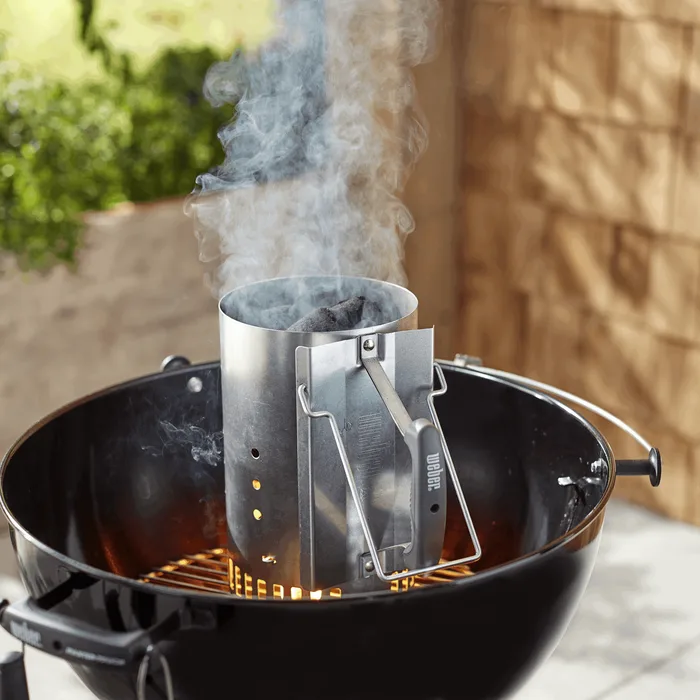
The Weber Rapidfire Chimney Starter is the one to buy: a 1.6 gallon chimney holding roughly 5.7 pounds of standard briquettes, in durable aluminized steel, with a heat shield that reduces heat transfer to the side handle and a flip-up helper handle so you can pour lit coals with two hands. It needs no power, no gas and no maintenance. The Looftlighter Pro is the fastest and the most expensive, starting charcoal, briquettes or logs with superheated air reaching 1400 degrees Fahrenheit, with no gas, no flame and no lighter fluid, 30 percent more airflow than the model before it and an auto ignition program. The Oklahoma Joe's Charcoal Lighter 2.0 is a propane torch with a wide flame and a 20,000 BTU burner, an ergonomic handle, a safety trigger and a push-button ignition. The Char-Broil Electric Charcoal Starter is the one to skip: 550 watts at 120 volts buried in the coals is the slowest method here and the element wears out. Best for: anyone still using lighter fluid, or still waiting forty minutes for coals.
Our picks at a glance
- Weber Rapidfire Chimney Starter - Buy. 1.6 gallons of aluminized steel that needs nothing but a match and ten minutes.
- Looftlighter Pro - Buy. Superheated air at 1400 degrees, no flame, no gas, no fluid, and a socket.
- Oklahoma Joe's Charcoal Lighter 2.0 - It depends. A 20,000 BTU propane torch with a safety trigger, for people who want a flame.
- Char-Broil Electric Charcoal Starter - Skip. A 550 watt element buried in the pile, which is the slow way to do this.
The verdict in 30 seconds
What mattered most
- Method
- Needs power
- Needs fuel or consumables
- Output figure
- Open flame
- Works on logs
Lighting charcoal is a solved problem with four competing solutions, and they are genuinely different rather than variations on a theme. A chimney uses physics and needs nothing but a sheet of newspaper. A hot-air lighter blows 1400 degree air at the coals and needs a socket. A propane torch sets fire to them directly and needs a gas canister. An electric coil sits buried in the pile and needs patience. Which is right for you depends less on speed than on what you are willing to keep, store, and plug in, and none of them involves lighter fluid, which is the one thing everyone agrees on.
1.6 gallons of aluminized steel that needs nothing but a match and ten minutes.
Best for: Almost everyone, and anyone who grills away from a power socket.
- A large 1.6 gallon capacity holding approximately 5.7 pounds of standard charcoal briquettes, which is the only capacity figure published by any maker here.
- Durable aluminized steel construction, a sturdy side handle shaped for a secure grip, and a heat shield that reduces heat transfer to that handle.
- A flip-up helper handle so you can use two hands to pour lit coals, which is the moment this job is most likely to go wrong.
- It needs a separate ignition source, whether newspaper, a lighter cube or a torch.
- Weber recommends wearing gloves when the chimney is hot, and it stays hot for a long time after the coals are poured.
- No time-to-light figure is published, and the whole thing has to go somewhere fireproof afterwards.
- It is a bulky object to store, and a smaller Compact version exists for a reason.
Superheated air at 1400 degrees, no flame, no gas, no fluid, and a socket.
Best for: Patio and garden grilling near a socket, where lighting in a couple of minutes is worth the outlay.
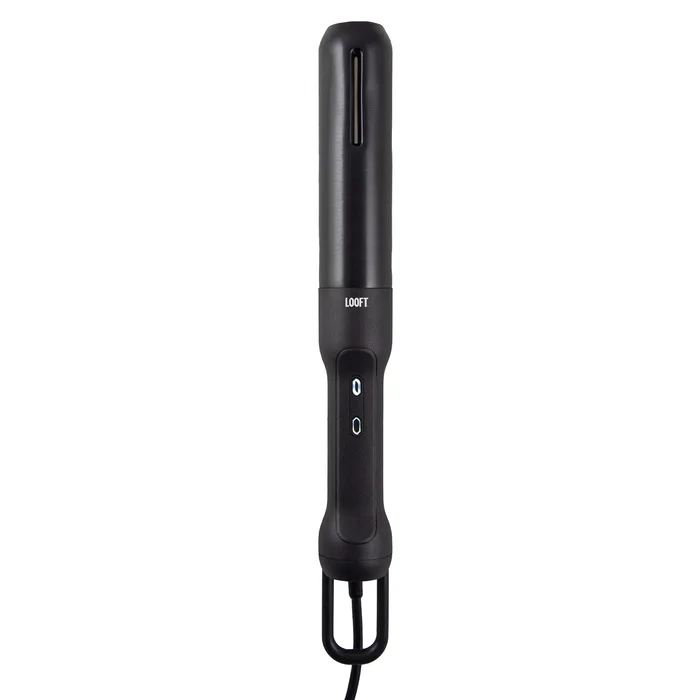
- Starts a fire with superheated air alone, reaching 1400 degrees Fahrenheit, with no gas, no flame and no need for lighter fluid.
- Lights all fuels including charcoal, briquettes and logs, so the same tool handles a grill, a fire pit and an indoor fireplace.
- The Pro adds 30 percent more airflow than the model before it and an auto ignition program, so it manages the sequence rather than relying on you holding a trigger.
- It needs mains power, which rules out grilling anywhere without a socket or an extension lead.
- No wattage and no time-to-light figure are published.
- No cable length is given, which is the practical constraint on where you can use it.
- It is by a wide margin the most expensive way to light charcoal here.
A 20,000 BTU propane torch with a safety trigger, for people who want a flame.
Best for: Lighting large or damp fuel loads and offset smokers, away from power.
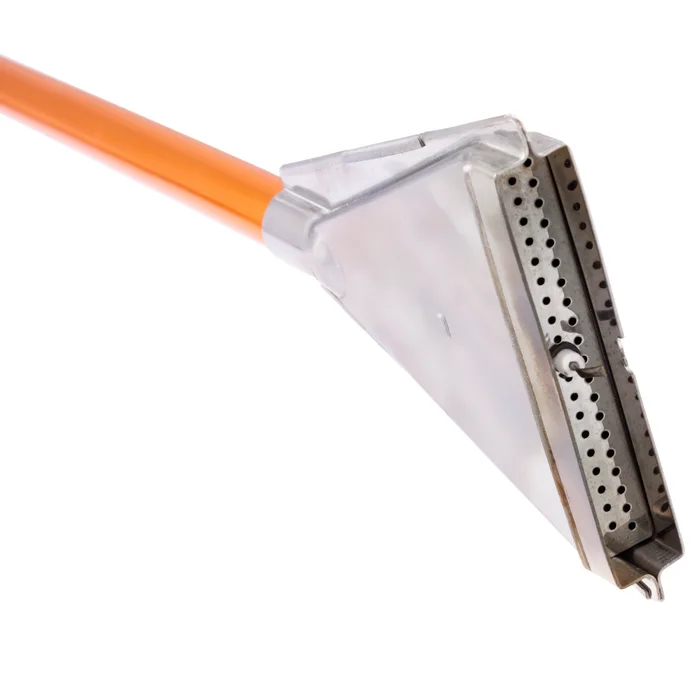
- A powerful propane burner rated at 20,000 BTU with a wide flame, which Oklahoma Joe's says sets fuel ablaze four times faster.
- An ergonomic handle with a safety trigger that must be held and a separate push-button ignition, so it does not light by accident.
- It works on wood as well as charcoal, needs no electricity, and doubles as a general-purpose torch around a smoker.
- It is an open flame at 20,000 BTU, which demands more care than any other method here.
- Four times faster is stated without saying four times faster than what.
- No propane canister size, thread standard or run time per canister is published.
- It needs a supply of gas canisters, which is a consumable the chimney and the electric options do not have.
A 550 watt element buried in the pile, which is the slow way to do this.
Best for: Occasional use where it already exists in the shed and nothing else is to hand.
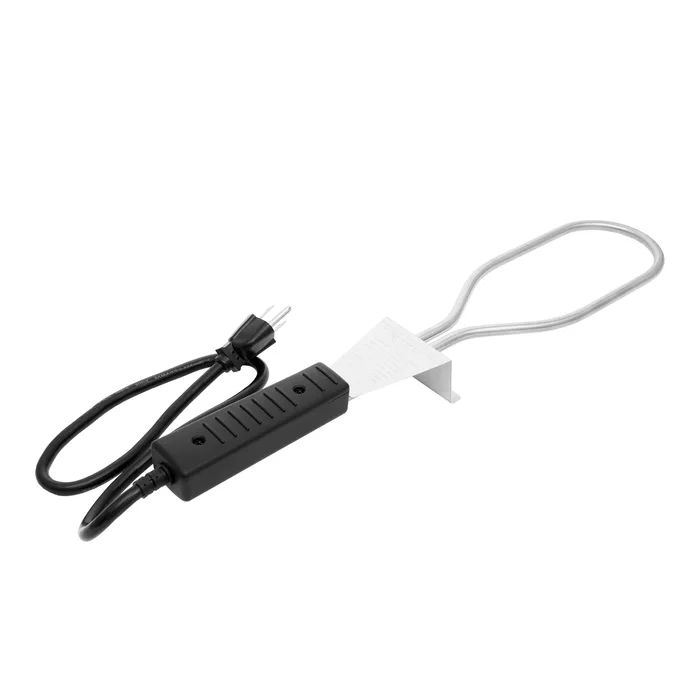
- No lighter fluid needed, and Char-Broil publishes its electrical rating at 550 watts and 120 volts, which is more than most makers in this group manage.
- A heat-resistant handle and a simple loop shape that stores flat.
- It can be used with an extension cord, which Char-Broil states explicitly.
- At 550 watts it is the lowest-powered method here and correspondingly the slowest.
- The element sits in direct contact with the coals while it works, which is what eventually destroys it.
- No time-to-light figure, no cable length and no dimensions are published.
- It needs a socket like the Looftlighter without being anywhere near as fast.
| Criteria | Rapidfire Chimney Starter Top pick | Looftlighter Pro | Charcoal Lighter 2.0 | Electric Charcoal Starter |
|---|---|---|---|---|
| Verdict | Buy it | Buy it | It depends | Skip it |
| Best for | Almost everyone, and anyone who grills away from a power socket. | Patio and garden grilling near a socket, where lighting in a couple of minutes is worth the outlay. | Lighting large or damp fuel loads and offset smokers, away from power. | Occasional use where it already exists in the shed and nothing else is to hand. |
| Price tier | $ · budget | $$$ · premium | $$ · mid-range | $ · budget |
| Method | Chimney, convection | Superheated air | Propane torch | Electric heating element |
| Needs power | No | Yes, mains | No | Yes, mains |
| Needs fuel or consumables | Newspaper or a lighter cube | No | Propane canisters | No |
| Output figure | 1.6 gallon, about 5.7 lb briquettes | 1400 °F air | 20,000 BTU | 550 W at 120 V |
| Open flame | Yes, from the starter below | No | Yes | No |
| Works on logs | No | Yes, stated | Yes | No |
| Material or build | Aluminized steel, heat shield | Not published | Not published | Not published |
| Safety features | Heat shield, helper handle, gloves advised | No flame or gas | Safety trigger and ignition button | Heat-resistant handle |
| Time to light published | No | No | Four times faster, no baseline | No |
Which one is right for you?
- Almost everyone, and anyone who grills away from a power socket. Buy it Weber Rapidfire Chimney Starter
- Patio and garden grilling near a socket, where lighting in a couple of minutes is worth the outlay. Buy it Looftlighter Pro
- Lighting large or damp fuel loads and offset smokers, away from power. It depends Oklahoma Joe's Charcoal Lighter 2.0
- Occasional use where it already exists in the shed and nothing else is to hand. Skip it Char-Broil Electric Charcoal Starter
How we judged the field
These four products do the same job by four different physical mechanisms, so the comparison is less about quality than about what each one demands of you. We started with dependencies: power, gas, consumables, and a separate ignition source. A chimney needs something to light underneath it and nothing else. A hot-air lighter needs a socket. A torch needs canisters. An electric element needs a socket and time. Those requirements decide where you can grill more than any performance figure does.
After that we looked for a number, any number, describing output or capacity, and found that each maker publishes exactly one in a different unit: a volume in gallons, an air temperature in Fahrenheit, a burner rating in BTU, and an electrical draw in watts. None of them is comparable with any other, and nobody publishes a time to light, which is the figure every buyer actually wants. Then we looked at the safety design, since three of these four involve either an open flame or a component hot enough to ignite a deck, and at what happens to the tool afterwards, which for a chimney is a genuine consideration.
The Weber Rapidfire Chimney Starter is the answer for most people because it removes every dependency. There is no cable, no canister, nothing to charge and nothing to fail; you put charcoal in the top, a starter underneath, and convection does the rest. Weber publishes the one figure that matters, a large 1.6 gallon capacity holding approximately 5.7 pounds of standard briquettes, which tells you directly whether it will fill your grill. The construction is durable aluminized steel, and the handle design has clearly been thought about: there is a sturdy side handle shaped for a secure grip, a heat shield to reduce heat transfer into it, and a flip-up helper handle so that pouring a load of lit coals is a two-handed operation rather than a one-handed balancing act. The limitations are inherent to the method. You still need something to light underneath, whether newspaper, a paraffin cube or a natural starter. Weber recommends gloves when the chimney is hot, and it remains dangerously hot long after the coals are poured, so it needs somewhere fireproof to sit. And it is a bulky thing to store, which is why a Compact version exists.
The Looftlighter Pro is the fastest and the cleverest, and the one most constrained by where you can use it. It lights fuel with superheated air alone, reaching 1400 degrees Fahrenheit, with no gas, no flame and no lighter fluid involved at any point, which makes it the safest method here by a distance. It works on charcoal, briquettes and logs, so it covers a kettle grill, a fire pit and a wood stove with one tool. The Pro revision adds 30 percent more airflow than the model it replaces and an auto ignition program, meaning the device manages the heating and blowing sequence rather than asking you to judge it. What Looft does not publish is anything numerical about performance: there is no wattage, no time-to-light figure, and no cable length, which is the practical limit on where it can be used and the one specification a buyer with a garden most needs. It also has to be plugged in, and it costs several times what a chimney does.
The Oklahoma Joe’s Charcoal Lighter 2.0 is the direct approach, and it is genuinely useful in situations the others struggle with. It is a propane torch with a wide flame and a burner rated at 20,000 BTU, enough to light wood as well as charcoal and to get a reluctant or slightly damp fuel load going when a chimney would stall. Oklahoma Joe’s claims it sets fuel ablaze four times faster, and the ergonomics are sensibly handled with a grip designed to be held for a while, a safety trigger that must be squeezed and a separate ignition button, so it does not fire by accident. It needs no electricity, which makes it the only fast option that works away from a socket. Against that, it is an open flame at serious output and deserves the respect that implies, the four-times-faster claim has no stated baseline, and Oklahoma Joe’s publishes no canister size, no thread standard and no run time per canister, so you cannot work out the running cost or what fuel to buy.
The Char-Broil Electric Charcoal Starter is the skip, and not because it does not work. It is a heating element you bury in a pile of briquettes, and Char-Broil is straightforward about it: 550 watts at 120 volts, a heat-resistant handle, no lighter fluid, and it can be run from an extension cord. Publishing the electrical rating is more than two of the other three manage in their own units. The problem is the number itself. Five hundred and fifty watts is roughly a bright halogen lamp, and it has to raise a pile of charcoal to ignition temperature through direct contact, which is why this method has always been slow. It also puts the element in among the coals while they light, so it spends its working life being cooked, and the element is the part that eventually fails. You are accepting the socket dependency of the Looftlighter without any of its speed, and paying about the same as a chimney that needs no socket at all. There is no time-to-light figure, no cable length and no dimensions to go on.
Weber Rapidfire Chimney Starter vs Looftlighter Pro: which should you buy?
Weber against Looft is a choice between independence and speed. The chimney needs nothing: no socket, no canister, no charge, no moving parts and no component that can burn out. It publishes its capacity, so you know whether one load fills your grill, and the flip-up helper handle makes the one genuinely risky moment, pouring several pounds of lit charcoal, considerably safer. It also costs a fraction of everything else here and will still work in twenty years.
The Looftlighter Pro buys you time and removes the flame entirely. Superheated air at 1400 degrees lights coals far faster than convection does, there is no gas and nothing burning in your hand, and it handles logs as well as charcoal, which the chimney cannot. The price is a cable: you can only grill where you can reach a socket, and Looft will not tell you how long that cable is. Buy the chimney if you grill anywhere, want nothing to maintain, or simply want the cheapest thing that works properly. Buy the Looftlighter if you grill on a patio near power and the wait is the part you want to eliminate.
What to look for
- What it depends on: mains power, propane canisters, or nothing but a match, which decides where you can actually use it.
- A capacity or output figure: gallons and pounds of briquettes for a chimney, BTU for a torch, watts for an element, and a temperature for hot air.
- Whether it lights wood as well as charcoal: only the torch and the hot-air lighter do, and that matters for fire pits and offset smokers.
- The handle and heat shield design: pouring lit coals is where this goes wrong, and a helper handle and a shield are not decoration.
- Whether a consumable is involved: canisters and lighter cubes are ongoing costs, and electricity and convection are not.
- Where the tool goes afterwards: a chimney or a torch head stays dangerously hot, and needs somewhere fireproof to cool.
Our final take
Four ways to light charcoal, and the oldest one is still the right answer for most people. The Weber Rapidfire Chimney Starter is the one to buy: 1.6 gallons holding about 5.7 pounds of briquettes, aluminized steel, a heat shield and a flip-up helper handle for the moment that actually matters, and no dependency on anything but a sheet of newspaper. The Looftlighter Pro is worth its considerable premium if you grill within reach of a socket and want coals in minutes with no flame and no gas at all. The Oklahoma Joe’s torch is the tool for wood, damp fuel and offset smokers, provided you respect 20,000 BTU of open flame. And a 550 watt element buried in the coals asks for a socket, gives you the slowest light of the four, and wears itself out doing it.
Questions, answered
How does a chimney starter actually work?
Convection. You put charcoal in the top section and a fire starter underneath, and the chimney shape draws air upward past the coals, so each layer lights the one above it. It needs no power and no gas because the fire does the work, and the only consumable is whatever you light underneath: a sheet of newspaper, a paraffin cube or a natural wood wool starter. The size determines how much you can light at once, which is why Weber's 1.6 gallon capacity, holding about 5.7 pounds of briquettes, is a genuinely useful number.
Is lighter fluid really that bad?
It works, and it is the one thing every maker here is positioning against. The objections are practical: it leaves a chemical taste if the coals are not fully burned through before cooking, it is easy to over-apply, and adding more to a lit fire is genuinely dangerous. Every product in this comparison is sold partly on not needing it, and all four succeed at that. If you already own lighter fluid, the honest answer is that a chimney starter costs very little and removes the problem permanently.
Which method is actually fastest?
The hot-air and torch methods, by a clear margin, and none of these makers publishes a time so the comparison has to be qualitative. A propane torch at 20,000 BTU or superheated air at 1400 degrees is applying far more energy than a sheet of newspaper, which is why Oklahoma Joe's claims four times faster, though without saying four times faster than what. A chimney is slower and almost entirely unattended. A 550 watt electric element is the slowest of the four, because 550 watts is not very much heat.
What do I do with the chimney once the coals are out?
Put it somewhere fireproof and leave it alone. A chimney that has just held lit coals is hot enough to scorch a table, melt a plastic surface or set fire to a wooden deck, and it stays hot far longer than you expect. Weber recommends gloves when handling it hot, and the flip-up helper handle exists so you can pour with two hands rather than one and a prayer. The usual answer is to stand it on the grill's lower grate or on bare concrete until it cools.
Can these light wood as well as charcoal?
The torch and the hot-air lighter can, and the other two cannot. Looft states that the Looftlighter lights charcoal, briquettes and logs, and a propane torch will start anything you point it at, which makes both useful for fire pits, wood stoves and offset smokers running on splits. A chimney starter is designed around charcoal geometry and does not work well with logs, and an electric element is designed to be buried in briquettes. If you burn wood as well as charcoal, that narrows the choice to two.
Deciding between the top two? See our head-to-head: Weber Rapidfire Chimney Starter vs Looftlighter Pro.
More Home & Kitchen reviews
 Best 8-Inch Chef's Knives: Our Honest Picks (and One to Skip)
  The Best Coffee Canisters: 4 Compared (and One to Skip)
  The Best Coffee Scales: 4 Compared (and One to Skip)
  The Best Cold Brew Coffee Makers: 4 Compared (and One to Skip)
  The Best Cordless Drills: 4 Compared (and One to Skip)
  The Best Cordless Lawn Mowers: 4 Compared (and One to Skip)