Explained
Car Leather Cleaners, Explained
After reading, you'll know whether your seats are coated or genuine leather, why most of them just need gentle cleaning plus light protection, and how to avoid the greasy over-conditioning trap.
In this guide
Nearly all modern car 'leather' is coated: a thin polyurethane clear coat printed over the hide, and some seats are fully synthetic. That single fact changes everything, because a coated surface can't drink in the heavy oily conditioners that marketing tells you to slather on. What trips buyers up is treating a factory seat like an old leather saddle, when what it really needs is a gentle wipe-down and a light protectant.
The 30-second version
- Most car leather is coated, meaning a clear plastic-like finish sits between any product and the actual hide, so heavy conditioners can't soak in and mostly just sit on top.
- Gentle cleaning beats conditioning, because removing grit and body oils is what actually keeps coated leather healthy, while over-conditioning leaves residue, a slippery feel, and a fake gloss.
- The water-drop test tells you which leather you have, water beads on coated leather and soaks in on genuine uncoated or aniline leather, and that answer decides your whole routine.
- Aim for a natural matte finish, not a wet look, a greasy shine means product is sitting on the surface, and slick seats and a slippery steering wheel are a real safety issue.
- Genuine uncoated leather is the exception, it genuinely needs a dedicated cleaner-and-protector system, so identify your leather type before you buy anything.
The products this guide is about
Our verdict on each, with the full reasoning on the companion review.
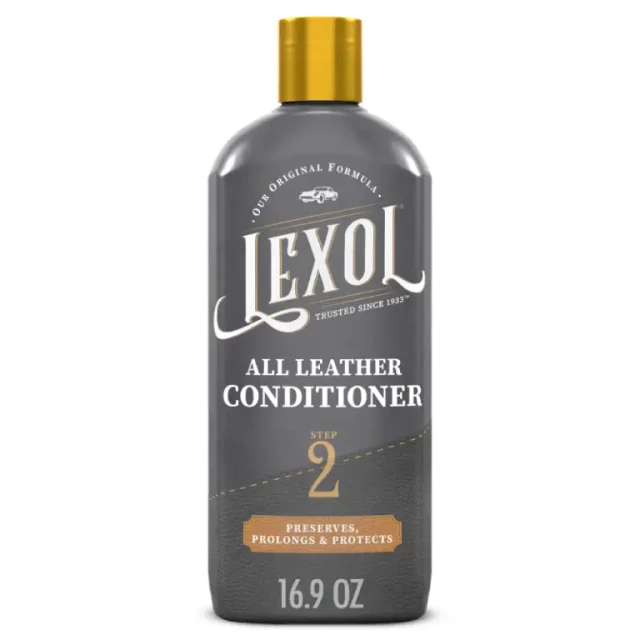
- Buy Lexol Leather Cleaner & Conditioner A pH-balanced two-step cleaner and light conditioner that does exactly what coated car leather actually needs — nothing more.
- Buy Chemical Guys Sprayable Leather Cleaner & Conditioner In One A pleasant, low-residue all-in-one spray that makes quick maintenance wipe-downs of coated leather genuinely easy.
- It depends Colourlock Smooth Leather Care Set The right, careful system for genuine uncoated or aniline leather — and overkill for the coated seats in most modern cars.
- Skip Leather Honey Leather Conditioner A heavy, oil-rich conditioner built for absorbent old-school leather — exactly the wrong idea for the coated seats in your car.
What actually matters
- Match the product to your leather type. Coated leather (beads water) wants gentle cleaning plus light protection; genuine uncoated or aniline leather (absorbs water) needs a dedicated nourishing system. Using the wrong one is the single most common mistake.
- A pH-neutral cleaner. Cleaning is the part that actually preserves leather, and a balanced, non-harsh cleaner lifts body oils and grime without stripping or drying the finish the way a strong degreaser can.
- A non-greasy, matte finish. The right product dries to a low, natural sheen. A glossy wet look signals residue sitting on top, which attracts dust and can make seats and the wheel dangerously slick.
- Light UV and wear protection. Cracking and fading come mostly from sun, heat, and abrasion, so a protectant with some UV resistance does more for longevity than piling on conditioner ever will.
- Cleaner-plus-conditioner vs. all-in-one format. A two-step system lets you clean thoroughly and add only as much conditioner as you actually need; an all-in-one spray trades a little deep-cleaning power for speed and simplicity.
- Gentle tools. A soft brush to loosen grime in the grain plus a microfiber towel to lift it away does the job without the hard scrubbing that can scratch or wear a coating.
The specs, in plain English
Green flags vs red flags
Green flags
- Clearly labeled as pH-neutral or pH-balanced and safe for coated or finished leather
- Dries to a natural, low-matte finish rather than a glossy or wet look
- Described as non-greasy, low-residue, or leaving no slippery film
- Includes some UV or wear protection, or pairs a cleaner with a light protectant
- Honest about leather type, telling you it's for coated seats rather than promising to 'feed' every hide
Red flags
- Promotes a high-gloss, wet, or 'showroom shine' look, which means residue sitting on the surface
- A heavy, oil-rich conditioner marketed for car seats, which coated leather can't absorb
- Vague 'leather dressing' or 'shine' with no mention of pH or cleaning
- Claims to stop cracking mainly by 'nourishing' or 'feeding' coated leather, ignoring UV and cleaning
- No guidance on coated vs. genuine leather, treating all leather as one thing
- Warnings from owners about tacky, slippery, or dust-attracting film after use
Who's who: the brands
- Lexol - Long-established, widely available leather-care line known for straightforward, affordable pH-balanced cleaners and light conditioners.
- Chemical Guys - Popular detailing brand offering convenient all-in-one sprays aimed at quick, regular maintenance.
- Colourlock - Specialist in matched care systems built around genuine uncoated and aniline leather, including delicate hides.
- Leather Honey - Maker of thick, oil-rich conditioners designed for bare, absorbent leather like boots and saddles rather than coated car seats.
How to read a listing without getting fooled
Start by finding the leather type, not the marketing promise. A listing that says 'nourishes and feeds your leather' or shows a mirror-like shine is speaking the language of old absorbent hides, which is the wrong target for the coated seats in most cars. Look instead for the words pH-neutral or pH-balanced, 'safe for finished or coated leather,' and a description of a natural or matte finish. Treat a cleaner and a conditioner as two different jobs: the cleaner does most of the real work, and 'conditioner' or 'dressing' is where over-treating creeps in. If a product only conditions and doesn't clean, know that it can seal grime under a shiny layer. And if you can't tell what leather you own, do the water-drop test first, because it decides whether you want a gentle everyday cleaner or a dedicated system for genuine leather.
How much should you spend?
Maintaining coated car leather is genuinely cheap, so this is not a category where spending more buys much. A basic pH-balanced cleaner with a light conditioner covers what almost every modern seat needs, and paying up for a premium 'shine' or heavy conditioner usually gets you residue you don't want. An all-in-one spray costs a little more per use than a plain cleaner, and that premium is fair if the convenience means you'll actually clean more often. The one place extra money is justified is genuine uncoated or aniline leather: a dedicated care set costs more but is the right tool, and using a cheap coated-leather spray on delicate real leather is a false economy. Confirm your leather type before you decide it's worth stepping up.
Questions, answered
How do I tell if my car leather is coated or genuine?
Put a small drop of water on a hidden spot. On coated (pigmented) leather, the color is uniform, the surface has a slight sheen, and the water beads on top. On genuine uncoated or aniline leather, common in classics and some luxury cars, the surface looks more natural with subtle variation and the water soaks in and darkens the spot within a few seconds. If it beads, a gentle cleaner plus light protectant is all you need; if it soaks in, use a dedicated system for real leather.
Do I even need a conditioner on coated car leather?
Usually very little. Because a clear coat sits between the conditioner and the hide, the oils mostly can't reach the leather, so they stay on the surface. Regular gentle cleaning matters far more, and a light protectant helps with UV and wear. Over-conditioning is the most common mistake: it leaves residue, a slippery feel, a fake glossy look, and it attracts dust. Clean often, condition lightly and only occasionally, and skip the heavy dressings.
Why avoid greasy 'leather shine' dressings and heavy oils?
A high-gloss, wet-look sheen on coated leather is a sign the product is just sitting on top rather than doing anything useful. Greasy dressings can make seats and the steering wheel slick, which is a genuine safety issue, and they attract dust and feel tacky in heat. Heavy oil conditioners are formulated for bare, absorbent leather; on a coated seat they can't absorb, so you get film instead of feed. Aim for a natural, low-matte finish.
Does leather conditioner actually stop cracking and fading?
Not the way the bottle implies. Cracking and fading on car leather are driven mostly by UV exposure, heat, and abrasion, not by the hide 'drying out' under its coating. A light protectant with some UV resistance and, above all, regular gentle cleaning to remove grit and body oils does more to prevent wear than slathering on conditioner. Parking in shade or using a sunshade helps as much as any product.
What's the safest way to actually clean the seats?
Work gently. Use a small amount of pH-neutral cleaner, a soft brush to loosen grime in the grain, and a microfiber towel to lift it away, rather than hard scrubbing that can wear the coating. Always clean before you protect so you're not sealing dirt under the finish, and buff any conditioner or all-in-one off well so it doesn't leave a slippery film. For light-colored or heavily used seats, clean a little more often.
How often should I clean and condition car leather?
A quick wipe-down every few weeks and a proper clean every couple of months suits most cars, and more often for light-colored seats or heavy use. On coated leather, a light protectant a few times a year is plenty. Reserve deeper conditioning for genuine uncoated leather, and always clean before you protect.
Or jump to the head-to-head: Lexol Leather Cleaner & Conditioner vs Chemical Guys Sprayable Leather Cleaner & Conditioner In One.