

Automotive
The Best Car Leather Cleaners & Conditioners: 4 Compared (and One to Skip)
We compared four leather cleaners and conditioners on what actually matters for modern coated car seats: gentle pH-neutral cleaning, a non-greasy matte finish, and no over-treating.
The short version
Almost all modern car 'leather' is coated — a polyurethane layer over the hide — so it does not absorb heavy conditioners and mostly just needs a gentle, pH-neutral wipe-down plus a light protectant. Lexol's two-step cleaner and conditioner covers that for the least money and leaves a natural matte finish, which is why it is our pick. Chemical Guys' all-in-one spray is the simplest one-step option and our runner-up. Colourlock's care set is the right, careful choice only if you actually have genuine uncoated or aniline leather. Skip Leather Honey for car seats — its thick oil is made for absorbent bare leather and just sits greasy on top of a coated seat. Best for: keeping normal coated car leather clean and supple without over-treating or paying for a slippery wet-look shine.
Our picks at a glance
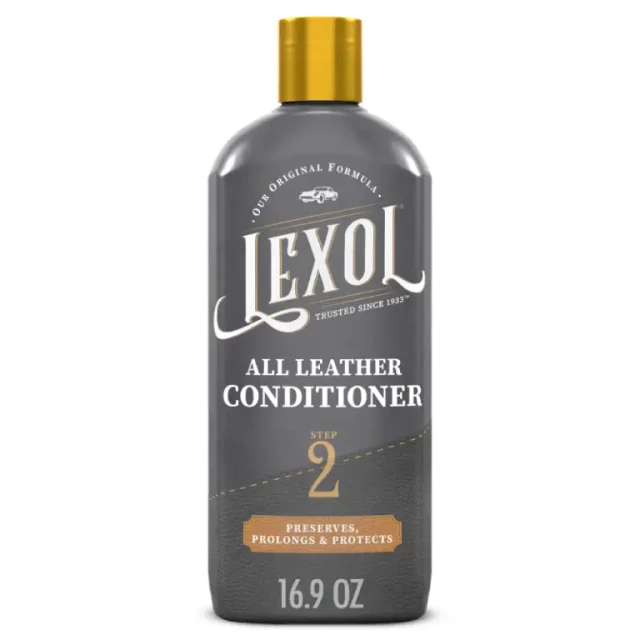
- Lexol Leather Cleaner & Conditioner - Buy. A pH-balanced two-step cleaner and light conditioner that does exactly what coated car leather actually needs — nothing more.
- Chemical Guys Sprayable Leather Cleaner & Conditioner In One - Buy. A pleasant, low-residue all-in-one spray that makes quick maintenance wipe-downs of coated leather genuinely easy.
- Colourlock Smooth Leather Care Set - It depends. The right, careful system for genuine uncoated or aniline leather — and overkill for the coated seats in most modern cars.
- Leather Honey Leather Conditioner - Skip. A heavy, oil-rich conditioner built for absorbent old-school leather — exactly the wrong idea for the coated seats in your car.
The verdict in 30 seconds
What mattered most
- Best leather type
- pH-neutral / gentle cleaning
- Finish
- Greasiness / residue
- Helps resist UV cracking/fading
- Format
Here is the thing almost no product page will tell you: nearly all modern car 'leather' is coated — a thin polyurethane clear coat printed over the hide — so it does not drink in heavy oily conditioners the way old aniline leather does. That reframes the whole category. For most seats you want a gentle, pH-neutral cleaner and a light protectant, not a thick greasy dressing that leaves a slippery, fake wet-look sheen. We synthesized independent testing and owner reports to pick two easy buys, one that only makes sense for genuine uncoated leather, and one popular product we would skip for car interiors.
A pH-balanced two-step cleaner and light conditioner that does exactly what coated car leather actually needs — nothing more.
Best for: Anyone with ordinary factory (coated) car seats who wants a safe, cheap, no-nonsense clean-and-protect routine.
- pH-balanced cleaner lifts grime without stripping or drying the coating
- Conditioner is light and non-greasy — dries to a low, natural matte finish, not a wet-look shine
- Two-step system lets you clean thoroughly, then decide how much (if any) conditioner you need
- Widely available and inexpensive, so you are not overpaying to maintain coated leather
- Two bottles and two steps is slightly more effort than a single spray
- Not the right tool for genuine uncoated or aniline leather that needs deeper nourishment
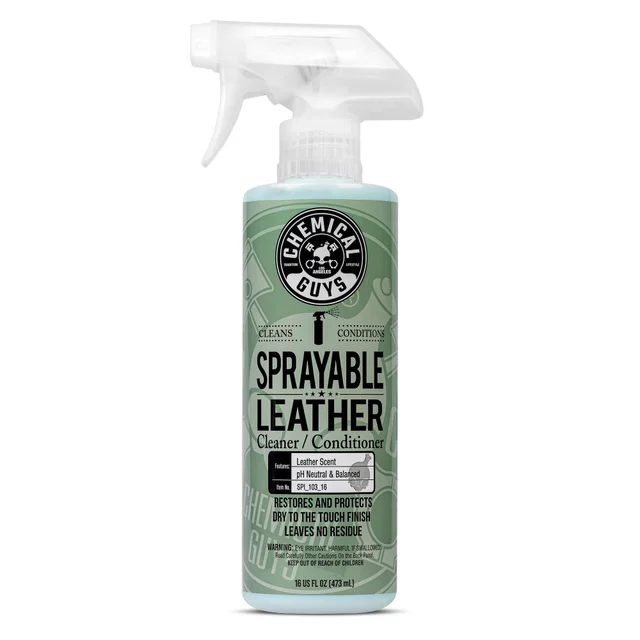
A pleasant, low-residue all-in-one spray that makes quick maintenance wipe-downs of coated leather genuinely easy.
Best for: People who want the simplest possible routine and will actually wipe the seats down more often because it is easy.
- One-step spray-and-wipe is fast and hard to over-apply if you use a little on a cloth
- Cleans and lightly conditions in a single pass — ideal for regular upkeep between deep cleans
- Leaves a natural, non-glossy finish rather than a greasy sheen when buffed off properly
- Mild, pleasant scent that owners tend to like over heavy chemical smells
- An all-in-one compromises a bit on deep-cleaning power versus a dedicated cleaner
- Costs more per use than a plain cleaner, and coated leather rarely needs the 'conditioner' half
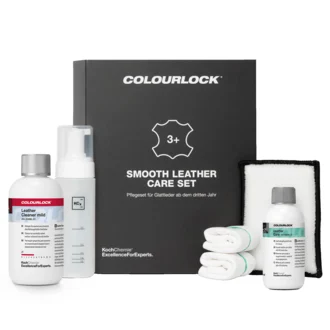
The right, careful system for genuine uncoated or aniline leather — and overkill for the coated seats in most modern cars.
Best for: Owners of classic cars, high-end interiors, or furniture with genuine uncoated/aniline leather that a standard cleaner cannot safely maintain.
- A matched cleaner-plus-protector system designed around how real leather actually behaves
- Gentle, controlled formulas aimed at preserving delicate aniline and semi-aniline hides
- Genuinely fills the gap where cheap coated-leather sprays are the wrong tool
- Applicator cloths and clear steps make careful, even treatment easy to get right
- More product, cost, and process than ordinary coated car seats ever require
- You need to correctly identify your leather type first, or you are paying for capability you cannot use
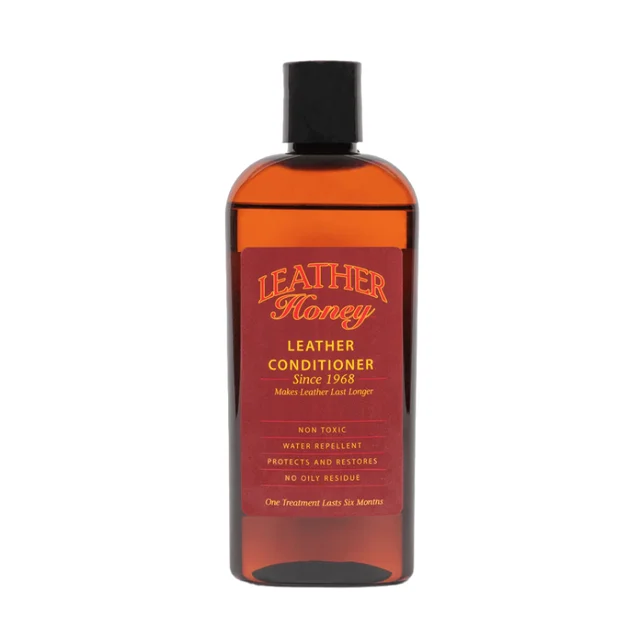
A heavy, oil-rich conditioner built for absorbent old-school leather — exactly the wrong idea for the coated seats in your car.
Best for: Bare leather boots, saddles, belts, and vintage bags — not the coated seats in a modern car.
- Thick, long-lasting formula that genuinely nourishes bare, absorbent leather like boots or tack
- A little goes a long way on the uncoated goods it is actually designed for
- On coated car leather it sits on top of the clear coat instead of soaking in
- Can leave a tacky, greasy film that attracts dust and feels slippery on seats and the wheel
- It is a conditioner only — no real cleaning — so it can seal grime under a shiny layer
- Encourages the over-conditioning habit that coated leather never needs
| Criteria | Lexol Leather Cleaner & Conditioner Top pick | Chemical Guys Sprayable Leather Cleaner & Conditioner In One | Colourlock Smooth Leather Care Set | Leather Honey Leather Conditioner |
|---|---|---|---|---|
| Verdict | Buy it | Buy it | It depends | Skip it |
| Best for | Anyone with ordinary factory (coated) car seats who wants a safe, cheap, no-nonsense clean-and-protect routine. | People who want the simplest possible routine and will actually wipe the seats down more often because it is easy. | Owners of classic cars, high-end interiors, or furniture with genuine uncoated/aniline leather that a standard cleaner cannot safely maintain. | Bare leather boots, saddles, belts, and vintage bags — not the coated seats in a modern car. |
| Price tier | $ · budget | $$ · mid-range | $$$ · premium | $$ · mid-range |
| Best leather type | Coated (most cars) | Coated (most cars) | Genuine / aniline / uncoated | Bare, absorbent leather — not car seats |
| pH-neutral / gentle cleaning | Yes — balanced cleaner | Yes — mild all-in-one | Yes — careful system | No cleaning — conditioner only |
| Finish | Low matte, natural | Natural, non-glossy | Natural, preserves original look | Can look greasy / wet-slick |
| Greasiness / residue | Low — non-greasy | Low when buffed off | Low — controlled | High — oily film on coated leather |
| Helps resist UV cracking/fading | Light protection | Light protection | Yes — dedicated protector | Not designed for coated seats |
| Format | Two-step: cleaner + conditioner | One-step all-in-one spray | Multi-part care set | Single conditioner bottle |
| Price tier | $ · budget | $$ · mid-range | $$$ · premium | $$ · mid-range |
Which one is right for you?
- Anyone with ordinary factory (coated) car seats who wants a safe, cheap, no-nonsense clean-and-protect routine. Buy it Lexol Leather Cleaner & Conditioner
- People who want the simplest possible routine and will actually wipe the seats down more often because it is easy. Buy it Chemical Guys Sprayable Leather Cleaner & Conditioner In One
- Owners of classic cars, high-end interiors, or furniture with genuine uncoated/aniline leather that a standard cleaner cannot safely maintain. It depends Colourlock Smooth Leather Care Set
- Bare leather boots, saddles, belts, and vintage bags — not the coated seats in a modern car. Skip it Leather Honey Leather Conditioner
How we judged the field
We do not run our own lab. What we do is read across independent testing, professional detailer write-ups, and a large volume of owner reports, then translate the consensus into one clear verdict per product. For car leather that meant starting with a fact most marketing quietly ignores: the vast majority of modern car seats are coated (pigmented) leather — a thin polyurethane clear coat printed over the hide. That single detail decides almost everything.
Because a coating sits between any product and the actual leather, heavy oily conditioners largely cannot soak in the way they would on old-school aniline leather. So the criteria that mattered most were: gentle, pH-neutral cleaning (the part that actually keeps leather healthy), a non-greasy, natural matte finish (no fake wet look), low residue and no slippery film, some UV/wear protection, a sensible format for how often you will really use it, and a pleasant scent. We also weighed each product against the special case of genuine uncoated or aniline leather, which genuinely does need a dedicated approach.
Lexol Leather Cleaner & Conditioner - buy
Lexol is the reliable value answer, and for coated car leather it is hard to beat. The cleaner is pH-balanced, so it lifts body oils, denim dye, and grime without stripping or drying the finish, and the conditioner is deliberately light — it dries to a low, natural sheen instead of a greasy gloss. Splitting the job into two steps is a feature, not a chore: you clean properly, then decide how little conditioner you actually need (on coated seats, that is not much). It is inexpensive and everywhere, which matters when the real job is just routine maintenance. The only reasons to look elsewhere are if you want a one-bottle routine, or if you have genuine uncoated leather that needs deeper care.
Chemical Guys Sprayable Leather Cleaner & Conditioner In One - buy
If the two-step approach feels like too much, this all-in-one spray is our easy runner-up. You mist a little onto a microfiber cloth, wipe, and buff — done. It cleans and lightly conditions in one pass, which is exactly right for the frequent, low-effort wipe-downs that keep leather looking good. Buffed off properly it leaves a natural, non-glossy finish rather than a slick sheen, and the scent is mild and well liked. The trade-offs are honest: an all-in-one does not deep-clean quite like a dedicated cleaner, and you are paying a bit for a ‘conditioner’ half that coated leather barely uses. But for people who will clean more often because it is simple, that is a good trade.
Colourlock Smooth Leather Care Set - it depends
This is the pick for the situation the cheap sprays get wrong: genuine uncoated or aniline leather. Colourlock builds matched cleaner-and-protector systems around how real leather actually behaves, with gentle formulas and applicators that make careful, even treatment easy. On a classic car, a high-end interior, or fine furniture with delicate hides, that care is worth it. But be honest about what you own. On the coated seats in an ordinary modern car, this is more product, more cost, and more process than the job requires — you would be paying for capability the clear coat prevents you from using. Identify your leather type first (see our FAQ on the water-drop test); if it beads, you do not need this. If it soaks in, this is the safe way to treat it.
Leather Honey Leather Conditioner - skip
Leather Honey is a good product aimed at the wrong target for this list. It is a thick, oil-rich conditioner made for bare, absorbent leather — boots, saddles, belts, vintage bags — and on those it genuinely nourishes. Put it on coated car seats, though, and physics is against it: the clear coat blocks absorption, so the oil sits on the surface as a tacky, greasy film that can feel slippery on the seat and wheel, attract dust, and look artificially shiny. It also does no cleaning, so it can seal grime under that layer. Worst of all, it reinforces the exact habit coated leather never needs — over-conditioning. Keep it for your bare-leather gear and keep it out of the car.
Lexol Leather Cleaner & Conditioner vs Chemical Guys Sprayable In One: which should you buy?
Both are genuine buys, and both respect what coated leather actually needs; the choice is about your routine. Lexol is the value and control pick: two steps let you clean thoroughly and condition sparingly, it costs the least, and it leaves the most natural matte finish — our overall winner for exactly those reasons. Chemical Guys’ all-in-one wins on convenience: one spray, one wipe, a nice scent, and a finish that is easy to keep non-greasy. Pick Lexol if you want the cheapest, most thorough setup and do not mind two bottles. Pick the Chemical Guys spray if simplicity is what will actually get you to wipe the seats down regularly. Neither will over-treat your leather if you use them lightly — which is the whole point.
What to look for
- Match the product to the leather. Coated (beads water) wants gentle cleaning plus light protection; uncoated/aniline (absorbs water) wants a dedicated system like Colourlock.
- Prioritize a pH-neutral cleaner. Cleaning removes the grit and oils that actually wear leather — it matters more than conditioning.
- Avoid the wet look. A glossy, greasy sheen means product sitting on top, not working. Aim for a natural, low-matte finish.
- Beware over-conditioning. On coated seats, less is more; heavy oils leave residue, slipperiness, and dust magnets.
- Value light UV protection. Cracking and fading come mostly from sun, heat, and abrasion — shade and a sunshade help as much as any bottle.
- Do not overpay. Coated leather is cheap to maintain; you do not need a premium system to wipe down a factory seat.
Our final take
The honest story of this category is that most people are overpaying and over-treating leather that just needs a wipe-down. Because modern car seats are almost always coated, the winning move is boring on purpose: clean gently and often with a pH-balanced product, protect lightly, and skip the greasy dressings. Lexol Leather Cleaner & Conditioner does that for the least money and earns our overall pick; the Chemical Guys all-in-one spray is the simplest path to the same result. Save Colourlock for the genuine uncoated or aniline leather that truly needs it, and keep heavy oils like Leather Honey for bare-leather goods — not your car.
Questions, answered
How do I know if my car leather is coated or genuine/aniline?
Most modern factory seats are coated (pigmented) leather: a uniform color with a slight surface sheen and a printed grain that feels a touch plasticky. A drop of water beads on top rather than soaking in and darkening the spot. Genuine uncoated or aniline leather — common in classics and some luxury interiors — looks more natural, shows subtle variation, and absorbs a water drop within a few seconds. If water soaks in, treat it as uncoated and use a dedicated system like Colourlock; if it beads, you have coated leather and a gentle cleaner plus light protectant is all you need.
Do I even need a conditioner on coated car leather?
Usually not much. Because a clear coat sits between the conditioner and the hide, the oils mostly cannot reach the leather — they stay on the surface. Regular gentle cleaning matters far more than conditioning, and a light protectant helps with UV and wear. Over-conditioning is the most common mistake: it leaves residue, a slippery feel, and a fake glossy look, and it can attract dust. Clean often, condition lightly and occasionally, and skip the heavy dressings.
Why avoid greasy 'leather shine' dressings and heavy oils?
A high-gloss, wet-look sheen on coated leather is a sign the product is sitting on top rather than doing anything useful. Greasy dressings can make seats and the steering wheel slick, attract dust, and feel tacky in heat. Heavy oil conditioners like Leather Honey are formulated for bare, absorbent leather; on a coated seat they cannot absorb, so you get film instead of feed. Aim for a natural, low-matte finish.
Does leather conditioner actually stop cracking and fading?
Cracking and fading on car leather are driven mostly by UV exposure, heat, and abrasion, not by the hide 'drying out' under its coating. A light protectant with some UV resistance and, above all, regular gentle cleaning to remove grit and body oils will do more to prevent wear than slathering on conditioner. Parking in shade or using a sunshade helps as much as any bottle.
How often should I clean and condition my car's leather?
A quick wipe-down every few weeks and a proper clean every couple of months suits most cars — more often for light-colored seats or heavy use. If you have coated leather, a light protectant a few times a year is plenty. Reserve deeper conditioning for genuine uncoated leather, and always clean before you protect so you are not sealing dirt under the finish.
Deciding between the top two? See our head-to-head: Lexol Leather Cleaner & Conditioner vs Chemical Guys Sprayable Leather Cleaner & Conditioner In One.
More Automotive reviews
 The Best Car Phone Mounts: 4 Compared (and One to Skip)
  The Best Car Ramps: 4 Compared (and One to Skip)
  The Best Car Scratch Removers: 4 Compared (and One to Skip)
  The Best Car Seat Covers: 4 Compared (and One to Skip)
  The Best Car Backseat & Trunk Organizers: 4 Compared (and One to Skip)
  The Best Car Trash Cans: 4 Compared (and One to Skip)