

Automotive
The Best Car Scratch Removers: 4 Compared (and One to Skip)
We compared four car scratch and swirl removers on cutting ability, finish quality, hand versus machine use, and marketing claims.
The short version
Buy Meguiar's Ultimate Compound if you want one bottle that actually removes clear coat scratches and can be used by hand. Buy 3D ONE Hybrid Compound & Polish instead if you own a dual action polisher, because pad choice turns it into either a compound or a finishing polish. Meguiar's ScratchX is worth having only as a hand tool for a single isolated scuff, not for correcting a whole car. Skip Carfidant Ultimate Car Scratch & Swirl Remover: the sealer in it flatters a mild polish, and you can buy more cut for less. Before you buy anything, drag a fingernail across the scratch, because if it catches, none of these will fix it. Best for: owners with clear coat scratches, swirl marks or light scuffs who want to fix them at home rather than pay a body shop.
Our picks at a glance
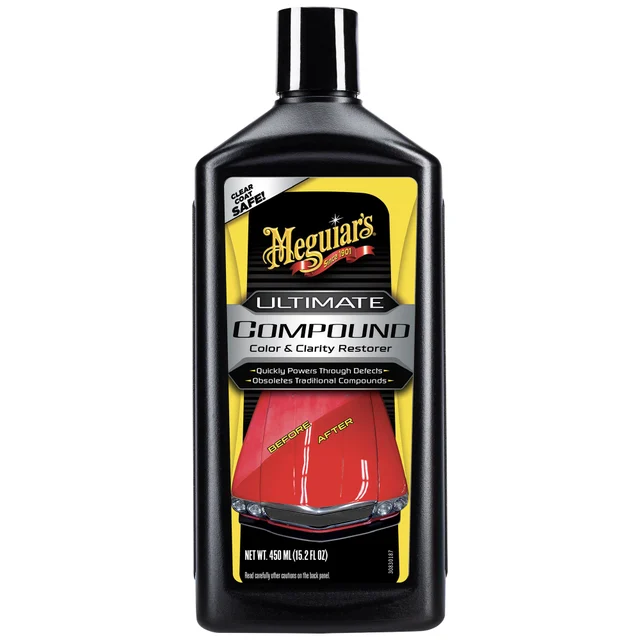
- Meguiar's Ultimate Compound - Buy. The default first bottle: enough cut for real clear coat scratches, and it still works if all you have is a microfiber towel and patience.
- 3D Car Care 3D ONE Hybrid Compound & Polish - Buy. One bottle that behaves like a compound or a finishing polish depending on the pad you pair it with, and it hides nothing.
- Meguiar's ScratchX Fine Scratch and Blemish Remover - It depends. A very mild hand-only spot treatment: excellent on one isolated blemish, underpowered for anything wider than your palm.
- Carfidant Ultimate Car Scratch & Swirl Remover - Skip. Sells itself as fixing scratches on any paint, delivers a mild one-step polish plus a sealer that flatters the result.
The verdict in 30 seconds
What mattered most
- Abrasive cut
- Works by hand
- Works on a machine polisher
- Fillers or sealants
- Finish left behind
- Beginner friendliness
Every bottle in this aisle promises to erase scratches, but all of them work the same way: they shave a tiny amount of clear coat down to the bottom of the scratch. That means the products separate on cut, on the finish they leave behind, and on whether they need a machine. Two of our four are genuinely worth owning, one earns its place only in a narrow situation, and one sells a promise the chemistry cannot keep.
The default first bottle: enough cut for real clear coat scratches, and it still works if all you have is a microfiber towel and patience.
Best for: Anyone buying their first scratch remover, especially without a polisher.
- Diminishing micro-abrasives cut hard at first, then break down and finish clearer than old-style rubbing compounds
- Works by hand as well as on a dual action polisher, so you can start without a machine
- Widely sold, which matters when you want to fix a scuff this weekend rather than next
- By hand it is real physical work: expect several passes on a stubborn scratch, and small sections at a time
- On soft or dark paint it can leave faint haze, so you may want a finishing polish afterwards to get full gloss back
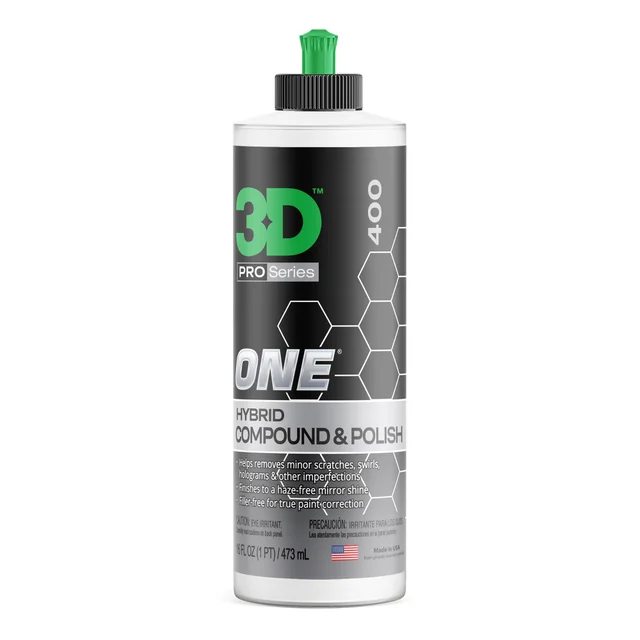
One bottle that behaves like a compound or a finishing polish depending on the pad you pair it with, and it hides nothing.
Best for: Owners with a dual action polisher who want one bottle to correct a whole car.
- Sold as a true paint correction polish with a zero-dust formula, so there is less residue to wipe away
- Cut is set by machine and pad: the maker points to a rotary for aggressive cutting and a dual action with a softer pad for a fine finish
- Easy wipe-off formula that leaves little dust behind
- It really wants a dual action polisher, so the true cost includes a machine and pads if you do not own them
- Owners report sling if you use too much product or start the machine at speed, so it takes a little discipline
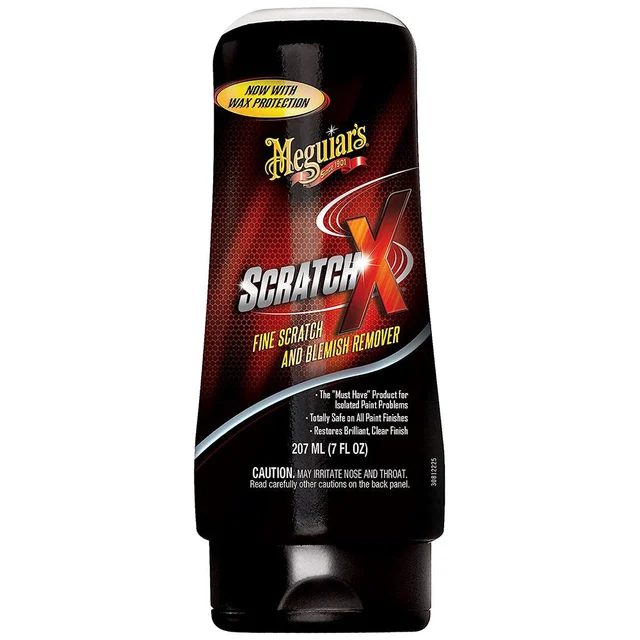
A very mild hand-only spot treatment: excellent on one isolated blemish, underpowered for anything wider than your palm.
Best for: Fixing a single shopping-cart scuff or a scuffed door edge by hand.
- Gentle enough that a beginner is unlikely to burn through clear coat with it, even leaning on it a bit
- Designed for hand application, so it suits trim edges, mirror caps and door handles where a machine will not fit
- Leaves some wax protection behind, so a small repair does not sit bare until you get around to sealing it
- Far too mild for swirl marks across a whole panel or car: you will be there all afternoon and still see them
- The wax content can mask light marring rather than remove it, so results sometimes look better on day one than day thirty
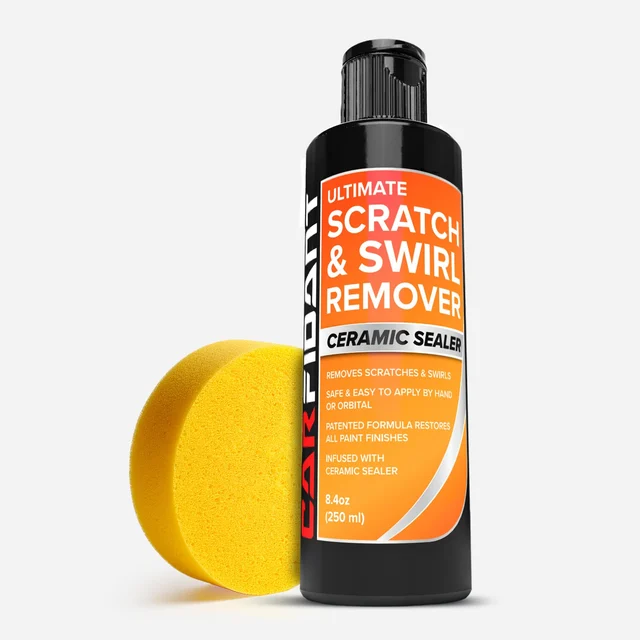
Sells itself as fixing scratches on any paint, delivers a mild one-step polish plus a sealer that flatters the result.
Best for: Almost nobody: a proper compound plus a separate sealant does both jobs better.
- Comes with an applicator pad, so a first-timer has everything needed in one purchase
- Genuinely does improve light swirl marks and dull spots on neglected paint
- The sealer component leaves a slick, glossy surface right after application
- The abrasive cut is mild, so anything beyond light swirls needs a real compound anyway
- Sits at a mid-range tier for a small bottle while established compounds cost less and cut more
- Sealer in the formula makes the panel look better than the correction really was, which is exactly what makes owner reports split so hard
| Criteria | Meguiar's Ultimate Compound Top pick | 3D ONE Hybrid Compound & Polish | Meguiar's ScratchX Fine Scratch and Blemish Remover | Carfidant Ultimate Car Scratch & Swirl Remover |
|---|---|---|---|---|
| Verdict | Buy it | Buy it | It depends | Skip it |
| Best for | Anyone buying their first scratch remover, especially without a polisher. | Owners with a dual action polisher who want one bottle to correct a whole car. | Fixing a single shopping-cart scuff or a scuffed door edge by hand. | Almost nobody: a proper compound plus a separate sealant does both jobs better. |
| Price tier | $ · budget | $ · mid-range | $ · budget | $ · mid-range |
| Abrasive cut | Medium, breaks down as you work | Adjustable: heavy to light via pad choice | Very light | Light |
| Works by hand | Yes, with effort | Possible but not the point | Yes, designed for it | Yes |
| Works on a machine polisher | Yes, dual action | Yes, dual action or rotary | Not recommended | Yes, dual action |
| Fillers or sealants | Minimal | Not stated by the maker | Contains wax protection | Contains a built-in ceramic sealer |
| Finish left behind | Good, may want a follow-up polish on dark paint | Very good, finishes clear with a soft pad | Glossy but corrects little | Glossy, partly from the sealer |
| Beginner friendliness | High | Medium, machine skills needed | Very high | High |
| Best scope of job | Spot repairs up to a full panel | A whole car in one pass | One isolated blemish | Light swirls only |
| Price tier | $ · budget | $ · mid-range | $ · budget | $ · mid-range |
Which one is right for you?
- Anyone buying their first scratch remover, especially without a polisher. Buy it Meguiar's Ultimate Compound
- Owners with a dual action polisher who want one bottle to correct a whole car. Buy it 3D Car Care 3D ONE Hybrid Compound & Polish
- Fixing a single shopping-cart scuff or a scuffed door edge by hand. It depends Meguiar's ScratchX Fine Scratch and Blemish Remover
- Almost nobody: a proper compound plus a separate sealant does both jobs better. Skip it Carfidant Ultimate Car Scratch & Swirl Remover
How we judged the field
We do not run a paint lab. We synthesize independent testing, published detailer write-ups and the pattern across owner reports at retailers and enthusiast forums, then weigh all of it against the one factor that decides this entire category: how deep the scratch is.
Run a fingernail across the damage. If your nail glides over it, the scratch lives inside the clear coat, and abrasives can level the surrounding clear down to its floor until it disappears. If your nail catches, the scratch has cut through the clear into the base coat or primer, and nothing in a bottle will bring the color back. Pushing harder there only thins the clear around the scratch until the panel hazes. Factory clear coat is only a few tens of microns thick, and a normal correction pass takes a few microns off, so a car has a limited number of corrections in it.
With that in mind we judged five things: real abrasive cut (does it level defects or just fill them), the finish left behind (haze and holograms you then have to chase), whether it works by hand or demands a machine, how forgiving it is for a first-timer, and how much of the label survives contact with an actual panel.
This is the bottle we would hand to almost anyone standing in the aisle for the first time. It uses diminishing abrasives, which cut aggressively on the first passes and then break down into a finer polish as you work, so you get meaningful correction without the chalky, hazed finish old-school rubbing compounds used to leave.
The important part is that it works by hand. Most products with this much cut assume a dual action polisher. Owners consistently report removing light to moderate clear coat scratches with nothing but a foam applicator, a microfiber towel and a few rounds of effort. That matters because the alternative is spending more on a machine than on the compound.
Be realistic about two things. Working by hand is genuinely tiring, and you cover small sections at a time. And on soft or dark paint, the compound can leave faint haze that is easy to spot in direct sun, which is why the classic sequence is compound first, then a finishing polish, then a wax or sealant. Treated as a compound rather than a miracle, it is the best value in this category.
If you own a dual action polisher, this is the more capable product. 3D ONE is a hybrid compound and finishing polish, so machine and pad choice, not a second bottle, set the level of cut. The maker points to a rotary for aggressive cutting and a dual action polisher with a softer pad for a fine finish, so the same liquid works as a compound or a polish. That is a genuine one-step correction for the sort of swirl marks that cover a whole car after years of automatic car washes.
It is sold as a true paint correction polish with a zero-dust, easy wipe-off formula, which suits a beginner who lingers too long on one section.
The catch is the machine. This is not a product to buy if a polisher is not already in your plan, and owners note that too much product or starting the machine at speed produces sling across the panel. It is also more product than you need for one scuff on a bumper.
The name suggests a stronger product than Ultimate Compound. It is the opposite. ScratchX is deliberately very mild, formulated for hand application on one isolated blemish, and it now carries some wax protection so a small repair is not left bare.
Where that suits you: a single scuff on a door edge, a mark on a mirror cap, or a blemish somewhere a machine physically cannot reach. Its gentleness is a real feature for a nervous first-timer, because it is very hard to do damage with it.
Where it does not: swirl marks across a hood, or anything a fingernail catches on. Owners repeatedly describe working at a scratch with ScratchX and getting nowhere, then removing it in minutes with the more aggressive compound. The wax content also means some of what you see is masking rather than removal, so the repair can look better on day one than it does after a month of washes. Buy it as a spot pen, not as your only bottle.
This is the shape the overpromise takes in this category. The label leans on broad claims such as being safe on every paint color, which reads as though it works regardless of how deep the damage goes. The maker does admit that a scratch which catches a fingernail needs touch-up paint, and no compound can put back clear coat that a key or a car wash brush already cut through. Do not read that as a promise that it fixes deep damage.
On its own terms, it is a mild one-step polish with a ceramic sealer mixed in. On light swirl marks and dull, neglected paint it does help. Push it at anything meaningful and the cut runs out fast, and you end up buying a real compound anyway.
The sealer is the bigger problem. It leaves the panel slick and glossy right after application, which makes the correction look better than it was, and that is a large part of why owner reports on this product split so violently: some people see a dramatic transformation, others see the same scratch a few washes later. Meanwhile it sits at a mid-range price for a small bottle while a budget compound offers more cut. Buy a proper compound and a separate sealant and you do both jobs better, for less.
Meguiar’s Ultimate Compound vs 3D ONE Hybrid Compound & Polish: which should you buy?
The deciding question is not paint color or scratch type. It is whether you own a dual action polisher.
If you do not, buy Ultimate Compound and stop reading. It is the product here with serious cut that a person can use effectively by hand, it is widely sold, and it sits at the budget tier. You will work harder, and on dark paint you may want to follow with a finishing polish, but you will get the scratch out.
If you do own a polisher, 3D ONE is the better tool. Being able to compound and finish with the same bottle collapses a two-product process into one, and the correction-focused formula means you can judge your results easily. Over a full car it also saves considerable time.
There is a sensible case for owning both: Ultimate Compound for quick spot repairs where dragging out the machine is not worth it, 3D ONE for the annual full correction. If you are buying one bottle today and the machine is hypothetical, buy the compound.
What to look for
- Do the fingernail test first. If your nail catches the scratch, it is through the clear coat, and no product on this page will fix it. Touch-up paint or a body shop is the answer.
- Distrust any label that promises to fix any scratch. The physics do not allow it. Products making that claim are usually mild polishes carrying a sealer that flatters the result.
- Match the product to the job size. A spot treatment for one scuff, a compound for a panel, a machine-friendly one-step for a whole car.
- Prefer correction-focused formulas when you want to know the truth. Sealers and glazes make the panel look corrected. Wash the car and check again a month later before deciding a product worked.
- Check whether it is rated for hand use. Many strong compounds simply will not break down properly without machine speed, and using them by hand leaves haze.
- Budget for what surrounds the bottle. Foam applicators, plenty of clean microfiber towels and good light matter more to your result than which brand you picked.
- Always protect afterwards. Compounding removes whatever wax or sealant was there. Reseal the panel once you are happy.
Our final take
This category is unusual in that the cheapest serious product is also the one we recommend to most people. Meguiar’s Ultimate Compound has enough cut to remove genuine clear coat scratches, it works with nothing but your hands, and it sits at the budget tier. 3D ONE is the upgrade, and a real one, but only if a dual action polisher is already part of the plan.
ScratchX is a useful specialist tool that is regularly bought for the wrong job, and Carfidant is the reminder that in this aisle the strength of the marketing claim tends to run inversely to the strength of the abrasive. The most valuable thing you can do before spending anything is drag a fingernail across the scratch. It will tell you whether you are buying a compound or an appointment.
Questions, answered
How do I know whether a scratch remover will work on my scratch?
Run a fingernail across the scratch. If your nail glides over it, the damage is inside the clear coat and abrasives can level it. If your nail catches, the scratch has gone through the clear into the base coat or primer, and no compound in a bottle will restore it. In that case you need touch-up paint or a body shop. This one test decides more than the brand you buy.
Do I need a machine polisher, or is doing it by hand fine?
By hand is fine for a scuff, a scratch or a small patch of marring. It becomes impractical for swirl marks across a whole car, where you would be working small sections for hours. Meguiar's Ultimate Compound and Meguiar's ScratchX both work by hand. 3D ONE really needs a dual action polisher to show what it can do.
Can compounds damage my paint?
Yes, if you keep going. Every pass removes a little clear coat, and clear coat is thin, so there is a finite number of corrections a car can take in its life. The usual mistakes are chasing a scratch that is too deep to remove, working one spot repeatedly, or using an aggressive pad on soft paint. Work in short passes, check your progress often, and stop when the improvement stalls.
What is the difference between a compound, a polish and a scratch filler?
A compound has coarser abrasives and removes material to level a defect. A polish uses finer abrasives to refine the surface and restore gloss after compounding. A filler or glaze does not remove anything: it deposits oils or waxes into the scratch so it hides temporarily, then reappears after a few washes. Products that mix a mild polish with a sealer sit in between, which is why their results can look better on the day than a month later.
Do I need to wax or seal after using a compound?
Yes. Compounding strips whatever protection was on the panel, leaving bare clear coat exposed to UV and contamination. Follow with a wax, sealant or ceramic spray once you are happy with the correction. Products that build a sealer into the compound save a step, but they also make it harder to judge how much correction you actually achieved.
Deciding between the top two? See our head-to-head: Meguiar's Ultimate Compound vs 3D Car Care 3D ONE Hybrid Compound & Polish.
More Automotive reviews
 The Best Car Seat Covers: 4 Compared (and One to Skip)
  The Best Car Backseat & Trunk Organizers: 4 Compared (and One to Skip)
  The Best Car Trash Cans: 4 Compared (and One to Skip)
  The Best Car Undercoating: 4 Compared (and One to Skip)
  The Best Car Vacuums: 4 Compared (and One to Skip)
  The Best Car Wash Soaps: 4 Compared (and One to Skip)