

Automotive
The Best Car Undercoating: 4 Compared (and One to Skip)
We compared four rust prevention coatings on what their own makers publish: base chemistry, whether the film stays soft or cures hard, stated reapplication interval, application temperature, and what the surface prep instructions actually demand.
The short version
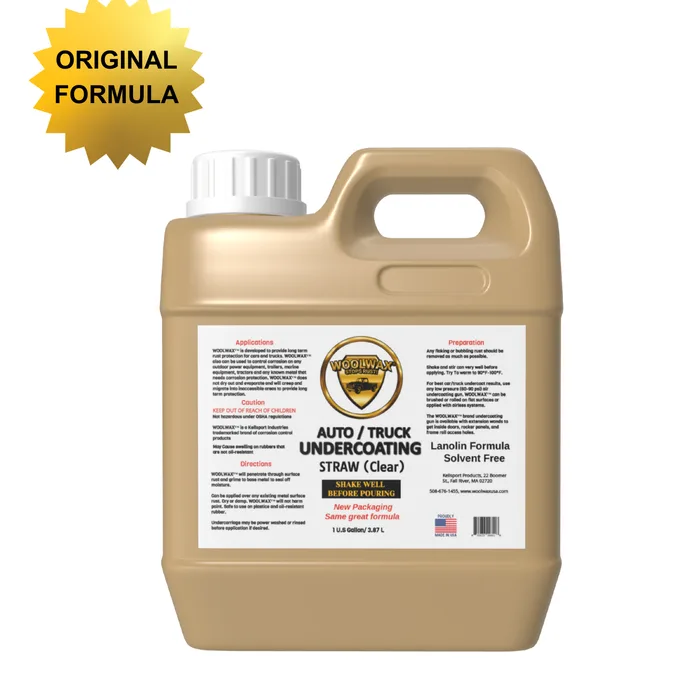
Woolwax Auto/Truck Undercoating is our pick: raw wool grease, no solvents, never dries, and Kellsport states a treatment typically lasts two years with the exposed underbody re-treated every other year. Fluid Film Black is the value choice and the easier first attempt, sold as an aerosol as well as bulk, with Eureka Chemical stating up to a full year of protection per application. POR-15 Rust Preventive Coating is the depends pick: a moisture cured urethane that dries rock hard and is designed to go straight onto prepped rust, which makes it excellent on a stripped frame or floor pan and wrong as a yearly maintenance coat. Dupli-Color Undercoating is the skip: a rubberized aerosol covering 12 to 15 square feet per can, whose own prep instructions tell you to remove rust and loose paint first, which is the exact step nobody completes under an assembled car. Whichever you pick, a coating is not a substitute for rinsing the underbody through the salt season. Best for: salt belt owners who want a soft coating they can respray themselves every year or two rather than a one time hard shell.
Our picks at a glance
- Woolwax Auto/Truck Undercoating (1 Gallon) - Buy. A thick, solvent free wool grease coating that never dries and that you respray straight over the old coat.
- Fluid Film Black Aerosol and Non-Aerosol - Buy. The thinner lanolin coating that creeps furthest into seams and is by far the easiest first undercoating job.
- POR-15 Rust Preventive Coating - It depends. A moisture cured urethane that dries rock hard and is designed to be painted directly onto prepped rust.
- Dupli-Color Undercoating (UC101) - Skip. The rubberized aerosol on every parts store shelf, sold for spot repairs but bought as a whole underbody fix.
The verdict in 30 seconds
What mattered most
- Base chemistry
- Film after application
- Maker's stated interval
- Applying over existing rust
- Application temperature
- Rubber, plastics, wiring
Undercoating is one of the few car care jobs where the wrong product can leave you worse off than doing nothing at all. The things sold under that single word are not variations on a theme. Some stay permanently soft and creep into seams, one cures to a rock hard shell, and they succeed and fail in opposite ways. We went through what four manufacturers publish about their own products and left out anything we could not find on a maker's page, label or product sheet.
A thick, solvent free wool grease coating that never dries and that you respray straight over the old coat.
Best for: Salt belt owners who will commit to a recurring spray job and want the longest interval between them.
- Kellsport states it does not dry out, stays soft and pliable, and keeps creeping into inaccessible areas.
- Stated protection of two to three years, with the exposed underbody re-treated every other year.
- Reapplication needs only a hose rinse, not stripping, because you spray fresh material over the existing coat.
- The label tells you to warm the container to 90 to 100 F, so a cold garage is the wrong place to work.
- Needs a low pressure undercoating gun at 60 to 90 psi, which is an extra purchase over an aerosol.
- Stays greasy, so road grime clings to it and anything you brush against underneath will mark.
- The label warns it may cause swelling on rubbers that are not oil resistant.
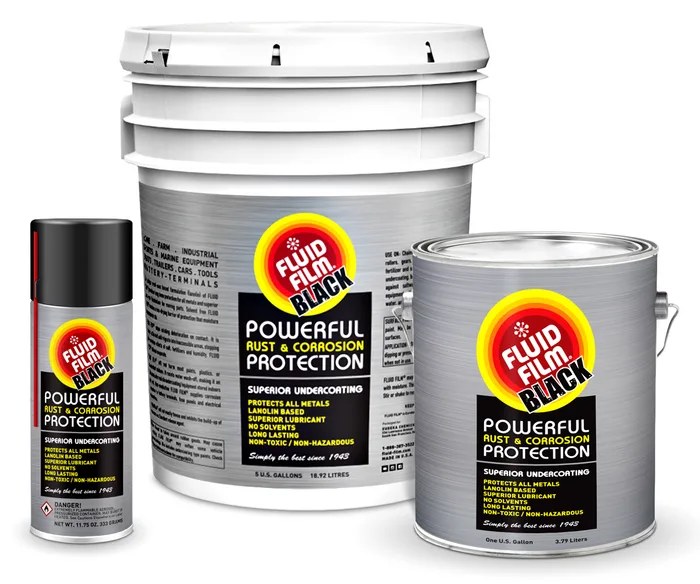
The thinner lanolin coating that creeps furthest into seams and is by far the easiest first undercoating job.
Best for: Anyone doing this for the first time, or covering seams and cavities where creep matters more than film thickness.
- Eureka Chemical states it remains soft and pliable, which makes it self healing and impossible to crack.
- Sold as an aerosol as well as in bulk, so you can start small.
- Maker states it is non-conductive and will not harm electrical connections, and has no adverse effect on plastics.
- Stated protection is up to a full year, shorter than the multi year figure Woolwax publishes.
- Thinner film means more of it washes off exposed areas hit directly by road spray.
- Eureka flags that it may soften some vehicle undercoatings, including undercoating type paints.
- Fluid Film publishes no application temperature range for undercoating work.
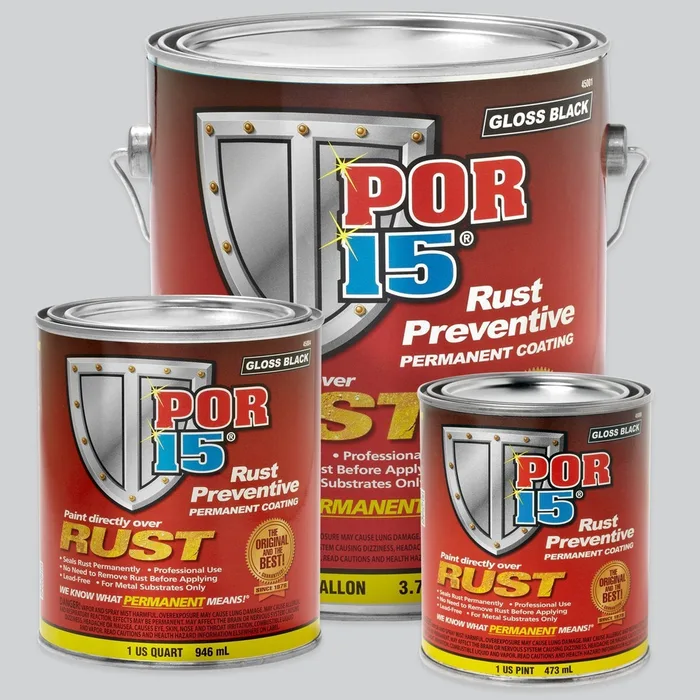
A moisture cured urethane that dries rock hard and is designed to be painted directly onto prepped rust.
Best for: Restoration work on parts you can strip and prepare properly, such as a bare frame, floor pan or fuel tank.
- Product sheet describes a rock hard, non porous film that will not chip, crack or peel, heat resistant to 450 F.
- Designed for application directly on rusted, sandblasted and seasoned metal rather than needing bare steel.
- Product sheet states it exceeds 2000 hours of salt spray testing, the highest published figure in this group.
- Requires the POR-15 cleaner and Metal Prep etch first, and smooth metal must be etched for adhesion.
- Must not be applied above 75 percent humidity, and needs an opaque topcoat anywhere sunlight reaches.
- Contains isocyanates; the sheet is marked professional use and calls for a NIOSH approved respirator.
- The maker states it cannot stop rust it is not in direct contact with, which rules out spraying over grime.
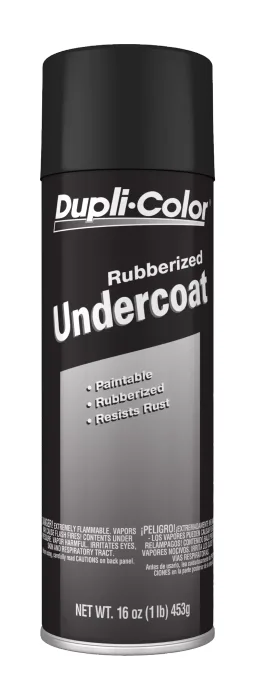
The rubberized aerosol on every parts store shelf, sold for spot repairs but bought as a whole underbody fix.
Best for: Recoating a clean, accessible panel during a repair, not treating a whole underbody against road salt.
- Genuinely convenient for a single wheel well or floor pan during a repair, with a 10 minute recoat window.
- Sherwin-Williams publishes clear application conditions of 60 to 95 F in low humidity.
- Can be used over painted and unpainted surfaces, so it works as cosmetic tidy-up on a panel you are already working on.
- Coverage is 12 to 15 square feet per 16 oz can, which does not go far across a full underbody.
- Its own prep instruction is to remove dirt, oil, grease, wax, rust and loose paint first, which is impractical under an assembled car.
- A hard film protects only the metal it actually touches, so anything you spray over is not being protected.
- No reapplication interval, no salt spray figure and no rubber or wiring guidance are published for it.
| Criteria | Woolwax Auto/Truck Undercoating (1 Gallon) Top pick | Fluid Film Black Aerosol and Non-Aerosol | POR-15 Rust Preventive Coating | Dupli-Color Undercoating (UC101) |
|---|---|---|---|---|
| Verdict | Buy it | Buy it | It depends | Skip it |
| Best for | Salt belt owners who will commit to a recurring spray job and want the longest interval between them. | Anyone doing this for the first time, or covering seams and cavities where creep matters more than film thickness. | Restoration work on parts you can strip and prepare properly, such as a bare frame, floor pan or fuel tank. | Recoating a clean, accessible panel during a repair, not treating a whole underbody against road salt. |
| Price tier | $$ · mid-range | $ · budget | $$ · mid-range | $ · budget |
| Base chemistry | Raw wool grease (lanolin), solvent free | Processed wool wax plus refined petroleum oils | Single component moisture cured urethane | Rubberized, solvent based aerosol |
| Film after application | Does not dry, stays soft and pliable | Will not dry out, remains soft and self healing | Dries rock hard and non porous | Dries to a rubberized textured film |
| Maker's stated interval | Typically 2 years; exposed underbody every other year | Up to a full year per application | Described as a permanent coating | Not published |
| Applying over existing rust | Label: can be applied over existing surface rust; remove flaking or bubbling rust | Not formulated to remove rust; maker says it stops existing rust spreading | Designed for direct application on rusted metal after cleaner and Metal Prep | Prep instruction says to remove rust and loose paint first |
| Application temperature | Warm product to 90 to 100 F before spraying | Not published | Not published; do not apply above 75 percent humidity | 60 to 95 F, low humidity |
| Rubber, plastics, wiring | Will not harm paint; safe on plastics and oil resistant rubber; may swell non oil resistant rubber | No adverse effect on plastics; non-conductive; may swell non oil resistant rubber | For metal substrates only | Not published |
| How you apply it | Low pressure undercoating gun, 60 to 90 psi | Aerosol, or bulk with a gun | Brush, roller or HVLP; two thin coats, 2 to 6 hour recoat | 16 oz aerosol, two light coats, 12 to 15 sq ft per can |
| Published corrosion test data | None published | Cites MIL-C-16173 Grade 2 soft film salt spray requirement | Product sheet: exceeds 2000 hours salt spray | None published |
Which one is right for you?
- Salt belt owners who will commit to a recurring spray job and want the longest interval between them. Buy it Woolwax Auto/Truck Undercoating (1 Gallon)
- Anyone doing this for the first time, or covering seams and cavities where creep matters more than film thickness. Buy it Fluid Film Black Aerosol and Non-Aerosol
- Restoration work on parts you can strip and prepare properly, such as a bare frame, floor pan or fuel tank. It depends POR-15 Rust Preventive Coating
- Recoating a clean, accessible panel during a repair, not treating a whole underbody against road salt. Skip it Dupli-Color Undercoating (UC101)
How we judged the field
Five things separate a coating that helps from one that quietly hurts. First, whether the film stays soft or cures hard, because that single property decides how it fails: a soft film reflows over a scratch, a hard film opens an edge. Second, what the maker says about existing rust and surface prep, since prep is where every DIY job on an assembled car falls apart. Third, the stated reapplication interval, because a coating with no interval is being sold as permanent and almost nothing under a car is. Fourth, application temperature and equipment, which decide whether you can realistically do the job in your own driveway. Fifth, published compatibility with rubber, plastics and electrical connections, because an underbody is full of all three.
The field splits cleanly. On one side are the wax and lanolin coatings that stay soft, creep into seams and get resprayed on a schedule; Woolwax and Fluid Film are the two that publish the most about themselves, and they differ mainly in viscosity. On the other side are coatings that cure to a film. POR-15 is the interesting case there, because unlike a generic rubberized product it is engineered specifically to be painted onto rust, with a prep system to match. Dupli-Color represents the family most people actually buy without reading the can, so we included it rather than a strawman. Those four cover the real decision.
Woolwax (Kellsport Products) Woolwax Auto/Truck Undercoating (1 Gallon)
Buy itWoolwax is raw wool grease rather than a lanolin additive, and Kellsport is direct about what that buys you. The product does not dry, it stays soft and pliable, and it keeps migrating into seams after you spray. The company states a treatment typically lasts two years, that enclosed cavities such as doors and frame rails stay protected far longer, and that the exposed underbody should be re-treated every other year, or annually if you want to be thorough. Reapplication is genuinely easy, since you rinse with a hose and spray straight over the old coat with no stripping. The trade-offs are real. It is thick enough that the label tells you to warm the container to 90 to 100 F and to run a low pressure gun at 60 to 90 psi, so a cold garage in November is the wrong place to start. It also stays greasy, which means road grime clings to it and anything you brush against underneath will mark. For an owner who accepts a recurring job, it is the strongest option here.
Fluid Film (Eureka Chemical Company) Fluid Film Black Aerosol and Non-Aerosol
Buy itFluid Film is the same idea in a thinner, more forgiving form. Eureka Chemical describes it as specially processed wool wax plus highly refined petroleum oils with no solvents in the bulk product, and says it remains soft and pliable, which makes it self healing and impossible to crack. The company’s own automotive page claims up to a full year of solid protection per application and reckons a gallon covers roughly one vehicle. The practical difference from Woolwax is viscosity. Fluid Film is thinner, which is why it creeps into frame rails and door bottoms so readily and also why it is easier to spray without warming the container or owning a proper undercoating gun. The aerosol makes a first attempt low commitment. That same thinness is the reason to expect a shorter interval, since there is less material to give up to road spray. Eureka does flag that it may soften some vehicle undercoatings, including undercoating type paints, so check before spraying over a factory or shop applied coating.
POR-15 (P.O.R. Products) POR-15 Rust Preventive Coating
It dependsPOR-15 Rust Preventive Coating is the odd one out because it is the hard coating designed for rust rather than in spite of it. It is a single component moisture cured urethane that dries faster in humid air, and the product sheet describes a rock hard, non porous film that will not chip, crack or peel, is heat resistant to 450 F, and exceeds 2000 hours of salt spray testing. Applied over a stripped and etched frame, floor pan or fuel tank it is a genuinely durable repair. Applied casually it is not. It needs the POR-15 cleaner and Metal Prep etch, two thin coats with a 2 to 6 hour recoat window, humidity below 75 percent, and an opaque topcoat anywhere sunlight reaches. It contains isocyanates, so the sheet is marked professional use and calls for a NIOSH approved respirator. The company also states plainly that the coating cannot stop rust it is not in direct contact with. That is a restoration product, not a yearly underbody pass.
Dupli-Color (Sherwin-Williams) Dupli-Color Undercoating (UC101)
Skip itDupli-Color Undercoating is the aerosol most people reach for, because it is on the shelf at every parts store and the name says exactly what you want. It is a rubberized coating in a 16 ounce can. Sherwin-Williams lists coverage at 12 to 15 square feet per can, an application window of 60 to 95 F in low humidity, two light coats and a 10 minute recoat. Read the prep line and the problem appears: clean the surface by removing dirt, oil, grease, wax, rust and loose paint. That is the correct instruction, and it is also the step almost nobody completes lying on their back under an assembled car with suspension, brake lines and fuel lines in the way. What you get instead is a film laid over grime and existing surface rust, and a hard film protects only the metal it actually touches. Used as intended, on a clean and accessible panel during a repair, it is fine. Used as a whole underbody rust treatment, it is the wrong tool.
Sources
Specs in this review come from these pages.
- Fluid Film - Automotive Applications (Eureka Chemical Company) (fluid-film.com)
- Fluid Film - Frequently Asked Questions (fluid-film.com)
- Woolwax - Auto Undercoating, 1 Gallon (Kellsport Products) (woolwaxusa.com)
- POR-15 Rust Preventive Coating - Product Information Sheet (cdn.shopify.com)
- Dupli-Color Undercoating (UC101) - Product Page, Sherwin-Williams (duplicolor.com)
- ASTM B117, Standard Practice for Operating Salt Spray (Fog) Apparatus (astm.org)
Woolwax (Kellsport Products) Woolwax Auto/Truck Undercoating (1 Gallon) vs Fluid Film (Eureka Chemical Company) Fluid Film Black Aerosol and Non-Aerosol: which should you buy?
Both of our buy picks are wool grease in a can, so the choice is not really about chemistry. It is about viscosity and how much work you are willing to do. Woolwax is the thick one. Kellsport says it applies like a heavy latex paint, which is why the company publishes a two year figure and tells you to re-treat only the exposed underbody every other year. That thickness is also the cost: you need a low pressure undercoating gun, and the label asks you to warm the material to 90 to 100 F first. Fluid Film is the thin one. It comes in an aerosol you can buy one of, it sprays without warming, and Eureka states up to a full year of protection. Kellsport’s own note about its thinner LV formula, which it says is similar in viscosity to Fluid Film and is not recommended for undercarriage use, is a competitor’s framing rather than a neutral test, but the underlying physics is not controversial: thicker material lasts longer where road spray hits directly.
So pick by commitment. If you live somewhere that brines the roads, plan to keep the vehicle, and are willing to buy a gun and set aside an afternoon roughly every other year, Woolwax gives you the longest interval and the most material where it matters. If this is your first attempt, or the vehicle is a lease or a short term keeper, start with Fluid Film aerosol and treat it as an annual habit. There is also a legitimate hybrid: Fluid Film’s creep makes it well suited to cavities such as frame rails, rockers and door bottoms, with the thicker product reserved for the exposed underside. Neither maker tells you to strip the old coating before the next round, which is the whole reason soft coatings stay manageable over years.
What to look for
- Soft or hard is the first question: decide whether you want a film that reflows over damage and needs respraying, or one that cures and has to be perfect the first time.
- Read the prep line before the marketing: if the instructions tell you to remove rust and loose paint first, that is the job, and doing it properly under an assembled car is far harder than the can suggests.
- Look for a published reapplication interval: Woolwax states two to three years and Fluid Film states up to a year, while a product with no stated interval is implicitly claiming to be permanent.
- Check the temperature window against your calendar: Dupli-Color specifies 60 to 95 F, Woolwax asks you to warm the material to 90 to 100 F, and POR-15 rules out humidity above 75 percent.
- Confirm rubber, plastic and wiring compatibility in writing: both lanolin products state they may swell non oil resistant rubber, and Fluid Film states it is non-conductive, while some makers publish nothing at all.
- Treat salt spray hours as a lab comparison, not a lifespan: ASTM B117 itself notes that prediction of real world performance has seldom been correlated with salt spray results used as stand alone data.
Our final take
Buy the coating that matches the job you will actually do. If the plan is to keep a vehicle through salt winters and respray it, a soft wool grease coating is the right family, and Woolwax gives the longest published interval while Fluid Film gives the easiest first attempt. If the plan is to restore a specific rusty component you can strip, etch and coat properly, POR-15 is a different and legitimate tool with real test data behind it. What almost nobody should do is spray a rubberized aerosol over a dirty, assembled underbody and consider the problem solved, because a hard film protects only the steel it touches. And whichever you choose, keep rinsing the underbody through the salt season.
Questions, answered
Does undercoating trap moisture and make rust worse?
It depends entirely on whether the film stays soft or sets hard, and the answer is more limited than the internet suggests. What is on the record is that a hard coating protects only the metal it is in direct contact with; POR-15 states this plainly about its own product. Dupli-Color's prep instruction to remove rust and loose paint before spraying says the same thing from the other direction. So a hard film applied over grime or existing rust is not protecting that steel, and a chip in the film exposes bare metal while the surrounding coating keeps water from evaporating out. The widely repeated claim that this makes a coated panel rust faster than an uncoated one is a plausible mechanism, but we could not find a manufacturer or standards body publishing measurements on it, so treat it as reasoning rather than a tested figure. Soft lanolin coatings sidestep the argument because they self heal and never form an edge to lift.
How often do I actually have to reapply a lanolin coating?
The two makers here publish different numbers, and both are on their own pages. Kellsport states Woolwax will provide long term protection of two to three years, that in enclosed areas such as doors and frame rails a single treatment lasts for years, and that the exposed underbody should be re-treated every other year or as needed for your region. Eureka Chemical's automotive page states Fluid Film provides up to a full year of solid protection. The difference tracks viscosity rather than chemistry, since the thicker product has more material to lose to road spray. Reapplication is deliberately easy in both cases: Kellsport says there is no need to remove or power wash the existing coating, just rinse with a garden hose and apply a fresh coat over it. Plenty of owners in heavy salt regions choose to touch up the exposed areas every autumn regardless of the stated interval.
Can I spray this over rust that is already on the frame?
Read the maker's own instruction, because the four products here genuinely disagree. The Woolwax container label says the product will penetrate through surface rust and grime to base metal to seal off moisture and can be applied over any existing metal surface rust, dry or damp, while also saying any flaking or bubbling rust should be removed as much as possible. Fluid Film's FAQ says it is not formulated to remove rust but that applied over existing rust it will stop it spreading further. POR-15 goes furthest: its product sheet is headed with a claim that there is no need to remove rust first, and its FAQ says the coating likes rusted surfaces, though it still requires the cleaner and Metal Prep steps and wire brushing of loose rust and scale. Dupli-Color's prep line tells you to remove rust before applying. That last one is the pattern to watch for.
Is it safe to spray near brake lines, wiring and rubber bushings?
The lanolin products publish the most reassurance here. Fluid Film states it is non-conductive and will not harm electrical connections, adds that connections should be made before applying, and says it has no adverse effect on plastics but that caution is needed around non oil resistant rubber goods because it may cause swelling. The Woolwax label carries the same rubber warning and adds that the product will not harm paint and is safe on plastics and oil resistant rubber. POR-15's product sheet describes the coating as being for metal substrates only. Dupli-Color does not publish guidance on rubber, wiring or brake components for its undercoating. As a general rule, keep any coating off brake rotors, pads and the friction surfaces of the braking system, off exhaust components, and away from anything that needs to grip or dissipate heat.
What time of year should I do this, and does it replace washing the underbody?
Temperature drives the timing more than the calendar does. Dupli-Color publishes an application window of 60 to 95 F in low humidity. The Woolwax label tells you to warm the container to 90 to 100 F before spraying, and Kellsport notes that many of its applicators suggest treating vehicles in warmer weather so the product creeps and migrates into inaccessible areas. POR-15 does not publish a temperature range but tells you not to apply above 75 percent humidity. In practice that means late summer or early autumn, on a dry vehicle, before the salt starts. None of it removes the need to rinse the underbody during the salt season; a coating slows the reaction at the metal, it does not remove the chloride sitting on top of it, and Woolwax explicitly tells you that you can rinse the existing coating with a hose without harming it.
Deciding between the top two? See our head-to-head: Woolwax Auto/Truck Undercoating (1 Gallon) vs Fluid Film Black Aerosol and Non-Aerosol.
More Automotive reviews
 The Best Car Vacuums: 4 Compared (and One to Skip)
  The Best Car Wash Soaps: 4 Compared (and One to Skip)
  The Best Cargo Liners: 4 Compared (and One to Skip)
  The Best Carpet and Upholstery Cleaners: 4 Compared
  The Best DIY Car Ceramic Coatings: 4 Compared (and One to Skip)
  The Best Car Detailing Clay: 4 Compared (and One to Skip)